
 By Arun Upadhayay
New Delhi, April 7: So here’s a question most of us never think about. The bullet that a soldier loads into his rifle on the border, where does it come from? Who made it? And if the answer is “we imported it,” then maybe we should be asking why a country of 1.4 billion people, with one of the largest armies in the world, is still dependent on other nations for something as basic as ammunition.
That question, roughly speaking, is what Sahil Luthra decided to do something about.
He’s 34. He’s from Delhi. And a little over a year ago, he started building a factory in Jhansi that he says will produce bullets for the Indian armed forces by June 2026. You might laugh. A lot of people probably did, at first. But then again, someone has to do it.
The Boy Who Grew Up Watching the SPG Go By
Luthra grew up in New Delhi, in a household that was never short of ambition. His father, the late Karan Luthra, was a businessman. Not a bureaucrat, not a government officer, a businessman. Which means Sahil grew up understanding one thing very clearly: money doesn’t come to you, you have to go build something and get it yourself.
But alongside that, there was another pull entirely. Delhi, if you grow up in the right parts of it, gives you a front row view of the Indian security establishment. The NSG commandos with their all-black gear. The SPG convoys are moving at speed. For a certain kind of young man, that world is magnetic. Not in a violent way, but in the way that discipline and purpose can be magnetic when you’re still figuring yourself out.
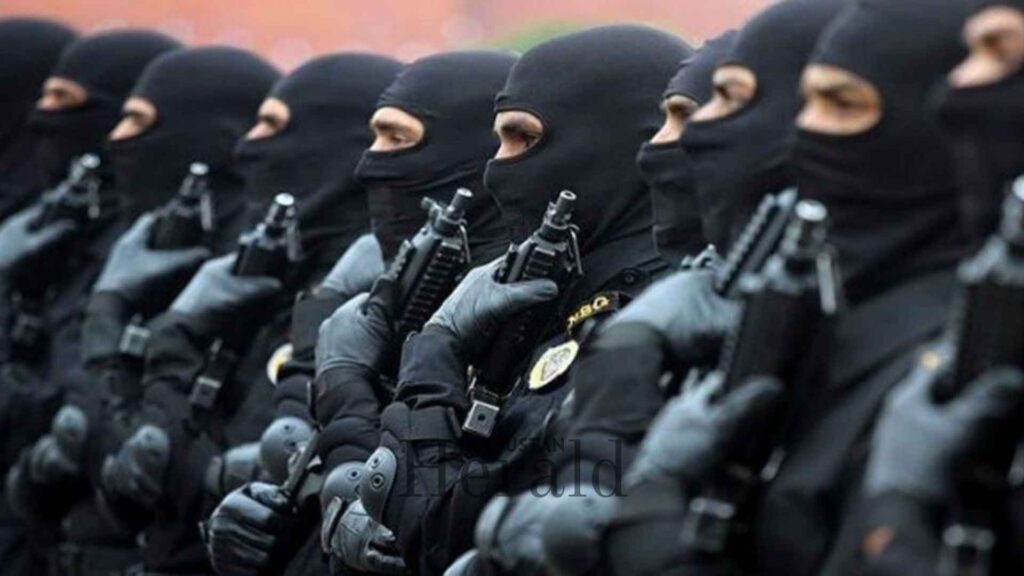
Luthra was that kind of young man. He never joined the forces, but the admiration never left him either. It was just found in a different shape later.
First, He Sold Land
Before anyone talks defence, here’s the part people skip: Sahil Luthra started his career in real estate and land banking through a company called SL Investors and Developers LLP. Not exactly a glamorous backstory for a future defence entrepreneur, right?

But think about it for a second. Land banking in India is not for the faint-hearted. You’re essentially betting money on plots that have no immediate value, waiting for development to catch up, dealing with regulatory headaches, and trusting your read on where the country is going. It is, in a very literal sense, training for exactly the kind of long-game thinking that defence manufacturing demands.
The skills crossed over more than people realise.
Then He Made a Call That Changed Everything
At some point in his early thirties, Luthra made a decision. He was going to pivot. Not into a safer industry, not into tech or FMCG, but into defence manufacturing, arguably one of the most complicated, most regulated, and most capital-intensive sectors you can enter in India as a private individual.

In 2024, he co-founded Vijayan Trishul Defence Solutions (VTDS) with his wife and co-director, Prikansha Luthra, with a mission to make India self-reliant in defence manufacturing. The company’s focus? Small arms and ammunition. The unglamorous, essential, utterly critical stuff. The rounds that soldiers actually fire. The calibres that paramilitary forces depend on. The kind of inventory that India, embarrassingly, still sources significantly from abroad.
He named the company partly as a tribute to his late father. VTDS is, in his own words, a tribute to the late Shri Karan Luthra, whose entrepreneurial spirit laid the foundation for this venture. There’s something very Indian about that, building something new while carrying someone’s name forward.
20 Hectares in Jhansi. Ninety Years. No Going Back.
The clearest signal that this isn’t just talk is a piece of paper that was signed in Jhansi last year.
VTDS signed a lease deed with the Uttar Pradesh Expressways Industrial Development Authority (UPEIDA) for a 20-hectare plot of land in the UP Defence Industrial Corridor. The allotted land, Plot No. S-8, is located in Village Erach, Tehsil Garautha, District Jhansi, and the lease has been executed for a period of 90 years.
Ninety years. Read that again. When a private entrepreneur signs a 90-year lease on 20 hectares of land in a defence corridor, that is not someone doing a press release exercise. That is someone who has made a life decision.
The project cost is estimated at around Rs 300 to 400 crore, and it is fully self-funded by the family, with no external investors. No VC money. No private equity. Just family capital on the line. That changes the risk calculus completely. When your own money is in, you don’t walk away when things get hard.
What Will Actually Come Out of That Factory
Let’s talk specifics, because the defence sector in India has a long and irritating history of announcements that never become actual products.
VTDS has a three-phase vision. In the first phase, the company will produce small ammunition such as 5.56 mm, 7.62 mm, and 9 mm rounds, which are critical for defence needs both in India and globally. All ammunition will be for defence use only, not for civilians, and will cover both NATO and Russian-grade formats.
Why does that matter? Because the Indian armed forces use both. Older weapons systems run on Soviet-era calibres. Newer ones are shifting toward NATO standards. A manufacturer who can supply across both formats is genuinely useful in a way that a narrow-spec supplier is not.
The target is to have the first batch of ammunition rolled out by June 2026, with the team already in talks with Indian Armed Forces, paramilitary forces, and international defence clients for pre-agreements.
That’s a tight timeline. Whether they hit it will tell us a lot.
The Team He’s Built Around Him
One thing that stands out about VTDS is that Luthra has not tried to do this with only young hustlers. He has pulled in people who have actually worked inside the system.
The company’s advisory bench includes Lt Gen Kamaljit Singh (PVSM, AVSM and Bar) as Vice President, G R Aloria (IAS Retd.), former Chief Secretary of Gujarat, as Chief Advisor, and Col PVS Nageswara Rao (Retd.) as Chief Consultant.
This matters more than it might seem. In Indian defence procurement, relationships and institutional knowledge are everything. The difference between a company that knows how to manufacture and a company that knows how to actually supply the armed forces is enormous. These are not decorative names on a letterhead. They are people who understand how the system works from the inside.
Amritsar Is Now in the picture, too
If one factory under construction is a statement, a second one is a pattern.
VTDS recently announced the establishment of its second manufacturing facility in Amritsar, following the success of its first facility in the UP Defence Corridor Jhansi node. The company has received all necessary approvals for this expansion.
Punjab announcing a new defence manufacturing facility is not a small thing. The new Amritsar unit is positioned to generate employment for youth in the region, and given that Punjab’s economy has been under stress for several years, any genuine industrial investment there carries real weight beyond just the defence angle.
Luthra, commenting on the expansion, said Punjab has always been at the forefront of India’s defence and that VTDS is partnering with the state’s workforce to strengthen the nation’s security infrastructure.
The Award That Came in Between
In March 2025, Luthra was recognised at the ET Now Business Conclave in New Delhi. He was honoured with the Excellence in Defence Entrepreneurship Award, celebrating his contributions to the defence sector and his commitment to fostering innovation, self-reliance, and national security.

These things can mean different things. Sometimes, awards in India are handed out the way business cards are exchanged at conferences, freely and without much thought. But an ET Now platform does carry weight, and the recognition at this early stage in VTDS’s life suggests that at least some of the industry is watching this company with genuine interest.
Separately, Luthra is recognised by the UP government as the youngest defence entrepreneur in India. Whether that distinction becomes a footnote or a headline will depend entirely on what gets built in Jhansi.
His Wife Is Not Just a Co-Founder on Paper
It’s worth spending a moment on Prikansha Luthra, because her role at VTDS is not ceremonial.

She serves as a Director at the company and is involved in its day-to-day operations and strategic decisions. In a sector that has very few women in leadership positions, that is quietly significant. Defence manufacturing in India, from the ordnance factories to the DPSUs to most private entrants, has been overwhelmingly male at every level above the shop floor.
VTDS also has plans to hire women specifically for packaging roles at the facility, a small thing in isolation, but a stated commitment to inclusion in an industry that rarely talks about it.
The Part Nobody Can Promise Yet
Now for the honest part of the story.
India has a complicated relationship with its own defence manufacturing ambitions. The corridors were announced with great fanfare. Targets were set, then revised, then quietly revised again. Several companies came in early, signed MoUs, did the press conference, and then discovered that the path from land allotment to actual production orders is much longer, much more expensive, and much more bureaucratically tangled than anyone told them upfront.
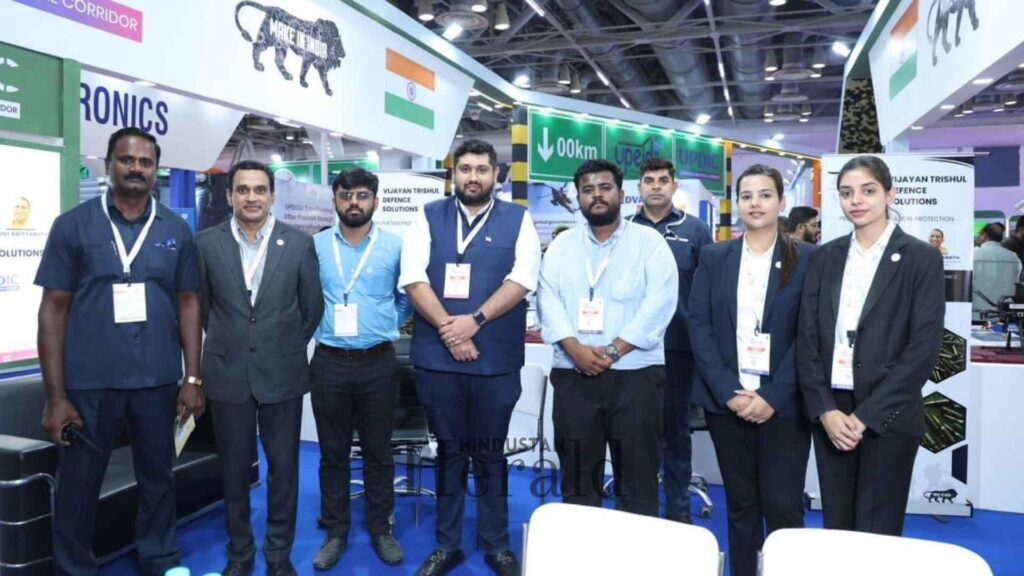
Analysts note that early-stage land acquisition in such corridors often signals long-term industrial intent, but experts also point out that transitioning from real estate to defence production presents real execution challenges, including compliance requirements, technology partnerships, and long project gestation cycles.
VTDS is not yet a proven supplier. It has land. It has approvals. It has a team. It has timelines. What it does not yet have is a track record of delivering ammunition to any buyer at scale. That track record is the only thing that will ultimately matter.
But here’s what’s also true. Someone has to start. India cannot become self-reliant in defence manufacturing by waiting for the perfect moment or the perfectly proven company. At some point, young entrepreneurs have to step into this space, put their money in, and figure it out under fire, literally and figuratively. If even a fraction of the companies entering the UP and Tamil Nadu defence corridors succeed in becoming genuine suppliers, the country will be meaningfully better off than it is today.
Sahil Luthra is 34. He has signed a 90-year lease. He has his family’s money and reputation in this.
Whatever happens next, that is not a small thing.
Stay ahead with Hindustan Herald — bringing you trusted news, sharp analysis, and stories that matter across Politics, Business, Technology, Sports, Entertainment, Lifestyle, and more.
Connect with us on Facebook, Instagram, X (Twitter), LinkedIn, YouTube, and join our Telegram community @hindustanherald for real-time updates.

- Arun Upadhayay

- Arun Upadhayay
- Arun Upadhayay
- Arun Upadhayay




 Kavita Iyer
  Ananya Sharma and Kavita Iyer