 By Ananya Sharma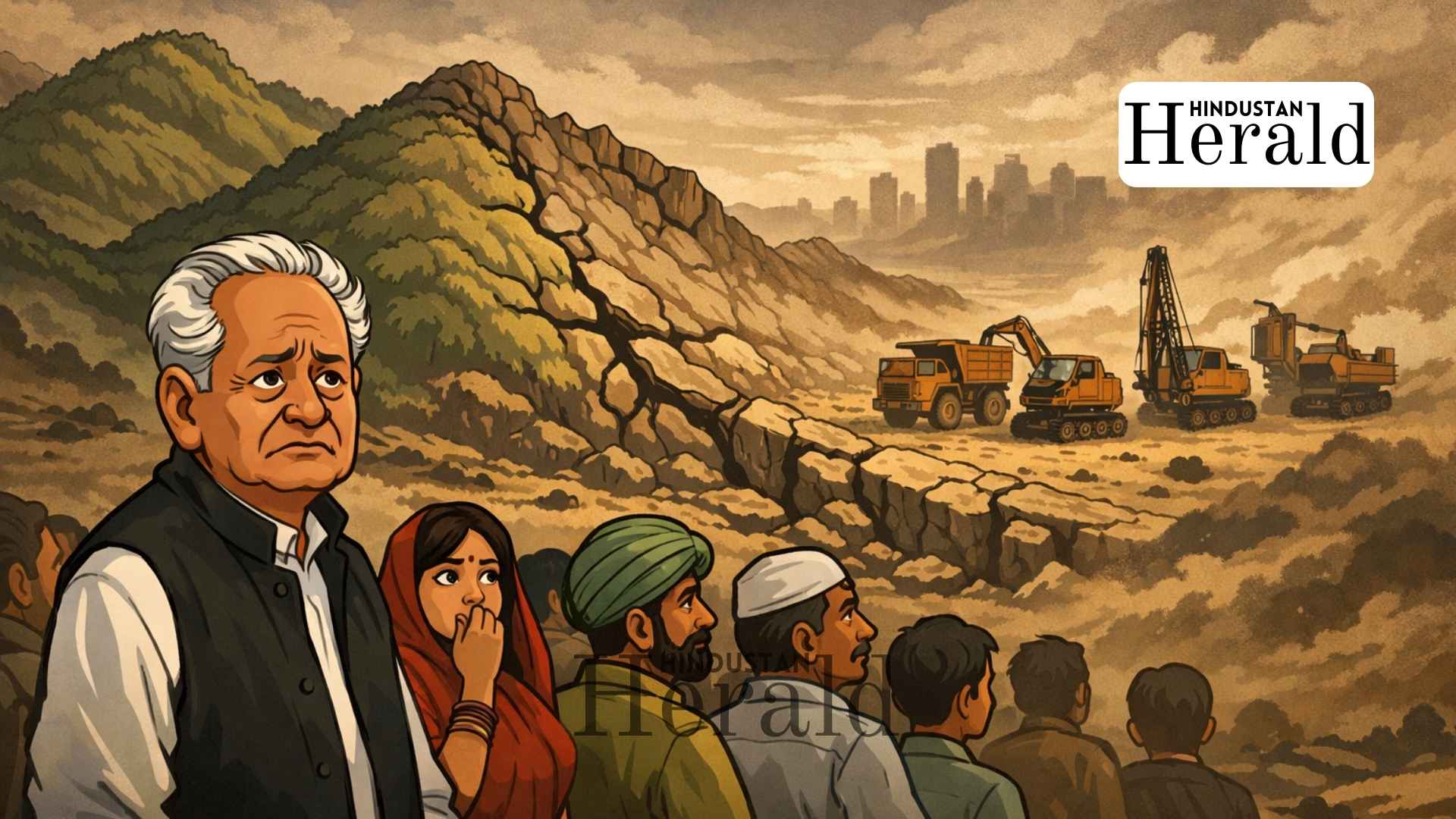
Jaipur, December 19: The Aravali hills are old enough to outlast most arguments made about them. What they have not managed to outlast is paperwork. Every few years, the hills return to public conversation, usually after a court order, a mining clearance, or a quiet policy change. This time is no different. What is different is the unease that followed a Supreme Court decision last month, one that redefined what counts as an Aravali hill.

On paper, the ruling was technical. On the ground, many believe it could be consequential. The court accepted a definition that recognises only landforms rising 100 metres above local relief as part of the Aravali range. Everything else, by implication, sits outside.
For those who know the terrain, that distinction feels artificial.
A Political Voice Breaks In
Former Rajasthan Chief Minister Ashok Gehlot has now publicly aligned himself with the Save Aravali campaign, bringing a political presence to an issue that had largely been argued in courtrooms and environmental seminars.

According to Free Press Journal, Gehlot urged the Union government and the Supreme Court to reconsider the definition. His concern was straightforward. Large portions of the Aravalis do not rise sharply, but they still perform the work of hills.
Speaking on the issue, Gehlot described the range as the lungs of the NCR, a phrase often repeated but rarely acted upon. As reported by Moneycontrol, he warned that weakening protection would worsen dust storms and air pollution across Delhi and its surrounding cities. When he changed his social media profile picture to reflect support for the campaign, reported by The Times of India, it was not seen as a gimmick. It was read as a signal that the issue had crossed into political territory.
Gehlot did not challenge the authority of the court. He questioned the consequences of the decision.
Why Environmentalists Are Unsettled
For environmentalists, the anxiety is rooted in familiarity. Babulal Jaju of INTACH, speaking to The Times of India, said the ruling risks undoing protections that were hard-won and often fragile. The Aravalis, he pointed out, are not dramatic peaks. They are ancient, worn down, and spread unevenly across the landscape.
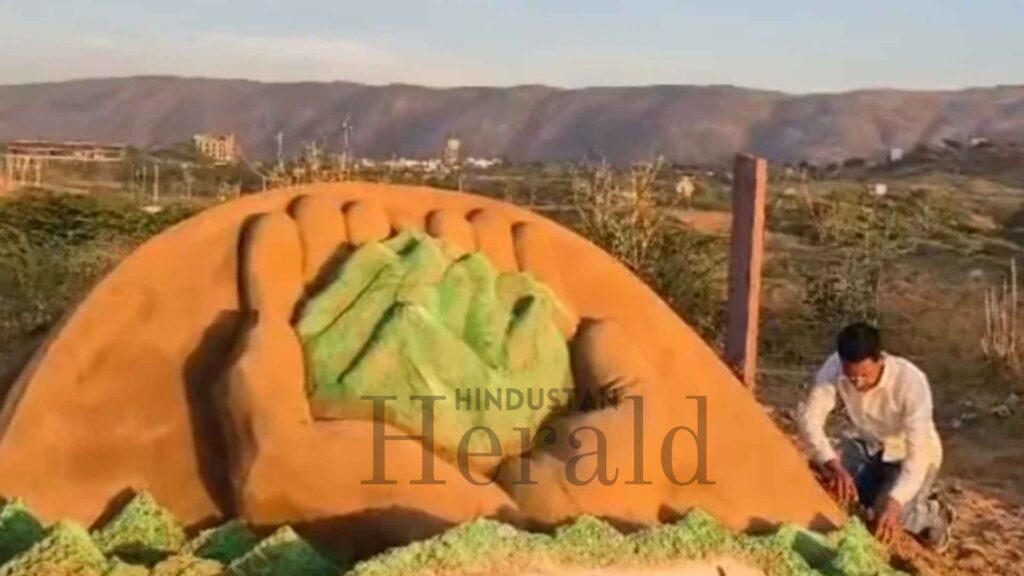
Their value lies underground as much as above it. Jaju warned that once areas fall outside the legal definition, mining pressure will return quickly. Past experience supports that fear. Enforcement in these regions has always followed the law closely. When the law loosens, activity follows.
Experts quoted by The Economic Times added that the hills act as barriers against desert winds, help retain groundwater, and limit dust movement toward the plains. Remove those buffers, and the damage arrives quietly, season by season. This is not speculation. Similar patterns have already been observed where the Aravalis have been degraded.
How a Definition Changed the Conversation
The November 2025 ruling accepted a definition proposed by the Environment Ministry, effectively shifting the legal understanding of the Aravali range. According to The Wire, this leaves significant stretches, particularly in Haryana and Rajasthan, outside formal protection. These areas are not empty land. They include ridges, forest patches, and recharge zones that continue to support nearby settlements.
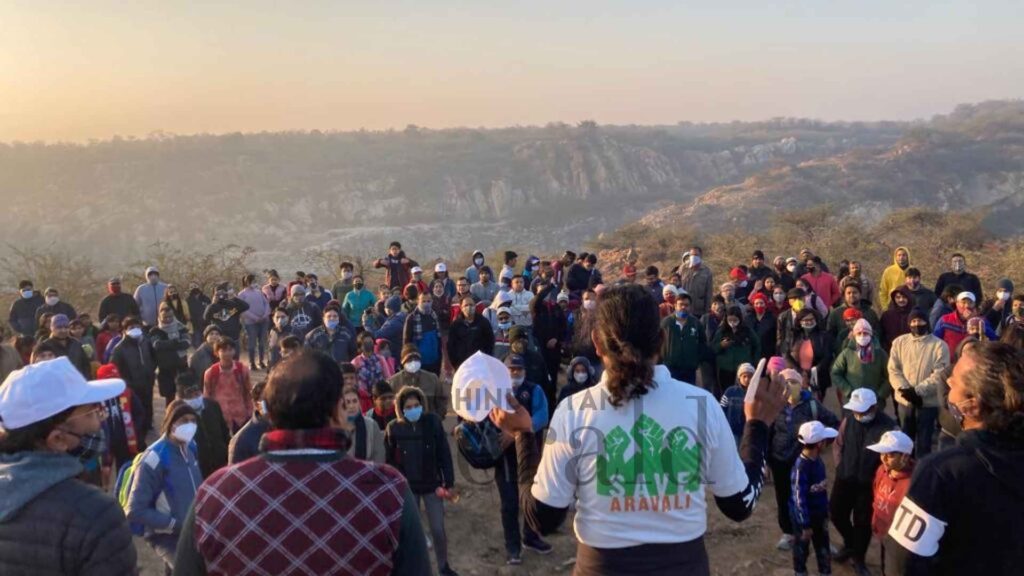
Those in favour of the definition argue it offers administrative clarity. Critics say clarity achieved this way ignores ecological function.
The legal process is not over. Environmental lawyers say review petitions are likely. But until then, the definition holds.
A Video That Changed the Tone
Away from formal institutions, the debate took an unexpected turn. A video by a Rajasthan-based influencer known as “मेवाड़ी बाई” began circulating widely. According to Navbharat Times, the video questioned why landscapes shaped over millions of years were being judged by modern measurements that barely capture their reality.
The tone was direct, unscripted, and emotional. That may explain why it travelled so quickly. For many viewers, particularly in rural Rajasthan, the issue is not theoretical. Water sources, grazing land, and seasonal livelihoods are tied to the hills. The video gave voice to that connection.
Activists say this response matters. Environmental issues often struggle to hold public attention. This one, at least for now, has broken through.
Petitions and an Older Argument
Civil society groups have responded by reviving petitions demanding an ecological definition of the Aravalis. According to Save Aravali, the appeal argues that elevation alone cannot define a living system. The Aravalis are fragmented, eroded, and uneven. That is precisely why they are vulnerable.
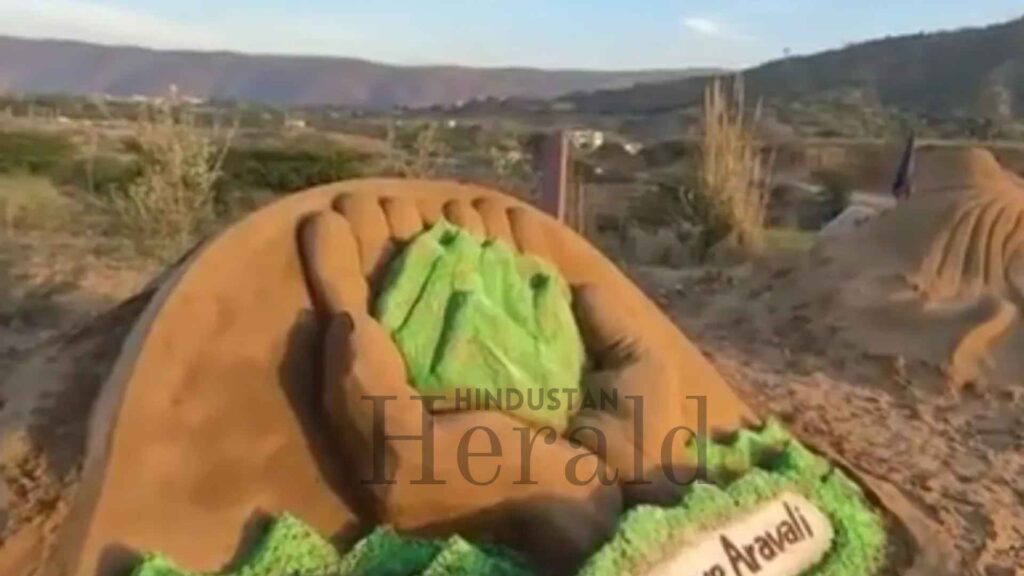
Legal observers note that Indian environmental law has previously acknowledged such complexity. The concern now is whether that approach is being replaced by narrower administrative logic.
Why This Extends Beyond One State
The implications of the ruling stretch far beyond Rajasthan. The Aravali range influences air quality and water availability across north India. Its steady degradation has been linked to rising dust pollution in the NCR and falling groundwater levels. As The Economic Times has reported, the long-term economic and public health costs of losing these systems are likely to outweigh the immediate gains from mining and development.
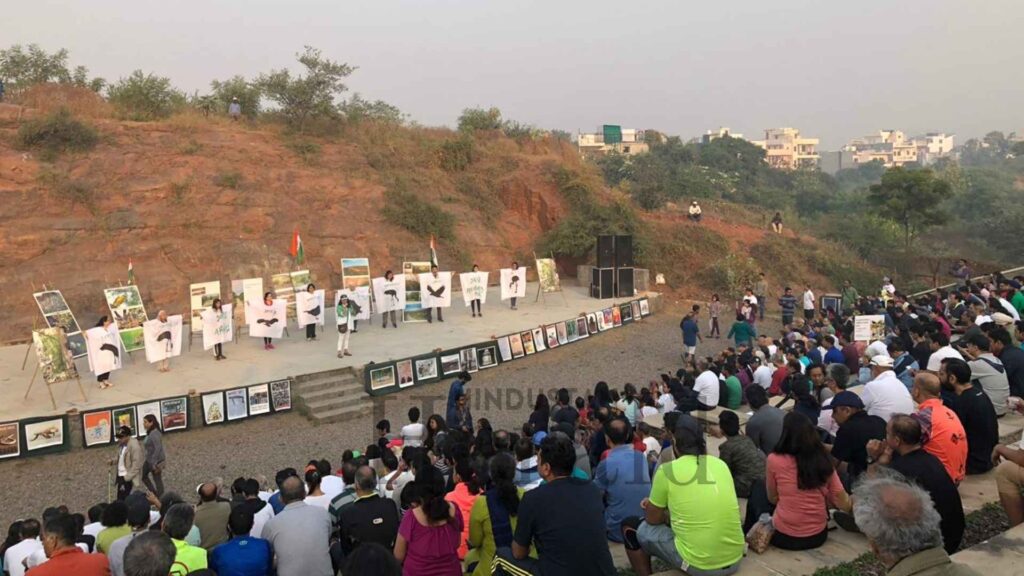
That imbalance sits at the centre of the current dispute.
Where Things Stand
The Save Aravali campaign has gathered momentum, but outcomes remain uncertain. Political backing has brought visibility. Experts have articulated the risks. Citizens have begun paying attention. Whether the legal definition will be revisited is unclear. What is clear is that the Aravali have once again exposed a familiar tension between ecological reality and administrative convenience.
The hills, as always, remain unchanged by the debate. It is the paperwork around them that keeps shifting.
Stay ahead with Hindustan Herald — bringing you trusted news, sharp analysis, and stories that matter across Politics, Business, Technology, Sports, Entertainment, Lifestyle, and more.
Connect with us on Facebook, Instagram, X (Twitter), LinkedIn, YouTube, and join our Telegram community @hindustanherald for real-time updates.

Covers Indian politics, governance, and policy developments with over a decade of experience in political reporting.
- Ananya Sharma

- Ananya Sharma
- Ananya Sharma
- Ananya Sharma