 By Ananya Sharma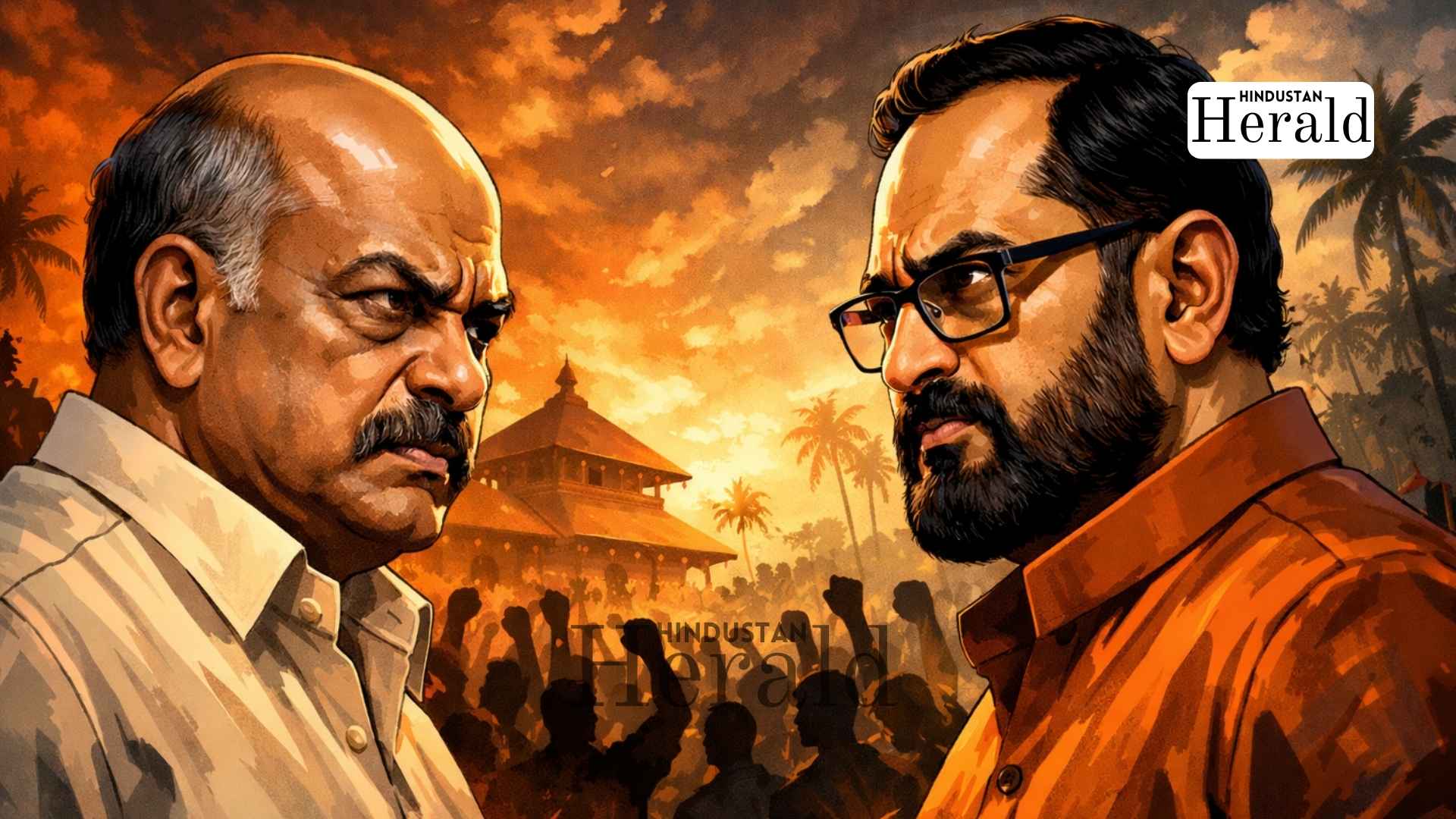
Thiruvananthapuram, April 12: The dust from Kerala’s April 9 Assembly elections has barely settled, but the BJP’s internal fault lines are already cracking open in full public view. Former Director General of Police and long-time BJP sympathiser T.P. Senkumar fired what can only be described as a point-blank salvo at the party’s state leadership on Sunday, targeting state president Rajeev Chandrasekhar by name in a viral Facebook post that has set off fresh debate about the future of the saffron party in Kerala.
Senkumar’s post was not a gentle nudge or a coded criticism. It was a thorough rejection of the party’s electoral strategy, the people who designed it, and the leadership that allowed it to go ahead unchallenged.
A Man Who Says He Warned Them First
In his Facebook post, Senkumar said he had earlier cautioned the party against abandoning its core Hindu base in favour of Christian outreach. “When the BJP moved away from its core Hindu base and went for Christian outreach, I had cautioned about it, including during the Chhattisgarh issue,” he wrote.
That “I told you so” tone is deliberate. Senkumar, a retired IPS officer who has built a reputation as an unfiltered voice on Kerala politics, was not just venting. He was making a political argument that the election results, at least from the BJP’s own internal estimates, seem to support.
As per The Week, the BJP’s internal post-poll survey painted a discouraging picture. The party initially projected wins in around 12 Kerala constituencies in its report to central leadership, but has since been walking back those expectations. Party leadership reportedly now believes their efforts to win over Christian voters fell significantly short.

In other words, the strategy Senkumar opposed is now looking like exactly what he said it would be: a miscalculation that cost the party among both the new voters it chased and the core voters it took for granted.
The Chandrasekhar Charge

The sharpest lines in Senkumar’s post were aimed squarely at Rajeev Chandrasekhar, who took over as BJP Kerala state president after former chief K. Surendran’s tenure ended. Chandrasekhar, a former Union minister and tech entrepreneur, had pitched himself as a fresh face capable of rewriting the party’s fortunes in a state where it has never formed government.
Senkumar alleged in his post that the party in Kerala is being led by someone unfamiliar with the state’s political landscape. “Where has he taken the party?” he wrote, adding that Chandrasekhar “doesn’t even know the ABCD of Kerala.” He further alleged that the state president worked alongside a group that never questioned him.

This is not Senkumar’s first public disagreement with the state leadership. Speaking to ANI weeks before the polls, Senkumar had already stated, “I am not in the BJP because I want to correct them wherever they go wrong. Their policy of taking Twenty20 is bad because they have no votes outside 2-3 panchayats in Ernakulam district.” He also predicted then that the BJP would win only around 16 seats, and called out what he described as “foolish candidates” being fielded by those around Chandrasekhar.
The fact that he is now escalating, post-election, suggests he believes the results have proven him right.
The Church Controversy That Lit the Fuse
To understand why Senkumar’s post landed with such force today, it is necessary to understand what happened in the days leading up to and immediately after April 9.
The BJP fielded several Christian candidates this election cycle as part of its deliberate outreach to the community, banking heavily on goodwill built during the Munambam waqf dispute and its stated support for Church positions. Among the NDA’s candidates were Shone George, BJP state vice-president contesting from Pala, and his father, P.C. George, the eight-time MLA running from Poonjar, along with Union Minister George Kurian from Kanjirappally.
Then, in the days around polling, a storm broke. Reports emerged that on April 8, bishops from the Kanjirappally and Thrissur dioceses reached out to monasteries and affiliated institutions, urging them to support the Congress-Muslim League-led UDF in the elections.
The BJP’s Christian candidates did not take this quietly.
Shone George sharply criticised Deepika, the Catholic Church’s mouthpiece, alleging that certain individuals within the publication were engaging in political activity and distorting news in favour of interest groups. He asserted that a church-run publication must safeguard the interests of the Church and its faithful, not those of external investors. P.C. George, for his part, criticised Bishop Jose Pulickal of Kanjirappally, claiming the bishop had instructed monasteries and convents to support the UDF.
P.C. George’s language was unusually combative. “This barking is for UDF. This is their rotten politics. Deepika did not publish my name or picture because it is run by bastards,” he reportedly told the media on April 10. His son Shone added a warning that if the Church’s stance was against the BJP, the party would have to reconsider its own position.

Deepika hit back. The paper published a hard-hitting editorial asserting that its stand would remain unchanged despite threats and attempts to silence minority voices. “Even if political opportunists come forward with threats asking not to speak about the FCRA, our stand will remain the same,” the editorial stated.
The Catholic Congress under the Kanjirappally diocese condemned P.C. George’s comments, with its president, K.K. Baby Kandathil terming the allegations “baseless” and warning of legal action. Congress MP Dean Kuriakose said Deepika did not need the BJP’s generosity to fulfil its constitutional duties.
Senkumar Doubles Down in Defence of the Georges
What makes Senkumar’s Sunday post particularly significant is not just who he targeted, but who he defended.

Rather than distancing himself from the P.C. George and Shone George controversy, Senkumar doubled down in their favour. He stated that their criticisms of the Church and Deepika were “very correct” and used the episode to reinforce his broader argument: that the BJP’s leadership pursued a community that, in his words, “only takes benefits without giving anything in return.”
Senkumar alleged in his post that certain groups acted only for their own benefit and that the BJP could govern without their support. “They act for their own benefit. It is the BJP that protects them from global Islamic State influences, they should realise that. Any electoral gains are without their support,” he wrote.
This framing, presenting the BJP as a protector of Christians against external threats while criticising the community for not reciprocating, is a pointed political argument that will find takers in certain sections of the Hindu voter base, even as it alarms others within the party who worry about further alienating minority communities.
The FCRA Thread Running Through All of It
The quarrel between the BJP’s Christian allies and the Church leadership did not emerge in a vacuum. Running beneath all of this is the proposed FCRA Amendment Bill, introduced in the Lok Sabha on March 25, which seeks to regulate foreign funding to religious and civil society organisations.

According to PTI, Kerala’s churches expressed opposition to the proposed amendments. P.C. George responded by saying that Union Home Minister Amit Shah had assured that the amendment would not create difficulties, and would only mandate disclosure of foreign funding details.
Christian churches in Kerala have broadly expressed opposition to the bill, and Deepika had been publishing a series of critical articles in the run-up to the election. Shone George alleged that the paper worked against the BJP and warned that “those bishops who speak politics will be seen as politicians by us.”
The FCRA row, in effect, became a proxy battle for whether the BJP’s gamble on Christian outreach had any durable foundation, or whether it was always an alliance of convenience that would collapse under the first serious test.
What the Internal Numbers Suggest
According to The Week, the BJP’s own post-poll assessment now indicates dissatisfaction at the leadership level, as results failed to deliver the decisive breakthrough the party had anticipated. The party maintains that securing even a marginal vote share from the Christian community in key constituencies represents progress, but that framing reads more as damage control than genuine confidence.
Notably, the party leadership reportedly refrained from publicly blaming P.C. George or Shone George for the post-election friction with Church leadership, treating their stance as separate from the party’s broader strategy. That distinction, convenient as it is, may be difficult to sustain as the internal debate intensifies.
The Bigger Question for Kerala BJP
The tension in play here is not entirely new. A Swarajya Mag analysis from last year had already flagged that Chandrasekhar’s real challenge in Kerala was internal rather than external, noting that the state unit was “plagued by factions” and that veterans such as V. Muraleedharan and P.K. Krishnadas led groups that would not make things easy for the new president.
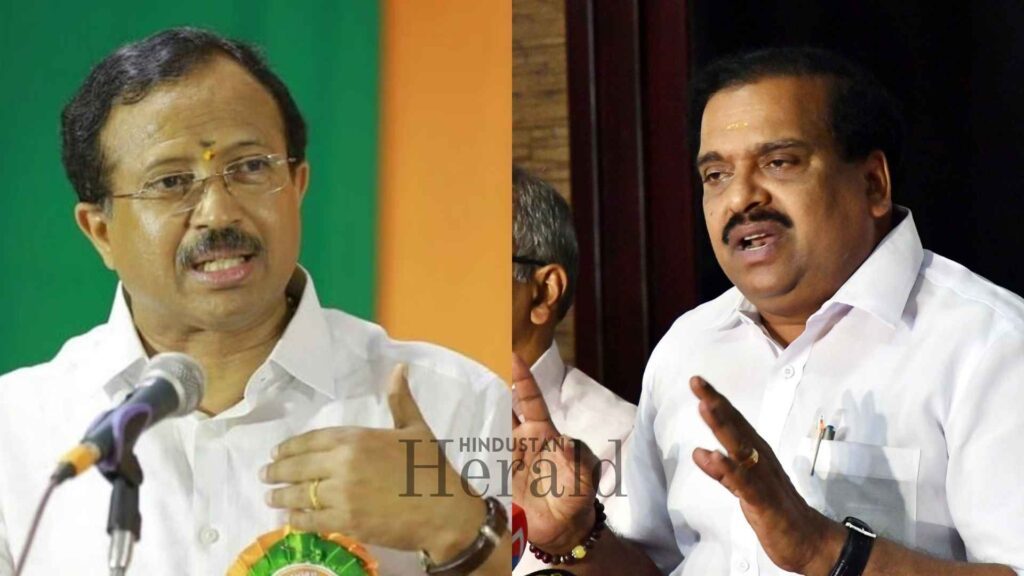
What Senkumar has done is bring that internal fracture into the open at the worst possible time, when election results have yet to be declared, and every narrative carries weight.
The party’s Christian outreach experiment was ambitious, and in theory defensible. Kerala’s Christian community is politically significant, socially organised, and geographically concentrated in constituencies the BJP needs to win to form a government. The logic of chasing those votes was not irrational.
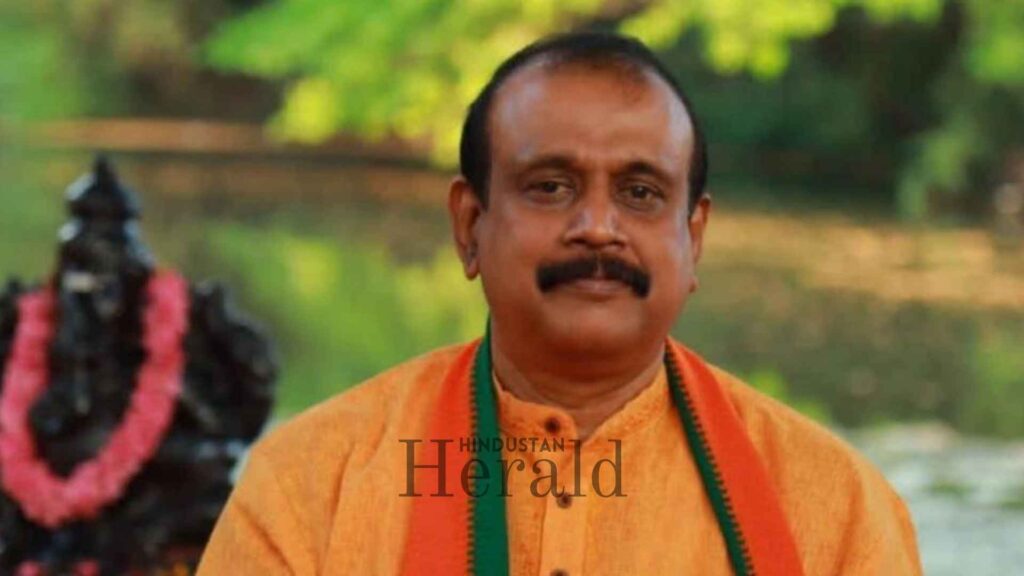
But the execution, according to Senkumar and now apparently according to the party’s own internal surveys, went wrong. Whether that was because the outreach was poorly managed, because the FCRA amendment undermined it at a critical moment, or because the Church’s leadership was always going to align with the UDF, regardless, is a question the party will have to answer honestly.
Senkumar, for his part, has made clear where he stands. The BJP’s core Hindu voter base, in his view, was the foundation that should never have been compromised. And he believes the election results are proving that point, loudly.
The state leadership, meanwhile, has reportedly described his remarks as “personal views” and is trying to keep a lid on the public fallout. For now, that containment effort appears unlikely to hold.
Stay ahead with Hindustan Herald — bringing you trusted news, sharp analysis, and stories that matter across Politics, Business, Technology, Sports, Entertainment, Lifestyle, and more.
Connect with us on Facebook, Instagram, X (Twitter), LinkedIn, YouTube, and join our Telegram community @hindustanherald for real-time updates.

Covers Indian politics, governance, and policy developments with over a decade of experience in political reporting.
- Ananya Sharma

- Ananya Sharma
- Ananya Sharma
- Ananya Sharma