 By Rajiv Menon
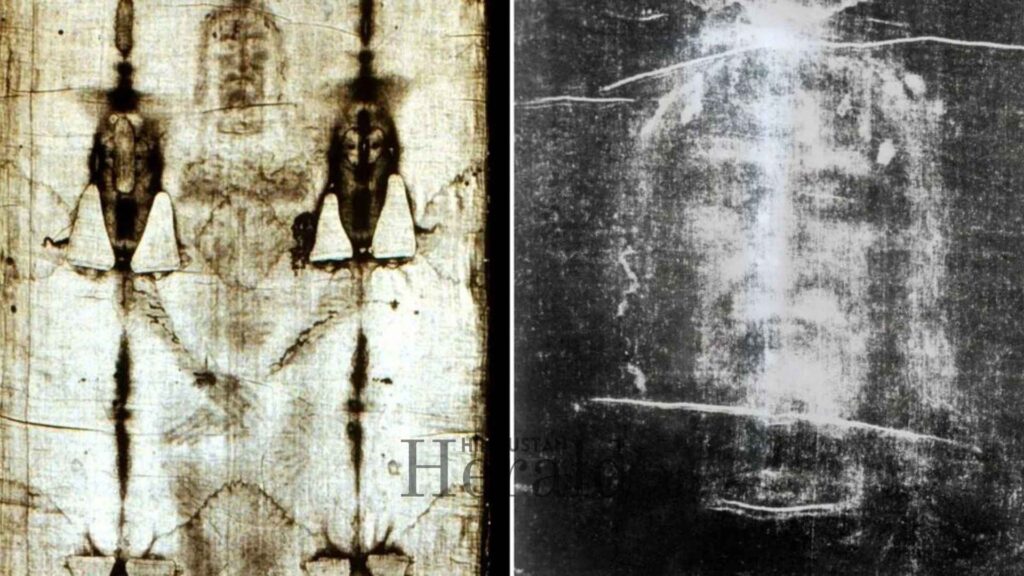
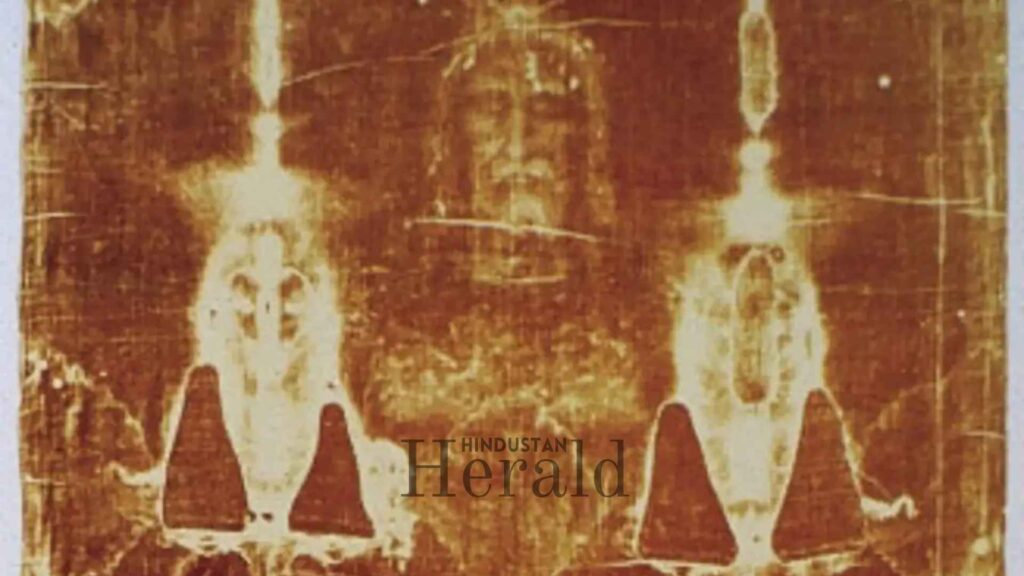
New Delhi, April 1: There is a piece of cloth sitting in a cathedral in Turin, Italy, that has been making people argue for centuries. Not just argue, but genuinely lose sleep, dedicate careers, question faith, and occasionally make enemies. It is 4.4 metres long, yellowed with age, and carries a faint human imprint that millions of people believe is the face and body of Jesus Christ pressed into linen at the moment of burial. Scientists have poked at it, prayed over it, carbon-dated it, and photographed it in wavelengths the human eye cannot see. Nobody has settled anything.
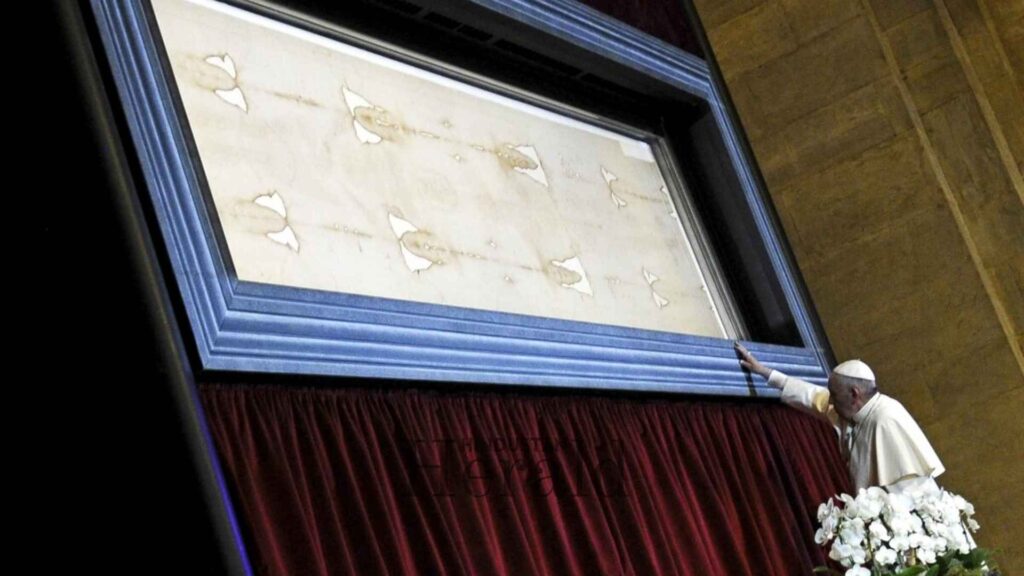
Now a team of geneticists from the University of Padova in Italy has added a new layer to this already impossible puzzle. Their latest DNA analysis of material collected from the Shroud back in 1978 has turned up something that nobody in the mainstream debate was quite prepared for. Nearly 40 percent of all the human genetic material found on the cloth traces back to Indian lineages. Not the Middle East. Not medieval France. India.
It landed on the internet like a small bomb.
The Samples, the Science, and the Surprise
The study goes back further than the headlines suggest. In 1978, a major international research effort called the STURP project the Shroud of Turin Research Project ran exhaustive tests on the cloth. As part of that work, scientists vacuumed microscopic dust particles directly from the surface of the linen. That material was preserved and handed off for further analysis. Professor Pier Luigi Baima Bollone, a forensic medicine specialist who had long worked on the Shroud, was one of the people who kept those samples safe. He passed away before this latest study was published, but his work made it possible.

Professor Gianni Barcaccia of the University of Padova took those same 1978 samples and put them through Next Generation Sequencing, a modern genetic technique capable of identifying DNA from extraordinarily small and degraded fragments. What he and his colleagues found was not a clean picture. It was a chaotic, layered, deeply strange biological record of everywhere and everyone the Shroud has ever been.
The human DNA breakdown went roughly like this: just over 55% from Near Eastern populations, around 38.7% from Indian lineages, and under 6% from Europeans. That last figure is what stops you. If this cloth was woven in 13th-century France by a medieval forger, the genetic fingerprints of the people who made it, handled it, and venerated it across centuries of European church history should be all over it. They are barely there.
The researchers were careful about their language. They wrote that the Indian DNA presence is “unexpected” and is “potentially linked to historical interactions associated with importing linen or yarn from regions near the Indus Valley.” Not proof of anything definitive. A lead, not a verdict.
India Was Not Peripheral to the Ancient World
This is the part that gets lost when the story is reduced to a social media headline about Jesus and India. The connection being proposed here is not mystical. It is commercial.
Ancient India was a textile powerhouse. The Indus Valley Civilisation, which goes back to around 3300 BCE, produced some of the finest woven fabrics in the ancient world. Long before Rome existed as an empire, Indian linen and cotton were moving westward through Persian Gulf ports, across Arabian Sea shipping lanes, overland through Central Asia on the routes that would eventually become the Silk Road. When Rome did rise, it developed a serious habit for Indian luxury goods. Pliny the Elder, writing in the first century CE, complained bitterly that Roman gold was draining eastward to pay for spices, silks, and fine cloth from the subcontinent.
Vatican News, in its coverage of the new study, pointed to something specific: rabbinic texts that reference linen described using a term transliterated as “Hindoyin” understood to refer to the Indian subcontinent being present at the Temple of Jerusalem, where it was used for the ceremonial garments of the High Priest during Yom Kippur. That is a concrete, textual reference to Indian linen circulating in the exact part of the ancient world where the Shroud’s story supposedly begins.
The researchers also identified a mitochondrial haplogroup called R0a in the DNA a genetic lineage found commonly across the Arabian Peninsula and East Africa, with patterns that extend into South Asian populations. That supports a picture of the cloth as a genuine traveller, passed through different hands across different civilisations, over a very long time.
Alongside all the human genetics, the plant DNA on the Shroud was equally revealing. Researchers found traces of cowpea Vigna unguiculata and other members of the Fabaceae plant family, both strongly associated with the Indian subcontinent. There were also markers from genera like Picea and Prunus. None of this is conclusive on its own. But combined, it builds a coherent case for a cloth that either came from India or spent serious time in Indian hands before making its way westward.
Everything Else Living on That Cloth
It is worth stopping for a moment to appreciate what else turned up in the analysis, because it reframes the whole conversation about what the Shroud actually is as a physical object.
Barcaccia’s team found DNA from cats, dogs, chickens, cattle, goats, sheep, pigs, horses, deer, and rabbits. They found fish: grey mullet, Atlantic cod, ray-finned fishes. Marine crustaceans. Flies, aphids, skin mites, ticks. They found carrots, peppers, tomatoes, potatoes, and wheat. Tomatoes and potatoes are from the Americas. They did not exist in Europe or the Middle East until after Columbus. Their presence on the Shroud means the cloth was still collecting biological material well into the modern era.
What that tells you, practically speaking, is that isolating any “original” DNA from this cloth, the DNA of whoever it actually wrapped at the moment of its creation, is essentially impossible now. The researchers acknowledged this themselves. Too many people, across too many centuries, have breathed on it, touched it, wept over it, and studied it. The cloth has absorbed the world.
That is not a reason to dismiss the Indian connection. If anything, the scale and specificity of the Indian genetic presence, nearly 40% of all human DNA recovered, from a lineage that has no obvious reason to dominate if the cloth were simply a French medieval creation, is what makes it worth taking seriously.
The Pushback Is Real, and It Matters
Anders Gotherström of Stockholm University is one of the most respected archaeogeneticists working today, and he was direct in his scepticism. He said he sees no reason to doubt that the Shroud is French, dating to the 13th or 14th century. He acknowledged there has been some debate around the famous 1988 radiocarbon dating experiment but called the results “sufficiently robust” a phrase that carries weight coming from someone in his field.
That 1988 study is the anchor of the sceptic’s position, and it deserves honest treatment. Three independent laboratories, Oxford, Arizona, and the Swiss Federal Institute of Technology in Zurich, each tested samples from the cloth. All three arrived at the same date range: 1260 to 1390 CE. That is not a marginal study. Three separate institutions, using accelerator mass spectrometry, landing in the same medieval century, is a serious result.
Barcaccia’s team does not directly contradict the radiocarbon dating. Their argument is more subtle. They suggest that for genetic material from this many distinct global regions, South Asia, the Near East, the Americas, and East Africa to have embedded itself so thoroughly into the cloth’s fibres, the exposure would have had to have been prolonged and varied. Whether that timeframe stretches back beyond medieval France, the data cannot definitively say.
As it turns out, this is also where the study’s main limitation sits. It has not been through peer review. The paper is a preprint posted on bioRxiv, which means other scientists have not yet formally examined the methodology, the reference databases, or the statistical models. That is not a disqualification. Peer review is a process, not a gate, but it means nobody should be announcing conclusions just yet.
What India Makes of All This
The story hit Indian social media in the last week of March and did not slow down. An account on X called Indian Tech and Infra posted the finding on March 31, and within hours it had cleared 284,000 views. The comment sections were predictable in their range: pride, scepticism, jokes, theology, nationalism, and genuine curiosity all showed up in roughly equal measure.
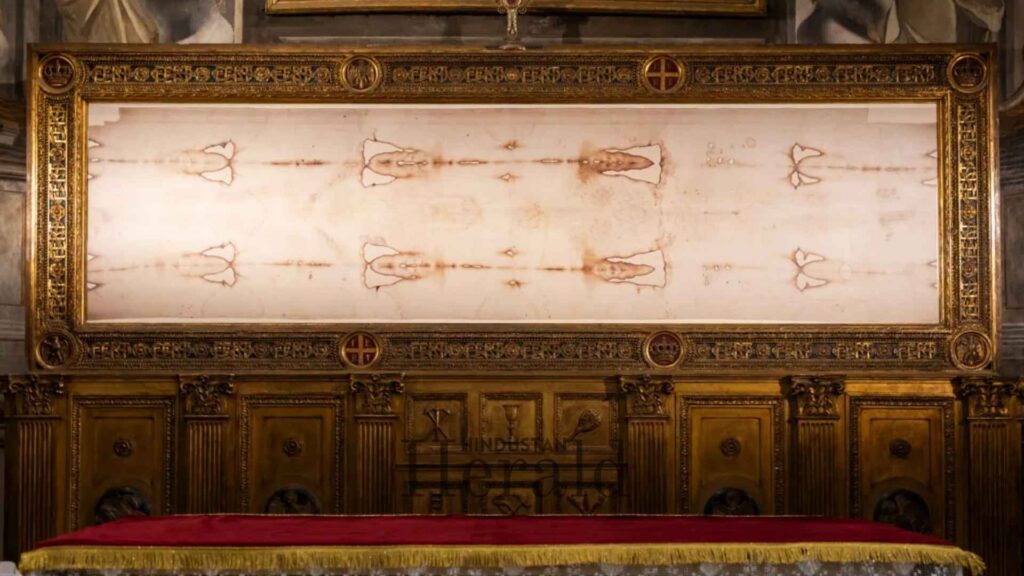
For a section of Indian readers, this lands as something more than a science story. It connects to a long-standing frustration with how ancient Indian civilisation has been positioned in global historical narratives as a regional story rather than a central one. The idea that linen from the Indus Valley may have ended up as the burial cloth of the figure at the centre of Western religious history is, for many people, a provocation in the best sense of the word.
The Goa Chronicle, in a thoughtful piece published this week, argued that this finding is “not definitively proof of an Indian origin, but it disrupts the certainty of a purely European narrative.” That is probably the most honest framing available right now.
The Cloth Still Has No Final Answer
The Catholic Church has never taken a hard position on whether the Shroud is real. Its stance has always been to allow veneration without demanding belief a careful, centuries-old ambiguity that has served it well. Vatican News covered Barcaccia’s new findings with interest, focusing on the confirmed Middle Eastern DNA as consistent with the cloth’s documented journey through that region. The Indian angle was noted but not overplayed.
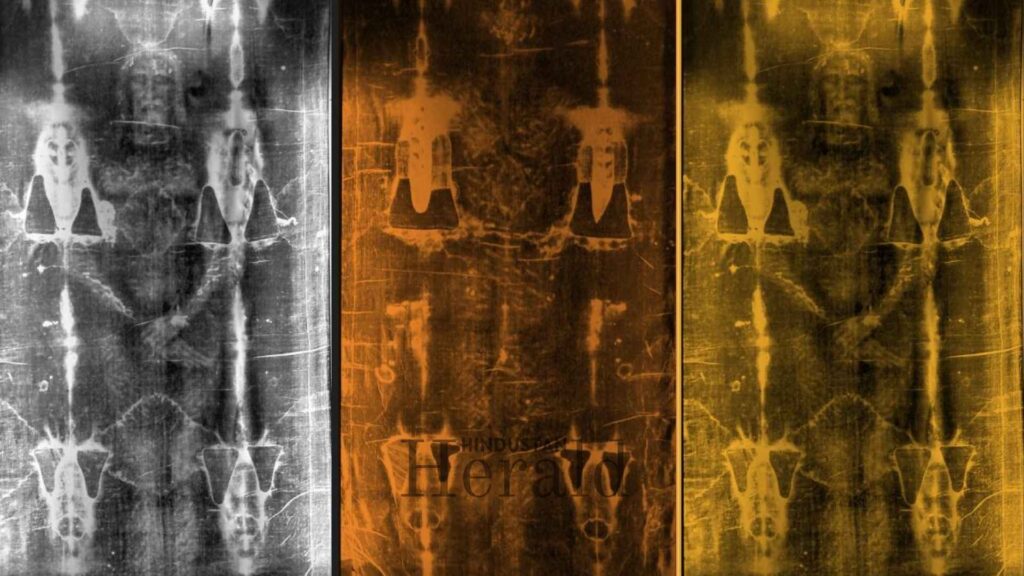
That is the right instinct. Because what this study actually does beneath all the headlines is remind you that the Shroud of Turin is a deeply human object. Whatever it is, wherever it came from, it has been touched by an extraordinary number of people across an extraordinary span of time. It carries the genetic traces of pilgrims and priests, merchants and scientists, animals and plants from five continents. It is a biological record of the ancient and medieval world pressed into linen.
Whether it ever touched the body of Jesus Christ is a question science may never resolve. But the idea that the yarn in that cloth was once spun somewhere near the Indus Valley, that Indian hands may have worked it into fabric before it began its long journey toward the most watched and argued-over relic in human history, is not a wild claim anymore. It is a hypothesis with data behind it.
For now, it is in the hands of the peer reviewers.
Stay ahead with Hindustan Herald — bringing you trusted news, sharp analysis, and stories that matter across Politics, Business, Technology, Sports, Entertainment, Lifestyle, and more.
Connect with us on Facebook, Instagram, X (Twitter), LinkedIn, YouTube, and join our Telegram community @hindustanherald for real-time updates.

Specializes in South Asian geopolitics and global diplomacy, bringing in-depth analysis on international relations.
- Rajiv Menon

- Rajiv Menon
- Rajiv Menon
- Rajiv Menon