
 By Sandeep Verma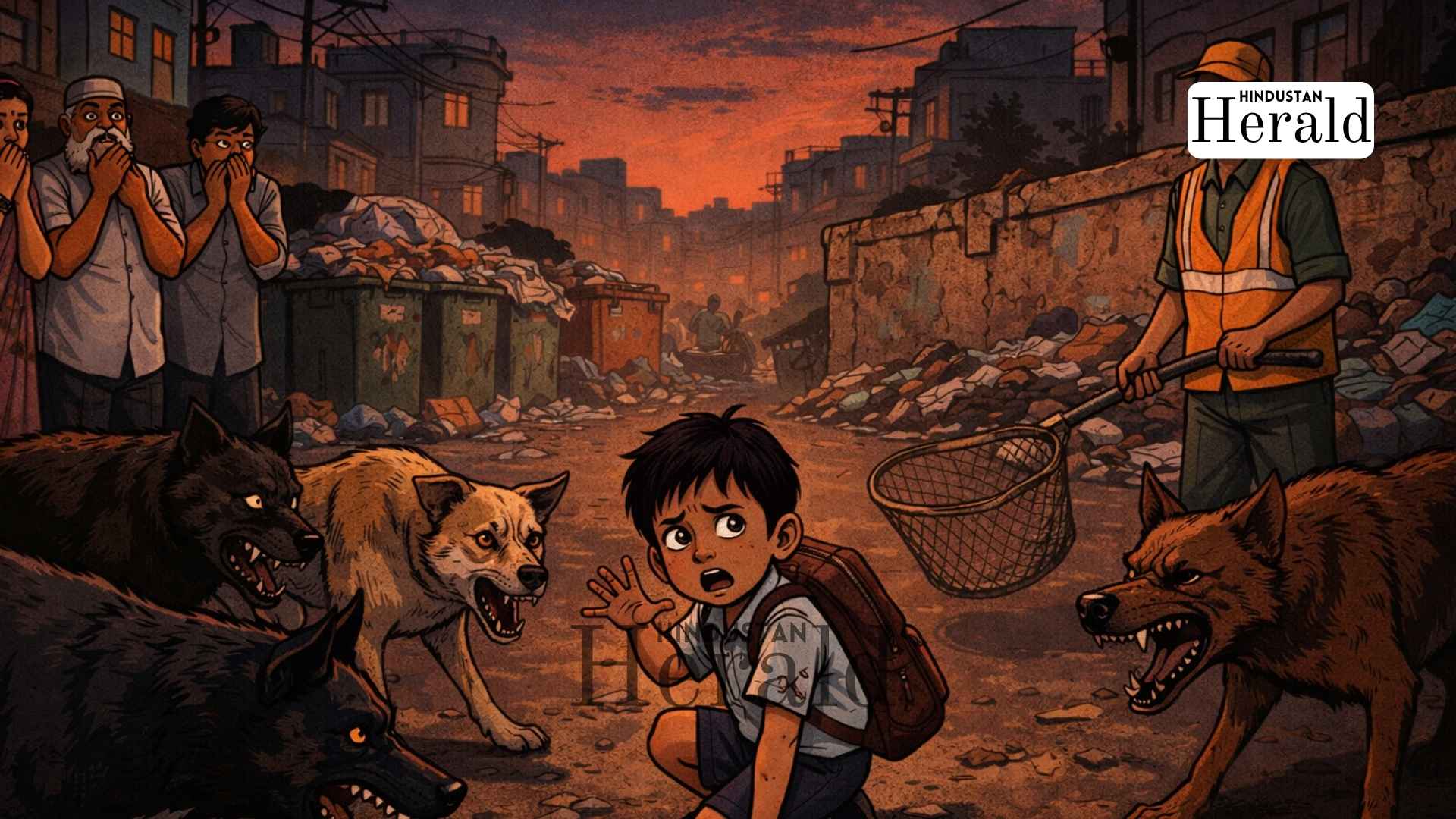
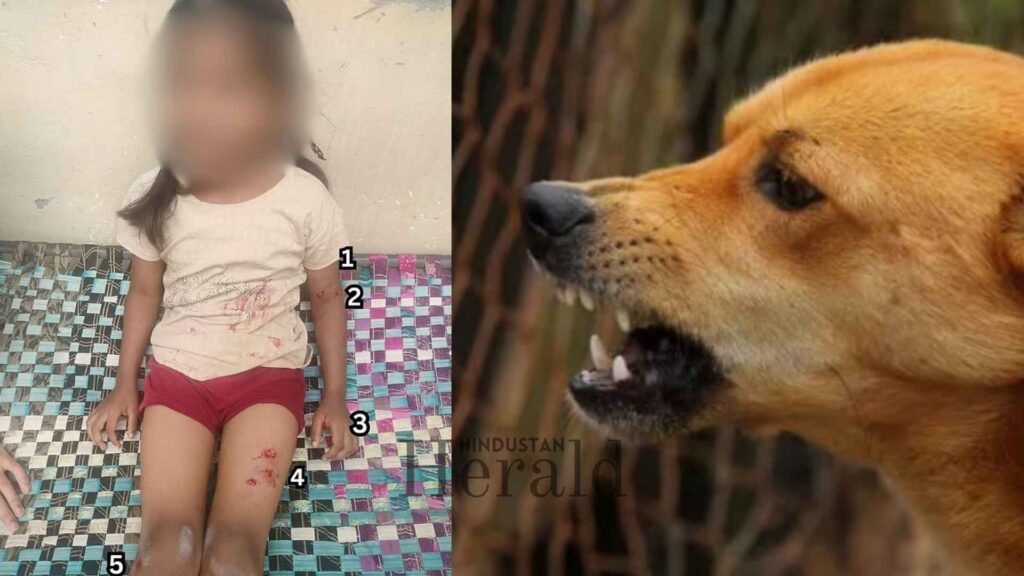
New Delhi, April 6: A six-year-old child bitten by a stray dog, footage of the moment circulating on X and other platforms within hours, and a country that still has not figured out what to do with its estimated 65 million strays. That, in short, is where India finds itself on this Sunday. The incident, which reportedly took place in the Mumbai-Delhi corridor and went viral on social media today, is the latest entry in what has become a deeply uncomfortable national pattern. It is not new. It is not isolated. And increasingly, it is not something that authorities can dismiss with a press release about vaccination drives.
A Country That Leads the World in the Wrong Ways
Let us start with the numbers, because they tell the story more honestly than any government statement will. India has the highest number of stray dog attacks in the world and accounts for 36 percent of all global rabies deaths. The country also holds the unenviable record of having the largest stray dog population anywhere on the planet, with many rabies deaths going entirely unreported.
The Ministry of Family and Health Welfare recorded 2.5 million dog bite cases in a single year, while data from Mars Petcare puts the total number of stray dogs in India at approximately 65 million. Read that again: sixty-five million. To put that in perspective, that is more than the entire population of the United Kingdom, roaming Indian streets with no consistent policy framework governing their management.
When a six-year-old gets bitten and the video goes viral before the child even reaches hospital, the public reaction is not surprise. It is exhaustion. Because this has happened before, and before that, and before that.
What the Videos Keep Telling Us
The power of social media in forcing this issue onto the national agenda cannot be understated. Researchers who study dog behaviour have noted that viral videos trigger public demands for governmental action in a way that dry statistics simply cannot. Today’s footage from Mumbai and Delhi is doing exactly that.

This is not the first time cameras have captured what India’s stray dog crisis looks like up close. As recently as March 2026, footage of a young boy from Mirzapur, Uttar Pradesh, who had been bitten by a dog four months earlier and had received only two doses of the anti-rabies vaccine, went viral across social media platforms. The child was reportedly exhibiting neurological symptoms, and the footage triggered widespread concern about healthcare access and rabies awareness. The boy had reportedly been turned away from multiple hospitals, and public response was a mix of grief and fury.

Just two days before today’s incident broke online, a controversy erupted at Delhi’s international airport after animal rights activists accused authorities of forcibly relocating long-time community dogs from the premises. Delhi airport acknowledged that over thirty dog bite cases had been reported within the airport ecosystem in the preceding three months, with one dog attacking two passengers on consecutive days in late March before being spotted chasing passengers again on April 2. The airport’s response triggered its own backlash, this time from welfare groups who argued that removing vaccinated, sterilised dogs from established territories only creates new dangers.
Both stories were running simultaneously on X by Saturday evening. By Sunday morning, the child bite footage was on top of both of them.
Mumbai’s Pockets of Success, Delhi’s Persistent Failure
The frustrating part of this debate is that workable models do exist within India itself. In Mumbai, approximately 95 percent of the city’s stray dogs have been sterilised through consistent implementation of re-vaccination and welfare programmes, according to Abodh Aras, CEO of the non-profit Welfare of Stray Dogs. A public health system geared for post-bite treatment, combined with school programmes on dog bite and rabies prevention, has contributed to making Mumbai a relative success story. States like Goa have eliminated rabies altogether, while Sikkim has also managed to bring it under control.
Still, the Mumbai model requires money, sustained institutional will, and NGO partnerships working in concert over years. Not every city has that. Not every city is even trying.
Anjali Gopalan, managing trustee at All Creatures Great and Small, a Delhi-based animal welfare non-profit, has acknowledged that India has a stray dog problem as well as a parallel rabies problem, and that steps must be taken to address both. That candid admission from within the animal welfare community matters. It signals that responsible voices on the pro-welfare side are not pretending the crisis does not exist, even as they push back against demands for culling.
The Law, the Courts, and the Impossible Middle Ground
India’s legal architecture on this issue is a study in good intentions colliding with reality. A 2001 law mandates that stray dogs be picked up, neutered, vaccinated against rabies, and then released back to where they were found. Killing stray dogs is illegal. The law requires sterilisation and vaccination, but experts have consistently flagged a severe lack of implementation across most municipal bodies.

The Supreme Court of India has been navigating this thicket in a suo motu case that has now stretched across multiple hearings. The case was initiated in July 2025 following a Times of India report about a six-year-old girl named Chavi Sharma who died in Delhi’s Pooth Kalan area after contracting rabies from multiple stray dog bites. In August 2025, the court directed the Delhi Government, the Municipal Corporation of Delhi, and NCR authorities to pick up all stray dogs and shift them to shelters. But the order proved unworkable because shelters for millions of dogs simply do not exist.
A three-judge bench subsequently modified the order, acknowledging that the original direction was too harsh and impractical. It ruled that dogs displaying aggressive behaviour or infected with rabies should be kept in separate shelters and not released back to public spaces, but left the definition of “aggressive behaviour” unresolved.
In November 2025, the court directed that dogs be removed from schools, hospitals, and public transport zones nationwide. By January 7, 2026, it instructed authorities to fence and secure all 1.5 million schools and colleges in India from dogs, to be completed within eight weeks. Whether those fences have materialised is a question local reporters across India have been asking and not getting clear answers on.
The court also expressed displeasure in January 2026 over remarks made by former Union Minister Maneka Gandhi criticising its orders in the stray dog matter, observing that she had committed contempt of court. It also signalled willingness to impose heavy compensation on states and on dog feeders for every bite and death resulting from failure to make proper arrangements.
The Feeder Question
No part of this debate is as socially combustible as the question of who feeds stray dogs and why. Across Indian cities, a committed community of feeders, often middle-class urban residents, maintain daily feeding routines for neighbourhood dogs. Preliminary research in Delhi suggests that dogs organise into packs around specific households where dedicated feeders can meet nearly all of their dietary needs. This supports far higher dog densities than scavenging ever could, and it is here that the ancient cultural compact between Indians and street dogs collides directly with modern urban design.
The same dog that wags its tail at the person who feeds it every morning can bite someone it does not recognise by evening. Indian streets are multi-use spaces, and in tropical climates, waste pickers and blue-collar workers often operate at night, precisely the hours when dogs are most territorial and when the wealthier residents who feed them are asleep.
Animal welfare advocates have also warned that relocating community dogs, who are territorial by nature, increases conflict among existing dog populations and creates fresh hazards. A dog relocated from Andheri to Thane is not a solved problem. It is a new one.
As it turns out, even the Supreme Court was forced to confront this when it directed in January 2026 that it would not intervene in allegations of harassment of women who feed stray dogs by anti-feeder vigilante groups, calling it a law-and-order matter. The harassment of feeders is itself now a documented phenomenon, running parallel to the attacks on humans by dogs. Both sides of this debate have grievances, and both are right about at least some of what they are saying.
The Rabies Gap
What often gets lost in the safety-versus-welfare argument is a third dimension that is, arguably, more actionable in the short term: post-bite treatment access.
Public health experts point to the fact that another serious concern often goes unnoticed alongside the stray dog attack figures: the lack of awareness about timely rabies vaccination after dog bites. Without proper treatment, rabies remains one of the deadliest yet entirely preventable diseases.
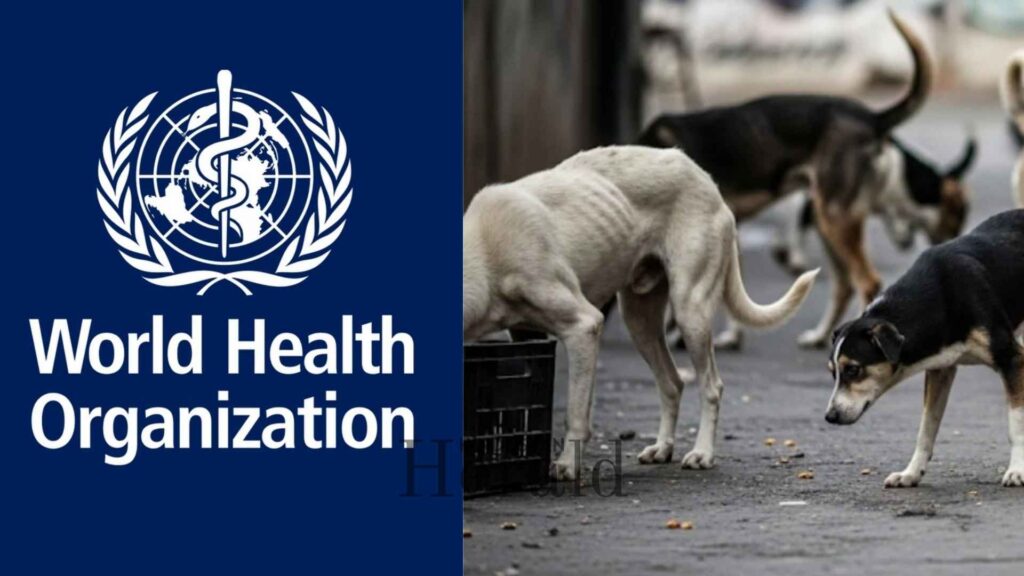
Rabies is almost always fatal unless a series of injections can be administered promptly after a bite. Dogs are the source of the vast majority of human rabies deaths globally and contribute up to 99 percent of all rabies transmissions to humans. India is endemic for rabies, accounting for more than a third of the world’s rabies deaths, according to the World Health Organization.
The Mirzapur boy’s tragedy earlier this month underscored this gap brutally. His family reportedly sought treatment but could not access it consistently. In a country with 2.5 million annual dog bite cases, post-exposure prophylaxis needs to be available at every primary health centre, not just district hospitals. Right now, it is not.
What Actually Works, and What India Keeps Avoiding
The government’s current approach follows the Animal Birth Control rules, updated in 2023, which ask municipal bodies to neuter and vaccinate dogs to control their populations. Sterilisation has proved effective in countries like Singapore and Japan, but it is an expensive process and Indian administrative bodies often lack the resources to implement it at the required scale.
The scale of the problem is visceral at ground level. In Gwalior alone, 365 dog bite cases were reported on a single day in February 2026, with three separate hospitals treating over a hundred patients each. These are not statistics from a failing small town. Gwalior is a major city. If civic bodies cannot contain this in Gwalior, the question of national scalability becomes very uncomfortable very quickly.
For now, the child bitten today in what social media is calling a Mumbai-Delhi incident is receiving treatment, reportedly. The video is circulating. The debate is raging again. The Animal Birth Control programme will be mentioned in press statements. The Supreme Court will be cited as evidence that institutions are engaged.
And in six months, or six weeks, there will be another video.
The Harder Conversation India Needs to Have
India may have reached what some researchers are calling “peak mutualism” in its relationship with street dogs. The same animal that wags its tail at familiar feeders may bite a stranger. This is not irrational aggression; it is territorial protection born of deep association with specific human communities. Western cities culled their street dogs long ago because social priorities were more uniform. India’s cultural diversity means no such consensus exists.
That diversity is worth protecting. But a six-year-old child is not a fair price for it.
The answer is not culling. The evidence on that is clear from Kerala’s failed 2016 attempt and the public fury it generated. The answer is also not the status quo, where the ABC programme runs at a fraction of the required coverage, shelters do not exist, post-bite treatment is inaccessible to the rural poor, and viral videos are the primary mechanism by which the government is forced to notice the problem at all.
What India needs is a properly funded, centrally monitored Animal Birth Control and Rabies Elimination Programme that treats this as the public health emergency it is: ring-fenced budget allocations to municipal bodies, third-party verification of sterilisation numbers, post-exposure prophylaxis at every government health facility, and a national shelter infrastructure plan that is actually costed and built. Not ordered. Built.
Until then, the videos will keep coming. And India will keep having the same argument.
Stay ahead with Hindustan Herald — bringing you trusted news, sharp analysis, and stories that matter across Politics, Business, Technology, Sports, Entertainment, Lifestyle, and more.
Connect with us on Facebook, Instagram, X (Twitter), LinkedIn, YouTube, and join our Telegram community @hindustanherald for real-time updates.

Regional journalist bringing grassroots perspectives and stories from towns and cities across India.
- Sandeep Verma

- Sandeep Verma
- Sandeep Verma
- Sandeep Verma