 By Ananya Sharma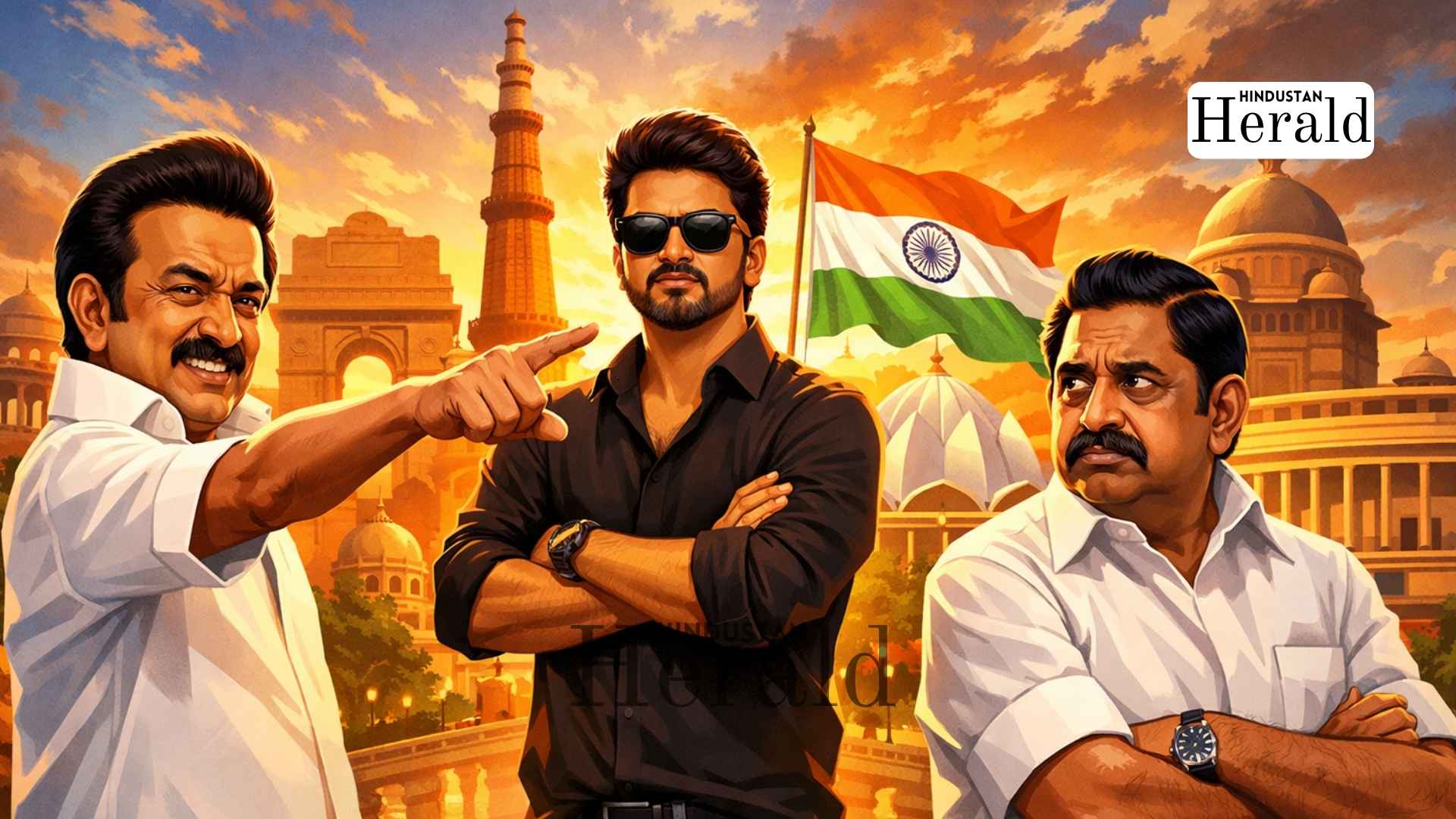
Chennai, March 20: Tamil Nadu Chief Minister M.K. Stalin wrote an open letter to his party workers on Thursday asking one simple question about opposition leader Edappadi K. Palaniswami: why exactly is this man in Delhi?
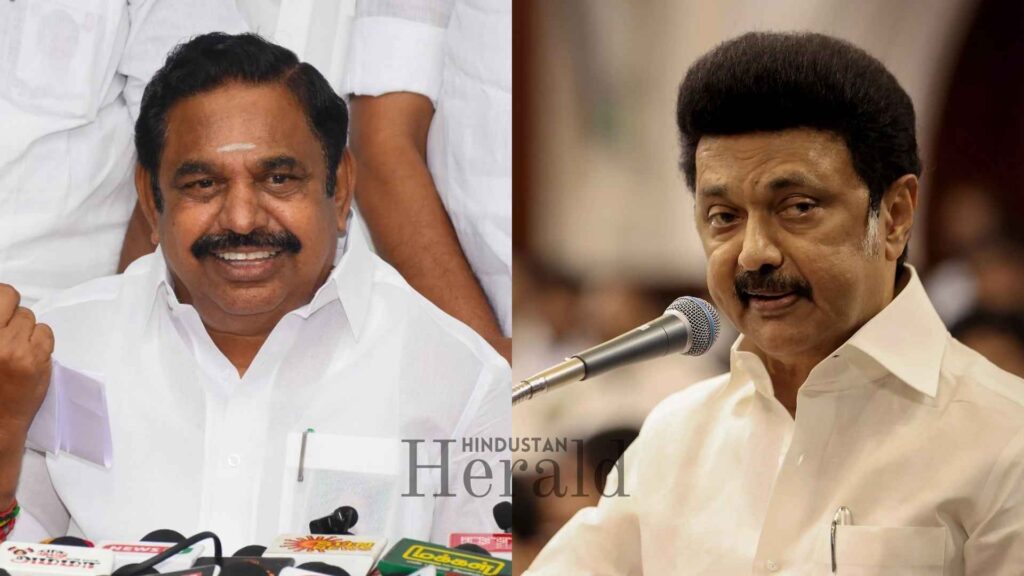
It sounds like a simple question. It was not.
With assembly elections just 34 days away, the answer to that question has become the entire argument of this campaign. And by the time Thursday ended, Tamil Nadu had a clearer picture than ever of what this election is really about, who is fighting whom, and why a movie star named Vijay may end up deciding it all.
Stalin’s Letter: Plain Words, Sharp Edges
The Chief Minister did not hold a press conference. He did not go on television. He wrote a letter to his own party workers, the kind of communication that travels fast through WhatsApp groups and local party offices before the national press even picks it up.
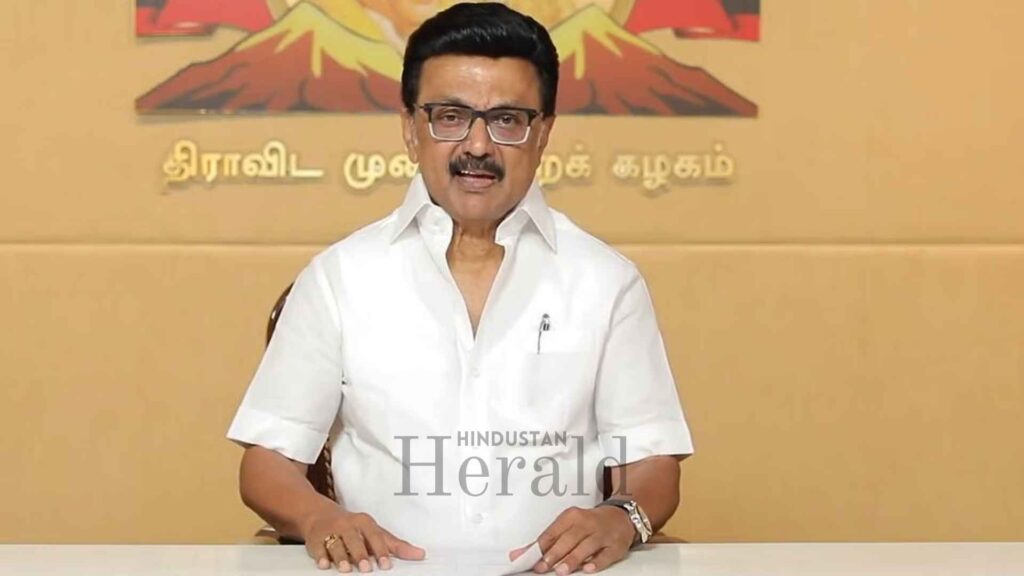
The message was simple enough for anyone to understand. Stalin asked: is Palaniswami in Delhi to get money released for Tamil Nadu? Is he there to fight for the state’s share of central taxes? Is he there to stop the Centre from interfering in Tamil Nadu’s affairs through appointed governors?
The answer, Stalin told his workers, is no. None of the above. He is there, Stalin wrote, because the BJP told him to come. Because the party that rules at the Centre is the same party that decides how the AIADMK will fight this election. Tamil Nadu’s main opposition, in Stalin’s telling, does not take its orders from Tamil Nadu.
He called them “proxies.” He told his cadres this election is about protecting Tamil Nadu from “domination from Delhi.” He gave it a name: Dravidian Model 2.0. The idea being that the first Dravidian model, built over decades by parties like the DMK and AIADMK themselves, stood for Tamil people running Tamil affairs. Model 2.0, Stalin argues, is about defending that principle against a national party that has spent years trying to expand its footprint in a state where it has historically won almost nothing.
It is a message designed to travel. It uses no complicated political language. It asks voters to imagine their own state being run from a city 2,100 kilometres away.
EPS in Delhi: Yes, He Was There. Here Is Why.
Palaniswami did not deny the visit. There was nothing to deny. He was in New Delhi on Thursday for a meeting with Union Home Minister Amit Shah to iron out the final details on constituency allocations, specifically addressing urban seats where both the AIADMK and BJP have overlapping interests.
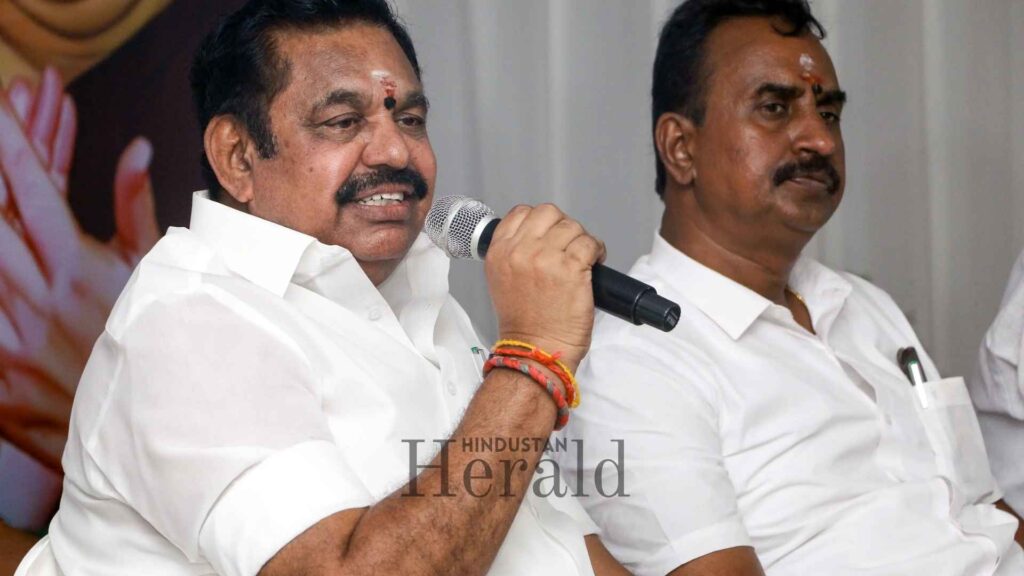
The practical reality is this: the AIADMK and BJP broke up before the 2024 Lok Sabha elections, contested separately, and both were wiped out in Tamil Nadu without winning a single seat between them. They reunited in April 2025, and since then, every major negotiation in this alliance has involved at least one trip to Delhi, because that is where the BJP’s decision-makers sit.
Sources within the alliance said the Thursday meeting was aimed at sealing a formal letter of understanding between the two parties, with an official announcement expected in Chennai shortly after.
Speaking to reporters after his Delhi meetings, Palaniswami was relaxed. He said seat-sharing discussions within the NDA are progressing smoothly and that a formal announcement covering all allocated constituencies would be made within four days.
The sticking point, as it has been for weeks, is how many seats the BJP gets. The BJP is reportedly pushing for around 35 constituencies, pointing to its roughly 18 percent vote share in the 2024 Lok Sabha polls when it contested Tamil Nadu independently as justification. In 2021 it contested 20 seats and won 4. The gap between those numbers explains why these talks have stretched across multiple meetings in Chennai, Madurai, and now Delhi.
As for Stalin’s “proxy” charge, AIADMK leaders on Thursday turned it around without missing a beat. They pointed out that the DMK’s own alliance includes the Indian National Congress, a national party headquartered in Delhi. They asked aloud what makes Stalin’s coalition-building principled and Palaniswami’s identical in form but somehow a surrender.
The DMK’s answer to that would be: everything depends on who calls the shots. But that is a debate both sides can keep having until April 22.
The Vijay Question: A Door Slammed Shut From Both Sides
For weeks, the most entertaining subplot in Tamil Nadu politics has been whether actor-turned-politician Vijay and his party, Tamilaga Vettri Kazhagam (TVK), would end up joining the BJP-AIADMK alliance, the DMK-led front, or contest alone. On Thursday, both Palaniswami and Vijay answered that question, and they answered it the same way.
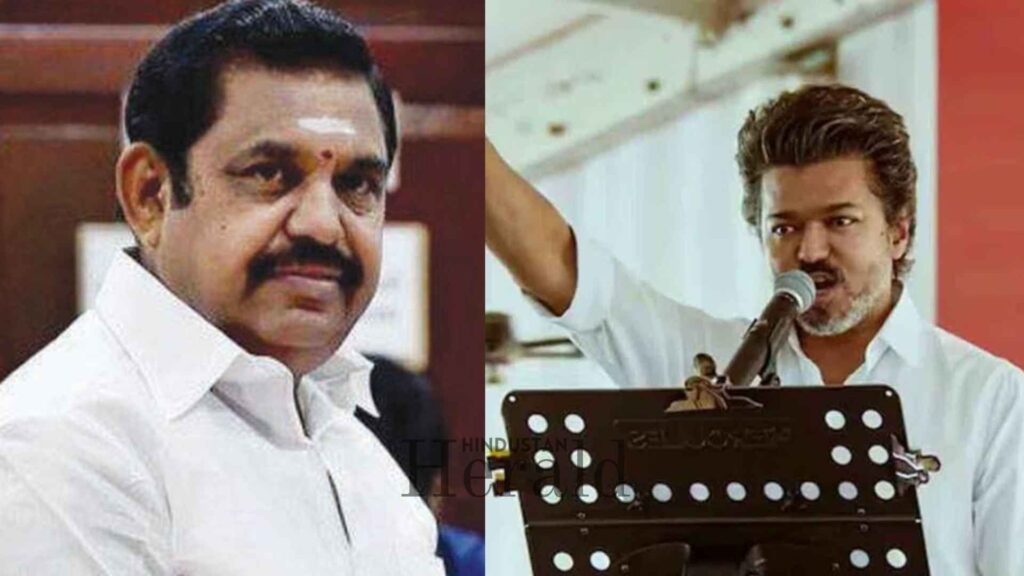
Palaniswami said simply: no talks, no alliance, no interest.
Vijay had already said as much two days earlier. At an Iftar gathering organised by TVK in Mahabalipuram, Vijay dismissed persistent rumours of tie-ups with any major party, saying his party’s secular stance is non-negotiable and that he intends to lead a government on his own terms.
He was particularly direct about the BJP. He called reports of a possible alliance a “false campaign” designed to confuse voters and undermine TVK’s identity, making clear the party is not looking for a supporting role in anyone else’s coalition.
Behind all these denials sits a number that explains the rumours in the first place. TVK’s own campaign management general secretary had publicly stated that Vijay was offered 90 seats and the Chief Minister’s post by the NDA on a power-sharing basis. Whether that was a formal offer or a negotiating kite flown through intermediaries, it tells you how seriously the BJP was trying to pull the actor into its fold. BJP spokesperson ANS Prasad even made a public appeal to Vijay, warning that splitting the anti-DMK vote would hand Stalin another five years in power.
Vijay said no. TVK will contest all 234 seats by itself. Tamil Nadu, for the first time in decades, is headed into a genuinely triangular election with three separate fronts each fielding a chief ministerial face.
Vijay’s support base skews young and urban, cutting across the caste lines that have traditionally governed Tamil Nadu politics, and analysts are genuinely unsure whether TVK will pull more votes from the DMK or from the AIADMK. That uncertainty is exactly what makes him the most unpredictable variable in an election that the other two sides had, until recently, mapped out fairly clearly.
The Man Who Crossed the Floor
One more piece of this picture deserves attention, because it speaks directly to how the ground has shifted under the AIADMK in recent months.
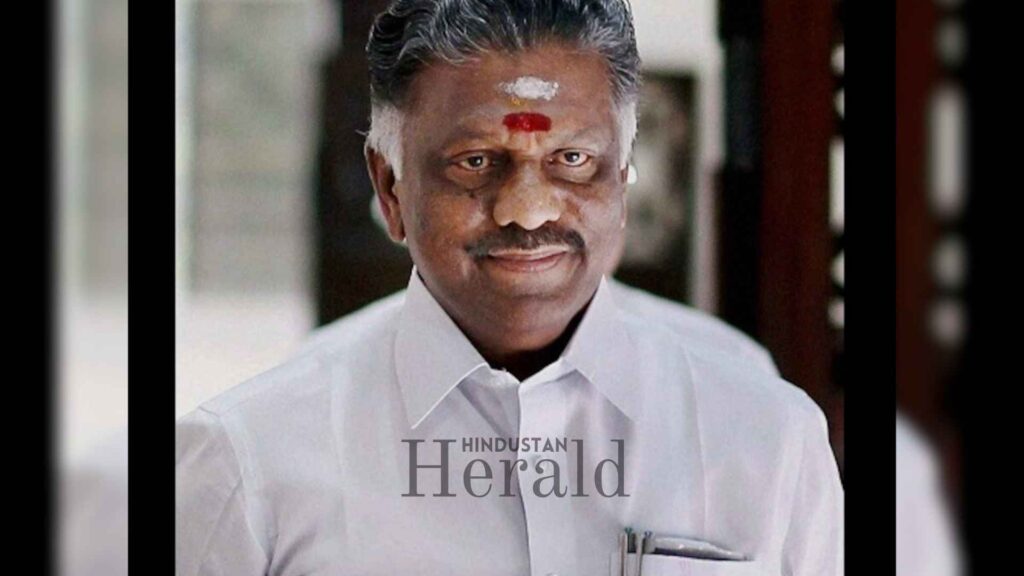
O. Panneerselvam, better known as OPS, was once the AIADMK’s most loyal face. A three-time Chief Minister of Tamil Nadu, a man described by party workers as the person who kept the seat warm for Jayalalithaa whenever she was disqualified or imprisoned. He was expelled from the party in 2022 after a bitter falling-out with Palaniswami.
Last month, Panneerselvam walked into the DMK’s office in Chennai and joined the ruling party in the presence of Stalin and his son, Deputy Chief Minister Udhayanidhi Stalin.
He is now expected to contest from the Bodinayakkanur constituency in Theni district, a seat where he previously won with over one lakh votes.
That is not a small thing. The Theni region and the surrounding southern districts are among the AIADMK’s historically dependable strongholds. When one of the men who built that base is now campaigning against you in those very seats, it creates a problem that no amount of Delhi meetings can fix.
For the AIADMK, facing this election after years of defections and internal conflict, the fundamental task is to prove it remains the primary home for voters who want the DMK out of power. Every departure makes that argument harder.
Who Is Actually Voting and How Many of Them Are Young
Before the noise of alliance mathematics drowns everything else out, it is worth pausing on the people who will actually walk into a booth on April 23.
Tamil Nadu’s total electorate stands at over 5.67 crore voters. That includes 2.77 crore men, 2.89 crore women, and 7,617 third-gender voters. Among them, over 12.51 lakh are between 18 and 19 years old.
That last number, 12 lakh first-time or near-first-time voters, is the audience Vijay has spent the last two years building for. His rallies draw enormous crowds in cities. His party’s symbol, a whistle, is immediately recognisable to anyone under 35 in this state. Whether that translates into booth-level organisation and actual votes cast is the question that everyone is asking and nobody can honestly answer.
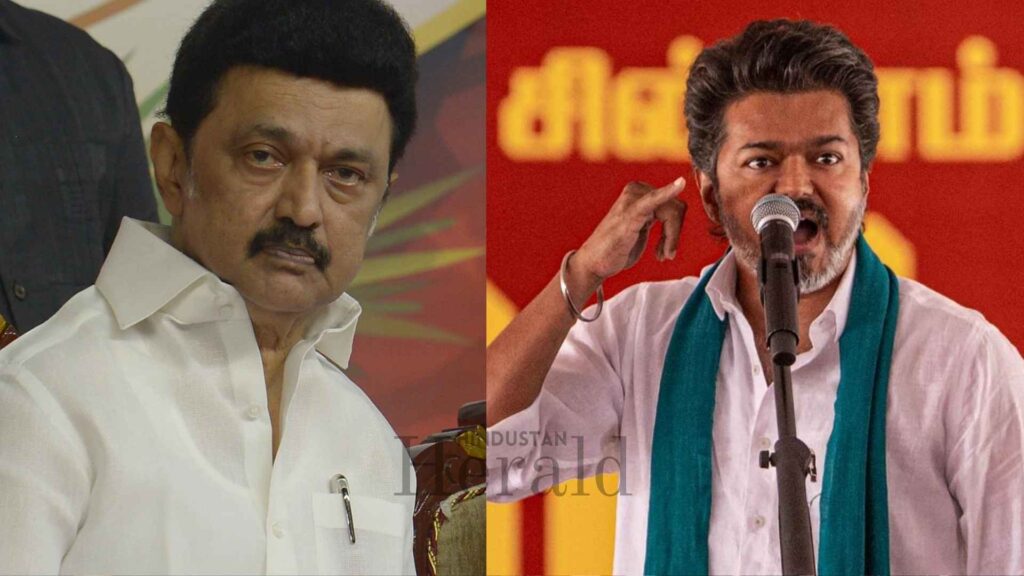
In 2021, the DMK alone won 133 seats, crossing the halfway mark by itself for the first time in 25 years. The full SPA alliance won 159 of 234 seats. Those numbers give the DMK a structural advantage going in. Replicating them requires holding together an alliance, keeping your own voters motivated, and hoping the TVK takes more from your opponent than from you.
None of those things are guaranteed.
What Thursday Actually Settled
The seat-sharing announcement is still pending. TVK’s candidate list is not finalised. Even within the DMK’s own alliance, a minor dispute with the CPI(M) over seat allocations has not been fully resolved, as reported by The Hindu.
So Thursday did not end the campaign. What it did was make the campaign’s central question impossible to ignore.
Stalin’s argument to Tamil Nadu is: your state is being governed from Delhi, and you have a choice about whether to let that continue.
Palaniswami’s argument is: building a national alliance is normal politics, not surrender, and the man making this accusation is himself allied with a national party.
Vijay’s argument is quieter but potentially more powerful in the long run: both of these men represent the same old Tamil Nadu, and you deserve something different.
On May 4, when the counting is done, Tamil Nadu will have answered all three of them.
Stay ahead with Hindustan Herald — bringing you trusted news, sharp analysis, and stories that matter across Politics, Business, Technology, Sports, Entertainment, Lifestyle, and more.
Connect with us on Facebook, Instagram, X (Twitter), LinkedIn, YouTube, and join our Telegram community @hindustanherald for real-time updates.

Covers Indian politics, governance, and policy developments with over a decade of experience in political reporting.
- Ananya Sharma

- Ananya Sharma
- Ananya Sharma
- Ananya Sharma