
 By Ananya Sharma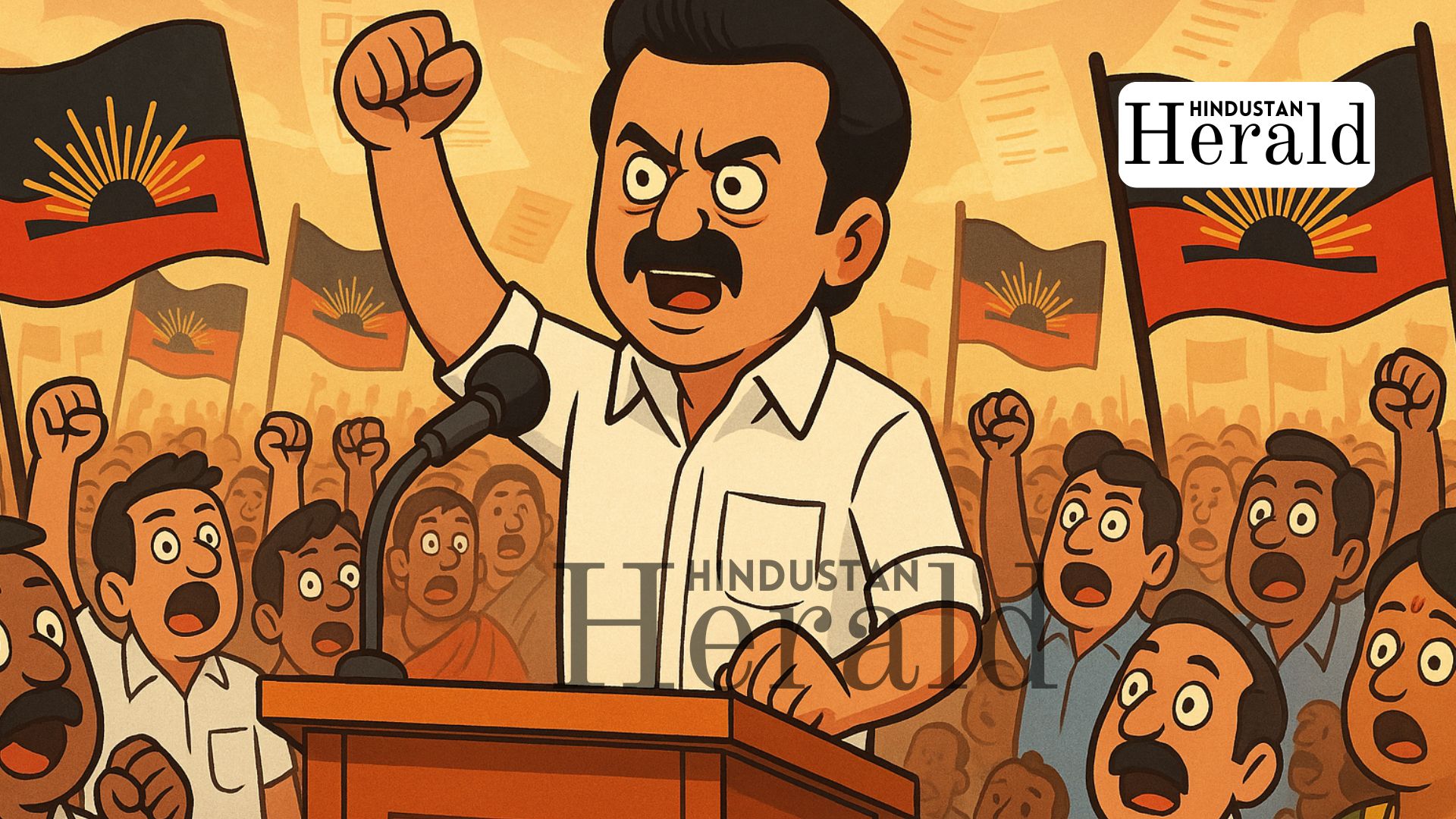
Chennai, November 10: Politics in Tamil Nadu took a sharp turn today after Chief Minister M. K. Stalin accused the Election Commission of carrying out a “flawed” and “dangerous” revision of voter rolls, warning that thousands of legitimate voters could be struck off ahead of the 2026 Assembly elections. The opposition AIADMK fired back, questioning his government’s handling of law and order and ration shortages, setting up yet another round of the state’s long-running Dravidian showdown.
The controversy centers on the Special Intensive Revision (SIR) of electoral rolls, a routine process before every election that has suddenly become anything but routine. Stalin says the exercise is riddled with inconsistencies and risks disenfranchising people who have voted for years. “The process is confusing, misleading, and dangerous,” he told reporters, announcing a statewide protest on November 11 and unveiling a helpline for voters who believe their names have vanished.
To most observers, this is classic DMK turning a procedural issue into a people’s campaign. The message from Stalin is clear: the party that built its identity on mass movements will not sit quietly if the voting lists look suspicious.
Stalin Strikes at Rivals
Later in the day, at a wedding in Somarasampettai, Stalin’s tone turned personal. “No one can ever destroy the DMK,” he declared, his voice cutting through the wedding crowd. According to The New Indian Express, he accused the AIADMK of “playing drama” by pretending to share his concerns about the voter list while secretly echoing the BJP’s line. “Whatever the BJP says, the AIADMK blindly supports,” he said, adding that Edappadi K. Palaniswami (EPS) had become a political puppet. “He keeps saying yes to the Big Boss in Delhi.”
This kind of rhetoric is familiar territory for Stalin, but it also serves a purpose. By linking the SIR issue to a broader “Delhi interference” narrative, he’s positioning the DMK as the last line of defense for Tamil Nadu’s autonomy a theme that’s always played well with the party’s base.
The AIADMK Hits Back
The AIADMK, unsurprisingly, isn’t letting Stalin dominate the headlines. EPS countered that the Chief Minister should focus less on rallies and more on running the state. He accused Stalin of neglecting public safety and demanded the appointment of a full-time DGP, arguing that “law and order is collapsing.” As The New Indian Express reported, he blamed the government for a spike in violent crimes and claimed the administration was too distracted by politics to govern effectively.
Then came a jab at everyday governance. The AIADMK flagged a wheat shortage in fair-price shops across Tamil Nadu, saying the state’s ration system had broken down. The government quickly promised to fix the problem, telling Business Standard that fresh supplies would reach stores by mid-November.
For EPS, these are strategic shots the kind that hit closer to home for regular voters. When people are worried about crime or food prices, debates about electoral rolls can feel abstract.
The Election Commission in the Middle
Caught in the crossfire is the Election Commission of India (ECI), which insists the SIR is just a standard pre-election clean-up of the voter list. Officials say there are clear avenues for people to challenge deletions and that nothing unusual is happening. But in Tamil Nadu, where political distrust runs deep, even a routine bureaucratic task can turn into a symbol of something bigger.
The DMK has already taken the fight to the Supreme Court, arguing that the SIR violates due process and threatens democratic participation. For a party that often casts itself as a defender of institutions against “central interference,” this legal battle fits squarely into its playbook.
What’s Really at Stake
At its core, this fight isn’t just about voter rolls. It’s about control of the political narrative heading into 2026. For Stalin, calling out the Election Commission lets him reframe the DMK as a people’s movement rather than just an incumbent government. The protest on November 11 is an opportunity to gauge how strongly that message resonates with those beyond loyal supporters.
For the AIADMK, the goal is to shift attention to real-world governance, the kind of issues that can hurt a ruling party more than any procedural fight. Law and order, food distribution, and local administration are tangible pressure points. EPS wants voters to think about everyday failures, not institutional ones.
The Road Ahead
Tamil Nadu’s politics has always thrived on confrontation, and this latest dispute feels like an opening act. The DMK’s protest tomorrow will reveal whether the SIR issue can translate into widespread anger or if it remains confined to the party’s inner circle. If turnout is massive, it could reset the tone of pre-election politics. If not, the AIADMK’s quieter, bread-and-butter criticism might start to land harder.
Either way, what was supposed to be a simple update to the voter rolls has exploded into a statewide flashpoint one that touches everything from electoral trust to food security. The lines are drawn, the speeches are sharp, and Tamil Nadu’s political machine is already whirring toward 2026.
Stay ahead with Hindustan Herald — bringing you trusted news, sharp analysis, and stories that matter across Politics, Business, Technology, Sports, Entertainment, Lifestyle, and more.
Connect with us on Facebook, Instagram, X (Twitter), LinkedIn, YouTube, and join our Telegram community @hindustanherald for real-time updates.

Covers Indian politics, governance, and policy developments with over a decade of experience in political reporting.
- Ananya Sharma

- Ananya Sharma
- Ananya Sharma
- Ananya Sharma


 Rajiv Menon and Ananya Sharma