
 By Shelesh Joshi and Kavita Iyer
Mumbai, June 9: TCS AI revenues crossed $2.3 billion in the last fiscal year. But the more consequential number is 23,460 the net reduction in the company’s human headcount over the same period. Tata Consultancy Services has been many things to many people over its fifty-seven years. To investors, it is the anchor stock in half the mutual fund portfolios in the country. To the Indian middle class, it is the company that wrote their parents’ career. To a few lakh engineering graduates every year, it is still the name at the top of campus placement season.
N. Chandrasekaran knows all of that. He ran this company for eight years before moving up to chair Tata Sons. He has sat through more campus placement briefings, more analyst calls, more shareholder meetings than most people can count. So when he writes something in his annual letter to shareholders, he is not speaking carelessly.
In the TCS Integrated Annual Report 2024-25, Chandrasekaran wrote this: “GenAI is not just another tech cycle. It is a civilisational shift. The path is clear: IT and business services are moving toward autonomous operations.”
Then he wrote something else. “The rise of autonomous robots and AI agents promises a future of ‘dark factories’ and AI-assisted enterprise functions.” Dark factories. Read that again. Not fewer people on the floor. No people on the floor. That phrase does not appear by accident in a shareholder letter drafted at the most scrutinised IT company in India. Someone put it there because it is the honest description of where this is going, and they wanted shareholders to understand that.
Quick Summary
- TCS Chairman N. Chandrasekaran declared in the TCS Integrated Annual Report 2024-25 that the company will build a large pool of AI agents to work alongside its human employees in a “human+AI” model.
- TCS crossed the USD 30 billion revenue milestone for the first time in FY2025, with full-year USD revenue of $30,179 million, according to the official TCS Q4 FY2025 press release published on the TCS Newsroom.
- Annualised AI revenue at TCS crossed USD 2.3 billion in Q4 FY2026, as confirmed in the official TCS Q4 FY2026 press release by COO Aarthi Subramanian.
- TCS confirmed 12,200 job cuts in FY2026, primarily targeting middle and senior management, as reported by Reuters in August 2025 citing a company statement.
- Over 300,000 TCS associates were trained on foundational AI and machine learning skills at the time of the WisdomNext platform launch in June 2024, according to the official TCS WisdomNext launch press release on the TCS Newsroom. The current TCS AI WisdomNext product page on tcs.com states that figure has since grown to more than half a million associates.
- India’s IT sector employed 5.67 million people as of March 2025 and contributed over 7% of India’s GDP, according to Reuters, making TCS’s AI pivot a matter of national economic significance.
The Four Things He Said TCS Would Do
The same shareholder letter, as published in the official TCS Integrated Annual Report 2024-25, laid out four specific directions for the company.

First, establish a large pool of AI agents working alongside the human workforce. Second, deliver solutions through a human+AI model. Third, invest consciously in AI data centres and cloud infrastructure. Fourth, forge industry-best partnerships with hardware providers, solution innovators, and startups.
He also wrote: “TCS is proactively leading this change. We have systematically infused AI across our offerings and built intelligent agent solutions throughout the value chain. In 2025, we will have the largest AI-trained workforce in the industry and have launched our enterprise-grade GenAI platform: TCS WisdomNext.”
As reported by Business Standard on May 28, 2025, Chandrasekaran also noted that traditional business services in IT, including coding and testing, are now being rapidly automated, and that agentic AI is being embedded deeply into enterprise systems.
Coding and testing. Those are not peripheral IT jobs. Those are the jobs hundreds of thousands of people currently hold inside TCS and companies like it. When TCS’s chairman says they are being rapidly automated in an official shareholder document, that is not a technology trend update. That is a signal to every team lead, every fresher batch, and every parent who pushed their child toward a computer science degree, that the landscape under their feet has changed.
The Company He Was Describing When He Wrote That
Chandrasekaran did not write this letter from a position of weakness. The numbers in the official TCS Q4 FY2025 press release, published on the TCS Newsroom on April 10, 2025, show a company that had just done something it had never done before.
Revenue crossed USD 30 billion for the first time in the company’s history in the full year ended March 31, 2025. Full-year USD revenue came in at $30,179 million, growth of 3.8 percent year on year.
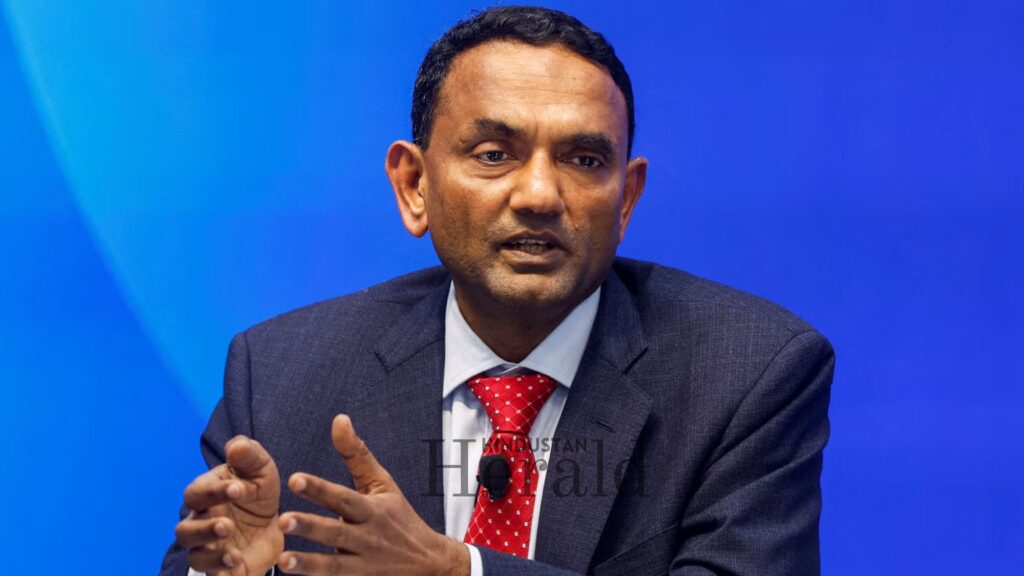
CEO K. Krithivasan stated in his official press release: “We are pleased to cross the $30 Billion in annual revenues and achieve a strong order book for the second consecutive quarter. Our expertise in AI and Digital Innovation, coupled with the unmatched knowledge of customer context and global scale makes us the pillar of support for our customers in this environment of macroeconomic uncertainty.”
The official TCS Q4 FY25 press release confirmed the workforce stood at 607,979 associates globally, with women making up 35.2 percent of total employee strength. LTM attrition in IT services stood at 13.3 percent. Total contract value for FY25 came in at USD 39.4 billion, with Q4 alone delivering a record USD 12.2 billion in TCV.
On talent, the same official press release confirmed 56 million learning hours logged by TCS associates during FY25, with 5.2 million competencies acquired. Trainee onboarding in FY25 was 42,000 as planned, according to then-Chief HR Officer Milind Lakkad in his official statement. Shareholder payout for FY25 stood at Rs 44,962 crore in dividends, per the official press release. The board recommended a final dividend of Rs 30 per share, subject to approval at the Annual General Meeting.
As reported by Business Standard, Q4 FY25 also showed constant currency revenue growth of just 2.5 percent year on year, and net profit declining approximately 1.7 percent year on year. Growth was slowing. Clients were asking harder questions about pricing and outcomes. The old playbook of adding more people and billing more hours was running into its natural ceiling. Global clients were no longer asking how many people can you put on my project. They were asking what outcomes can you guarantee and at what cost. That shift in the question is what changed everything.
WisdomNext and the Infrastructure That Already Exists
One thing that separates this annual report from most corporate AI announcements is that TCS had actually built something before making the claim.
According to the official TCS Newsroom press release announcing the platform, published on June 7, 2024, TCS AI WisdomNext is described as “an industry-first GenAI aggregation platform” that “provides unique capabilities to compare GenAI models and tools across cloud services in a single unified interface allowing clients to accelerate AI adoption at scale.”
The official press release adds that it offers “ready-to-deploy business solution blueprints with built-in guardrails, making it simpler for large organisations to adopt GenAI solutions quickly.”
The services built around the platform, according to the same official TCS launch announcement, include consulting and advisory, solution design and prototyping, large language model training and fine-tuning, guardrail agent design, project delivery, ongoing maintenance, and a responsible AI framework for ethical and safe use.
The official WisdomNext launch press release also put a workforce number on the record: at the time of the platform’s launch in June 2024, over 300,000 associates had been trained on foundational AI and machine learning skills, including GenAI. As it turns out, that number has moved considerably since. The current TCS AI WisdomNext product page on tcs.com states that more than half a million associates have now been trained in AI and machine learning, reflecting continued investment in workforce capability between the platform launch and the present.
The TCS official website also documents real client deployments. A utility company in North America chose TCS to build and train AI models using LiDAR data, satellite imagery, weather patterns, and vegetation characteristics, as confirmed in the official Q4 FY25 press release. For a global OTT and technology firm, TCS built a GenAI-based movie script analyser generating insights based on viewership data. These are not demos or pilots. They are running.
The gap between what TCS announces and what it has already deployed is smaller than most people tracking this story from the outside realise.
FY2026: When the Revenue Line Stopped Being Theoretical
The financial results from FY2026 are where this story gets harder to dismiss or qualify away. According to the official TCS Q4 FY2026 press release, published on the TCS Newsroom on April 9, 2026, annualised AI revenue crossed USD 2.3 billion in Q4 FY26.
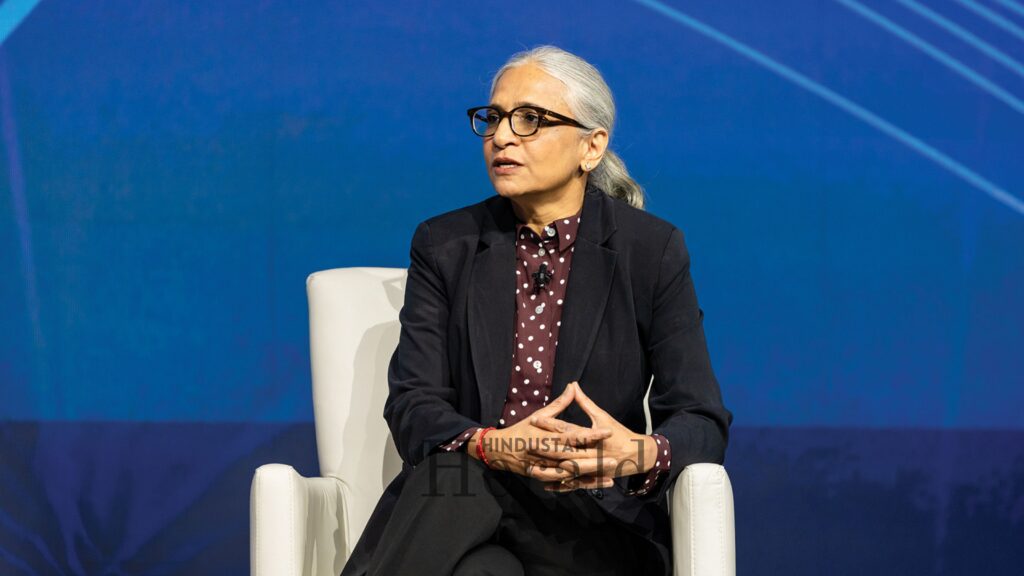
Aarthi Subramanian, Executive Director, President and Chief Operating Officer, stated in that official press release: “FY26 marked a pivotal year for enterprise AI adoption. In Q4, our annualized AI revenues surpassed USD 2.3 billion, driven by the accelerated deployment of AI solutions. We experienced strong deal momentum across new services in Enterprise Transformation, Digital Engineering, and Cloud Modernisation.”
The same official release confirmed FY26 operating margin at 25 percent, up 70 basis points year on year. The highest in four years, per the official press release. Net margin at 19.8 percent, up 80 basis points year on year. Also the best in four years.
TCV for FY26 hit USD 40.7 billion for the full year, with USD 12 billion in Q4 alone. Three mega deals in the quarter. Five for the year. The official TCS press release described these figures as “among the highest TCV ever.”
CEO Krithivasan stated in the official Q4 FY26 press release: “We are pleased to report the third consecutive quarter of sequential growth, supported by three mega deals and a USD 12 billion TCV, underscoring the strength of our five-pillar strategy and our AI-led positioning across services.”
CFO Samir Seksaria added in the same official release: “In FY26, we intensified investments through our Build-Partner-Acquire approach, by acquiring Coastal Cloud and List Engage and establishing HyperVault. “Subramanian described HyperVault in the same official release as “a catalyst in forging strategic partnerships with OpenAI, AMD, and ABB.”
On the people side, the Q4 FY26 official press release confirmed 69 million learning hours in FY26, up 23 percent year on year; 5.2 million competencies acquired; and over 270,000 associates achieving higher proficiency in AI and machine learning. Chief HR Officer Sudeep Kunnumal confirmed salary hikes across all grades went through on April 1, 2026. Campus hiring continued in Q4.
Two things happening at once. Machine revenue accelerating. Human investment continuing. The company is reporting both, every quarter, in official documents, without trying to reconcile the tension between them. That tension is real and it is not going away.
12,200 People Who Did Not Make the Transition
There is a third set of numbers in this story, and it belongs right here alongside the others. As reported by Reuters in August 2025, TCS confirmed plans to cut approximately 12,200 jobs, roughly 2 percent of its global headcount, primarily targeting middle and senior management.
In its official statement, as cited by Reuters, TCS said: “This transition is being planned with due care to ensure there is no impact on service delivery to our clients.” Krithivasan communicated the decision to employees directly, as reported by Reuters, describing it as necessary to build a “future-ready organisation.”
The official company position was that the cuts reflected skill mismatches rather than AI-driven productivity directly replacing human roles, according to the same Reuters report. There is something uncomfortable about that framing. Not because it is dishonest, necessarily, but because it places the entire burden on the individuals being let go. Their skills did not match. As if the company had not spent years actively building a workforce model that rewarded exactly the skills it is now calling mismatched. The bench system, the project rotation, the deliberate generalism, were all features of the same organisation that is now saying its people were not specific enough.
Jefferies analyst Akshat Agarwal was more direct about the underlying mechanics, as reported by Reuters: “With cost optimisation being the key driver for new deal wins, clients are asking for productivity benefits, a trend which is also growing due to the rise in AI adoption. This requires IT firms to do more work with the same number of employees, or the same work with fewer employees.” Whether the cause is labelled skill mismatch or AI disruption, the outcome for 12,200 people was identical.
When you place the closing headcount from the official TCS Q4 FY25 press release, 607,979, next to the closing headcount from the official TCS Q4 FY26 press release, 584,519, the net reduction across a single fiscal year is 23,460 employees. That has never happened at this company before, not at this scale, not at this speed.
What the Rest of the Sector Is Watching
TCS is not alone in this. It is just the loudest and most visible version of what is happening everywhere in Indian IT. As Reuters reported in its August 2025 analysis, the Indian IT sector employed 5.67 million people as of March 2025 and contributed over 7 percent of India’s GDP. The sector’s reach into the broader economy runs deeper than those numbers suggest. When TCS hires fewer engineers, fewer flats get rented in Whitefield and Hinjewadi, fewer car loans get signed, fewer parents in Tier 2 cities get monthly transfers from their children.
Ray Wang, founder and chairman of Constellation Research, told Reuters: “We are in the midst of a massive transition that will transform white-collar work as we know it.”
Former Tech Mahindra CEO CP Gurnani said, also cited in the Reuters report: “With AI, for the first time, the onus is on the individual to reinvent or reskill themselves.”
Reuters further reported that experts warned the broader trend could eliminate around half a million jobs over the next two to three years from the USD 283 billion sector. The most exposed roles, per the same Reuters analysis, are people managers without deep technical knowledge, testers and QA professionals, and infrastructure management employees whose work is already being automated.
The concern is not abstract. India produces roughly 1.5 million engineering graduates a year, according to government data. A significant share of them have historically looked to TCS and similar companies as the default destination. If that destination is restructuring its intake model at the same time that it is scaling AI agents, the arithmetic for that graduating cohort gets uncomfortable fast.
The Thing That Should Keep People Up at Night
TCS took roughly forty years to build its first USD 10 billion of annual revenue. The next USD 20 billion took about fifteen years. The AI revenue line, disclosed publicly for the first time in the official Q4 FY26 press release, crossed an annualised USD 2.3 billion run rate within the same fiscal year that the headcount fell by 23,460, calculated from the closing figures in TCS’s own official press releases. That trajectory does not need a graph. The shape of it is clear enough in the numbers alone.
What bothers me about how this conversation usually goes is that it gets framed as progress versus resistance. Pro-AI versus anti-AI. Adapt or get left behind. That framing is convenient because it places the weight on individuals and removes it from institutions. If you lost your job at TCS, you should have reskilled earlier. If you are anxious about the next three years, you should build new capabilities.
Maybe. But it is also worth remembering that TCS built its first thirty years of growth on a specific and deeply understood promise to a specific generation of Indian engineers. Study hard, get the degree, clear the placement round, and the institution will carry you forward. Projects will rotate, technologies will change, managers will come and go, but the company will hold you. That was not just a human resources strategy. For millions of families in this country, it was a social contract.
That contract is being quietly retired. Not with a press release. Not with an apology. Just with a restructuring announcement here, a headcount figure there, and a chairman’s letter that uses the phrase dark factories as a description of the destination rather than a warning about it.
Gurnani said the onus is now on the individual. Chandrasekaran called it a civilisational shift. Read those two statements next to each other and what you get is this: the institution that once defined a generation’s professional identity in India has decided it can no longer afford to play that role.
For the millions of engineers currently inside TCS, or currently studying to join it, that is not an abstract statement about the future of artificial intelligence. It is a very concrete and very personal question about what their career looks like in three years. And the honest answer, the one that no official press release has provided and no earnings call has addressed directly, is that nobody at the top of this company has yet been willing to fully say it out loud. That silence is its own kind of answer.
Stay ahead with Hindustan Herald — bringing you trusted news, sharp analysis, and stories that matter across Politics, Business, Technology, Sports, Entertainment, Lifestyle, and more.
Connect with us on Facebook, Instagram, X (Twitter), LinkedIn, YouTube, and join our Telegram community @hindustanherald for real-time updates.

Tracking world politics, global markets, trade movements, policy decisions, and the changing balance of economic power.
- Shelesh Joshi

- Shelesh Joshi
- Shelesh Joshi
- Shelesh Joshi





Former financial consultant turned journalist, reporting on markets, industry trends, and economic policy.
- Kavita Iyer
- Kavita Iyer
- Kavita Iyer
- Kavita Iyer