 By Neeraj Kapoor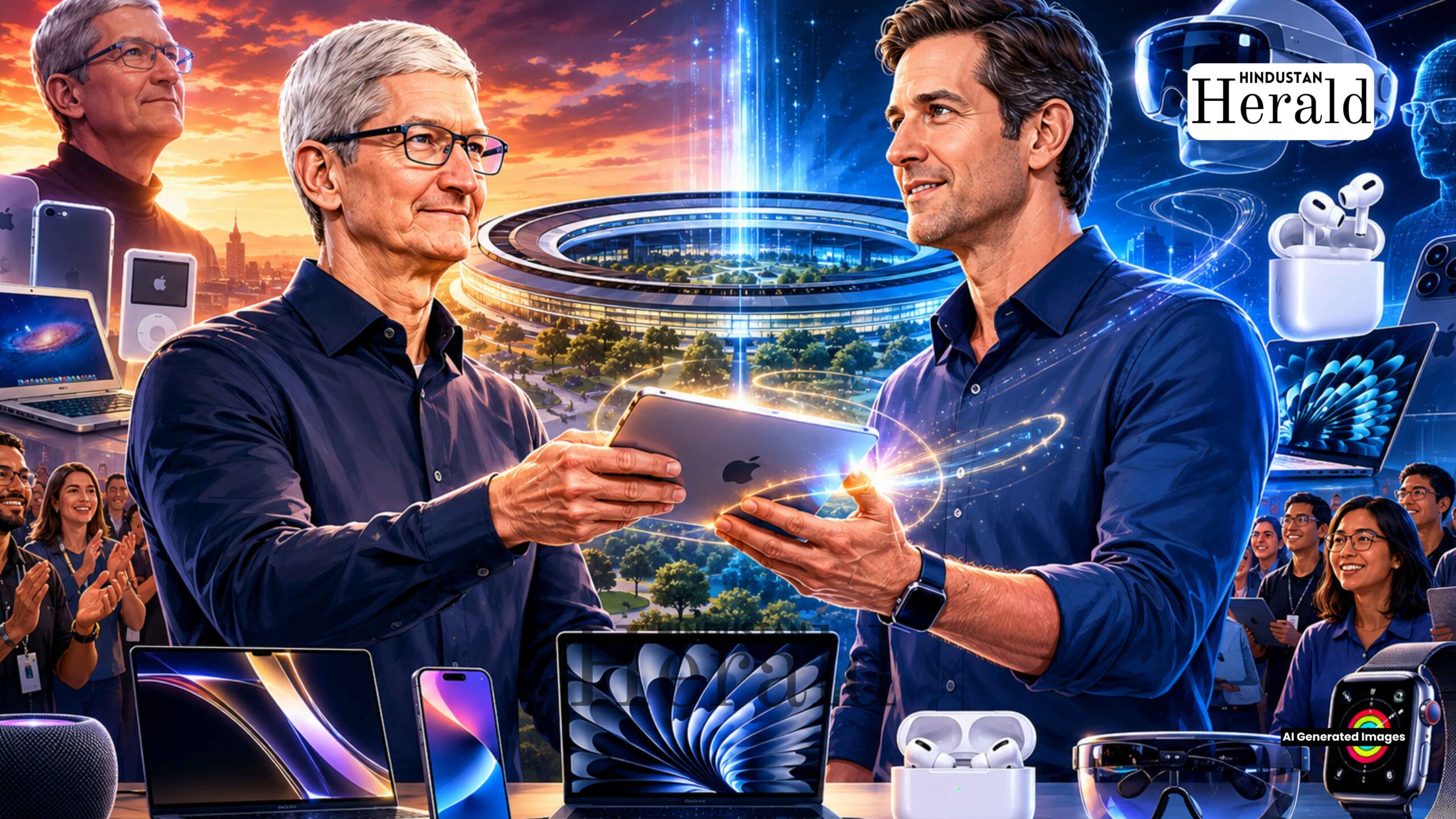
San Francisco, June 9: Fifteen years is a long time to run anything. But running Apple for fifteen years, and leaving it worth ten times more than you found it, that’s something most business schools don’t have a case study for yet.
Tim Cook announced in April that he’s stepping down as CEO. He’ll move into an Executive Chairman role from September 1, which means he’s not gone, just no longer the final word on everything. The man taking that responsibility is John Ternus, currently Apple’s head of hardware engineering, a 50-year-old engineer who has been building Apple’s physical products quietly and competently since 2001. The board approved it without a single dissenting vote.
Cook’s farewell letter to the Apple community was brief. “This is not goodbye,” he wrote. Coming from a man who spent 15 years letting the products do the talking, that was practically a speech.
The Weight Of What He Inherited
Go back to October 2011 for a second. Steve Jobs has just died. The entire tech world is watching to see what happens next. And the guy stepping up is the supply chain guy. The operations man. The person who figured out how to get 50 million iPhones shipped on time, not the person who decided what the iPhone should feel like.
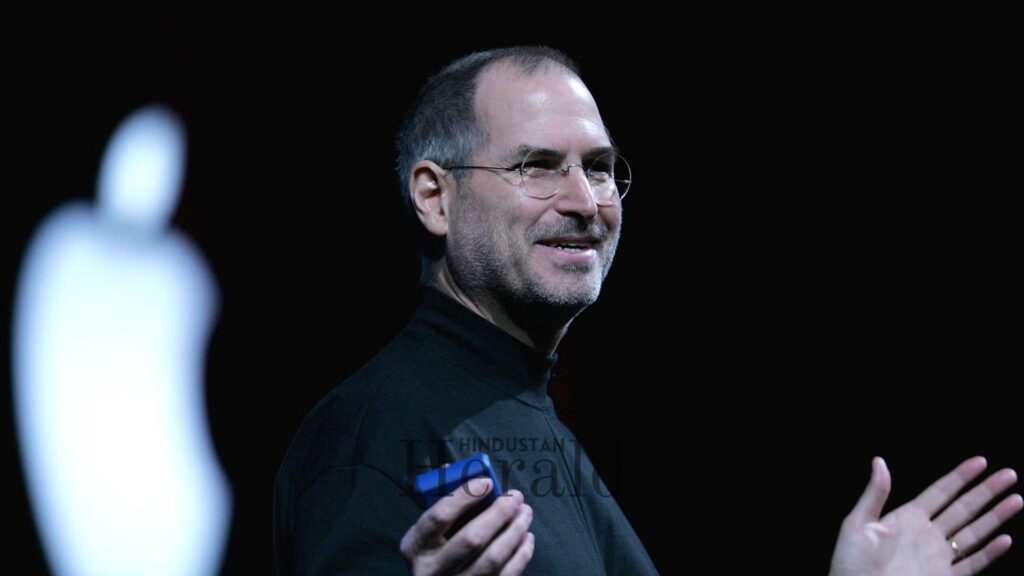
People were polite about it. Mostly. But the underlying question was real: could Apple survive without Jobs? Could it stay Apple?
Cook didn’t answer that question with a speech. He answered it by running the company for fifteen years and turning it into the most valuable business in human history.
When he took over, Apple was worth roughly $350 billion, which sounds enormous until you see where it ended up. Today the company sits at $4 trillion. Annual profits crossed $110 billion on his watch, four times what he inherited. The $1 trillion valuation milestone came in 2018, the first time any publicly traded company had ever reached it. Then two trillion. Then three. At some point it stopped being remarkable and just became the baseline, which is its own strange achievement.
What Cook figured out, and this is really what separates his tenure from a simple continuation of Jobs-era momentum, was that the iPhone couldn’t be the whole story forever. Phones get replaced every three or four years. That cycle has a ceiling. So he built everything else.
The App Store became a financial engine in its own right. Apple Music, iCloud, and Apple Pay created monthly recurring revenue that flowed regardless of hardware sales. AirPods arrived in 2016 and somehow became the kind of product people had feelings about. The Apple Watch was dismissed by fashion writers when it launched and is now a device that has genuinely saved lives, catching irregular heart rhythms and sending people to doctors they didn’t know they needed.
None of it happened by accident. Cook thought in long cycles. He was patient in a way that Silicon Valley does not traditionally reward or even respect.
What The Numbers Miss
The billions matter. Obviously they do. But they’re not the whole story and anyone writing about Cook as if they are is missing something.
He picked a fight over privacy when it wasn’t fashionable, when the dominant business model across the entire tech industry was vacuum up as much data as possible and figure out what to do with it later. He took the FBI to court when they demanded Apple help unlock a terrorist’s iPhone. He held the line. He said, not once but consistently over years, that your data was yours and Apple wasn’t going to be the company that sold it.
While every other major tech platform was being grilled by governments on three continents about what they knew about their users and what they were doing with it, Apple’s exposure on that specific front was notably smaller. That was a choice Cook made, early and often.
He pushed environmental commitments that his shareholders didn’t ask for. He invested in accessibility features that most product teams would have deprioritized because they didn’t move the sales needle directly. These weren’t headline-grabbing moves. They were quiet, repeated, institutional choices that accumulated into something real over time.
That said, the criticism of his tenure is not nothing. Artificial intelligence became the defining technological story of the 2020s, and Apple’s response was slower, more cautious, and less visible than what was coming out of OpenAI, Google, and Microsoft. Siri, the assistant Apple had introduced years before the AI boom, never became what it could have been. The company has been playing catch-up, or at least appearing to, and the gap between perception and reality on Apple’s AI capabilities is something Ternus is going to have to address faster than Cook perhaps had to.
Whether Cook’s caution on AI was wisdom or delay, history will sort that out. Right now it’s just an open question that gets handed to the next person.
Ternus: What We Know, And What We Don’t
John Ternus is not a name most people outside Cupertino have strong feelings about, and that’s fine. That’s basically his brand.
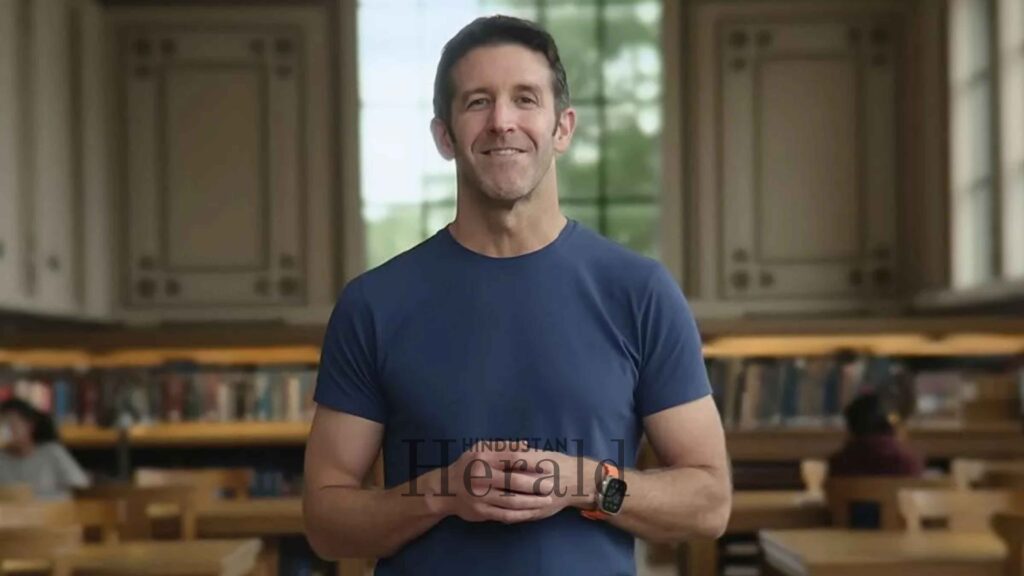
He came to Apple in 2001, the same year the first iPod launched, and worked his way through hardware engineering for two decades without generating the kind of press that follows executives who like being written about. In 2021 he became Senior Vice President of Hardware Engineering, which put him in charge of the physical products that Apple actually sells. The iPhone. The Mac. The iPad.
And most significantly, the Apple Silicon transition, the decision to move Mac computers onto chips Apple designed itself rather than continuing to rely on Intel. That turned out to be a significant call. The performance advantage Apple’s chips gave those computers caught the industry off guard, and the execution was clean enough that most users barely noticed the migration was happening.
He’s an engineer. Not a marketer, not a platform thinker, not someone who came up through services or software. He builds hardware. At a moment when Apple’s most pressing challenge is probably AI integration, it’s an interesting choice, and either a very deliberate one or the best option available given the internal talent pool. Probably both.
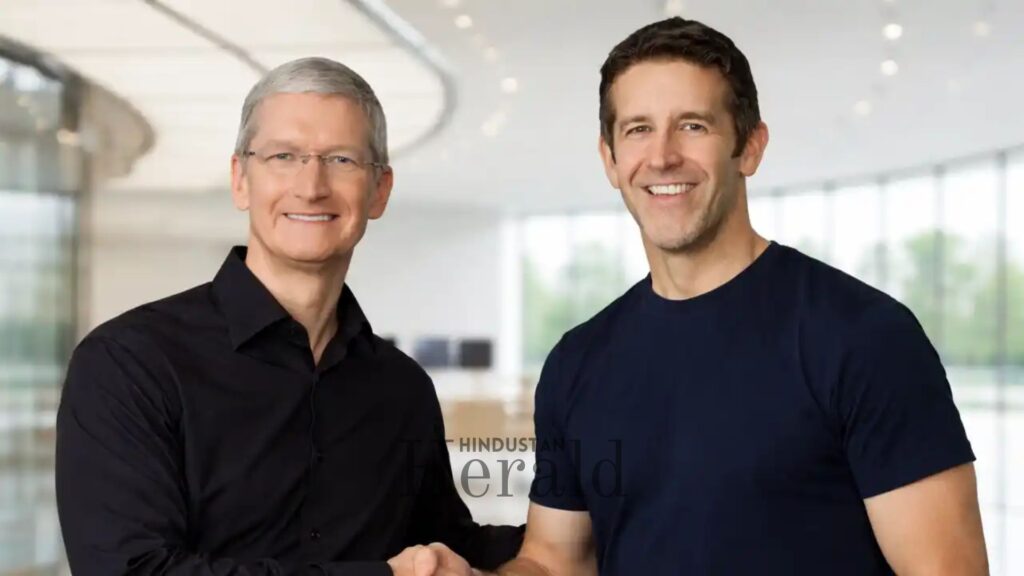
Ternus at 50 is the same age Cook was when he stepped into the CEO role in 2011. The symmetry is a little too neat to be coincidental. Apple is clearly not looking for a two-year transition figure. They want another long run.
What he actually walks into is genuinely difficult to summarise. The iPhone remains enormously profitable but the growth story around it has matured. Services are healthy. Vision Pro has not yet become what the Watch eventually became. The next product that genuinely changes things, the thing that makes people re-evaluate how they spend their days, hasn’t arrived yet. There’s noise about foldable iPhones, about smart glasses, about deeper AI in every surface of the operating system. Some of that will happen. Probably all of it, eventually. What defines Ternus is whether he picks the right bets and executes them before the competition makes them irrelevant.
Why India Should Be Paying Attention
This isn’t just a story for tech journalists in California. It has real weight for India, and it’s worth saying that directly.
Cook came to India himself. He met Prime Minister Modi, opened flagship stores in Mumbai and Delhi, and presided over a significant expansion of iPhone manufacturing on Indian soil. That manufacturing push wasn’t charity or optics. Apple needed to reduce its exposure to China in its supply chain, a pressure that intensified sharply through the early 2020s, and India offered scale, a willing government, and a domestic market that was growing fast.
Apple’s India relationship has become structural, not just strategic. The stores are there. The factories are running. The middle-class consumer base is real and expanding.
As Executive Chairman, Cook is expected to stay involved in policy-level conversations globally, so this relationship doesn’t simply go dark on August 31. But Ternus will have to decide, fairly early in his tenure, how aggressively he wants to deepen it. India is not a market Apple can afford to treat casually anymore, and whoever runs the company understands that.
August 31, And Then
Cook’s last day as CEO is August 31, 2026. Ternus takes the title the next morning.
The summer between now and then is apparently being spent on the handover itself, which is almost refreshingly normal. Two people, passing responsibility for a four-trillion-dollar company back and forth across a table, trying to make sure nothing falls through the gap.
What Cook leaves behind is something that genuinely surprised the people who doubted him in 2011. Not just the financial returns, though those are staggering. But a company with a coherent identity, products people are attached to, a brand that means something to its customers in a way that very few brands at this scale still manage. He didn’t chase every trend. He didn’t break things to fix them. He built carefully, bet selectively, and compounded the gains.
Ternus gets all of that as a foundation. He also gets the pressure. The next chapter of Apple has to justify the platform Cook built, and the world it has to operate in now is faster, more competitive, and more AI-saturated than anything Cook was navigating even five years ago.
There is no blueprint for what comes next. Cook didn’t have one either when he started. He figured it out anyway.
That’s probably the most useful thing Ternus can take from the man he’s replacing.
Stay ahead with Hindustan Herald — bringing you trusted news, sharp analysis, and stories that matter across Politics, Business, Technology, Sports, Entertainment, Lifestyle, and more.
Connect with us on Facebook, Instagram, X (Twitter), LinkedIn, YouTube, and join our Telegram community @hindustanherald for real-time updates.

Tech writer passionate about AI, startups, and the digital economy, blending industry insights with storytelling.
- Neeraj Kapoor

- Neeraj Kapoor
- Neeraj Kapoor
- Neeraj Kapoor