
 By Sandeep Verma
Chennai, April 6: Somewhere across Tamil Nadu (TN) today, a Class 10 student handed in their last answer sheet, walked out of an exam hall, and probably stood blinking in the April heat wondering what to do with their hands. No more textbooks to open. No more revision lists. Just the strange, hollow relief of it being over.
That moment played out roughly nine lakh times today across the state.
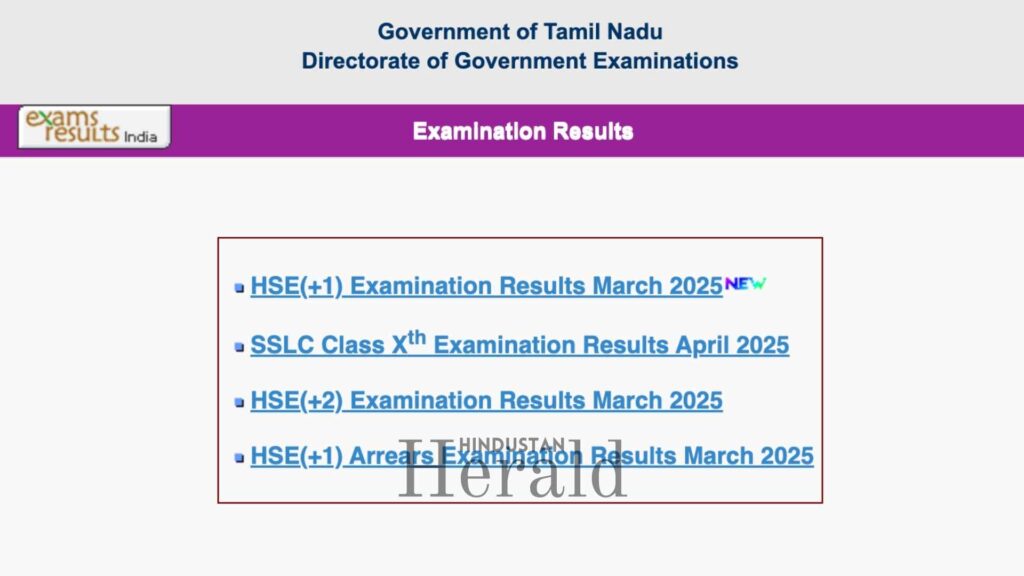
The Tamil Nadu SSLC public examination 2026 formally concluded this morning with the Optional Language paper, bringing down the curtain on a cycle that began on March 11. Twenty-seven days. Multiple subjects. One sitting per day, 10 AM to 1:15 PM, no exceptions. For students and their families, it has been a long month.
It Always Ends With the Optional Language Paper
There is something quietly anticlimactic about the way board exams end. The hardest papers Maths, Science are long done. By the time the optional language paper rolls around, most students are already running on fumes and relief in equal measure. Today was no different.
The Directorate of Government Examinations (DGE), Tamil Nadu, which runs this entire machinery with an organisational muscle that few state bodies can match, confirmed that the SSLC cycle officially wraps up today. Close to 8.82 lakh regular students and just over 26,000 private candidates sat for these exams. That is a staggering number of individual stories students from Chennai’s dense urban schools, from government schools in Tirunelveli, from small towns in the Nilgiris all writing the same papers at roughly the same hour.
The Class 12 Higher Secondary examinations had already ended earlier, concluding on March 26. Those students are in a different kind of limbo now. Their papers are already in the evaluation pipeline, results expected around May 8. For SSLC students, the wait stretches a little longer results are tentatively set for May 20.
What Happens to Nine Lakh Answer Sheets
It is easy to forget that the exam ending is not the end of the process. Not by a long shot.
Once today’s papers are collected, they travel to 118 regional collection centres spread across the state. From there, examiners begin the actual work evaluating subject by subject, entry by entry, across a timeline that typically spans a few weeks. Marks get entered, cross-checked, processed. It is unglamorous administrative work, but it is the backbone of a system that produces results for nearly a million students with reasonable accuracy and speed.
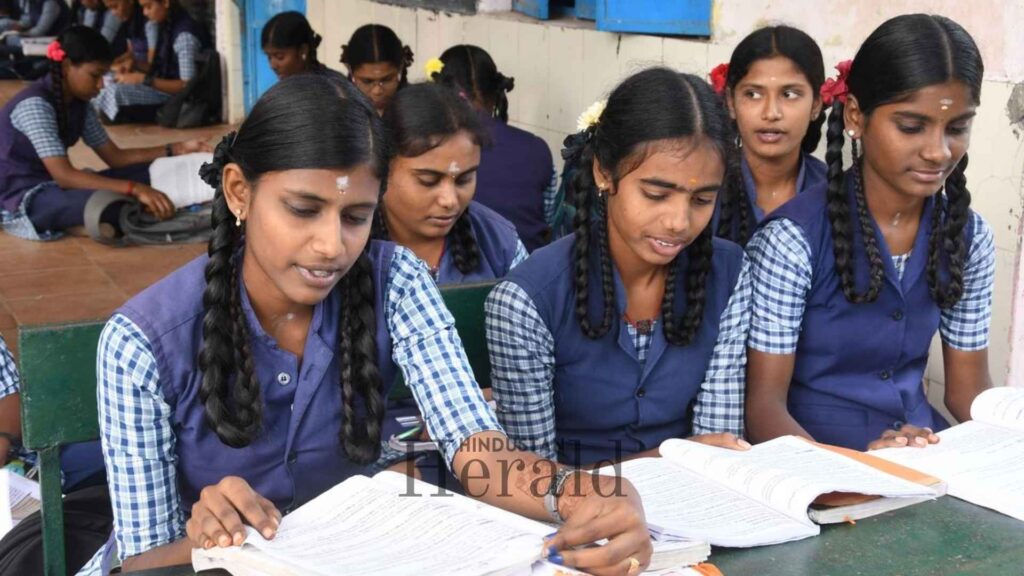
The results, when they come, will be available at tnresults.nic.in and the alternate portal dge1.tn.nic.in. DigiLocker will carry provisional marksheets for those who prefer the digital route. Students will need their registration number and date of birth nothing more complicated than that.
Still, it is worth saying plainly: as of today, no results exist. If a relative forwards you a screenshot claiming otherwise, it is either old data or misinformation. The DGE has not declared anything, and will not until the evaluation is complete.
The Numbers That 2026 Has to Beat
Last year’s SSLC results were genuinely strong. The overall pass percentage in 2025 was 93.80% an improvement of 2.25 percentage points over 2024, which had itself been a recovery year. Of the students who appeared, 8,17,261 cleared the exam. Girls, as has been the pattern for years, significantly outperformed boys. The female pass rate stood at 95.88%, compared to 91.74% for male students. That gap over four percentage points is not a fluke. It has shown up consistently, and it reflects something real about study habits, stress management, and in many cases, the different pressures that boys and girls face in the run-up to exams.
Sivaganga district led the state in 2025, with a pass rate of 98.31%. Virudhunagar, Thoothukudi, Kanyakumari, and Trichy followed close behind. At the other end of the spectrum, Chennai, despite being the state capital, has historically shown a more uneven performance a reminder that urban does not automatically mean better resourced or better prepared.
For Class 12, the 2025 numbers were even more impressive. The pass percentage came in at 95.03% a figure that compares favourably with most national boards.
Whether 2026 holds or exceeds these benchmarks will depend on how the evaluation goes. Early student feedback on key papers this year described the Science exam as manageable, the English paper as reasonably accessible. Whether that translates to higher scores is something only the marksheets will reveal.
What the Grading System Actually Means
For students doing the post-exam arithmetic in their heads, the Tamil Nadu grading structure is worth knowing precisely. The passing mark is 35 out of 100 in each subject. In Science, that 35 is a combined theory-plus-practical minimum, though theory alone must clear its own threshold. Grades follow a straightforward scale: A1 for 91 and above, A for 81–90, B1 for 71–80, B for 61–70, and below 35 means a fail.
One thing the DGE does not do and this is deliberate is release a formal toppers list. No rank-holder names splashed across press conferences, no students held up as benchmarks for others to measure themselves against. Instead, the board releases district-wise statistics and performance breakdowns. It is a quieter approach, and probably a healthier one given what has historically happened in states where topper culture runs hot.
For Students Who Do Not Clear
Not everyone passes, and it is worth saying that without euphemism. A significant minority of students every year running into the tens of thousands do not clear one or more subjects in the main exam. In 2025, of roughly 9 lakh who appeared, around 54,000 did not make it through.
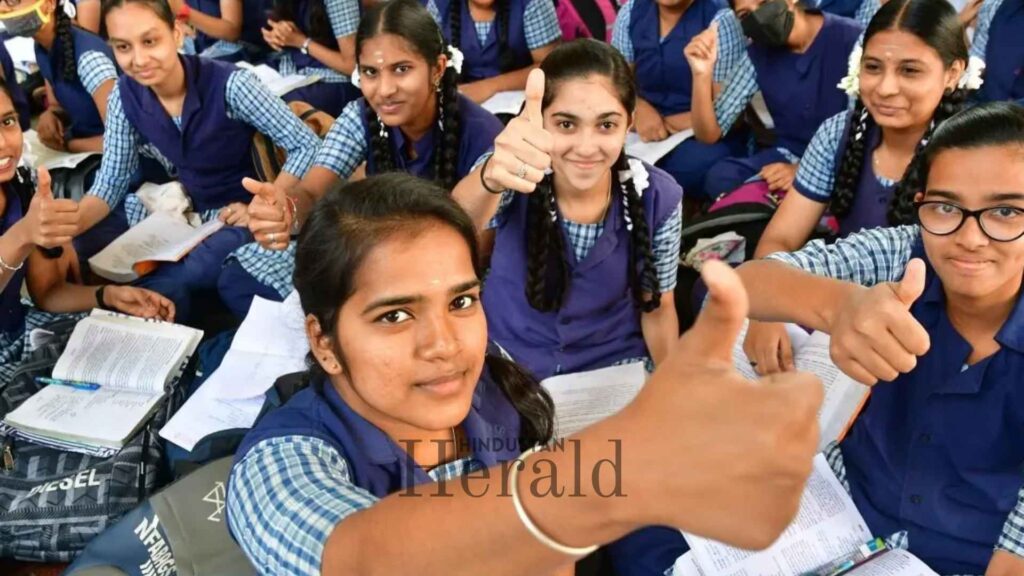
That is not a failure of the students alone. In many cases it reflects resource gaps, health issues, family disruption, exam anxiety that no amount of preparation entirely resolves. The system does provide a path forward. Supplementary exams are expected to be held in the last week of June 2026, giving students a chance to clear outstanding subjects without losing an academic year. Applications go through schools for regular students, and through exam centres for private candidates.
For those unhappy with their marks even after passing, re-totalling is available. The fee is Rs. 205 per subject, or Rs. 305 for two-paper subjects. Students can also request photocopies of their evaluated answer scripts for Rs. 275 per script a provision that is more useful than it sounds. Looking at how your answers were actually marked is sometimes the clearest feedback a student can get.
The Weight of This Moment
Board exams mean different things to different families. In some homes, SSLC marks determine whether a child will study science or commerce in Class 11. In others, they set the tone for how the next decade of that child’s life is talked about at the dinner table. For a teenager in a first-generation-literate family in a small district town, a good SSLC result is not just personal it is the whole family’s stake in the education system paying off.
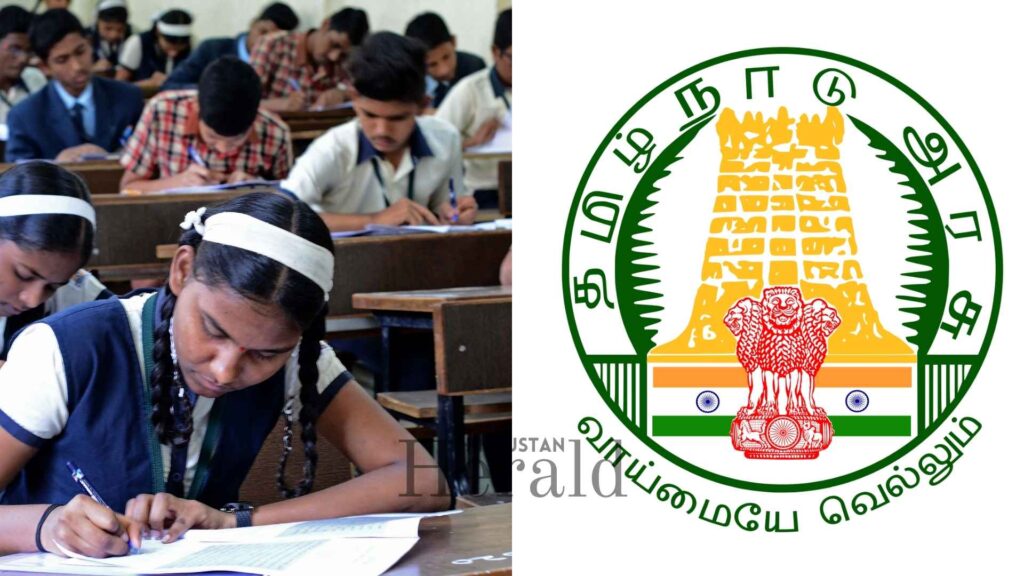
That weight does not disappear when the exam ends. In some ways, it intensifies. The weeks between now and May 20 are known to be anxious ones. Counsellors and teachers across the state have long flagged the post-exam, pre-result window as a particularly vulnerable period for students, especially those who feel they underperformed.
For now, the papers are handed in. The answer sheets are moving toward evaluators. Tamil Nadu is waiting and in the meantime, nine lakh students are probably getting their first full night’s sleep in months.
Stay ahead with Hindustan Herald — bringing you trusted news, sharp analysis, and stories that matter across Politics, Business, Technology, Sports, Entertainment, Lifestyle, and more.
Connect with us on Facebook, Instagram, X (Twitter), LinkedIn, YouTube, and join our Telegram community @hindustanherald for real-time updates.

Regional journalist bringing grassroots perspectives and stories from towns and cities across India.
- Sandeep Verma

- Sandeep Verma
- Sandeep Verma
- Sandeep Verma