
 By Ananya Sharma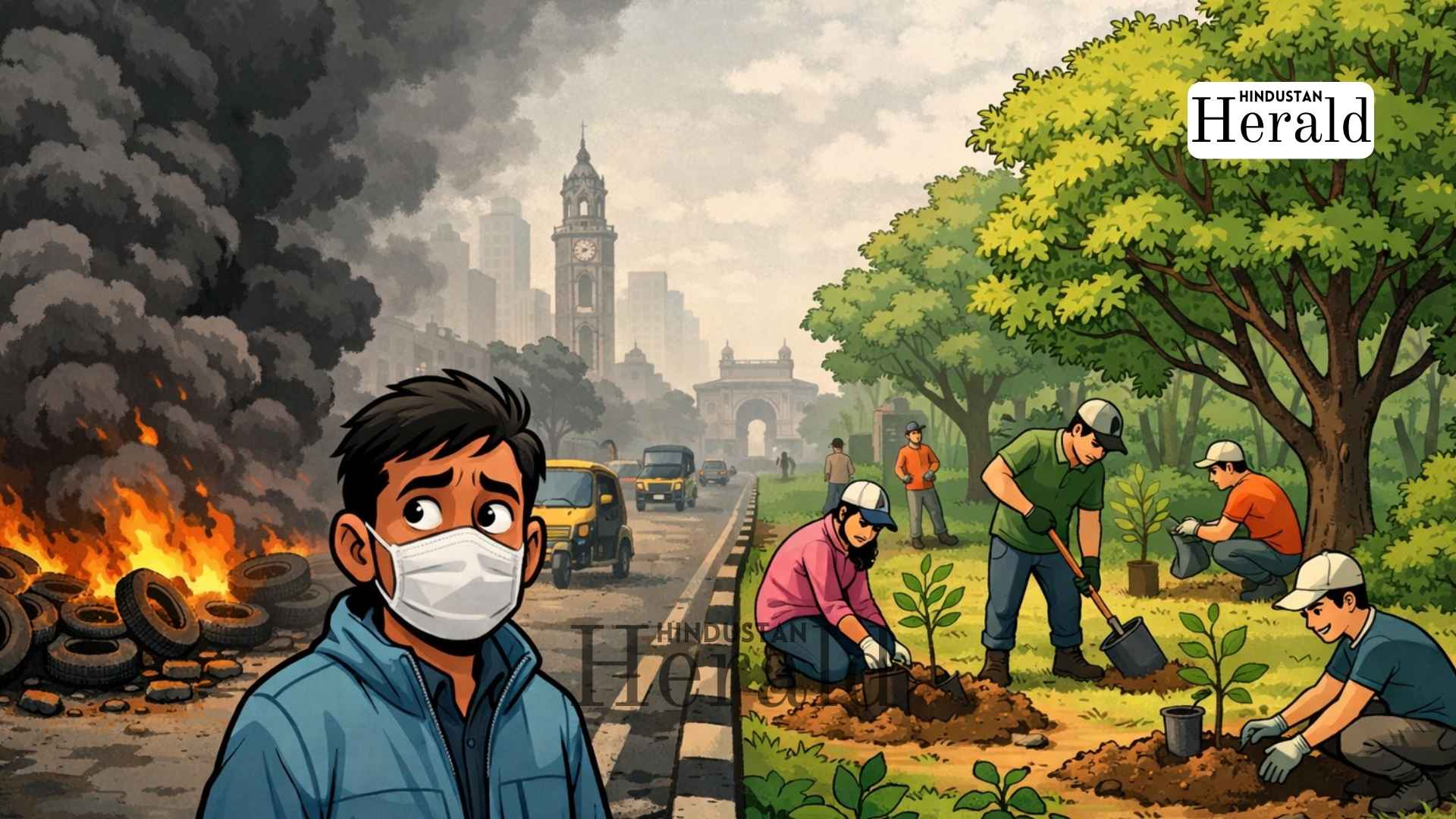
Mumbai, January 2: If you live in Mumbai, you do not need an air quality index to tell you something is wrong. Your body tells you first. The cough that does not go away. The burning in your eyes while waiting for a bus. The grey sky feels closer than it should. This is the backdrop against which rumours, half-truths, and fear spread fast. Over the last few days, one such rumour dragged Mission Green Mumbai into a conversation about tyre burning and pollution. A check of facts, however, shows something very simple. As of January 2, 2026, there is no proof at all connecting Mission Green Mumbai to burning tyres or pollution from automobile tyres.
But the panic around it reveals something else. People are angry. People are tired. And people are scared about what they are breathing every day.
What Mission Green Mumbai Has Been Doing All Along

There is nothing hidden or mysterious about Mission Green Mumbai.
The group started back in 2010, led by Subhajit Mukherjee. Since then, its work has stayed fairly visible and simple. Planting trees where there is concrete. Encouraging people to save rainwater instead of wasting it. Getting volunteers together on weekends to do small but meaningful work.
If you look at their public posts, you will see saplings, buckets, muddy hands, and people standing under the sun. You will not see fires, tyres, or smoke. There are no government warnings, no police cases, no pollution control notices linking the group to anything illegal.

People who work in the environmental space say this kind of confusion is becoming common. When pollution gets worse, people look for names to blame. Sometimes, the wrong ones get picked.
Why Burning Tyres Is A Big Deal
Now here is the part that really matters. Burning tyres is not just bad. It is dangerous in ways most people do not realise.
When a tyre is set on fire, it releases poisonous gases. These gases do not just disappear into the sky. They enter your lungs. Carbon monoxide, cyanide, sulphur dioxide, and other chemicals come out in thick black smoke. Some of these chemicals are known to cause cancer. Others damage the heart, lungs, and brain over time.
Anyone who has seen a tyre fire knows how ugly it is. The smoke is heavy and black. It spreads fast and stays longer than normal smoke. In narrow lanes and crowded areas, it gets trapped between buildings.
Doctors say breathing this smoke can make asthma worse, trigger heart problems, and affect children’s development. Street vendors, traffic police, sanitation workers, and people living near dumping grounds suffer the most.
The Pollution That Sinks Into The Ground
Most people think pollution ends when the smoke clears. That is not true.
When tyres burn, they release toxic oil. This oil sinks into the soil. It mixes with underground water. Over time, it makes land useless and water unsafe.
Studies say that burning one million tyres can release around 55,000 gallons of poisonous oil. During monsoon, rainwater spreads this contamination even further, carrying it into drains, rivers, and creeks.
What is left behind after the fire is ash. This ash contains heavy metals. These metals do not break down easily. Every time it rains, they sink deeper into the earth, causing damage that can last for years.
What The Law Says, Clearly
The Maharashtra Pollution Control Board has already said this in plain terms. Burning tyres in the open is illegal in Maharashtra.

The board has called the practice highly toxic and mutagenic, meaning it can cause long-term damage to humans and the environment. This rule applies everywhere, from highways to empty plots to informal recycling areas.
Then why does it still happen? Because it is easy to do and hard to catch. Many fires happen at night. Some happen in areas where inspections are rare. And waste management systems are still weak in many parts of the city.
How Wrong Stories Take Shape
In a city where people are constantly falling sick because of bad air, frustration is always close to the surface. A message goes viral. A name is mentioned. And suddenly, blame is fixed.

The problem is, blaming the wrong people does nothing to clean the air. It only distracts from the real issue. Illegal waste burning continues quietly while attention shifts elsewhere.
Mumbai’s pollution does not come from one source. It comes from traffic, construction dust, factories, poor waste handling, and yes, tyre burning. Fixing it needs action, not confusion.
What Needs To Happen Now
As the city enters another year of polluted winters, one thing is clear. Rumours will not help anyone breathe better.
Tyre burning is completely avoidable. It happens because rules are not enforced properly, and safer disposal systems are missing. That is where attention needs to go.

Groups like Mission Green Mumbai will continue planting trees and spreading awareness. That work matters. But stopping toxic pollution needs stronger enforcement, better waste systems, and accountability from those in charge.
For now, the facts are simple and should stay that way. Mission Green Mumbai has no link to tyre burning. There is no evidence to suggest otherwise.
What is undeniable is this. Burning tyres is quietly harming Mumbai, fire by fire. And until that stops, no amount of blame or online noise will fix the air we all share.
Stay ahead with Hindustan Herald — bringing you trusted news, sharp analysis, and stories that matter across Politics, Business, Technology, Sports, Entertainment, Lifestyle, and more.
Connect with us on Facebook, Instagram, X (Twitter), LinkedIn, YouTube, and join our Telegram community @hindustanherald for real-time updates.

Covers Indian politics, governance, and policy developments with over a decade of experience in political reporting.
- Ananya Sharma

- Ananya Sharma
- Ananya Sharma
- Ananya Sharma




 Arun Upadhayay and Ananya Sharma
  Neeraj Kapoor and Ananya Sharma