
 By Sandeep Verma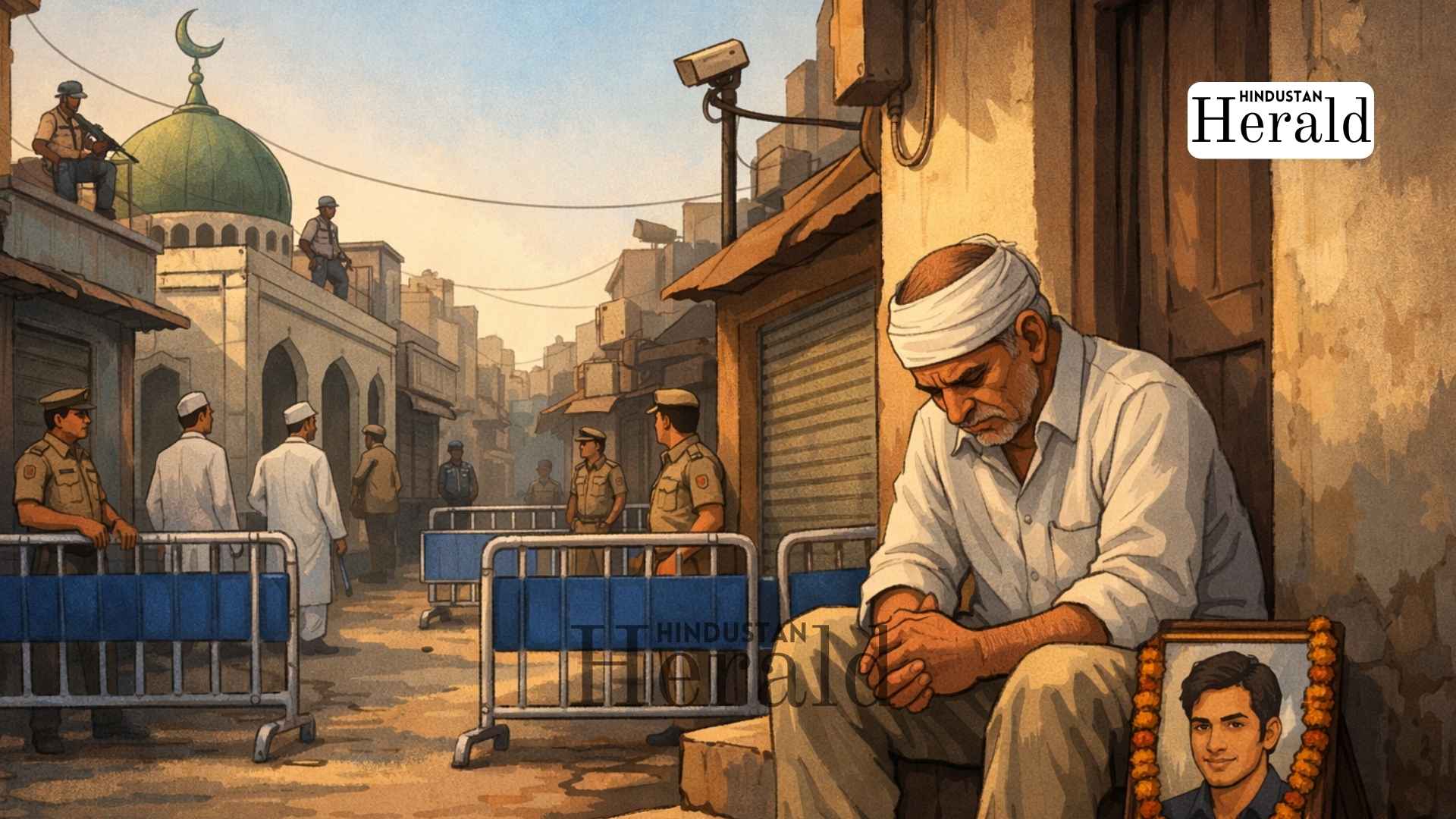
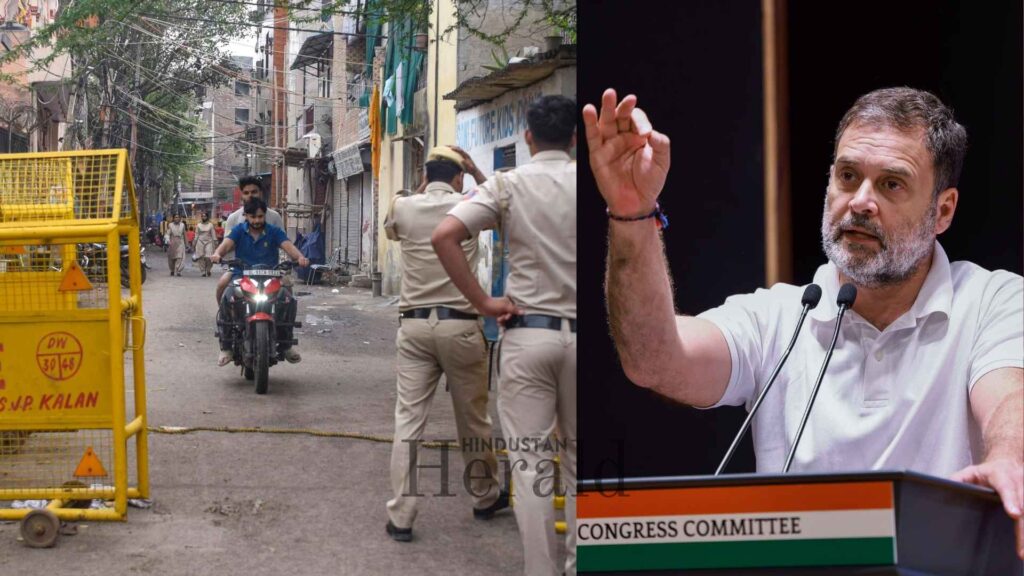
New Delhi, March 21: There were no children running through lanes in new kurtas this Eid morning in Uttam Nagar. No loud greetings thrown across balconies. No smell of mutton biryani floating out of open doors. What the residents of this crowded West Delhi neighbourhood woke up to instead were police barricades, identity checks at colony entrances, and the low hum of CCTV cameras tracking every movement.
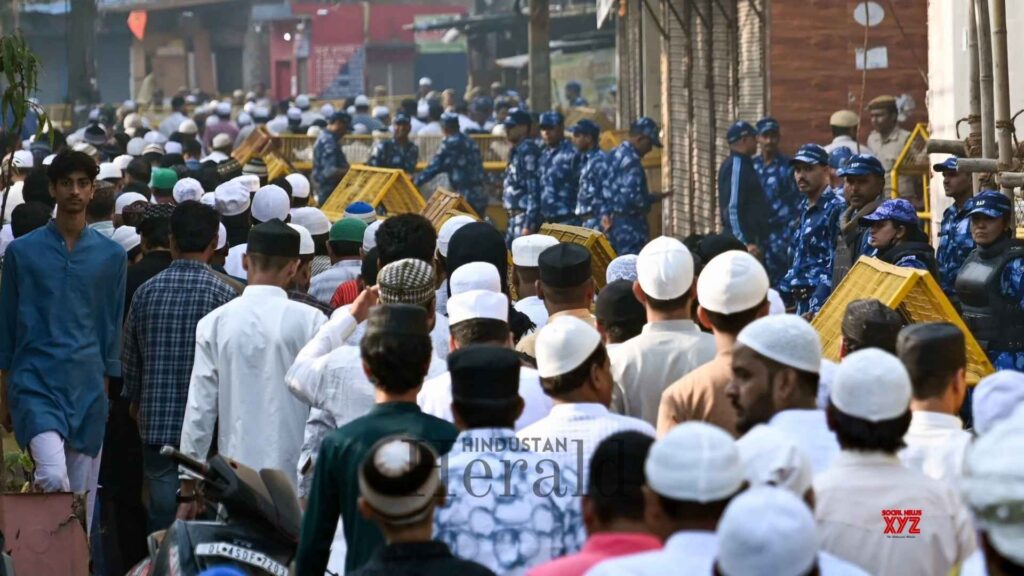
This is what Eid al-Fitr 2026 looks like in one of Delhi’s most tense localities right now.
The reason goes back seventeen days, to a Holi night that should have ended with colours and sweets, but ended instead with a young man dead on the street.
A Water Balloon That Changed Everything
On the night of March 4, in the narrow lanes of JJ Colony, Hastsal village, a child was playing Holi the way millions of children do every year. She was on her terrace, throwing water balloons into the street below. One of those balloons landed on a neighbour, a woman from a Muslim family living close by.
What followed was an argument. Then a scuffle. Then, by the time night fell, it had turned into something far uglier.

Tarun Kumar, 26, who had been out celebrating Holi with his friends, was returning home when eight to ten people attacked him with cricket bats, iron rods, and stones. He was not even present when the original dispute broke out. By the next morning, he was dead.
Tarun was pursuing a digital marketing course. He died after sustaining severe injuries in the clash. His father Memraj told reporters that his son had no idea what had happened at home when he walked back into his lane that night.
People who live in that colony, both Hindu and Muslim, will tell you something important if you sit with them long enough. Multiple local residents said the two families had a long-standing rivalry, with prior complaints filed at the police station from both sides. Older residents called it a very unfortunate coincidence that the fight occurred on Holi.
That context got buried very quickly under what came next.
The Outsiders Arrived
Within days of Tarun’s death, the locality stopped being just a neighbourhood in mourning. It became a destination.
People associated with right-wing organisations began continuously visiting the family of the deceased. Several people were heard giving provocative speeches.
On March 12, Bittu Bajrangi along with members of the International Hindu Sena and several right-wing organisations reached Tarun’s house. One sadhvi present told the crowd that they would have to enter the homes of the accused.
On March 15, groups marched under the banner of Sarv Hindu Samaj demanding a CBI probe. In videos of the protest, participants called for “badla” and used language explicitly targeting the Muslim community.
The local peace committee, which had been quietly trying to hold things together, summed it up plainly. Members asked police to take action against the spread of misinformation and to bar outsiders intent on inciting communal tension. The problem, as residents saw it, was not the people who had lived side by side in those lanes for years. It was the people coming in from outside with a different agenda entirely.
Tarun’s own father, grieving and bandaged, gave reporters the clearest statement of all. He said his family never made this a Hindu-Muslim issue. “A crime should be seen as a crime,” Memraj said.
Nobody was really listening.
Threats Specifically Targeting Eid
As Ramzan entered its final days and Eid came into view on the calendar, the tone of the threats sharpened considerably.
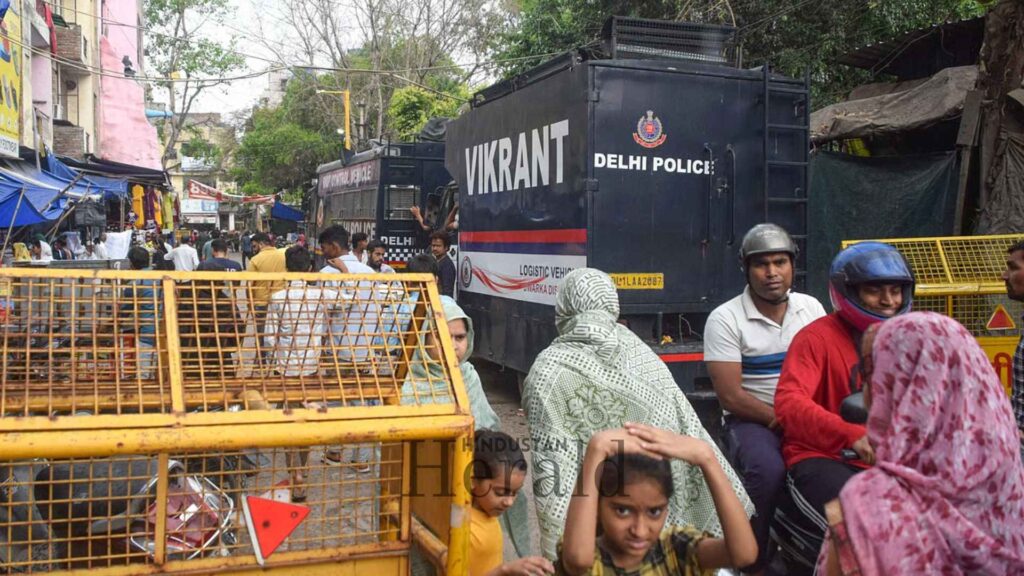
Speeches circulating on social media and delivered at public gatherings contained explicit threats that Muslims would not be allowed to celebrate Eid in Uttam Nagar. Some statements even called for Holi to be forcibly played with Muslims on the very day of Eid, and for violence before morning prayers. Posters announcing that “Holi will be celebrated in Uttam Nagar on March 20,” the date of Eid, were being widely circulated.
Think about what that actually means for the people living there. Families who had been fasting through Ramzan, preparing for what is essentially their biggest festival of the year, were waking up to messages threatening them with violence on that day. Many Muslim residents of JJ Colony abandoned their shops and homes in the middle of Ramzan. Entire families packed up and left because they did not feel safe staying.
This is in a neighbourhood inside the national capital of India.
The Association for Protection of Civil Rights took the matter straight to court.
What the Delhi High Court Said
The Delhi High Court did not waste time on the matter.
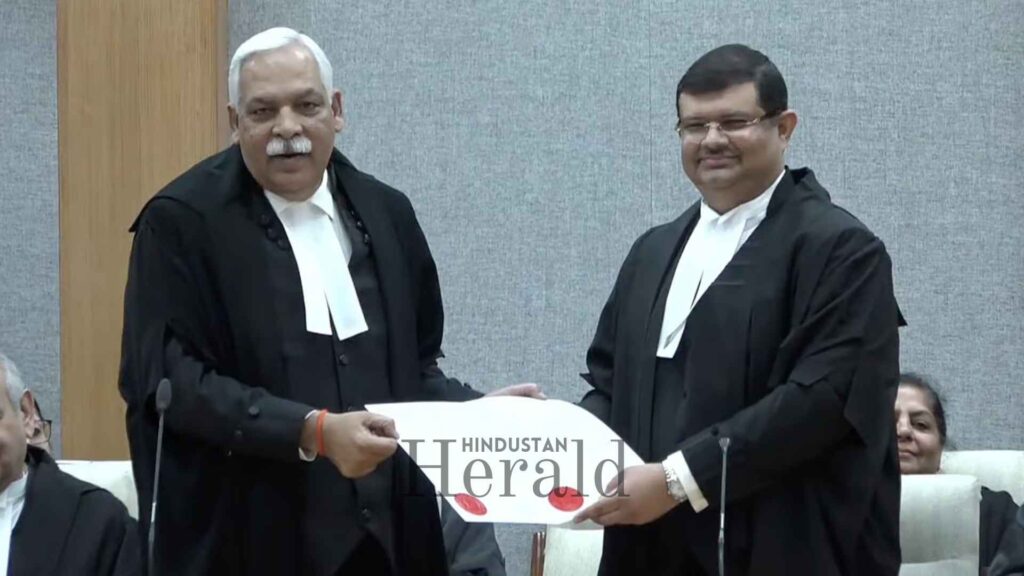
A bench of Chief Justice D K Upadhyaya and Justice Tejas Karia directed that the police deployment be robust enough to instil a sense of safety and security among all residents. The bench ordered that no one be allowed to play mischief with the potential to create any untoward situation. It directed that security arrangements remain in place not just through Eid but all the way until Ram Navami.
The court issued a notice to Delhi Police seeking details on measures being implemented on the ground. The Centre informed the bench that central paramilitary forces had already been deployed in the area. The matter comes up again on April 6.
The significance of the court stepping in here goes beyond Uttam Nagar. It reflects a reality that has been playing out in patches across India for several years now, where the festive calendar itself becomes a site of communal contestation. Holi, Eid, Ram Navami, these are festivals. They are being used as deadlines.
What Uttam Nagar Looks Like Today
The security operation in place right now is not a small one.
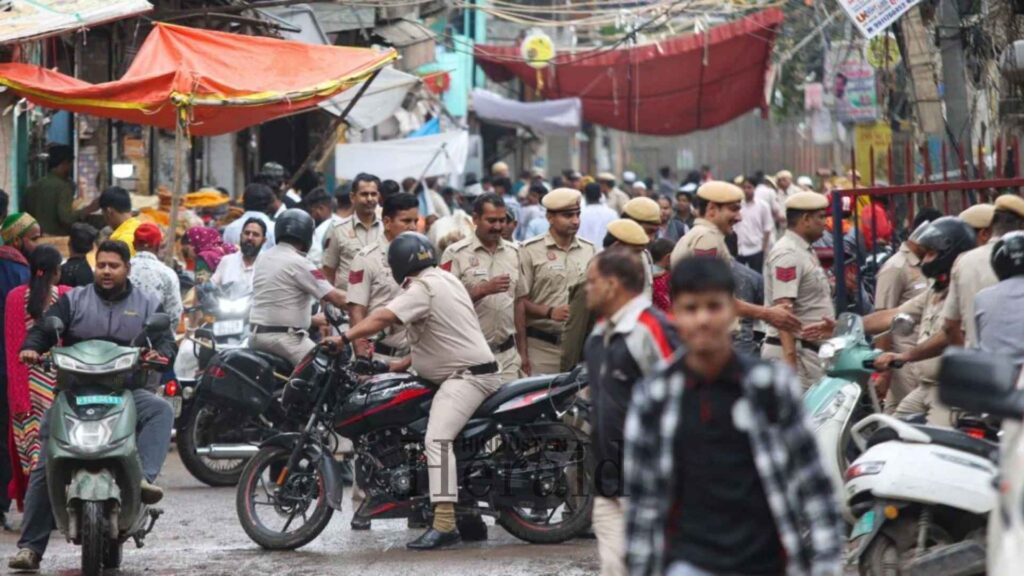
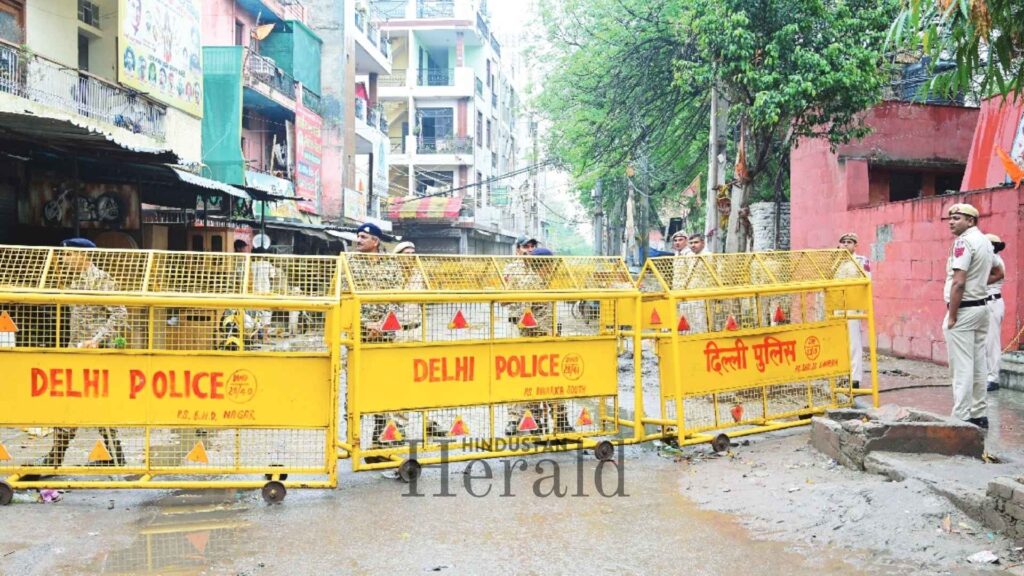
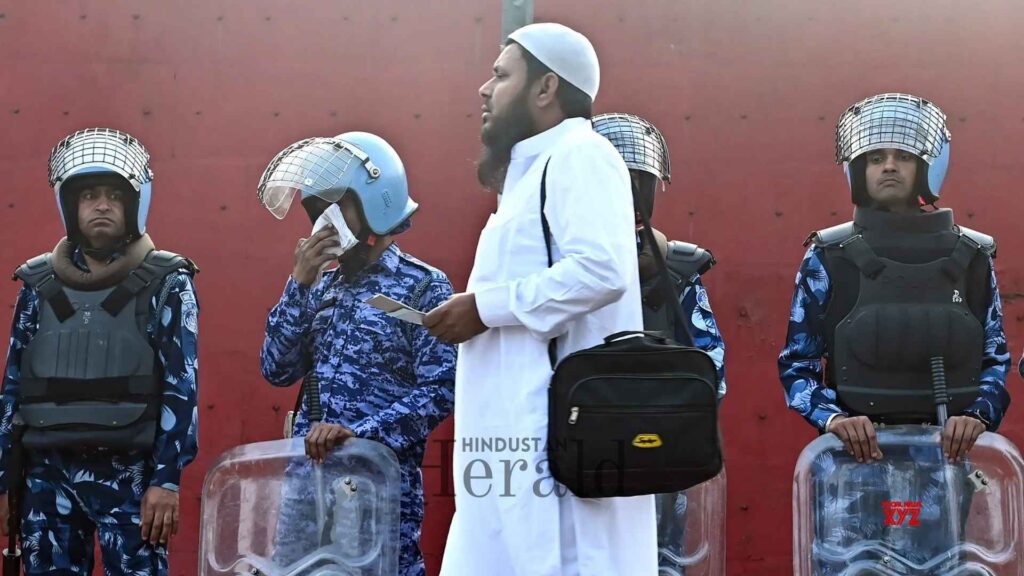
More than 100 picket points have been established across Dwarka district and Uttam Nagar. Rooftop surveillance is active. Central Armed Police Forces are deployed alongside Delhi Police at key junctions. Hastsal village, where the killing took place, has reinforced deployment that will continue through the festive period.
Around 150 to 200 police personnel are stationed outside the Uttam Nagar police station alone. Entry into certain stretches of the colony requires you to prove you actually live there.
Pradeep Shukla, who heads the local residents’ welfare association, is someone who has lived in this area and watched it for years. His words this morning were measured but honest. “There is heavy barricading, and movement has reduced. It feels unusually quiet. People are still worried, but we are hoping things remain peaceful,” he said.
That word, “hoping,” says everything.
Eid Prayers Were Offered. The Calm Held.
Visuals from the morning Eid prayers showed residents coming together to observe the occasion peacefully. Officials confirmed that religious observances took place without disruption.
People prayed. They embraced. They went home quietly. The festive buzz that normally fills a Muslim neighbourhood on Eid morning, the music, the visitors, the street food, was largely absent. But violence did not break out, and for a locality that has spent the last two weeks under this kind of pressure, that itself counts as something.
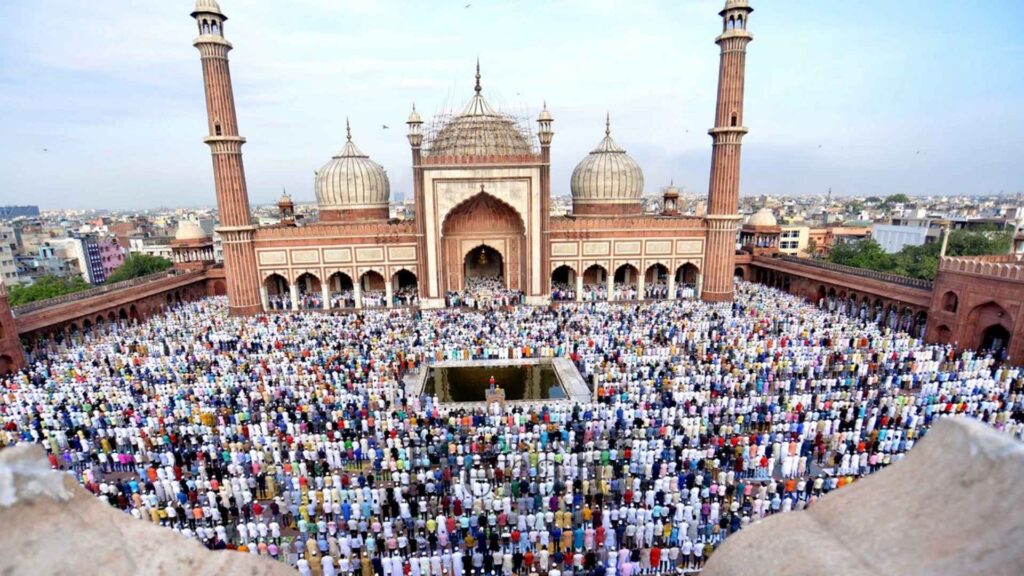
Elsewhere in Delhi, the story was different. At Jama Masjid, thousands gathered for prayers in an atmosphere that was festive and undisturbed. Prime Minister Narendra Modi and President Droupadi Murmu both extended Eid greetings to the nation, emphasising brotherhood and harmony.
In Uttam Nagar, those words would have felt a long way away.
Where the Politics Lands
Congress leader Rahul Gandhi accused the BJP of inciting communal violence and appealed to Delhi residents not to fall for any provocation, saying that the people of Uttam Nagar have already paid a heavy price for the violence.
The BJP, for its part, had praised the police action and demolitions as strong and necessary responses to the killing.
Both parties are, in their own way, doing what political parties do. The people of JJ Colony are doing something harder. They are trying to figure out how to be neighbours again after weeks of being told they are enemies.
What Comes Next
The Delhi High Court order runs through Ram Navami. That festival falls in early April, and it will be the next real test of whether the peace in Uttam Nagar holds or fractures.
The arrests have been made. The demolition has happened. The court has spoken. The police are in place. And yet the thing that actually needs to happen, ordinary people of different communities deciding that they will not let their neighbourhood be used as a stage for someone else’s politics, cannot be ordered or deployed or demolished into existence.
Memraj, Tarun’s father, understood that, even in his grief. He buried his son and refused to let that burial become a communal statement. That quiet, stubborn clarity from a man who had every reason to be consumed by rage is, if anything in this story is, the thing most worth paying attention to.
The lanes of JJ Colony are quiet this Eid afternoon. Whether that quiet becomes peace, or merely waits for the next occasion, only the calendar knows.
Stay ahead with Hindustan Herald — bringing you trusted news, sharp analysis, and stories that matter across Politics, Business, Technology, Sports, Entertainment, Lifestyle, and more.
Connect with us on Facebook, Instagram, X (Twitter), LinkedIn, YouTube, and join our Telegram community @hindustanherald for real-time updates.

Regional journalist bringing grassroots perspectives and stories from towns and cities across India.
- Sandeep Verma

- Sandeep Verma
- Sandeep Verma
- Sandeep Verma




 Arun Upadhayay
  Ananya Sharma