 By Ayesha Khan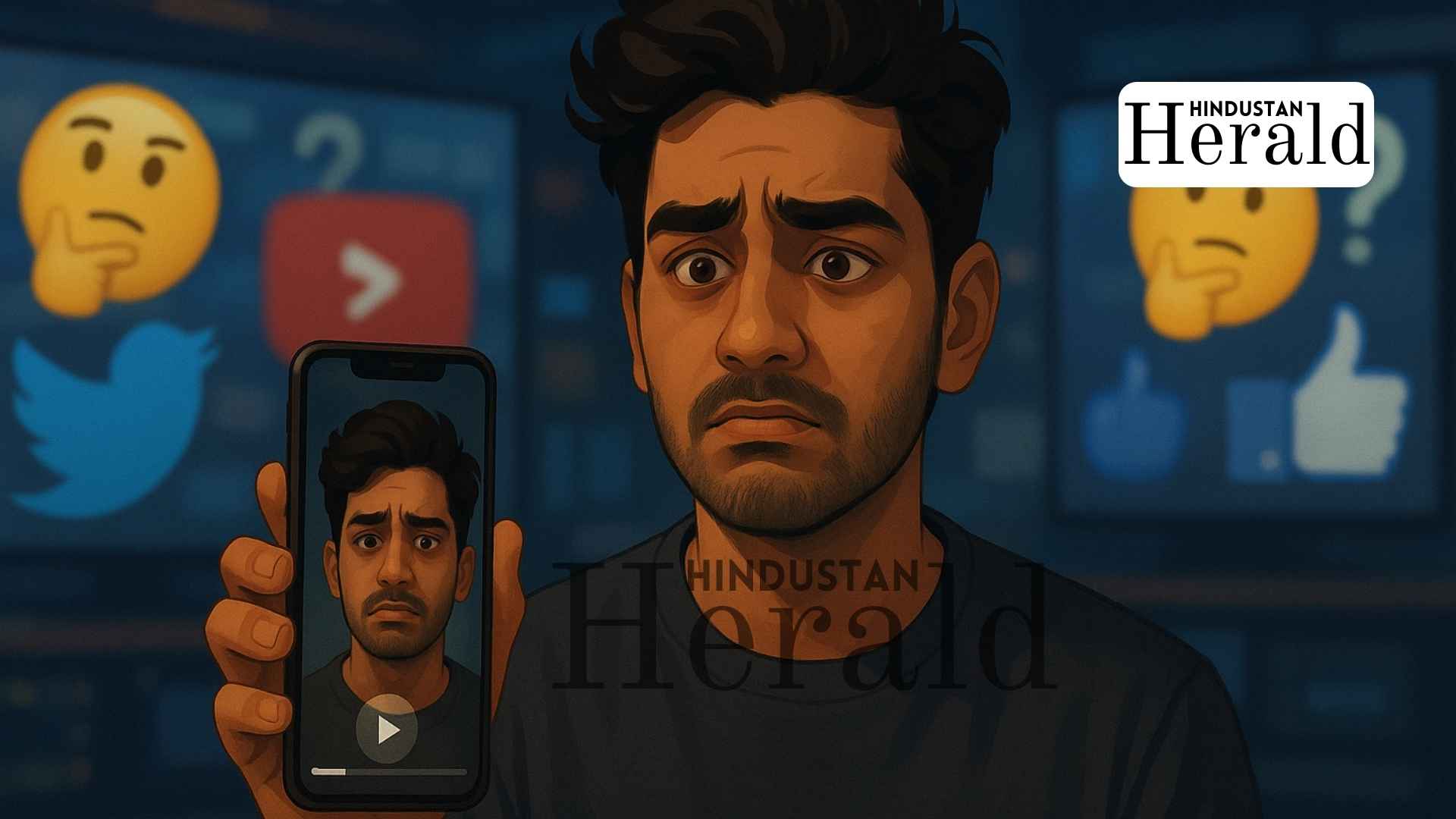
New Delhi, December 15: It began, as many online storms do, with a joke that travelled faster than its context. A short parody video, meant to poke fun at cinematic chest-thumping, was stripped of its intent and recast into something far heavier. By the end of the day, Vikanshu Tomar, an Indian content creator, found himself repeatedly described across social media and television chatter as a Pakistani influencer, a label that was both incorrect and revealing.
What followed was not outrage, not a legal threat, but a pointed, almost weary humour that cut deeper than any denial could have. In the process, Tomar inadvertently exposed how casually identity is handled in India’s entertainment media ecosystem, especially when nationalism, virality, and cinema collide.
A Joke That Travelled Too Far
Tomar’s original video was straightforward in its intent. Posted as an Instagram Reel, it was a spoof, a performance where he pretended to be a Pakistani viewer reacting to Dhurandhar, the upcoming Hindi spy thriller directed by Aditya Dhar and headlined by Ranveer Singh. His tone was exaggerated, the mannerisms deliberately theatrical. To regular followers, the joke was obvious.
The internet, however, does not pause to check footnotes.
As reported by Hindustan Times, the video quickly crossed two million views, lifted and reposted by dozens of meme pages and entertainment handles. Somewhere along the way, the framing vanished. Captions dropped the word “spoof.” Context dissolved. What remained was a clip of a man speaking in character, conveniently fitting into a narrative that many pages were already eager to push.
Soon, Tomar was being cited as a Pakistani content creator reacting to an Indian spy film. Some posts treated it as novelty. Others framed it as a cross-border moment loaded with political suggestion.
Not one, it appears, stopped to check who he actually was.
When Identity Becomes Clickbait
In a country where India Pakistan relations are never far from the surface, even a harmless joke can acquire weight it was never meant to carry. The genre of Dhurandhar only amplified this. Spy films in Hindi cinema are rarely just entertainment. They trade heavily in symbolism, allegiance, and patriotic imagery.

Against that backdrop, a so-called Pakistani reaction becomes irresistible content.
According to Hindustan Times, Tomar addressed the misidentification in a follow-up video, choosing sarcasm over fury. “Next time se acting halki karunga,” he said, smiling. Next time, I will act less convincingly. The line landed precisely because it carried an uncomfortable truth. His performance had been believable enough to override even the most basic verification.
In another moment, he joked that if this was the standard of fact-checking, actors might soon be signed for imaginary Karachi promotions. It was a laugh, yes, but it was also a quiet indictment.
That said, laughter was doing the work that apologies did not. Many pages that had mislabelled him quietly edited captions or deleted posts without clarification. Television segments moved on. The correction cycle never quite caught up with the error.
Dhurandhar And The Viral Machine
The controversy cannot be separated from the film itself. Dhurandhar has been trending relentlessly since its promotional rollout. Directed by Aditya Dhar, best known for Uri, the film arrives with expectations of muscular nationalism and high-stakes espionage. Ranveer Singh’s casting has only added fuel to the discussion, as has Akshaye Khanna’s return in a pivotal role.
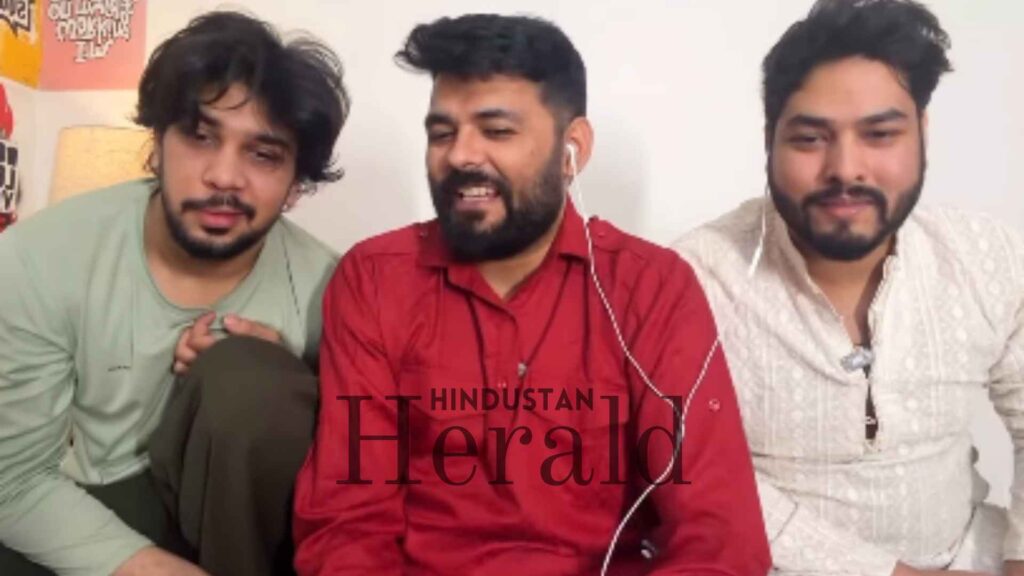
Reaction videos, parody reels, and speculative breakdowns have flooded social platforms. In this environment, nuance rarely survives. Clips are consumed out of sequence. Characters blur into creators. Performance becomes identity.
As it turns out, Tomar’s spoof landed at precisely the wrong moment, when the algorithm was hungry and the discourse already primed for cross-border framing.
Still, the responsibility does not rest with algorithms alone.
The Quiet Collapse Of Verification
Entertainment journalism in India has long operated under looser standards than political or economic reporting. Quotes are lifted from social media without confirmation. Backgrounds are assumed. Viral reach often substitutes for credibility.
The Tomar episode lays this bare. Identifying a content creator’s nationality is not investigative journalism. It is basic reporting. Yet even that step was skipped, repeatedly, because the version of the story that travelled fastest was also the most provocative.

This is not an isolated failure. It is a pattern.
Creators performing satire, dialect comedy, or character-driven humour are particularly vulnerable. When their work escapes its original audience, it is often flattened into literal truth. Performance is mistaken for belief. Character becomes person.
Tomar understood this instinctively, which perhaps explains why he did not attempt to fight the misreporting with anger. Humour, in this case, was both shield and scalpel.
Another Dhurandhar Moment, Same Day
Interestingly, the same news cycle also carried a very different conversation around Dhurandhar. According to Hindustan Times, actor Saumya Tandon spoke about a slap sequence in the film involving Akshaye Khanna, revealing that he was slapped seven times during filming.
Tandon recalled that Khanna encouraged her to deliver the slaps with full force, telling her to go all in. The anecdote sparked its own debate about performance, consent, and intensity in filmmaking.
While unrelated on the surface, both stories pointed to the same truth. Dhurandhar has become more than a film. It is a cultural object onto which multiple conversations are being projected, about nationalism, masculinity, authenticity, and now, media responsibility.
The Cost Of Being Convincing
For Tomar, the irony is sharp. His skill as a performer created the problem. The better he played the character, the easier it became for others to mistake fiction for fact.
There is a quiet exhaustion in that realisation, familiar to many creators who work with satire in politically charged spaces. If you explain the joke, it dies. If you do not, someone else will explain it for you, badly.
Still, Tomar’s response has been widely appreciated precisely because it resisted escalation. He did not accuse. He did not sermonise. He held up a mirror and let the reflection speak.
What This Episode Leaves Behind
This is not a scandal. No careers have ended. No lawsuits are pending. And yet, the episode lingers because it exposes something fundamental about how stories are shaped online.
In the rush to frame content within familiar binaries, Indian versus Pakistani, patriot versus outsider, satire is flattened and individuals are mislabeled. Corrections rarely travel as far as errors. Accountability dissipates once the trend moves on.
For now, Vikanshu Tomar has reclaimed his narrative with humour. Dhurandhar continues to dominate timelines. And the media ecosystem rolls forward, largely unchanged.
Still, the question remains, uncomfortably unresolved. If a simple Instagram spoof can be misreported so widely, what else slips through unchecked when the stakes are higher and the jokes are fewer.
Stay ahead with Hindustan Herald — bringing you trusted news, sharp analysis, and stories that matter across Politics, Business, Technology, Sports, Entertainment, Lifestyle, and more.
Connect with us on Facebook, Instagram, X (Twitter), LinkedIn, YouTube, and join our Telegram community @hindustanherald for real-time updates.

Covers films, television, streaming, and celebrity culture with a focus on storytelling trends.
- Ayesha Khan

- Ayesha Khan
- Ayesha Khan
- Ayesha Khan