
 By Ananya Sharma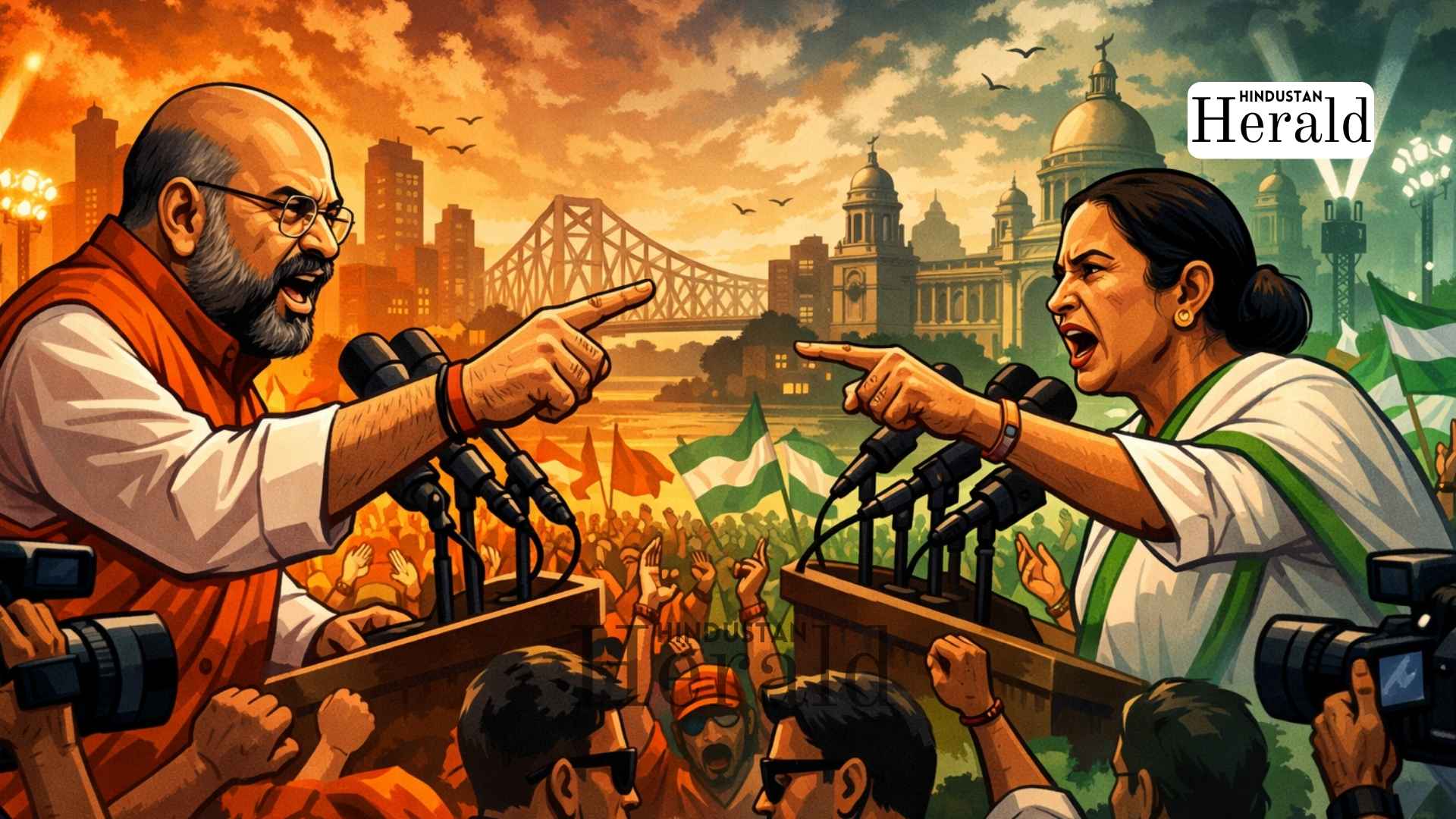
Kolkata, March 28: Union Home Minister Amit Shah arrived in Kolkata on Saturday to formally release the Bharatiya Janata Party’s pre-election chargesheet against the Mamata Banerjee government, triggering an immediate counter-offensive from the Trinamool Congress and setting the tone for what is shaping up as one of the most combative state election campaigns in recent national political memory. With West Bengal’s 294-member assembly heading to polls on April 23 and April 29, Saturday’s events confirmed that the 2026 contest will be fought on two parallel tracks: governance record and national security.
Shah’s Abhiyognama: A 40-Page Case Against 15 Years of TMC Rule
The BJP’s document, titled Abhiyognama or “chargesheet,” compiles alleged instances of corruption and misgovernance across the 15-year tenure of Chief Minister Mamata Banerjee. Allegations related to administrative corruption, collapse of law and order, safety concerns for women, prevalence of syndicate raj, and crises in health and education figure prominently in the document.
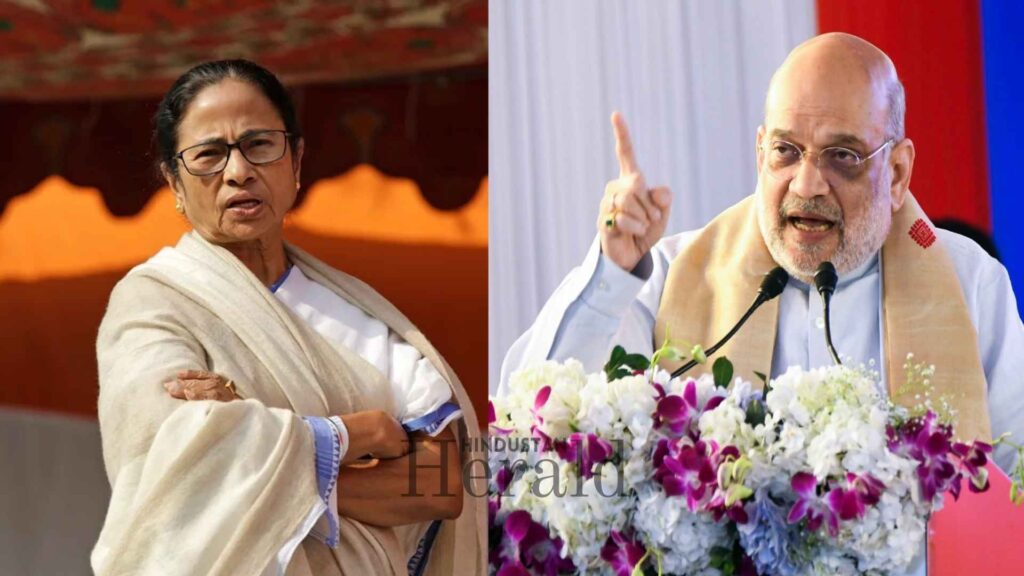
Addressing a press conference in Kolkata, Shah said the chargesheet highlighted key issues from the TMC government’s 15 years in power, adding that while the TMC may dismiss it as a BJP document, it actually reflected the concerns of the people of Bengal.
The Home Minister framed the election in terms that went well beyond state politics. “In the coming elections, Bengal has to choose between fear and trust. For the last 15 years, the rule of fear, corruption, and appeasement politics has been going on in the state,” he said.
On infiltration, Shah was categorical. He alleged that during the TMC’s rule, West Bengal had become the country’s “principal corridor for infiltration, appeasement politics and border insecurity,” and claimed that infiltration routes through Assam had been shut after the BJP came to power there, leaving West Bengal as “the only remaining route.”
Shah also alleged that the Mamata Banerjee government had not provided land for border fencing despite repeated requests from the Centre, calling the refusal “politically motivated.” “The TMC government has not provided land for border fencing as they want to create a vote-bank of infiltrators,” he alleged.
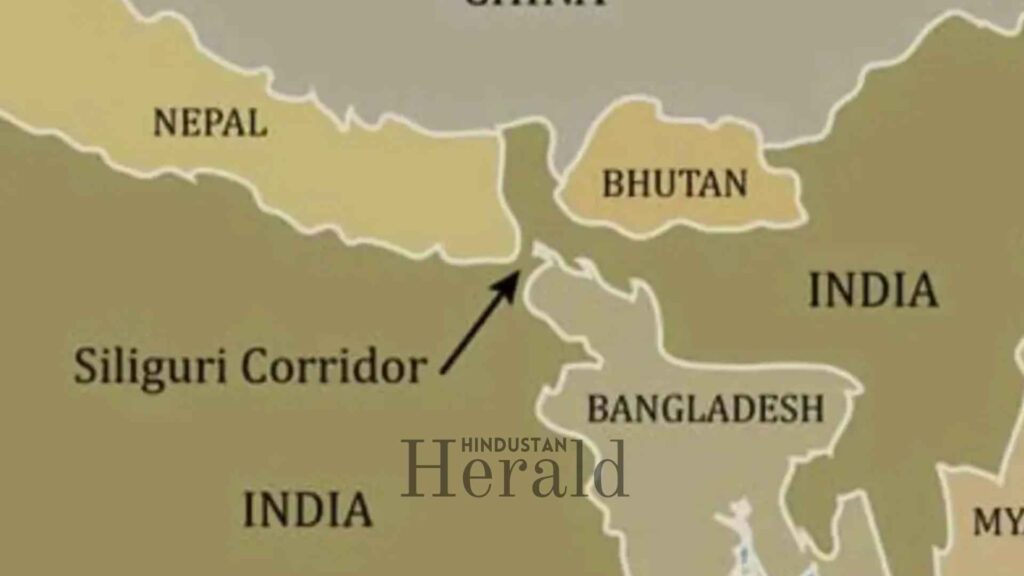
He also invoked the Siliguri Corridor, the strategically vital strip of land connecting the Northeast to mainland India. Shah alleged that the security of the corridor was being endangered “because of the TMC government’s appeasement politics.” In the context of national security discourse, this framing is significant: it positions a state election as a matter of central strategic interest, a talking point that carries weight far beyond West Bengal.
The Victim Card Allegation and the SIR Controversy
Shah also accused Mamata Banerjee of perpetually playing the “victim card” in politics, saying the people of Bengal had now “thoroughly understood” her tactics.
On the Special Intensive Revision (SIR) of electoral rolls, one of the most hotly contested issues of this cycle, Shah questioned why judicial officers had to be deployed specifically in West Bengal during the exercise, and declared that the BJP was resolved to identify and expel every single infiltrator from the country, “not merely from voter lists.”
The SIR has emerged as a major flashpoint between the Election Commission and the Mamata government. The TMC contends the exercise is being used to disenfranchise minority voters; the BJP argues it is a routine, necessary cleansing of fraudulent entries on the rolls. Neither side has shown any appetite for a middle ground.
TMC’s Immediate Counter: ‘Mota Bhai, Jawab Chai’
The TMC did not wait. Hours after Shah’s press conference, TMC MP Mahua Moitra, along with leaders Bratya Basu and Kirti Azad, released a counter-chargesheet against the BJP under the slogan “Mota Bhai, Jawab Chai,” listing 12 points of alleged misgovernance in BJP-ruled states, including corruption, women’s safety, and ethnic violence.
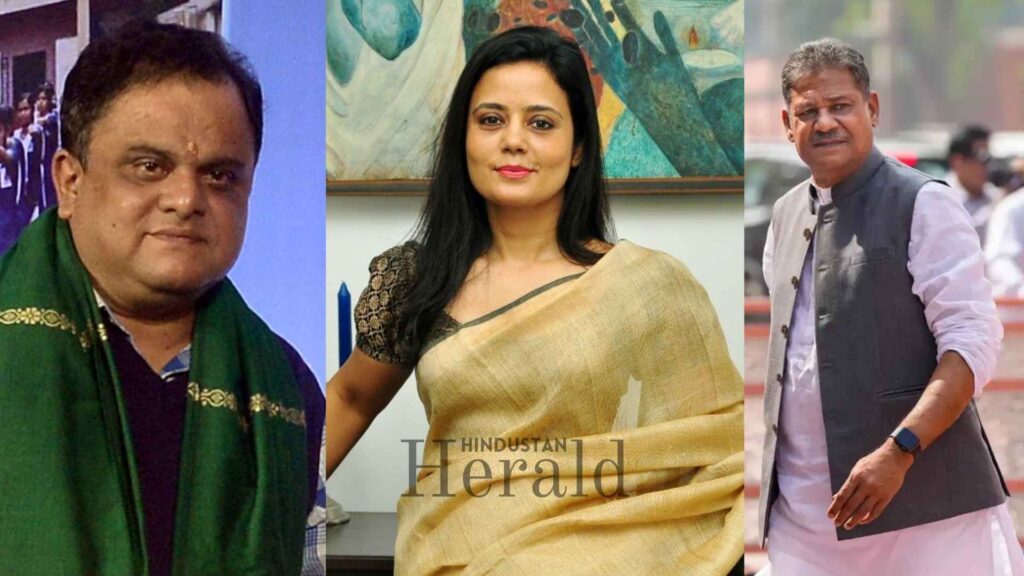
Moitra directly challenged Shah on women’s safety: “Amit Shah is talking about women’s security. What is the condition of women’s safety in BJP-ruled states? Shah should first answer about violence in Manipur, which has bled continuously for the past three years.”
The TMC’s structural counter-argument was equally pointed. The party argued that if infiltration remained a problem, responsibility lay primarily with the Union government, which controls the country’s borders and security apparatus.
Senior leader Basu alleged that the BJP was seeking to blur the line between Bengali and Bangladeshi identity, looking to “import their hateful Assam-style detention camp model into Bengal.”
That said, the TMC’s counter-chargesheet was as much a media operation as a policy rebuttal. The party is aware that Shah’s national security framing, particularly the Siliguri Corridor argument, resonates with a segment of the electorate that is genuinely anxious about demographic change and border security. A well-packaged counter-narrative is essential damage control.
Murshidabad Clashes Add Live Ammunition to BJP’s Pitch
The political theatre of the day was shadowed by real violence on the ground. Clashes broke out on March 27 in Raghunathganj town in Murshidabad district when a Ram Navami procession turned violent, with stone-pelting and skirmishes reported across multiple locations.
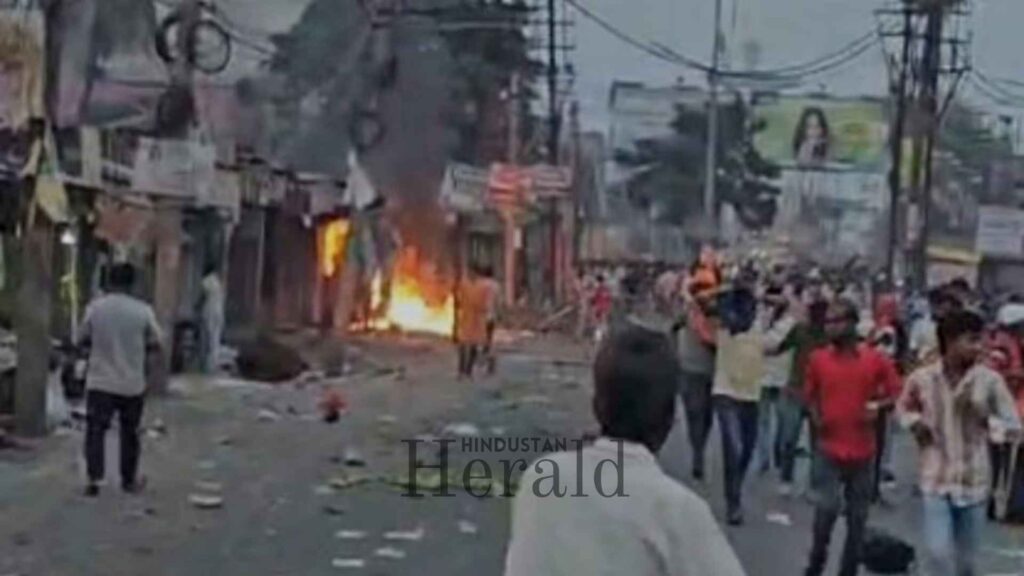
According to local accounts, trouble began when the procession passed near a mosque in Jangipur where Friday prayers were underway. Objections to loud DJ music near the mosque triggered a standoff that quickly escalated into stone-pelting, vandalism, and arson.
By Saturday, 30 people had been arrested, Section 144 remained in force, and heavy deployment of police and Central Armed Police Forces (CAPFs) continued across Raghunathganj and Jangipur. Shops remained shut, and prohibitory orders had been issued for affected localities.
Predictably, both sides sought ownership of the narrative. Shah pointed to the violence as evidence of state administration’s failure, noting that the situation had only come under control after the Election Commission transferred several officers and brought in competent replacements. Mamata Banerjee, in turn, blamed the BJP for instigating the clashes.
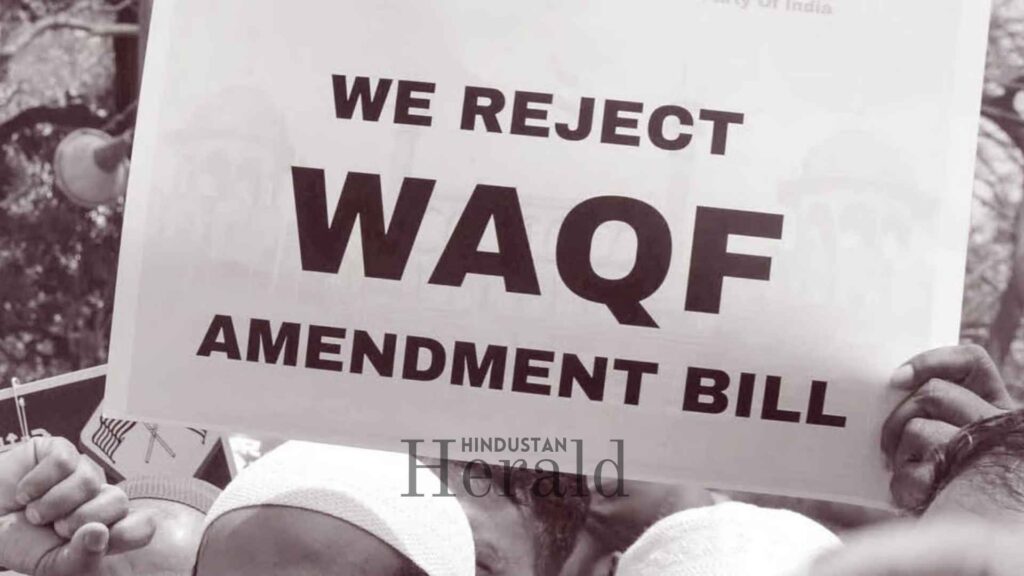
This is not Murshidabad’s first brush with electoral-season unrest. The district was the site of major violence in April last year during protests over the Waqf (Amendment) Act, prompting the Supreme Court to direct the NIA to file a report before the Calcutta High Court in connection with the probe. The recurrence of communal flashpoints in the same district during the same election season raises questions that go beyond political blame-trading.
What the Chargesheet War Signals for National Politics
Saturday’s events in Kolkata are relevant not just as national news in India but as a study in how the BJP deploys its campaign architecture at the state level. The Abhiyognama follows a pattern seen in other contested states: a pre-manifesto indictment of the incumbent, designed to set the terms of debate before the ruling party can fully mobilise its welfare narrative.
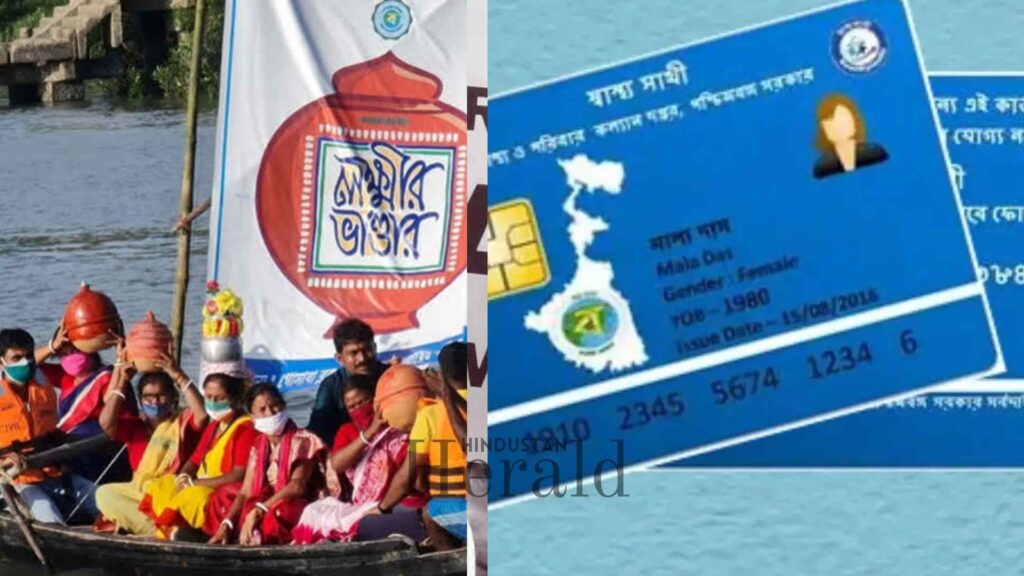
The TMC’s record in welfare delivery, through schemes like Laxmi Bhandar and Swasthya Sathi, remains its most durable electoral asset. The BJP knows this, which is why its chargesheet is structured not around welfarism but around law, order, identity, and security, areas where the TMC is structurally vulnerable to attack.
The BJP’s election manifesto, Bharosha Potro, is expected in the first week of April and is likely to elaborate further on these themes while presenting the party’s proposed alternatives.
As it turns out, the chargesheet war may matter less for what it says and more for what it signals: that both parties have decided the 2026 Bengal election will be fought in the realm of identity and accountability, not just development. That is a more dangerous campaign for both sides to run, and for the electorate to navigate.
Poll Schedule
West Bengal votes in two phases on April 23 and April 29, 2026. Counting of votes is scheduled for May 4
Stay ahead with Hindustan Herald — bringing you trusted news, sharp analysis, and stories that matter across Politics, Business, Technology, Sports, Entertainment, Lifestyle, and more.
Connect with us on Facebook, Instagram, X (Twitter), LinkedIn, YouTube, and join our Telegram community @hindustanherald for real-time updates.

Covers Indian politics, governance, and policy developments with over a decade of experience in political reporting.
- Ananya Sharma

- Ananya Sharma
- Ananya Sharma
- Ananya Sharma




 Rajiv Menon and Ananya Sharma