
 By Ananya Sharma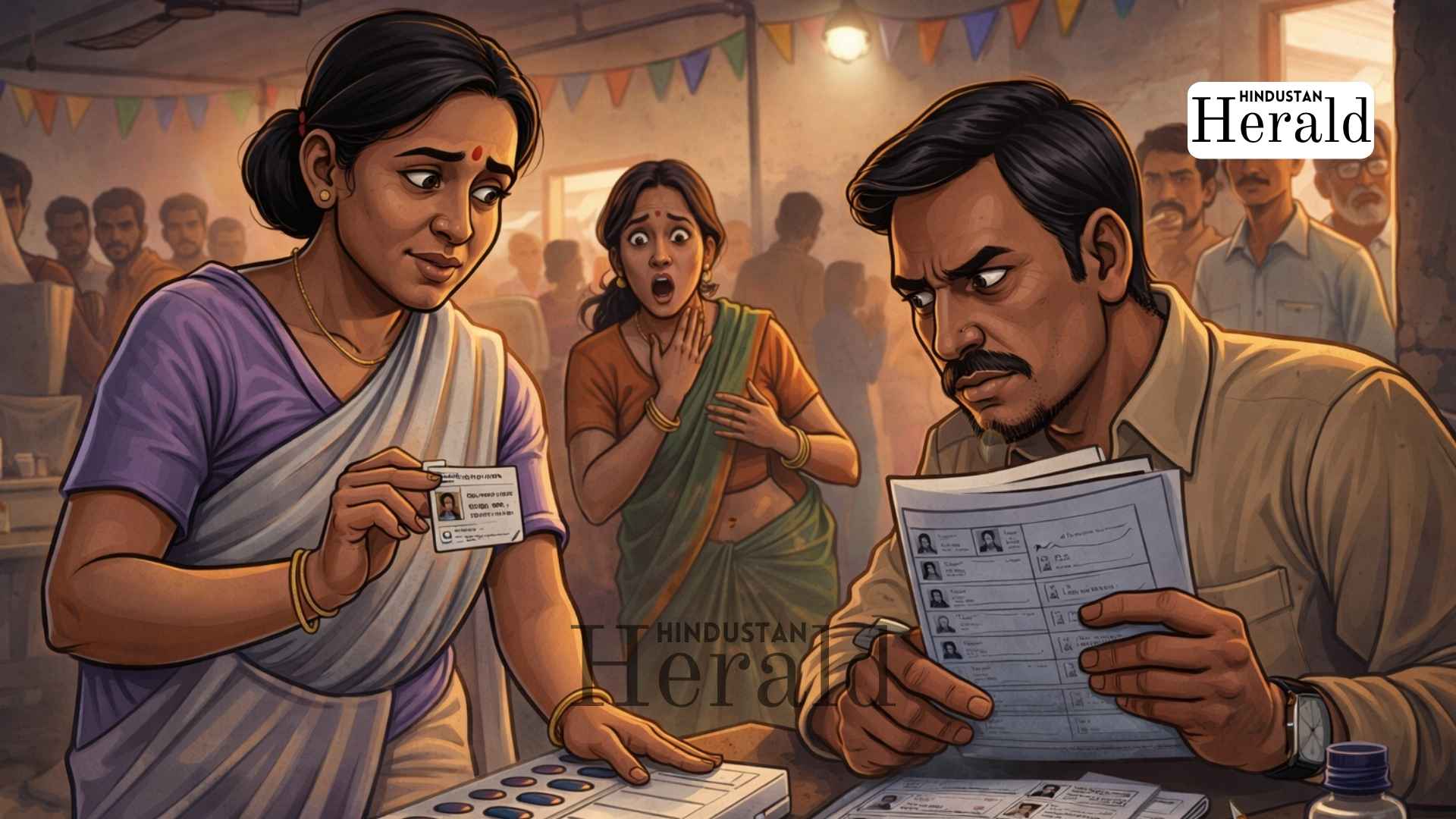
Kolkata, March 28: The notices arrived without warning. For tens of thousands of voters across West Bengal, the first sign of trouble was a form letter from a Booth Level Officer informing them that their names had been flagged during a statewide verification exercise. Many did not receive any notice at all. They simply found their names gone from the rolls when the Election Commission of India (ECI) published the final electoral list on February 28, 2026.
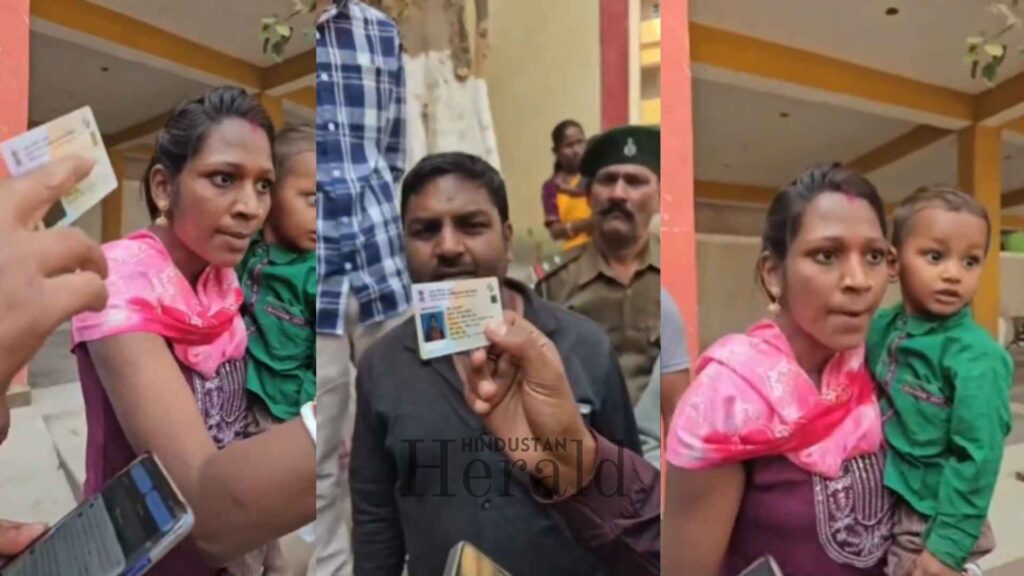
What followed has become one of the most bitter pre-election controversies in recent Indian democratic history, a dispute that touches on citizenship, disenfranchisement, judicial oversight, and the integrity of the institutions that govern India’s elections. With West Bengal’s 294-seat Assembly scheduled to go to polls in two phases on April 23 and 29, and results to be counted on May 4, the clock is running down on a crisis that remains far from resolved.
What the Special Intensive Revision Actually Did
The controversy centres on a process called the Special Intensive Revision (SIR) a door-to-door verification exercise that the ECI launched in November 2025. According to the Commission, the exercise was necessary to clean up a voter roll that had accumulated over two decades of inconsistencies. The last comparable revision in West Bengal was conducted in 2002, leaving a 23-year gap in comprehensive verification.
As reported by Deccan Herald, the exercise ultimately resulted in 63.66 lakh voters, roughly 8.3 per cent of the total electorate, being struck off the electoral rolls since the SIR was launched. In addition, a further 60 lakh voters were placed in an “under adjudication” category, meaning their documents are still being examined by judicial officers and their voting eligibility has not yet been confirmed.
Before the SIR began, West Bengal had approximately 7.66 crore registered voters. Following the revision, the total electorate now stands at just over 7.04 crore, representing a reduction of 8.3 per cent. The final list categorises every voter into one of three groups: Approved, Deleted, or Under Adjudication, a three-tiered classification that has no precedent in Indian electoral history.
The districts with the highest number of voters under adjudication are Murshidabad (11.01 lakh) and Malda (8.28 lakh), both of which share an international border with Bangladesh and have significant Muslim-majority populations according to the 2011 Census. Critics have pointed to this geographic pattern as evidence that the SIR was designed to target a specific community under the guise of weeding out illegal immigrants. The ECI has not publicly responded to this specific allegation.
A Portal Glitch That Made Everything Worse
The situation took a sharp turn for the worse in mid-March when a technical glitch on the ECI’s voter portal briefly marked voters across the state as “under adjudication”, compounding uncertainty already triggered by the controversial list of names flagged during the SIR process.
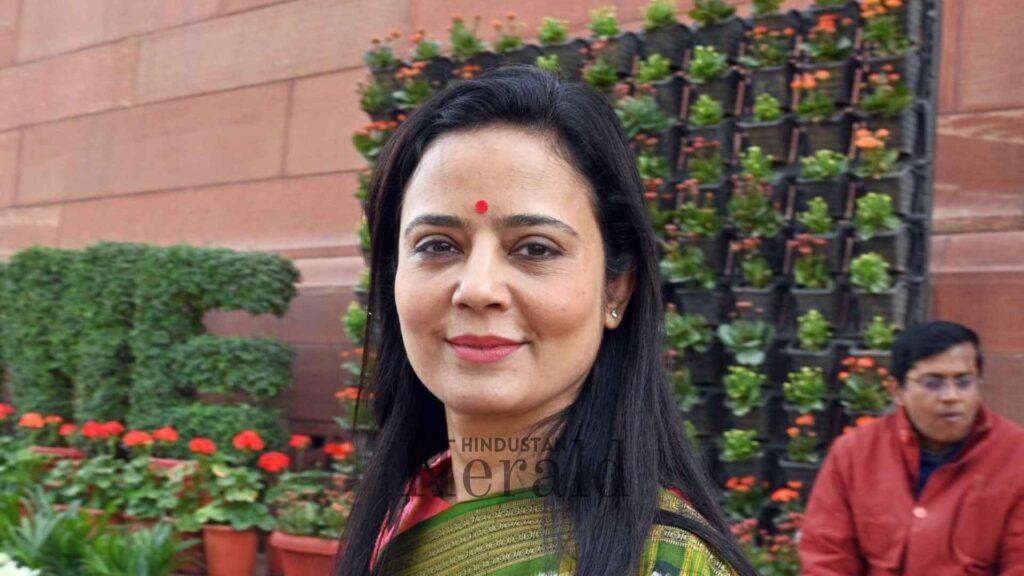
The Commission maintained that the incident was limited to a display error on one website and that the underlying database was unaffected. Trinamool Congress MP Mahua Moitra reacted sharply, asking publicly whether this was “some kind of childish game.”
For ordinary voters, the experience was considerably less abstract. Bappa Ghosh, an auto-rickshaw driver from Kolkata’s Maniktala neighbourhood, said: “I saw my name, my family’s, all gone, marked ‘under adjudication’. I drive 12 hours daily for bread. Now this tension? How will I vote if the list is wrong?”. In Haldia, a woman named Rekha Mondal described how her name had been restored after she filed Form 7, only to be wiped again by the glitch. The ECI’s assurances did little to arrest the erosion of public confidence at a moment when it could least afford it.
Mamata vs. the Commission and the BJP
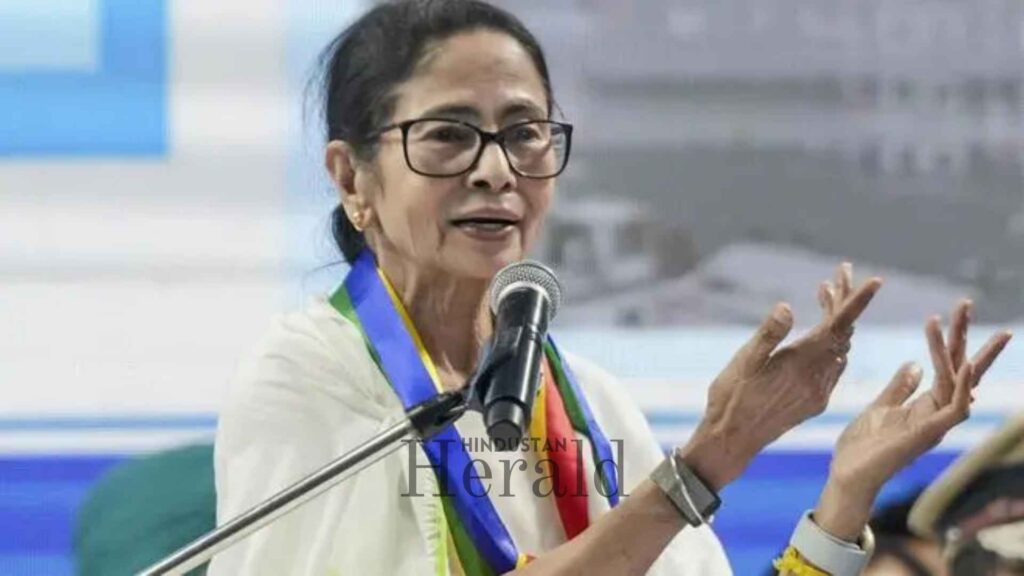
The political fallout has been swift and pointed. Chief Minister Mamata Banerjee has labelled the voter roll revision a coordinated attempt to disenfranchise genuine voters in a state where her Trinamool Congress (TMC) faces its most serious electoral challenge in years. She announced a protest on March 6 against what she termed “arbitrary deletions” under the revision process.
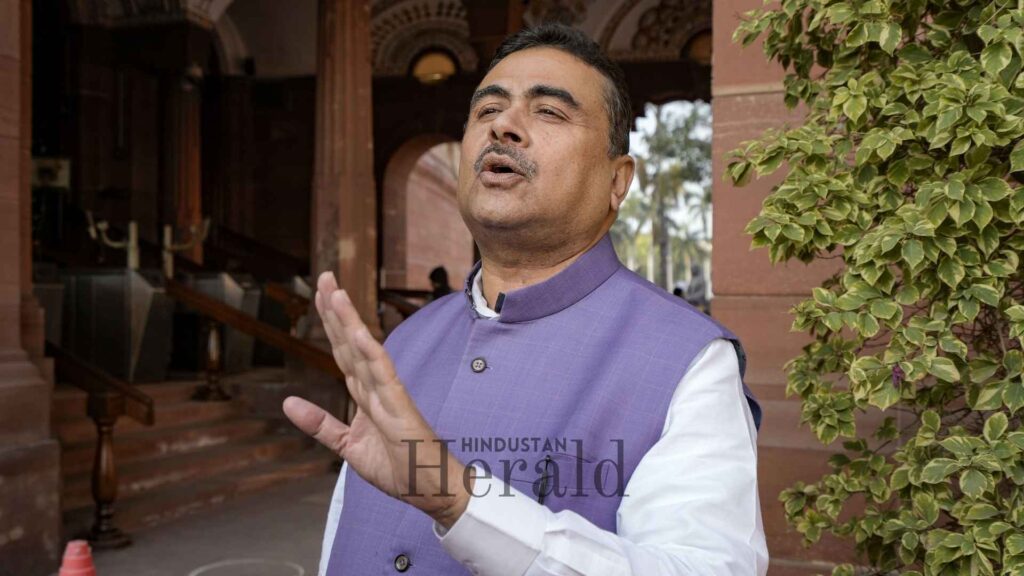
The BJP, for its part, has welcomed the deletions as a long-overdue correction. Senior leaders have argued that voter list revisions are necessary to remove ineligible names and ensure accurate electoral rolls. Suvendu Adhikari, the Leader of Opposition in the Bengal Assembly, has argued that the deletion of so-called fake voters benefits the BJP electorally and has made no secret of that calculation.
Buried in this argument is a question that neither side wants to answer cleanly: how does one definitively distinguish a Bengali-speaking Indian Muslim citizen from an undocumented Bangladeshi migrant when both may have lived in the same village for decades and hold similar documentation? The SIR’s framework has not offered a satisfying answer.
The Supreme Court, the Adjudication Backlog, and the Shrinking Timeline
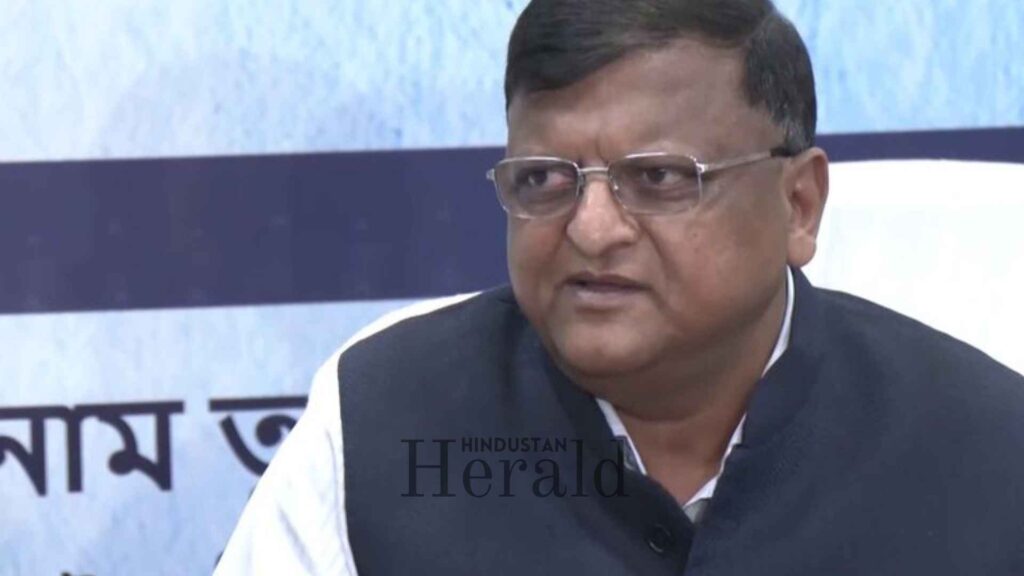
In an attempt to manage the crisis, the Supreme Court of India directed the ECI to deploy judicial officers to adjudicate the 60 lakh pending cases. According to The Week, 705 judicial officers were deployed for this purpose. By the time the first supplementary list was released, Chief Electoral Officer Manoj Kumar Agarwal stated that approximately 29 lakh names had been adjudicated. A second supplementary list followed on or around March 27 and 28, processing a further batch.
That still leaves a meaningful gap as polls approach. Political analyst Sujit Chatterjee warned, “People of Bengal have no trust left. 60 lakh names hanging since February, then this full-state glitch? Lists must be perfect for fair votes.” Some voters have begun contemplating protest abstention. Candidates filing nominations are reportedly uncertain about their own voter counts, with the Deccan Herald describing the revision as having left both voters and vote-seekers in a state of limbo.
A Pattern That Goes Beyond West Bengal
The West Bengal controversy does not exist in isolation. Since mid-2025, India has witnessed an extended national debate about the reliability of its electoral rolls, triggered most visibly by Congress leader Rahul Gandhi’s allegations of large-scale “Vote Chori” across multiple states.
Gandhi’s most detailed claims focused on Mahadevapura, an assembly segment within Bengaluru’s Central Lok Sabha constituency. A detailed investigation uncovered an estimated 11,965 fake voters, 40,009 voters with fake or unverifiable addresses, and 4,132 voter ID cards with missing or unusable photographs. Additionally, 33,692 voters aged between 60 and 90 were found to have been registered as first-time voters through Form 6.
Independent investigators found commercial buildings and single-bedroom houses with dozens of voters registered at the same address. At one Whitefield address, a brewery, 68 voters were listed as registered. The building manager said he had never seen any of them. The ECI dismissed the allegations as baseless and demanded that Gandhi file a sworn declaration before it would examine the claims formally.
In Haryana, Gandhi cited the case of a Brazilian model’s photograph appearing on multiple voter IDs across the state as evidence of systematic fabrication, and claimed thousands of voters were registered in both Haryana and Uttar Pradesh simultaneously, in violation of electoral law. The pattern has since been alleged in Bihar and Maharashtra as well, creating a cumulative picture of voter roll integrity as a nationwide crisis rather than a local one.
What Is Actually at Stake
Elections in India have always carried the weight of contested voter rolls. Electronic Voting Machines, introduced in phases between 1998 and 2001, eliminated the older problem of physical booth capture and ballot box stuffing. Research published by the Brookings Institution found that EVM adoption measurably reduced fraudulent voter turnout in states with historically high levels of electoral crime. Still, as that research acknowledged, the machine counts nothing that was not on the roll to begin with. A manipulated voter list upstream of the EVM negates the machine’s integrity guarantees entirely.
That is precisely the argument the opposition has been making and precisely what makes the West Bengal situation so consequential. This is not a routine cleanup of a stale database. It is a revision of unprecedented scale, conducted in the final months before a high-stakes election, in a border state with a complex history of migration and communal politics, with a verification backlog that the ECI’s own judicial machinery has struggled to clear in time.
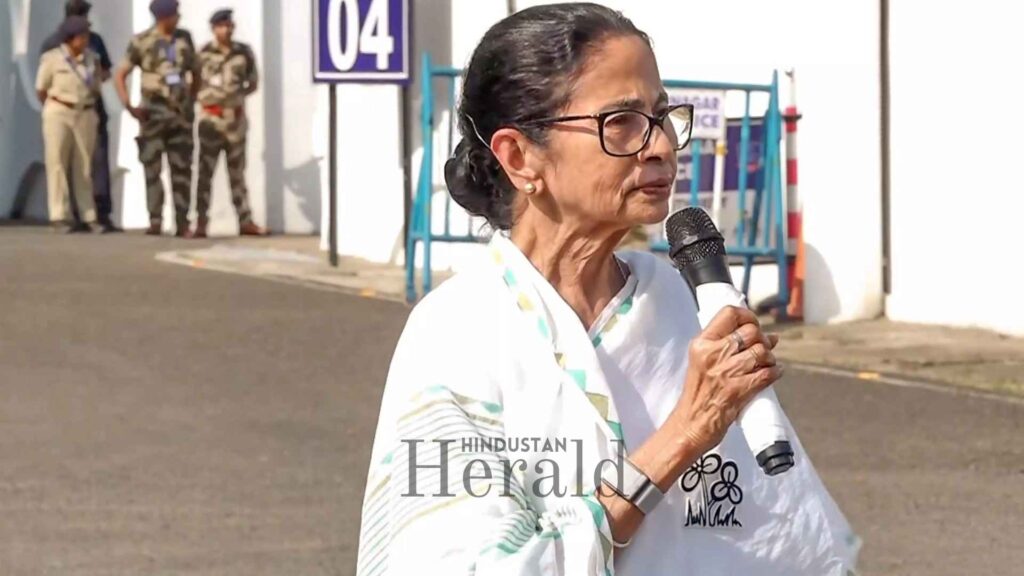
The Mamata Banerjee government has staked its political future on the claim that genuine voters have been removed to tilt the playing field. The BJP has staked its electoral strategy in part on the claim that the rolls were riddled with illegitimate names. Both claims carry political interest. Both may also contain some truth.
What is not in dispute is the lived experience of hundreds of thousands of voters in West Bengal who, as of this writing, remain uncertain whether their names will appear on the final roll when polling booths open on April 23. For a democracy whose founding promise is the equal weight of every vote, that uncertainty is not a technical matter. It is a democratic failure and one that demands accountability from the institutions entrusted with preventing it.
Stay ahead with Hindustan Herald — bringing you trusted news, sharp analysis, and stories that matter across Politics, Business, Technology, Sports, Entertainment, Lifestyle, and more.
Connect with us on Facebook, Instagram, X (Twitter), LinkedIn, YouTube, and join our Telegram community @hindustanherald for real-time updates.

Covers Indian politics, governance, and policy developments with over a decade of experience in political reporting.
- Ananya Sharma

- Ananya Sharma
- Ananya Sharma
- Ananya Sharma




 Rajiv Menon and Ananya Sharma