
 By Rajiv Menon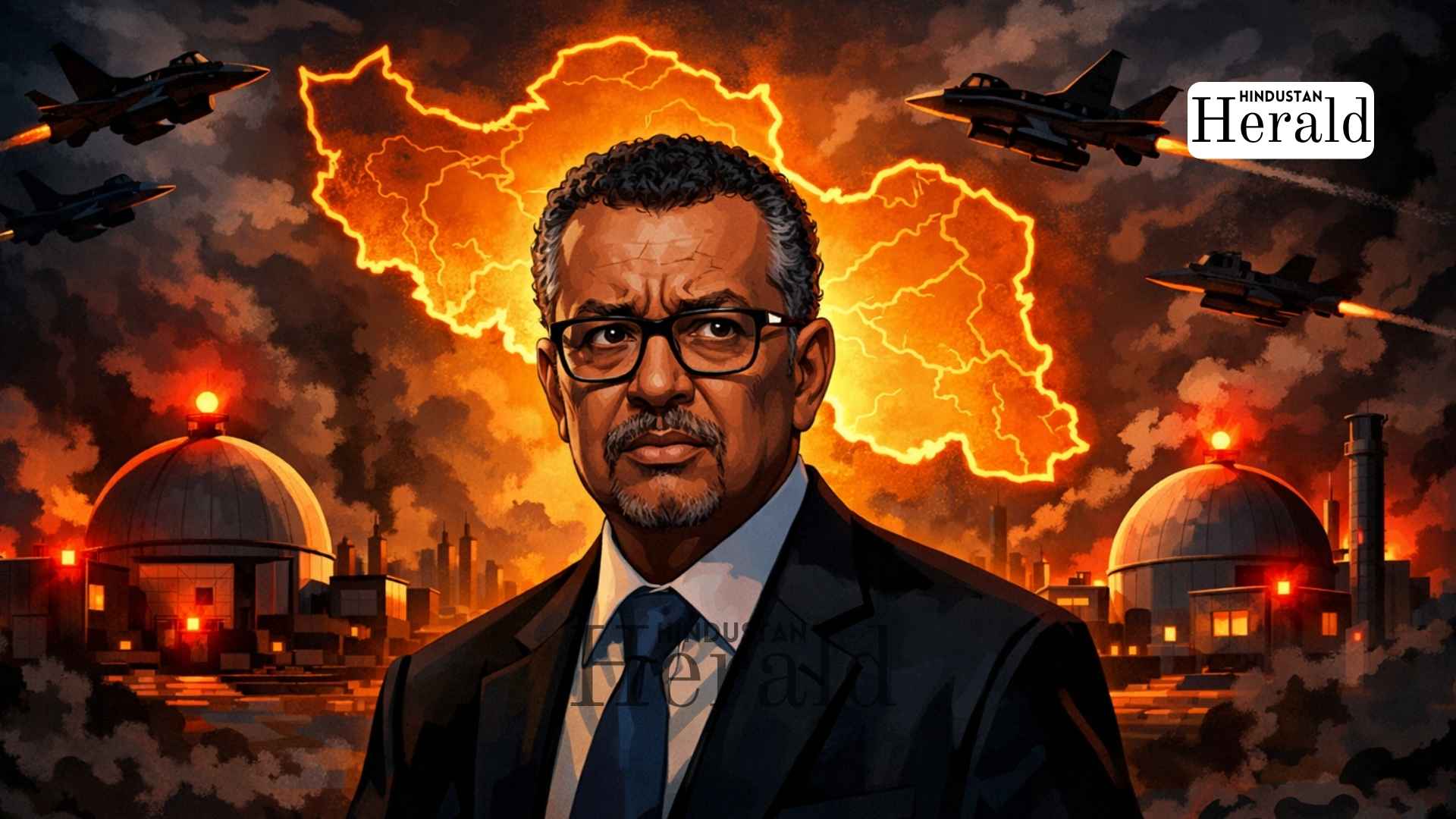
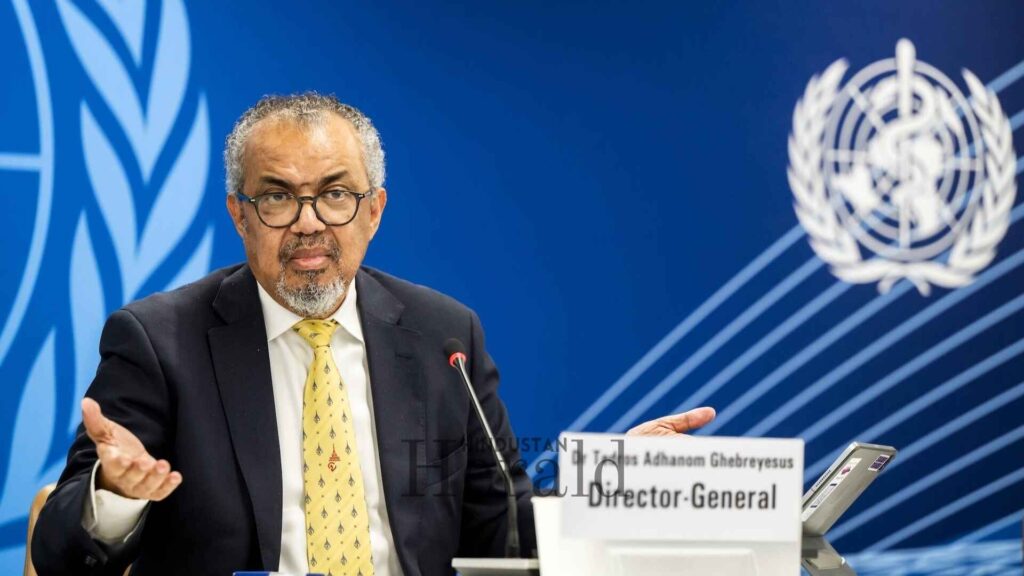
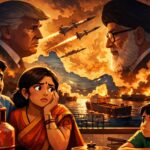
New Delhi, March 22: On a Sunday that felt anything but ordinary in the corridors of global diplomacy, WHO Director-General Tedros Adhanom Ghebreyesus issued one of the starkest warnings to emerge from any international health body in recent memory. Speaking through a post on X, Tedros declared that the war in the West Asia region “has reached a perilous stage,” with strikes reportedly hitting the Natanz Enrichment Complex in Iran and the Israeli city of Dimona, where a nuclear facility is located. The appeal was spare but devastating in its implication: “Peace is the best medicine.”
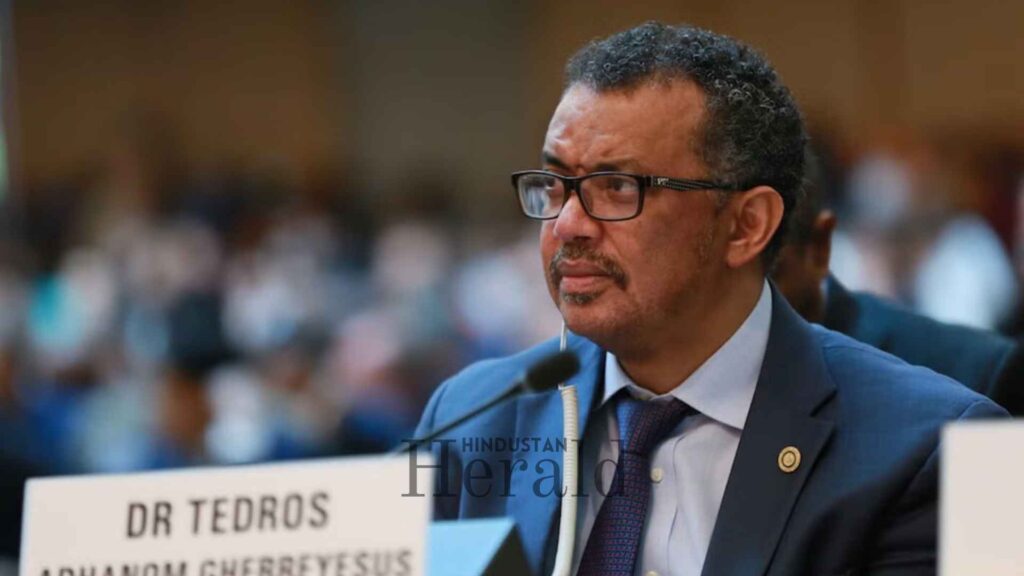
It was not a metaphor. It was a diagnosis.
A Threshold Nobody Wanted to Cross
The conflict, which traces its immediate origins to joint US-Israeli airstrikes on Iran that began on February 28, 2026, has spiraled with a velocity that has left international institutions scrambling to keep pace. What started as a targeted military campaign against Iran’s nuclear and ballistic missile infrastructure has since spread to nearly a dozen nations across a region already hollowed out by years of proxy conflict, economic dysfunction, and political fragility.
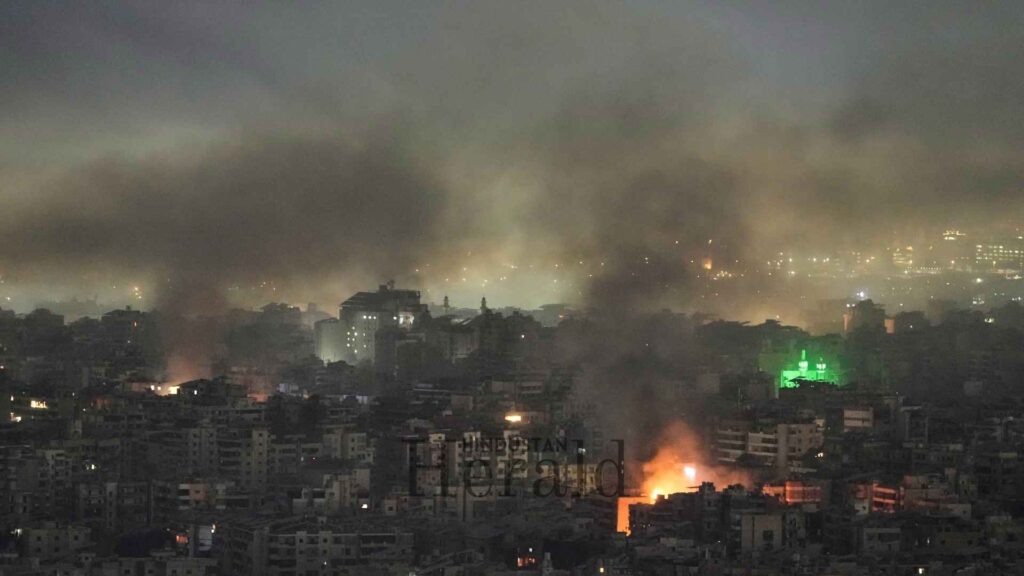
As of Sunday, the International Atomic Energy Agency (IAEA) was actively investigating reported incidents near nuclear sites in southeastern Iran and in Dimona. No indications of abnormal or increased off-site radiation levels have been reported, according to Tedros, but the qualifier “as of now” hangs over that reassurance like a cloud. The concern is not just about what has happened. It is about how quickly that can change.
Tedros was explicit: “Attacks targeting nuclear sites create an escalating threat to public health and environmental safety.” He called on all parties to exercise maximum military restraint and to avoid any actions that could trigger nuclear incidents. That language, coming from the head of the world’s foremost public health body, reflects a calculation that the situation has moved past the threshold of conventional conflict concern into the domain of potential civilizational risk.
The WHO’s Preparations: Reading the Room Before the Room Catches Fire
The WHO’s alarm did not arrive without preparation. Since the outbreak of hostilities, the organization has provided critical training to its own staff and United Nations personnel across 13 countries to help them respond to public health threats in the event of a nuclear incident, a disclosure that confirms planners were taking seriously scenarios that diplomats were still publicly dismissing just weeks ago.
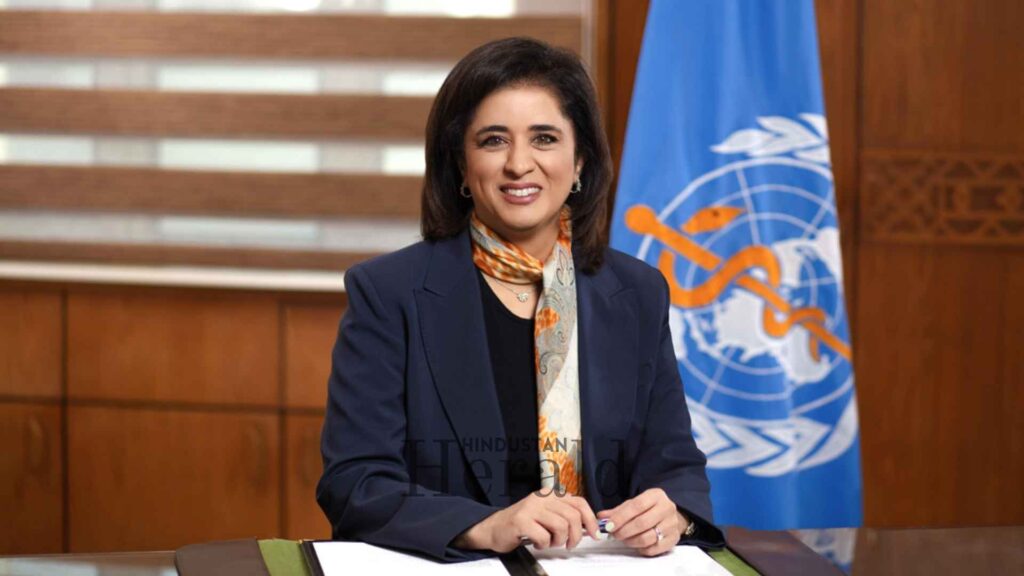
WHO Regional Director for the Eastern Mediterranean Hanan Balkhy, speaking to Politico earlier this week, had already flagged the organization’s worst-case fears. “The worst-case scenario is a nuclear incident, and that’s something that worries us the most,” she said, adding that however prepared the organization might be, “there’s nothing that can prevent the harm that will come. The consequences are going to last for decades.”
That is not bureaucratic hedging. That is an expert who has read the historical record on Chornobyl, on Hiroshima and Nagasaki, and is saying plainly that preparation has its limits when the event in question involves radiation dispersal at a regional scale.
According to reporting by Politico, WHO officials are also updating internal protocols and guidance for staff and governments on how to respond to a nuclear emergency, covering risk assessment and protective measures for civilians. Notably, additional reports citing Russia’s state nuclear corporation Rosatom indicated that a strike was recorded near the Bushehr nuclear power plant, marking the first such incident in proximity to an active reactor since the escalation began. A strike near an active reactor, even without a direct hit, carries consequences that no emergency protocol can fully neutralise.
Humanitarian Collapse in Real Time
Behind the high-stakes nuclear warnings lies a humanitarian emergency that is already unfolding at scale. The conflict has produced displacement figures that are staggering even by the grim standards of West Asian geopolitics.
Civilian infrastructure has been among the primary casualties. In Lebanon, which re-entered active hostilities after Hezbollah fired projectiles at Israel in response to the assassination of Iran’s supreme leader, the strain on medical systems has been immediate and severe. As per sources cited by the WHO, 49 primary healthcare centres and five hospitals in Lebanon alone have been forced to shut down due to evacuation orders and safety concerns.
According to the Security Council Report, it appears that both sides in the conflict have struck critical infrastructure and civilian objects, including residential buildings, energy infrastructure, fuel depots, and desalination plants. Strikes on desalination plants, in particular, represent a form of warfare that threatens populations on a timeline measured in days rather than weeks. Water scarcity in a region already stressed by years of drought is not an inconvenience; it is a death sentence scaled across civilian populations.
In a statement on March 6, Iran’s Permanent Representative to the UN said that over 1,300 people had been killed in Iran since February 28. During the initial US-Israeli strikes, an elementary school in the Iranian town of Minab was hit, resulting in the deaths of at least 175 people, many of them children, according to Iranian health officials. No side has taken responsibility for the strike.
The Strait of Hormuz: Where the Crisis Becomes a Global Economic Problem
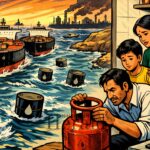
The military and humanitarian dimensions of this crisis carry obvious gravity. Still, no single element holds the potential to internationalize the consequences faster than what is happening on the water. Iran has reportedly taken steps toward closing the Strait of Hormuz, the narrow chokepoint through which approximately 20 percent of the world’s oil transits daily. For India, which sources a significant share of its crude from the Gulf region, even partial disruption of Hormuz shipping lanes carries immediate implications for fuel prices, inflation, and industrial supply chains.
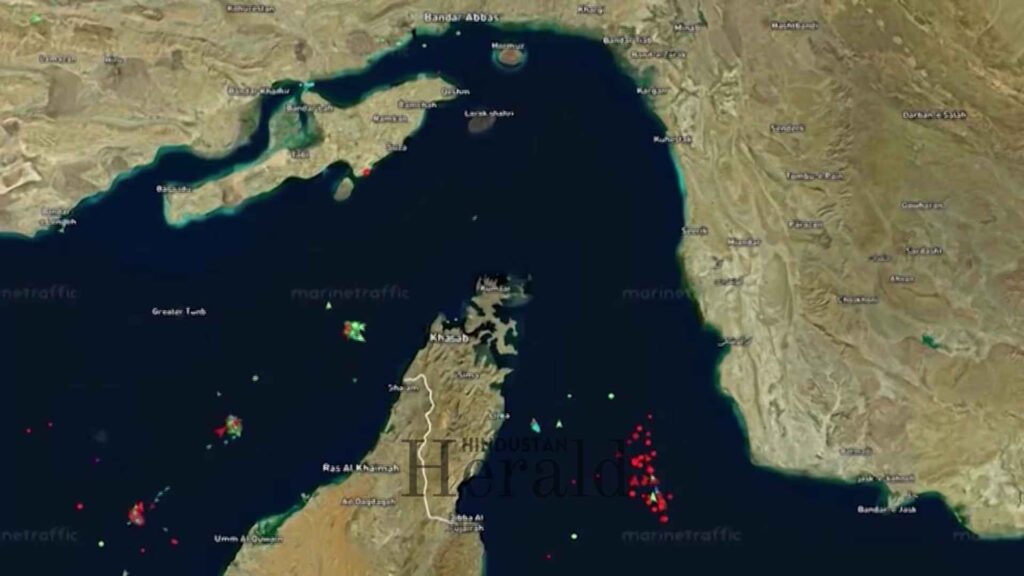
G7 leaders have urged Tehran to cease its threats, laying of mines, drone and missile attacks, and other attempts to block the Strait to commercial shipping, and to comply with Resolution 2817, stressing that “freedom of navigation is a fundamental principle of international law.”
That ultimatum reflects the degree to which the economic fallout is already beginning to register in Western capitals alongside the security concerns. As G7 leaders warned, “the effects of Iran’s actions will be felt by people in all parts of the world.”
For India’s Ministry of External Affairs, which has so far maintained studied silence on the military operations while continuing to advocate for dialogue, the Hormuz question adds a new layer of urgency. New Delhi’s ties with both Tehran and Washington place it in a diplomatically uncomfortable position from which abstaining indefinitely becomes harder the longer the crisis runs.
A Divided Security Council and What That Means
The political architecture of the international response to this conflict has been telling. On March 11, 2026, the UN Security Council adopted Resolution 2817, which condemned Iran’s attacks against the Gulf states and Jordan. It was sponsored by Bahrain and received approval from 13 members, while China and Russia abstained. The text does not reference the US and Israeli strikes on Iran that triggered the conflict on February 28.
That omission is not a drafting oversight. It is the political price of consensus, and it has proven contentious. China’s representative, who abstained, argued that the resolution “does not fully reflect the root cause and overall picture of the conflict in a balanced manner,” while also pointing out that the United States and Israel launched military strikes without Council authorization.
Russia’s representative, characterizing the resolution as one-sided, introduced a separate draft text that intentionally did not name any parties to the conflict. That draft was subsequently rejected by a vote of 4 in favour to 2 against, with 9 abstentions.
What this procedural standoff reveals is something deeper than a disagreement over language. The Security Council is, in effect, paralyzed by the same great-power fractures that have defined the post-2022 international order. Despite the unprecedented level of international consensus behind Resolution 2817, possibly the largest co-sponsorship ever for a UN resolution, the Council’s fundamental inability to hold all parties to the same standard of accountability remains its defining limitation.
The Nuclear Shadow and the Longer Reckoning
What distinguishes the current phase of this conflict from its predecessors is not simply the scale of casualties or the geography of its spread. It is the proximity to nuclear thresholds that has not been seen in any conflict since the Cold War’s most dangerous moments.
Analysts have warned that cyber interference with early-warning systems could produce false alarms about incoming missile strikes, and that under conditions of uncertainty and limited decision time, leaders might mistakenly initiate nuclear retaliation. If the conflict spreads beyond its immediate participants, escalation risks would increase significantly, potentially drawing in other nuclear powers through strategic signalling or alliance commitments.
The Bulletin of the Atomic Scientists noted in its 2026 Doomsday Clock statement that the amount of damage caused to Iranian nuclear facilities by earlier strikes remains unclear, as does the fate of more than 400 kilograms of uranium enriched to 60 percent of the fissile uranium-235 isotope, enough to build several nuclear weapons even without further enrichment.
That is not a number to pass over lightly. Highly enriched uranium that cannot be accounted for during an active military conflict represents a proliferation risk that extends well beyond the current parties to the fighting.
For now, the IAEA continues its investigations. The WHO continues its preparations. And Tedros Adhanom Ghebreyesus continues to issue warnings that are, in their medical clarity, more honest about the stakes than most political communiques have managed to be.
“Peace is the best medicine.” In a region where hospitals are closing, water plants are burning, and nuclear sites are being struck, that sentence is not optimism. It is triage.
Stay ahead with Hindustan Herald — bringing you trusted news, sharp analysis, and stories that matter across Politics, Business, Technology, Sports, Entertainment, Lifestyle, and more.
Connect with us on Facebook, Instagram, X (Twitter), LinkedIn, YouTube, and join our Telegram community @hindustanherald for real-time updates.
Specializes in South Asian geopolitics and global diplomacy, bringing in-depth analysis on international relations.
- Rajiv Menon

- Rajiv Menon
- Rajiv Menon
- Rajiv Menon


 Arun Upadhayay