 By Sandeep Verma
A routine late-night grocery order on Zepto has snowballed into a serious consumer complaint, raising uncomfortable questions about product authenticity, quality control, and how much responsibility instant delivery platforms are willing to shoulder once an order is marked delivered.

The issue centres on Amul Butter, one of India’s most familiar food brands and a daily-use item in millions of homes. What should have been an ordinary kitchen staple instead left a customer questioning whether a counterfeit or locally substituted product had entered the supply chain under the label of a trusted national brand.
A Late-Night Order That Did Not Feel Right
The order was placed between 2:00 and 2:30 A.M., a time window that quick commerce companies often advertise as proof of their operational strength. Multiple items were delivered, including a packet of Amul Butter.
Ordered multiple items from @ZeptoNow today between 2–2:30 AM, including Amul Butter @Amul_Coop @amul_india
— Arun Upadhayay (@thearunupadhyay) December 19, 2025
It was only the next morning, when the butter was actually used, that something felt off. According to the consumer, the taste was unusual, noticeably different from the familiar flavour profile Amul butter has maintained for decades. Even before that, the packaging itself appeared different, triggering immediate suspicion. For a brand that prides itself on uniformity and strict quality controls, the differences were not subtle.

The customer did what most users would. They raised a complaint through Zepto’s in-app chat support, expecting at least an investigation, if not a replacement.
What they received instead was a flat refusal.
The OTP Wall: When Complaints Stop Cold
Zepto’s support team reportedly informed the customer that because the delivery was OTP-based, no action could be taken. The order, in effect, was treated as closed.
This response has struck a nerve. OTP verification is meant to confirm that a package reached the right doorstep. It is not meant to certify the quality, authenticity, or safety of what is inside. Food items, especially dairy products, often reveal problems only after the seal is opened and the product is consumed.
That distinction appears to have been lost here. For the customer, the experience felt less like policy enforcement and more like a dead end, with no escalation, no verification, and no willingness to even examine whether something had gone wrong at the warehouse or supplier level.
Why This Is More Than a Refund Dispute
Butter is not just another packaged good. It is a perishable dairy product, sensitive to storage conditions, handling, and sourcing. Changes in taste can indicate anything from temperature abuse to spoilage or substitution.
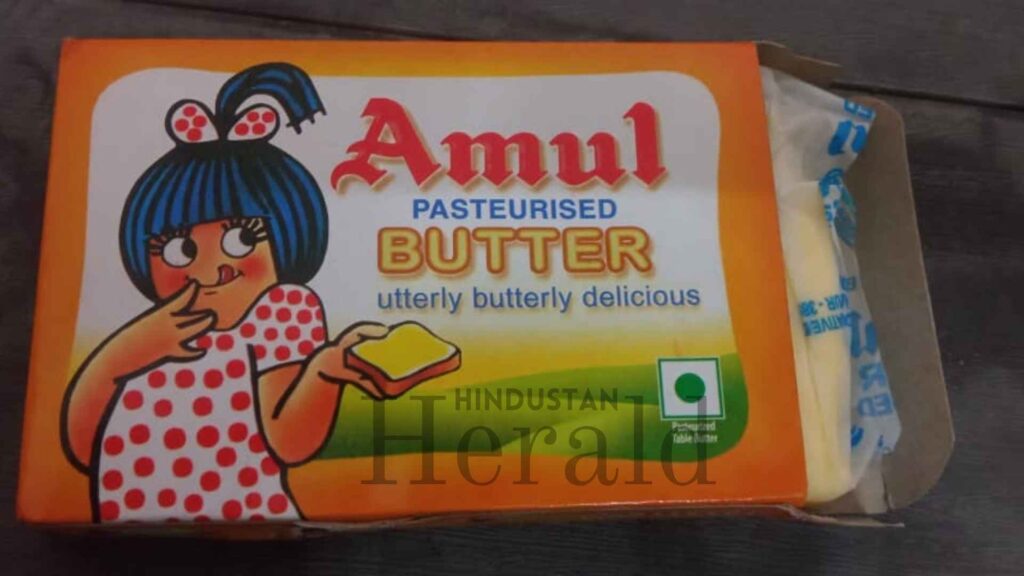
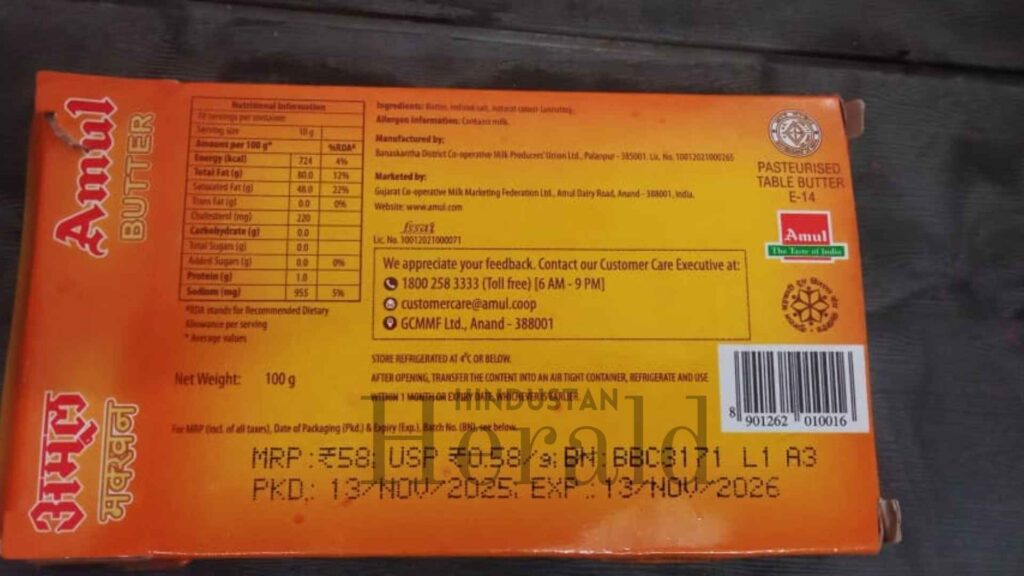
If a product sold as Amul Butter is not actually what it claims to be, the implications go far beyond one dissatisfied order. Misrepresentation of branded food products raises concerns about consumer safety, regulatory compliance, and intellectual property violations.
Amul, operated by the Gujarat Cooperative Milk Marketing Federation, follows tightly regulated production and distribution standards. Deviations in taste or packaging are rare, which is why such complaints tend to ring alarm bells quickly.
Still, in the world of dark stores and rapid fulfilment, responsibility often gets diffused. Was it a supplier issue. A stocking error. Improper refrigeration during late-night operations. Or something more serious.
Without investigation, no one knows.
The Quick Commerce Blind Spot
India’s quick commerce boom has been built on speed. Platforms promise groceries in minutes, even in the early hours of the morning. To make that work, companies rely on decentralised dark stores, high staff turnover, and rapid inventory movement.
Quality checks, especially during post-midnight shifts, are often thinner than companies like to admit.
Industry insiders acknowledge that night operations run with minimal supervision. When inventory is replenished at odd hours, the risk of mislabelled or wrongly sourced products increases. In such a system, consumer complaints are not inconveniences. They are warning signals.
As it turns out, dismissing those signals with a policy script can do more damage than the original mistake.
What the Law Says, And What Consumers Expect
Under the Consumer Protection Act, 2019, selling goods that are misrepresented or counterfeit qualifies as an unfair trade practice. E-commerce platforms are expected to provide grievance redressal that goes beyond automated replies.
Legal experts are clear that OTP confirmation does not override post-delivery rights, particularly for food items where defects are not visible at the doorstep.

Consumers are not asking for miracles. In this case, the request was straightforward: investigate the product, verify the batch and supplier, and offer a refund or replacement if the product does not meet brand standards.
The refusal to do even that has become the real story.
A Risk to Brand Trust
For Amul, incidents like these carry reputational weight even if the fault does not lie with the company itself. When a product bearing its name reaches a consumer in questionable condition, the brand inevitably gets pulled into the narrative.
Amul has historically taken a hard line against counterfeit products and unauthorised use of its branding. If similar complaints surface more frequently, pressure will mount on both platforms and manufacturers to tighten oversight.
For Zepto and its peers, the episode underscores a growing gap between delivery speed and accountability.
What This Leaves Behind
The customer has asked Zepto to properly examine the issue and provide a fair resolution. More broadly, the incident leaves behind a larger question for India’s instant delivery economy.
Convenience has changed how cities shop. But trust still rests on something far more basic. When a platform sells a product under a famous name, consumers expect it to be exactly that product, not something close enough to pass in the dark.
For now, this remains one complaint. But in an industry built on promises, even one unresolved case can linger longer than any delivery timer.
Stay ahead with Hindustan Herald — bringing you trusted news, sharp analysis, and stories that matter across Politics, Business, Technology, Sports, Entertainment, Lifestyle, and more.
Connect with us on Facebook, Instagram, X (Twitter), LinkedIn, YouTube, and join our Telegram community @hindustanherald for real-time updates.

Regional journalist bringing grassroots perspectives and stories from towns and cities across India.
- Sandeep Verma

- Sandeep Verma
- Sandeep Verma
- Sandeep Verma