
 By Ananya Sharma
Vrindavan, October 30: Every morning, before the sun has properly warmed the streets of Vrindavan, a small crowd begins to gather near Shri Hit Radha Keli Kunj Ashram on Parikrama Marg. They come from every corner of India families, students, sadhus, and those quietly carrying private burdens. Their goal is simple, though not easy: to get a token for darshan of Shri Hit Premanand Govind Sharan Ji Maharaj, one of Vrindavan’s most revered spiritual teachers.
For many, the process begins long before dawn. There’s no online form that guarantees a slot, no app that can fast-track a meeting. The only way is to be physically present at the ashram when the tokens are distributed, usually around 9:30 in the morning. Miss that window, and you wait for another day.
A System Built on Presence, Not Technology
Unlike the many modern temples that have moved parts of their rituals online, Premanand Ji’s ashram keeps its approach firmly personal. There’s no official online booking for darshan or audience. You can, if you like, fill out a small contact form on the ashram’s website under the “Darshan” tab. But that doesn’t guarantee a slot it simply tells the staff that you’re interested.
The actual token comes only when you show up in person, stand in line, and present your Aadhaar card for identification. According to The Times of India and The Economic Times, the ashram checks every visitor’s ID to manage crowds and keep the process orderly.
What the Token Really Means
A token collected in the morning allows darshan the following day. It’s a small slip, but for devotees, it represents a moment months in the making. The ashram holds several types of sessions Maharaj Ji Bhav Darshan, Shri Ji Shringar Darshan, and Vaani Path Darshan, each offering a slightly different form of connection with Premanand Ji and the teachings of Radha Rani.
What makes the experience striking is that it remains entirely free. The ashram doesn’t charge a rupee for tokens or darshan. There are, however, outside agents and travel coordinators who offer “assistance packages,” but as the ashram clarifies, these are unofficial. No special payments can guarantee access.
The Human Rhythm of the Ashram
The days at Radha Keli Kunj begin early. Around 4:10 AM, the first morning satsang begins, a gathering of voices and quiet devotion that spills into Mangla Aarti and Van Vihar by sunrise. Later, scriptures like the Hit Chaurasi Path or Radha Sudhanidhi are read depending on the day of the week.
By 4:15 PM, the Vaani Path begins, where Premanand Ji speaks on the Shrimad Bhagavad Gita or on Radha Rani’s bhav (divine mood). The Sandhya Aarti, short but deeply moving, closes the day around 6:15 PM.
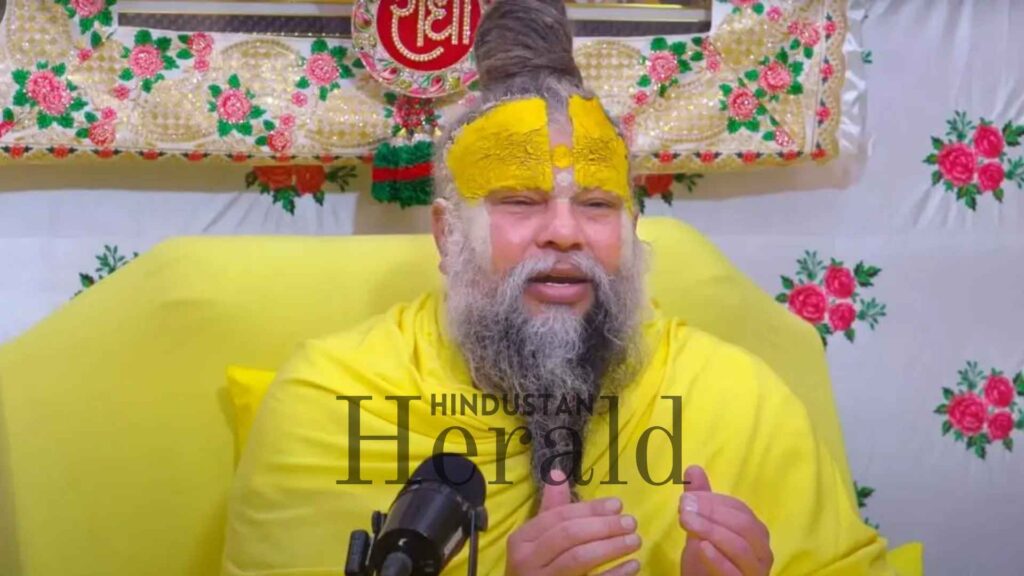
Devotees often describe the experience as a transformative atmosphere where the noise of life seems to fade. “Even waiting for your turn becomes part of the prayer,” one visitor said, describing how standing in line among strangers somehow feels sacred.
The Special Session Few Get to Attend
Then there’s the Ekantik Vartalap, a private, one-on-one conversation with Premanand Ji Maharaj. It’s not advertised, not guaranteed, and never booked online. You must apply in person, and your question must be spiritual in nature. The ashram makes it clear: curiosity about wealth, career, or worldly affairs won’t earn you a slot. Only those seeking clarity in devotion or spiritual practice are considered.
Even after registering, most are not chosen. The number of slots is tiny, and much depends on the Maharaj Ji’s health and time. But for those who do get that chance, it’s said to be profoundly personal, a few minutes that can shape a lifetime of practice.
What You Need to Carry and What You Should Leave Behind
The only required document is an Aadhaar card. The ashram staff uses it to verify identity during token distribution. Apart from that, there’s no paperwork, no donation receipt, no ticket.
There is, however, a dress code of respect. Devotees are asked to wear simple, traditional clothes, nothing flashy or revealing. Photography and phone use are generally discouraged, especially during satsangs.
As a regular visitor from Kanpur put it, “It’s not a place for posting selfies. You come here to listen and to feel.”
Patience Is the Real Ticket
Because the demand is so high, the ashram advises devotees to arrive early, sometimes as early as 8 AM, to secure a place in line. On weekends and major festivals like Radhashtami, Holi, and during the Kartik month, the queues stretch well beyond the ashram gate.
And yet, there’s an understanding among the crowd that things move at their own pace here. If Maharaj Ji is unwell or traveling, the darshan can be postponed without notice. For many, it’s simply part of the journey, an invitation to surrender to divine timing.
The Soul of the System
To someone used to the fast, app-driven world of temple management, this might all seem unnecessarily slow. But devotees argue that’s exactly the point. The process itself, showing up, waiting, and standing quietly, is the first act of surrender.
There’s no shortcut, no priority pass, no way to “book” your bhakti. You have to show up, heart open, documents in hand, and wait.
For a generation often searching for instant spirituality, Shri Hit Premanand Ji Maharaj’s ashram insists on something older and deeper: presence.
Quick Recap for Devotees
- No online booking or paid service exists. All registration is in person at the ashram.
- Token distribution: around 9:30 AM, for the next day’s darshan.
- Carry: Aadhaar card for ID verification.
- Darshan types: Bhav Darshan, Shringar Darshan, Vaani Path.
- Fees: None. The process is completely free.
- Ekantik Vartalap: one-on-one session, limited slots, spiritual topics only.
- Best time to arrive: 8–8:30 AM the day before.
- Dress code: modest, traditional.
Finding the Ashram
Shri Hit Radha Keli Kunj Ashram stands on Parikrama Marg, near Varaha Ghat, opposite Bhaktivedanta Hospice, Vrindavan-281121, Uttar Pradesh. The location itself has become something of a pilgrimage, simple yet charged with quiet energy.
For most who make the journey, the token is just a small slip of paper. But what it represents, the chance to see, listen, or simply sit before Maharaj Ji, is something that can’t be digitized.
As one elderly devotee said while clutching his token, “You don’t come here to get something. You come to remember what you already have.”
Stay ahead with Hindustan Herald — bringing you trusted news, sharp analysis, and stories that matter across Politics, Business, Technology, Sports, Entertainment, Lifestyle, and more.
Connect with us on Facebook, Instagram, X (Twitter), LinkedIn, YouTube, and join our Telegram community @hindustanherald for real-time updates.

Covers Indian politics, governance, and policy developments with over a decade of experience in political reporting.
- Ananya Sharma

- Ananya Sharma
- Ananya Sharma
- Ananya Sharma




 Herald Desk
  Sandeep Verma