
 By Rajiv Menon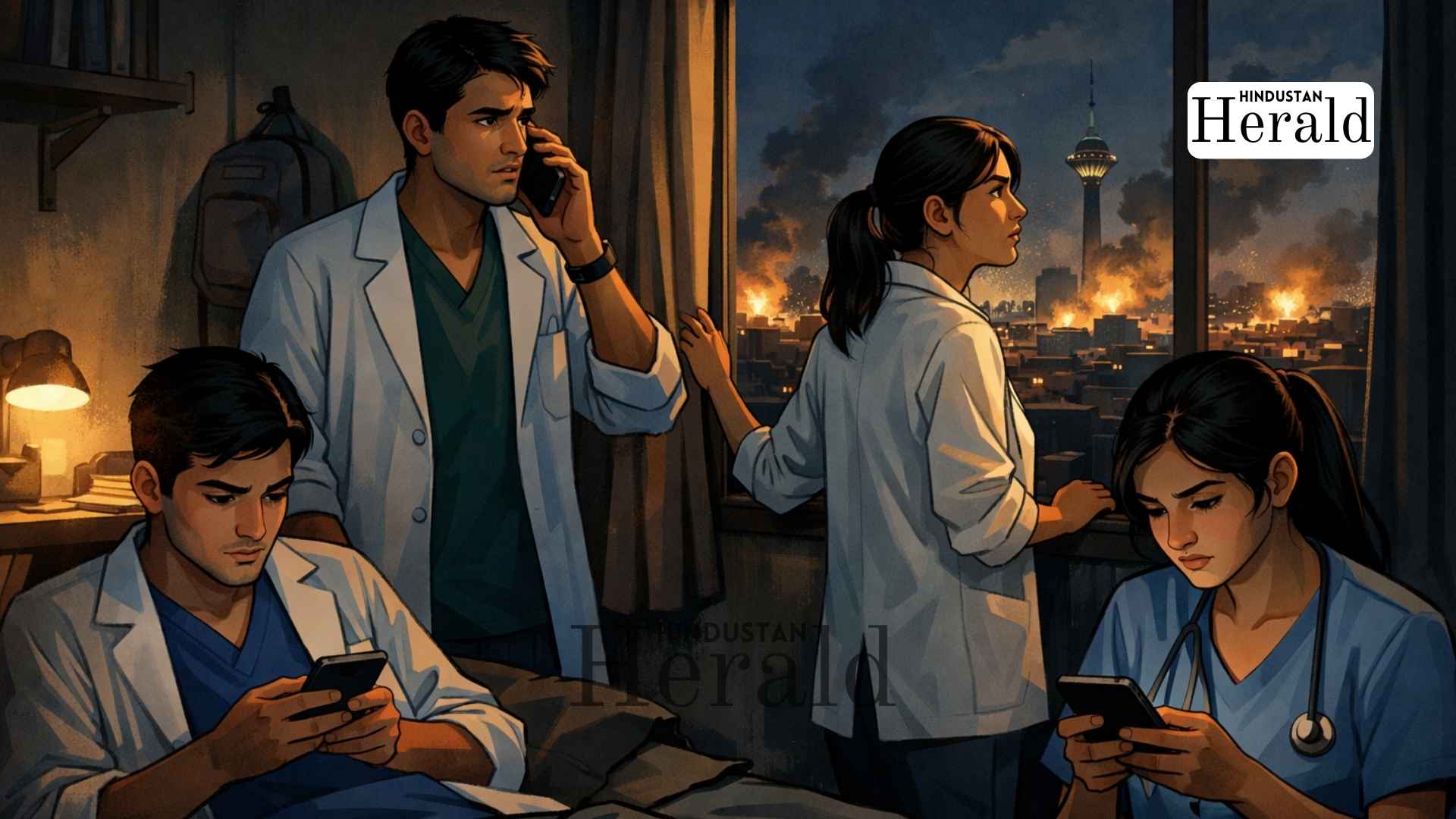
New Delhi, February 28: By evening, the television volume was low in most homes. Not because the news was unimportant. Because it was too loud already.
Parents across Srinagar, Kochi, Jaipur, and Mumbai sat staring at WhatsApp last-seen timestamps. A single blue tick became a sign of relief. A missed call meant the heart skipped once.
Far away, in parts of Iran, Indian students spent the day listening carefully to the sky.
Saturday did not begin as a normal day. It began with reports that the United States and Israel had carried out coordinated air strikes across Iranian territory. Within hours, Iran responded. Missiles were launched. Military bases in the Gulf were reportedly targeted. The region’s airspace tightened. Flights disappeared from booking systems. Airports slowed to a standstill.
For those watching from India, it is a geopolitical flashpoint. For those inside Iran, it is a very human fear.
Blasts In The Night
International agencies including Reuters reported explosions in Tehran, Isfahan, and Shiraz. Residents described loud blasts and visible smoke. Iranian media acknowledged attacks but offered limited details.
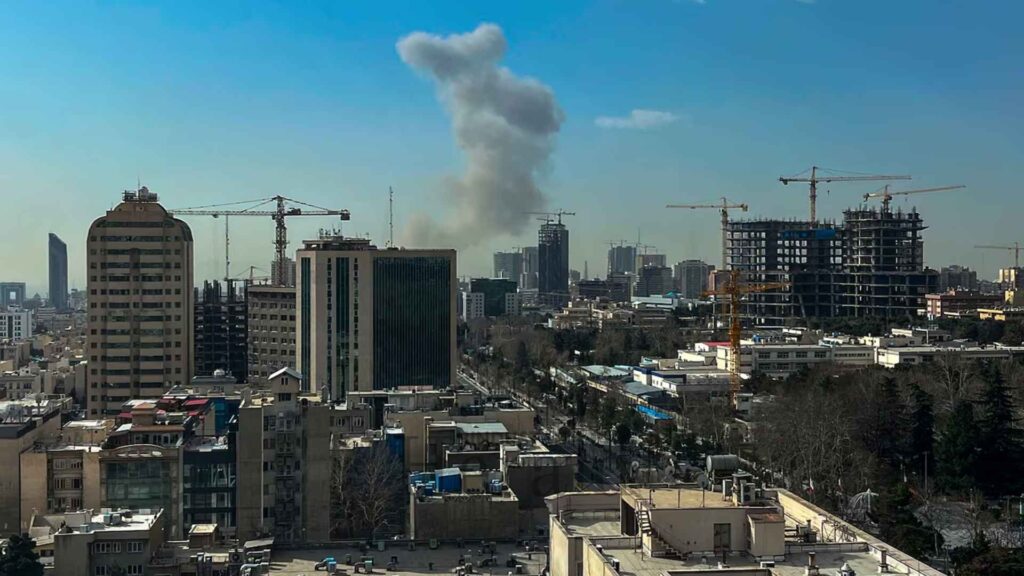
By afternoon, the pattern was clear. This was not a single isolated strike. It was a coordinated operation. Iran’s retaliation followed quickly, with missiles reportedly aimed at Israeli territory and American facilities in the region.
When two sides exchange direct fire, the situation stops being theoretical. It becomes unpredictable.
And unpredictability is what scares civilians the most.
Indian Students Inside Iran
Iran has long been a destination for Indian students, especially those pursuing medical degrees. The tuition is comparatively affordable. The degrees are recognised. For families unable to secure seats in India’s highly competitive medical colleges, it is often a practical option.
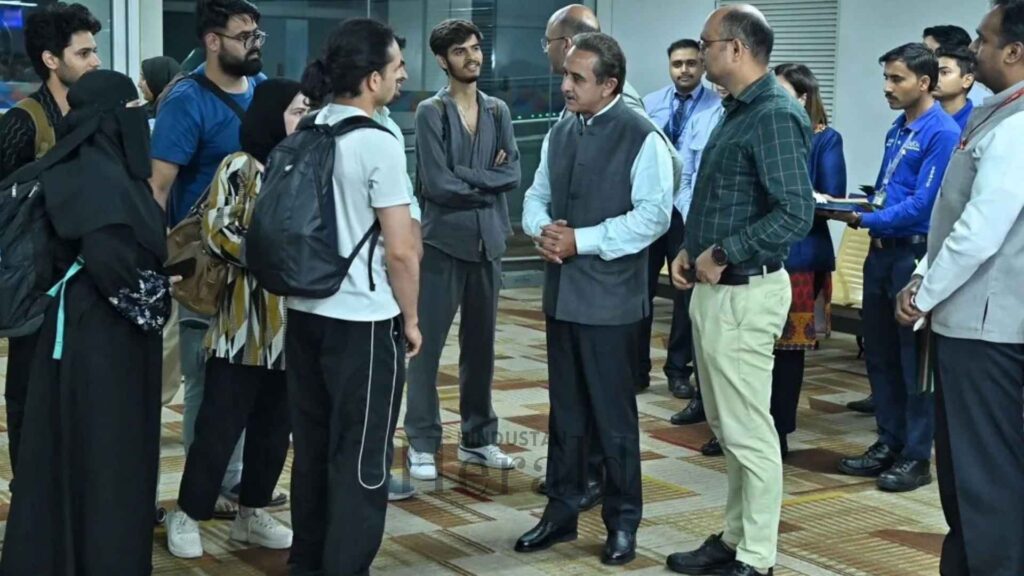
Today, that practical decision feels heavy.
Student groups estimate that hundreds, possibly thousands, of Indian nationals remain in Iran. Some left after India issued a “Leave Iran” advisory earlier this week. Many did not.
Why stay?
Because exams were scheduled. Because missing them could mean losing a year. Because universities were initially unwilling to postpone mandatory assessments. Because no one believed things would escalate this fast.
Now those exams have reportedly been cancelled. But flights are grounded. Airspace across much of the Middle East has restrictions. Travel is uncertain.
In videos shared online, students speak plainly. No dramatic language. Just worry. “We can hear explosions.” “We are scared.” “Please help us.”
Some say internet connections have become patchy. Calls drop mid-conversation. Families in India refresh their phones again and again.
It is one thing to read about conflict in a newspaper. It is another to know your child is in the middle of it.
What The Government Is Saying
The Ministry of External Affairs has advised all Indians in Iran to remain indoors and avoid unnecessary movement. The Indian Embassy in Tehran has shared emergency contact numbers and urged citizens to stay connected.

Officials say they are monitoring the situation closely and are in touch with Iranian authorities.
That is the official line.
Behind the scenes, evacuation from an active conflict zone is complicated. Closed skies limit air options. Overland evacuation would require coordination with neighbouring countries and safe corridors. These things take planning, negotiation, and security guarantees.
Student representatives, including voices from the Jammu and Kashmir Students Association, have written to the Prime Minister requesting urgent evacuation arrangements.
They point to previous rescue efforts in global crises and argue that speed matters now.
Why This Feels Bigger
India has important ties across West Asia. It maintains relations with Israel. It has energy and trade interests linked to Iran and Gulf countries. Any prolonged conflict will force delicate diplomatic handling.
There is also the economic angle. If tensions disrupt oil supply routes, fuel prices could react globally. That would eventually reach Indian households.
But for now, macroeconomics feels distant.
The immediate question is safety.
Are students stocked with essentials?
Are hostels secure?
Will there be further strikes overnight?
No government advisory can completely calm a parent whose child is in a conflict zone.
Waiting For The Next Update
As of late evening, there are no confirmed reports of Indian casualties. That is important. It is also fragile.
The region remains tense. International leaders have called for restraint. Military analysts warn that once direct exchanges begin, escalation can happen quickly if miscalculations occur.
Inside dorm rooms in Tehran and smaller university towns, students are doing ordinary things under extraordinary circumstances. Charging phones. Filling water bottles. Staying away from windows. Messaging family groups every few hours.
In India, parents are doing their part too. Calling relatives. Watching the news. Whispering prayers.
War, when it breaks out, rarely asks who is ready. It arrives suddenly and rearranges priorities.
This evening, the priority is simple. Keep everyone safe. Keep communication open. Hope that diplomacy moves faster than missiles.
Until flights resume or safe passage is arranged, Indian students in Iran are being told to stay indoors and remain alert.
It is going to be a long night.
Emergency Contacts For Indians In Iran
Mobile: +98 912 810 9115 / +98 912 810 9109 / +98 912 810 9102
Email: cons.tehran@mea.gov.in
Stay ahead with Hindustan Herald — bringing you trusted news, sharp analysis, and stories that matter across Politics, Business, Technology, Sports, Entertainment, Lifestyle, and more.
Connect with us on Facebook, Instagram, X (Twitter), LinkedIn, YouTube, and join our Telegram community @hindustanherald for real-time updates.

Specializes in South Asian geopolitics and global diplomacy, bringing in-depth analysis on international relations.
- Rajiv Menon

- Rajiv Menon
- Rajiv Menon
- Rajiv Menon




 Shelesh Joshi and Rajiv Menon