 By Shelesh Joshi and Rajiv Menon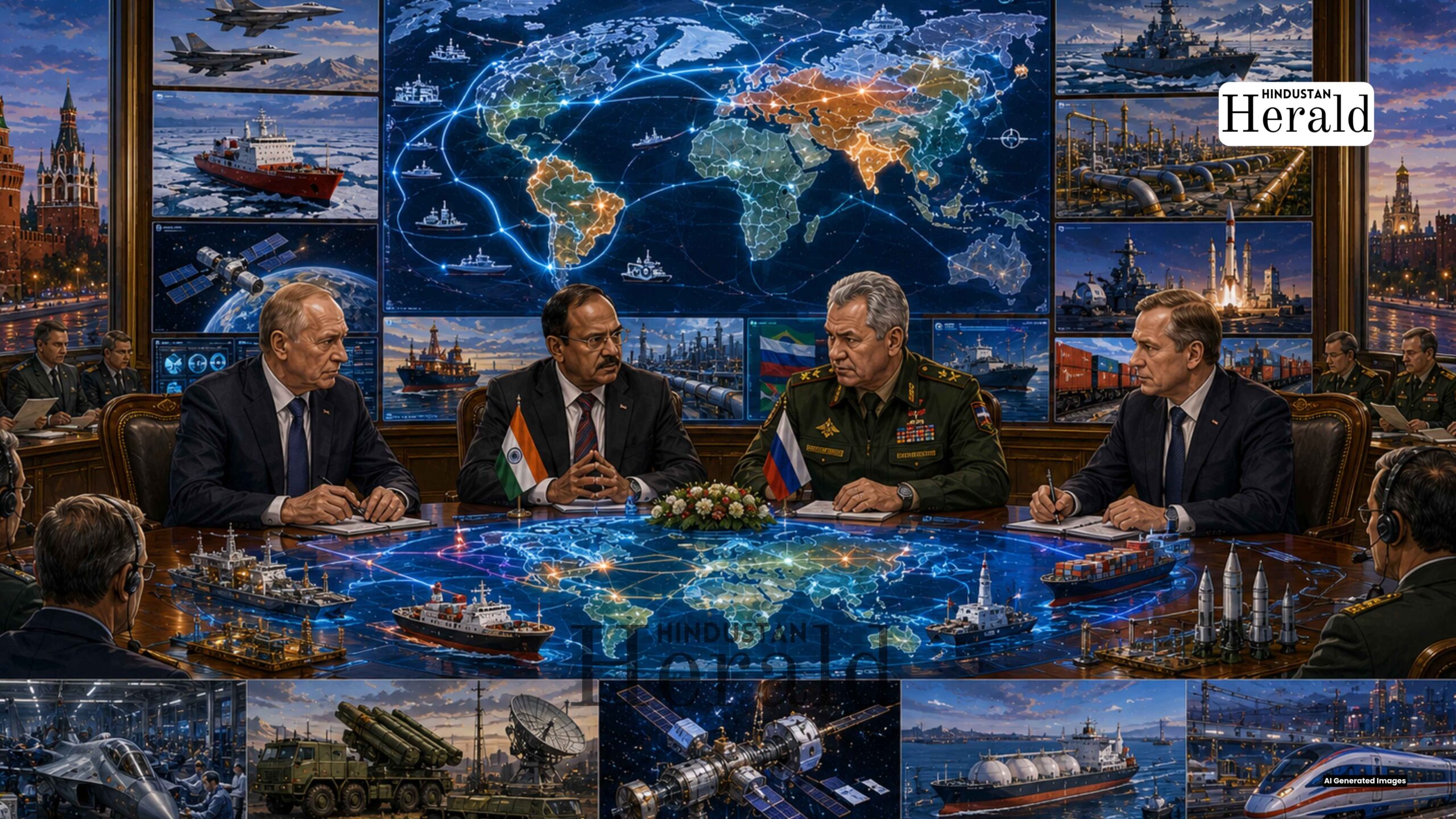
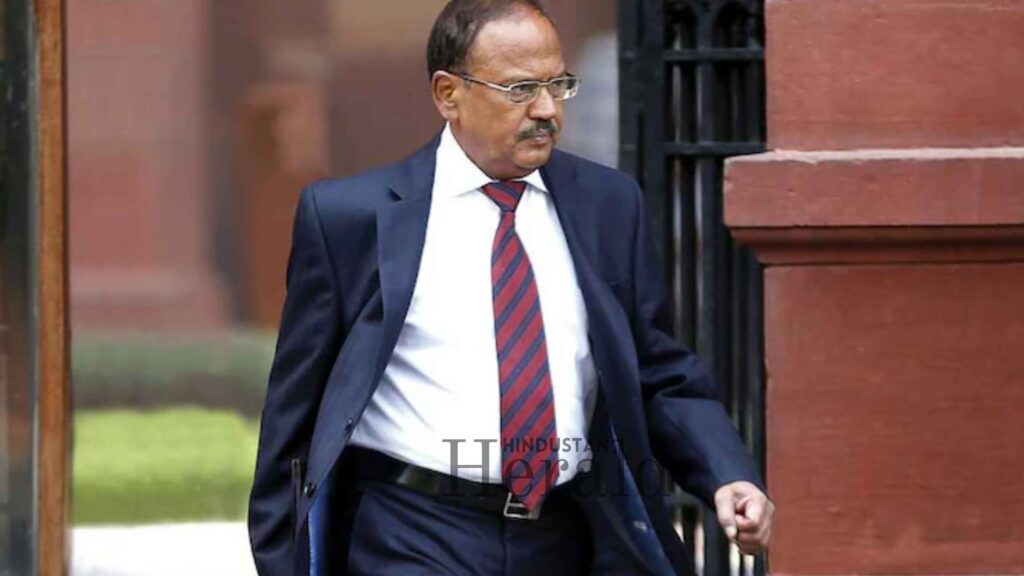
New Delhi, May 30: There is a particular kind of diplomatic visit that does not make much noise when it happens but quietly shifts things in ways that matter for years afterward. Ajit Doval Moscow visit this Friday felt like one of those.
India’s National Security Adviser is not someone who shows up somewhere to fill a chair. The man has spent decades operating in spaces where every word is weighed and every meeting has a purpose that extends well beyond what gets written in official summaries. So when he sat down with three of Russia’s most powerful figures in a single day, the right question is not what was said. It is what was being built.
He met Nikolai Patrushev first. Then Denis Manturov. Then Sergei Shoigu. Each conversation covering different ground but all of them pointing in the same direction. India and Russia, whatever the outside world might prefer, are not drifting apart. They are, with quiet consistency, drawing closer.
This visit had been building for months. Patrushev came to New Delhi in November last year. Jaishankar met Lavrov in Moscow around the same time. The meetings have been coming at a steady rhythm, each one picking up where the last left off, each one adding a little more weight to what the two countries are trying to construct together. Doval’s trip was not the beginning of something. It was the continuation of something that has been quietly gaining momentum for a while now.
Quick Summary
- NSA Ajit Doval packed 3 high-level meetings into a single day in Moscow on May 30, 2026, covering everything from Arctic shipping to defence procurement to space cooperation.
- Nikolai Patrushev, the man who chairs Russia’s Maritime Board and sits close to Putin, reviewed proposals that were first discussed during his own November 2025 trip to New Delhi, meaning these are not new conversations but maturing ones.
- Russia’s Arctic shipping route, formally the Northern Sea Route, came up seriously as an alternative to the Suez Canal and Strait of Hormuz, both of which have been causing India real economic pain over the past year.
- India ships more than 85 percent of its crude oil through international waterways, which means any threat to those routes is not a foreign policy problem. It lands on kitchen tables across the country.
- Doval also met Myanmar’s NSA Tin Aung San quietly on the sidelines, with the 5th BIMSTEC NSA meeting in India coming up in July 2026.
- The BRICS NSA meeting in New Delhi came up directly in Doval’s conversation with Sergei Shoigu, and the way both sides discussed it suggests they are already coordinating on what happens in that room.
The Man, the Meetings, and What Was Really Going On Behind Ajit Doval Moscow Visit
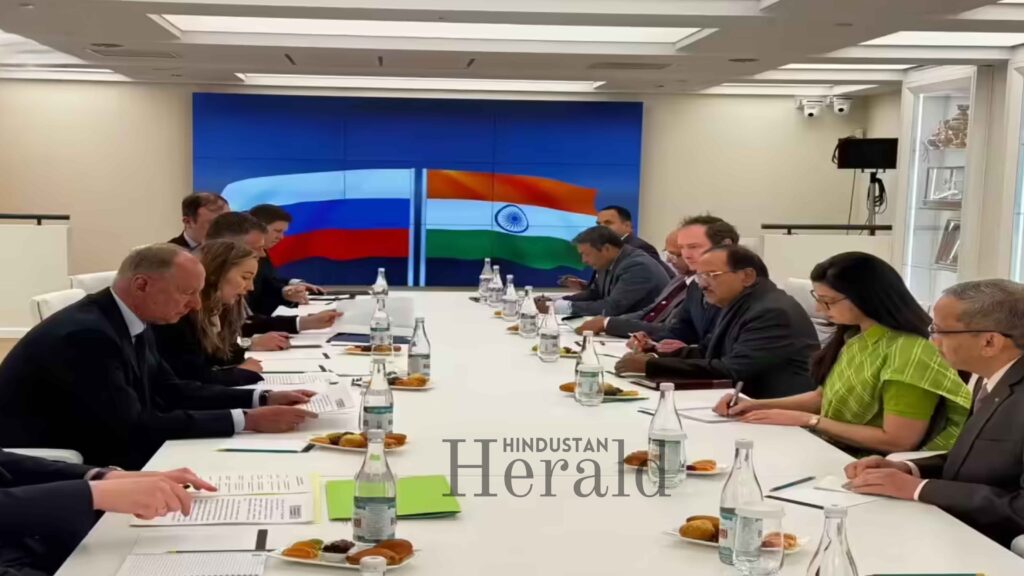
The official reason for the Moscow visit was the first International Security Forum, a gathering that Russia has been trying to establish as a serious alternative to forums like Munich, where Moscow feels it has long been cast as the problem rather than invited as a partner.
Whether you think that framing is fair or not, the forum drew real attendance. Senior security officials from multiple countries showed up. And India sent its most senior security official, not a deputy, not a special envoy, but the NSA himself.
That choice says something. It says New Delhi considers this forum worth its full attention. It says India is comfortable being seen in that room. And in the current global environment, where every diplomatic move gets read for signals by capitals from Washington to Beijing, that comfort is itself a statement.
Doval is also, it bears remembering, not a talker. He is a doer. Former intelligence chief, architect of some of India’s most consequential security operations, a man who spent much of his career in places where things actually happened rather than just got discussed. His presence in a room changes the temperature of the conversation.
The Patrushev meeting, according to ANI, was essentially a progress audit. Both sides had agreed on a set of proposals when Patrushev visited India back in November 2025. Moscow was now checking what had actually moved. The agenda was maritime connectivity, shipbuilding, defence, and polar sailor training. That last item is the one that catches your attention if you are paying close enough attention.
Polar Training and Why It Is Not a Small Detail
Governments do not train sailors for Arctic conditions because it sounds interesting. They do it because they are planning to send ships through Arctic waters. The fact that India and Russia have been discussing this training for over two years now, and that it has now been elevated to the NSA level, tells you that New Delhi is genuinely serious about the Northern Sea Route as a long-term option. And honestly, after what the Red Sea has put Indian shipping through over the past year, that seriousness makes complete sense.
The Houthi attacks on commercial vessels have not been a minor inconvenience. Ships have been rerouted. Freight costs have gone up. Delivery times have stretched in ways that compound across supply chains. Indian companies have been absorbing those costs quietly while publicly saying very little about it because there is not much to say. The route is disrupted, the alternatives are expensive, and nobody has a clean solution.
The Arctic is not a clean solution either. As reported by Bold News Online, the Northern Sea Route significantly cuts transit time between Asia and Europe compared to the Suez Canal path. But it is navigable only during certain months without icebreaker support, it demands specialised vessels, and it runs through waters where Russia has sovereign authority and is the only country with the infrastructure to make regular commercial traffic viable.
That last point is important. Using the NSR means depending on Russia. For India, that is not necessarily a deal-breaker given how the relationship has been developing, but it is a factor that does not get discussed enough in the excited coverage of Arctic shipping as some kind of neutral geographic opportunity.
Still, the conversations are real. The sailor training programme that Sarbananda Sonowal began setting up in Vladivostok back in 2023, at the Russian Maritime Training Institute with its polar simulators, as reported by News on Air, was not a photo opportunity. It was a practical first step. What Doval did this week was signal that the step is being followed by others.
Manturov and the Relationship That Goes Deeper Than Headlines
The meeting with Denis Manturov gets less attention than the Patrushev discussions because it is harder to summarise neatly. The readout covered defence, energy, space, and a catch-all reference to “other fields” that is diplomatic shorthand for things too sensitive or too detailed to put in a press note. But consider what is sitting inside those words.
Energy first. India has been buying Russian crude at scale since 2022, when Europe’s decision to sanction Moscow opened up a gap that Indian refiners moved into quickly and quietly. At various points over the past couple of years, the volumes have been striking. What began as an opportunistic trade, take the discount while it lasts, has been slowly transforming into something more structural. The conversations are now about long-term arrangements, payment systems that do not route through Western financial infrastructure, and supply security that holds up even if the political environment gets messier. That is not a trade relationship. That is the beginning of an energy architecture.
Space is the quieter one, but it matters. ISRO has been on a genuine run lately. Its ambitions are expanding, its budget has grown, and the list of missions it wants to fly keeps getting longer. Russia’s space capabilities are not what they once were, but in specific areas, crewed mission expertise, certain propulsion technologies, deep institutional knowledge built over decades, they are still real. A collaboration that fills gaps on both sides without requiring either to compromise its other partnerships is worth pursuing.
Doval’s Words at the Forum: The Part That Needed to Be Said
When Doval addressed the forum itself, he chose his ground carefully. He raised West Asia, called for protection of international waterways including the Strait of Hormuz and the Red Sea, and said directly, in a line that ANI carried: “Safe and uninterrupted movement of international trade through international waterways is essential for the global economy.”
He also called out terrorism with language that has become familiar in India’s foreign policy vocabulary but that lands with different weight depending on the venue. No “double standards,” he said, according to India TV News. Everyone in that room understood the reference.
The thing about saying this at a Moscow forum specifically is that it shifts the conversation away from the Western-dominated terrorism frameworks that India has long found frustrating. The argument that certain state sponsors of terror have been protected because they were geopolitically convenient is not a new one from New Delhi. But making it in a room that includes officials from the Global South, from countries that have their own reasons to distrust Western definitions of acceptable violence, gives it a different resonance.
As reported by Indian Defence News, Doval also pushed a broader point that goes to the heart of how India sees the current moment: the institutions built after World War II are not keeping pace with the world that actually exists now, and reforming them is not something that can be deferred indefinitely. It is the kind of argument that plays well in Moscow and across much of the developing world, and India has been making it with increasing confidence as its own global standing has grown.
Shoigu, BRICS, and the Room India Is Preparing to Host
The Doval-Shoigu meeting on the forum’s sidelines was relatively brief, but the Indian Embassy in Russia confirmed on X that it covered defence, security, energy, and economic cooperation. It also, crucially, touched on the upcoming BRICS NSA meeting in New Delhi.
India is hosting that gathering. Doval is chairing it. And you do not have to read too much into the timing to understand that part of what he was doing in Moscow this week was getting a sense of where Russia stands before that meeting happens. When you are running a room full of major powers, it helps to have already had the harder conversations privately.
As reported by Indian Defence News, the pattern visible across all of Doval’s Moscow engagements is what analysts sometimes call dual-track diplomacy, though the phrase makes it sound more calculated and less organic than it probably feels from the inside. India is deepening specific bilateral relationships while simultaneously trying to reshape the multilateral frameworks within which those relationships operate. It is ambitious. It is also exhausting to sustain. But so far, it has been working.
The Myanmar Meeting Nobody Really Noticed
Sandwiched somewhere in Doval’s packed Moscow day was a meeting with Tin Aung San, Myanmar’s National Security Adviser. According to Business Standard, they talked about security, connectivity, defence, and regional dynamics. Myanmar’s NSA will visit India in July for the 5th BIMSTEC NSA meeting. Most reports gave it a line and moved on. That is probably the wrong call.
Myanmar is one of the genuinely difficult corners of India’s foreign policy, and it does not get nearly enough honest examination. The military took power in 2021 and has faced international condemnation since. India has not exactly embraced the junta, but it has not cut it off either. The reasons are real enough: a long shared border, insurgency concerns on India’s northeastern frontier that are directly tied to what happens across that border, and significant infrastructure investment including the Kaladan Multi-Modal corridor and the India-Myanmar-Thailand highway that represent years of strategic planning and cannot simply be written off.
So India sits with the discomfort. It maintains the relationship while being careful about how loudly it does so. The BIMSTEC meeting in July will put that calculation under some scrutiny in a room that includes other democracies who will be watching how India handles it. There is no clean answer here. There rarely is in foreign policy when the geography is complicated and the stakes are real.
Stepping Back: What This Day in Moscow Actually Means
Pull back far enough and what Doval’s Friday in Moscow looks like is a snapshot of the strategic position India has been patiently constructing for itself over the past decade and more. A country that sits in the middle of competing global orders without fully belonging to any of them. That buys Russian weapons and American fighter jets. That trades with China while maintaining border tensions with it. That hosts summits for the Global South while deepening ties with Western economies. That sends its NSA to a Moscow security forum and then, presumably, takes calls from Washington the following week.
It frustrates everyone a little. Western governments find India’s continued engagement with Moscow difficult to justify publicly. Russia would clearly prefer a more committed partner. China watches India’s ambitions with a wariness that never quite goes away. And yet India keeps getting invited to every room. Keeps being courted by every side. Keeps extracting real value from relationships that other countries have been pressured to abandon.
As per Tribune India, the defence deals still being shaped between New Delhi and Moscow include BrahMos missile range expansion, jet upgrades, and potential Sukhoi-57E production in India. These are not symbolic gestures. They are the hardware that India’s military will actually depend on for the next generation of its capability.
Walking away from that because it is geopolitically uncomfortable would mean either operating with gaps or scrambling for alternatives that do not yet exist at the price and pace India requires. New Delhi has looked at that choice clearly and decided to stay the course.
Whether everything discussed in Moscow actually translates into real outcomes over the coming months is genuinely uncertain. Big diplomatic days have a way of generating impressive language that quietly dissolves when the follow-up meetings get cancelled and the bureaucratic friction sets in. It has happened before in this relationship.
But something about the sustained pace of engagement right now, the frequency of senior meetings, the breadth of what is being discussed, the fact that both sides keep showing up and pushing further rather than treading water, feels different from the usual diplomatic theatre. The next twelve months will tell the story properly.
Stay ahead with Hindustan Herald — bringing you trusted news, sharp analysis, and stories that matter across Politics, Business, Technology, Sports, Entertainment, Lifestyle, and more.
Connect with us on Facebook, Instagram, X (Twitter), LinkedIn, YouTube, and join our Telegram community @hindustanherald for real-time updates.

Tracking world politics, global markets, trade movements, policy decisions, and the changing balance of economic power.
- Shelesh Joshi

- Shelesh Joshi
- Shelesh Joshi
- Shelesh Joshi



Specializes in South Asian geopolitics and global diplomacy, bringing in-depth analysis on international relations.
- Rajiv Menon
- Rajiv Menon
- Rajiv Menon
- Rajiv Menon