
 By Ananya Sharma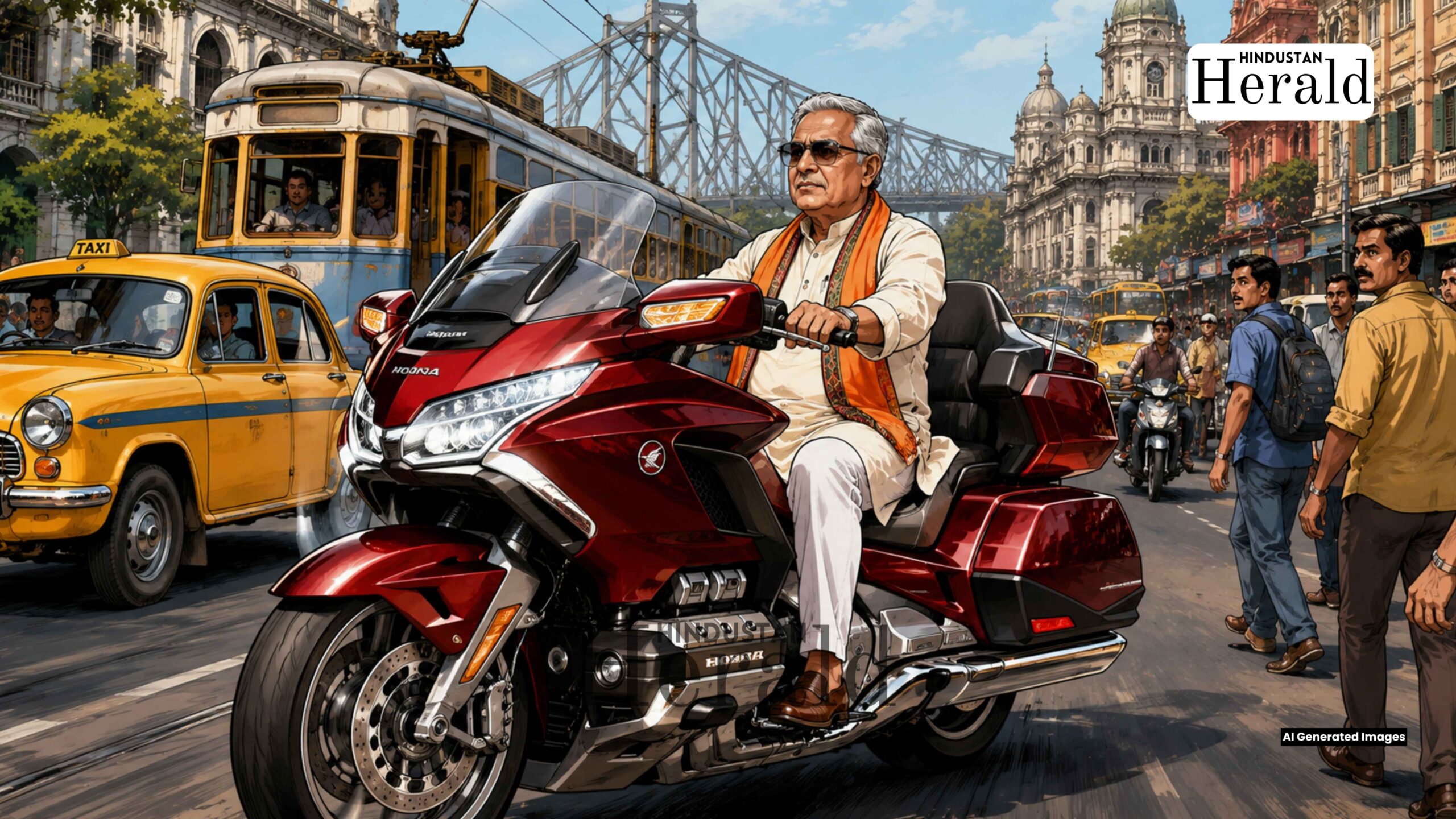
Kolkata, May 29: A ₹53 lakh motorcycle, no helmet, and a minister who looked absolutely unbothered about both. That was Friday afternoon in Kolkata, and that was enough.
A video started making the rounds, and it was not complicated to understand. Dilip Ghosh, freshly minted as a BJP minister in West Bengal, riding a massive Honda Gold Wing Tour through city traffic. No helmet. Just the wind, the machine, and what appeared to be genuine comfort with the whole situation.
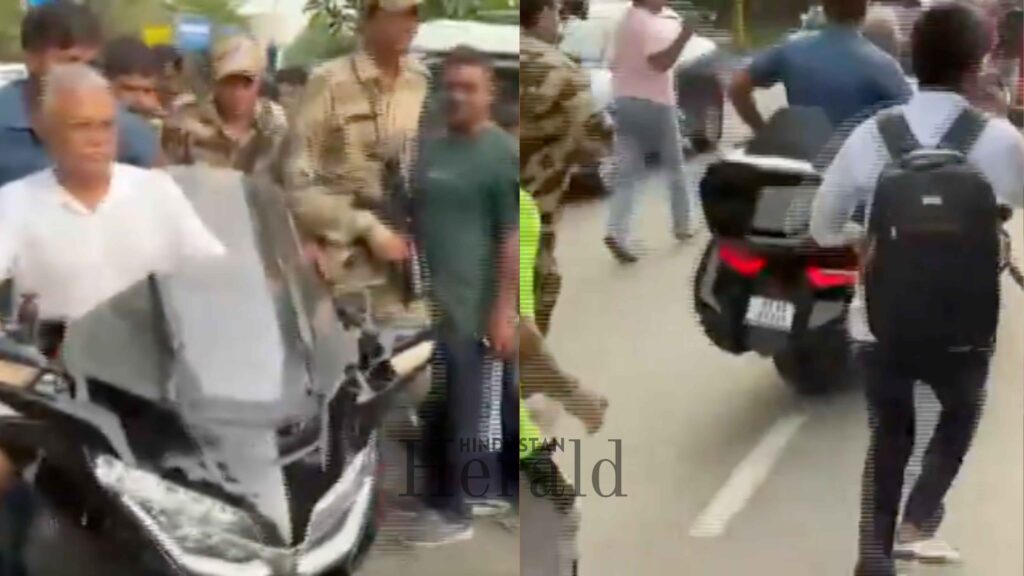
The clip was short. It did not need to be long.
The Bike, First, Because It Matters
The Honda Gold Wing Tour is not a commuter motorcycle. It is not something you pick up for office runs or weekend errands. It is a touring machine built for long highways and serious riding, with a flat-six engine and a price that starts well above ₹40 lakh and climbs to ₹53 lakh depending on the variant. Riders who know motorcycles talk about it the way car people talk about a Mercedes S-Class. It is that category of vehicle.
On Kolkata’s streets, surrounded by autos and buses and the general organised chaos of city traffic, the Gold Wing looked exactly as conspicuous as you would expect. And Dilip Ghosh on top of it, without a helmet, looked exactly as unbothered as the video suggests.
Here Is the Straightforward Part
Wearing a helmet on a two-wheeler is not optional in India. The Motor Vehicles Act is clear about this. It applies to every rider, everywhere, every time. Kolkata’s traffic police have been running enforcement drives. Ordinary commuters get stopped, fined, and sent on their way with a lighter wallet. That is how the system is supposed to work.
When a sitting minister does the same thing, openly, on camera, the question that follows is not unfair. It is actually the most basic question you can ask: does this rule apply to everyone, or are there people it quietly does not apply to?
Ghosh has not said anything publicly. His office has not issued a clarification. The video exists, the internet has seen it, and the silence since then has been complete.
Why People Got Annoyed
Some of the criticism online was predictable, the kind of political point-scoring that happens regardless of which party is involved. That is normal and should be discounted accordingly.
But underneath the noise, there was a genuine frustration that is harder to dismiss. West Bengal, like the rest of India, has a road safety problem. Two-wheeler riders dying in accidents where the absence of a helmet was a decisive factor, that is not an abstract statistic. It shows up in hospital wards and family homes and police reports regularly. State governments know this. They run awareness campaigns. They fund enforcement. They put up billboards.
And then a minister takes out a ₹53 lakh motorcycle in the middle of the city without bothering with the one piece of safety equipment the law requires. For people who have lost someone to a road accident, that kind of image lands differently than it does for everyone else.
There was also the fuel angle, which was a smaller but still pointed critique. A motorcycle that size, with an engine that large, is not fuel-efficient by any reasonable measure. Ministers across party lines have, at various points, spoken about responsible governance and austerity. Critics were not going to let that contrast pass without comment.
His Supporters Had a Different Read
That said, not everyone watching the video saw a problem.
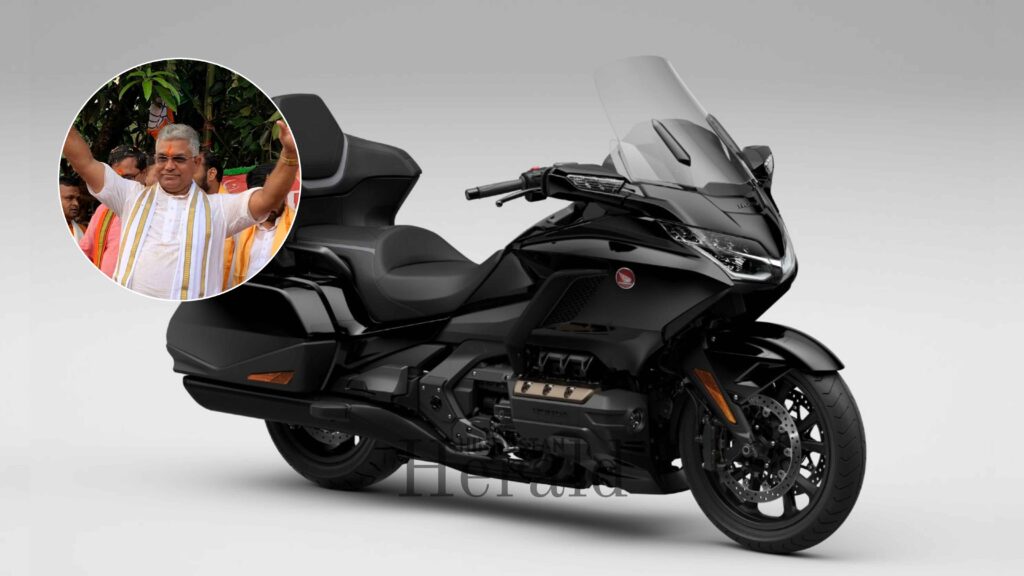
Within Ghosh’s political base, the reaction was closer to appreciation. He has always had a certain kind of following, people who like that he does not calibrate every public move through a political optics filter. He rides motorcycles. He says things without checking how they will land. He is not performing accessibility, he just seems to actually have it.
For that section of his supporters, Friday’s video was consistent with who he is. A politician who can actually ride a serious motorcycle, not sitting stiffly on it for a photo opportunity but actually riding it through city traffic, that reads as genuine to people who are tired of manufactured politician imagery.
Both readings of the same thirty-second clip are real. That is what made this particular moment more interesting than a standard political controversy.
The Bigger Problem With Staying Silent
Still, the helmet question is not going to resolve itself.
India loses more than 1.5 lakh people to road accidents every year. Head injuries from two-wheeler crashes make up a significant part of that number, and helmet non-compliance is consistently identified as a factor. This is not contested data. It is the reason the law exists in the first place, and it is the reason state governments keep putting money into enforcement.
Public figures do not operate in a vacuum. When a minister skips a safety rule on camera and then says nothing about it, the message that filters down, intentionally or not, is that the rule is negotiable depending on who you are. Traffic constables trying to change riding behaviour in their zones do not need that message circulating.
A straightforward acknowledgement would have closed this down quickly. Something as simple as recognising the lapse and committing to wear a helmet next time. That is all it would have taken. The silence instead has kept the video relevant longer than it needed to be.
Where Ghosh Sits Politically Right Now
This is also not a moment when West Bengal’s BJP can afford unnecessary noise. The party has spent years building a serious political presence in a state where it was once barely visible. Ministers from the party are operating with the awareness that they represent a broader project, not just themselves. Every episode that becomes a controversy is an episode that takes energy away from governance messaging.
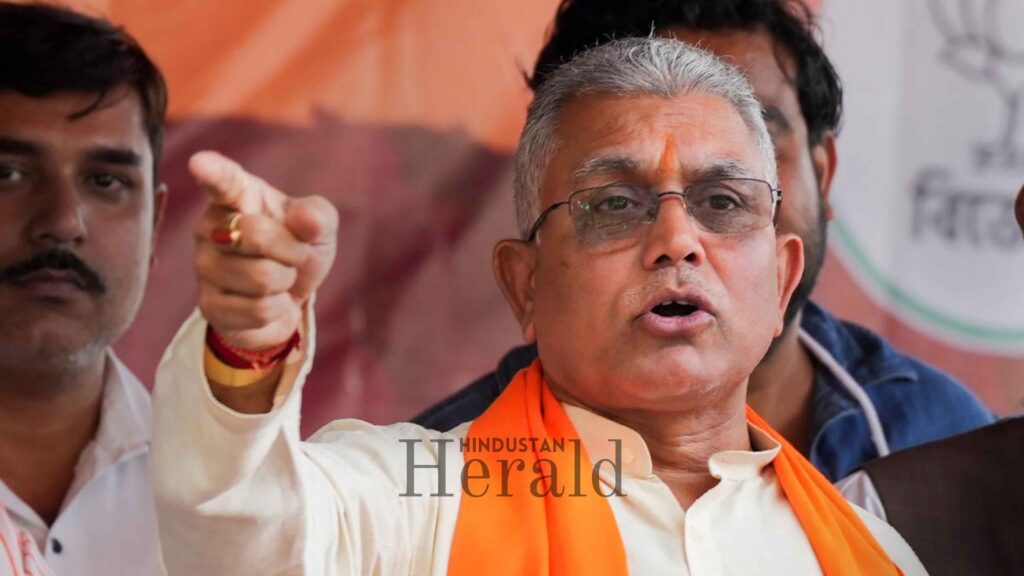
Dilip Ghosh is experienced enough to know how these things work. He has been in politics long enough to understand that a video clip without a response becomes whatever the internet decides it is. Whether this particular episode has legs beyond a news cycle or two depends entirely on what he does next.
For now, the video is still out there. The highway, so to speak, remains open.
Stay ahead with Hindustan Herald — bringing you trusted news, sharp analysis, and stories that matter across Politics, Business, Technology, Sports, Entertainment, Lifestyle, and more.
Connect with us on Facebook, Instagram, X (Twitter), LinkedIn, YouTube, and join our Telegram community @hindustanherald for real-time updates.

Covers Indian politics, governance, and policy developments with over a decade of experience in political reporting.
- Ananya Sharma

- Ananya Sharma
- Ananya Sharma
- Ananya Sharma


 Sandeep Verma
  Herald Desk