 By Shelesh Joshi and Kavita Iyer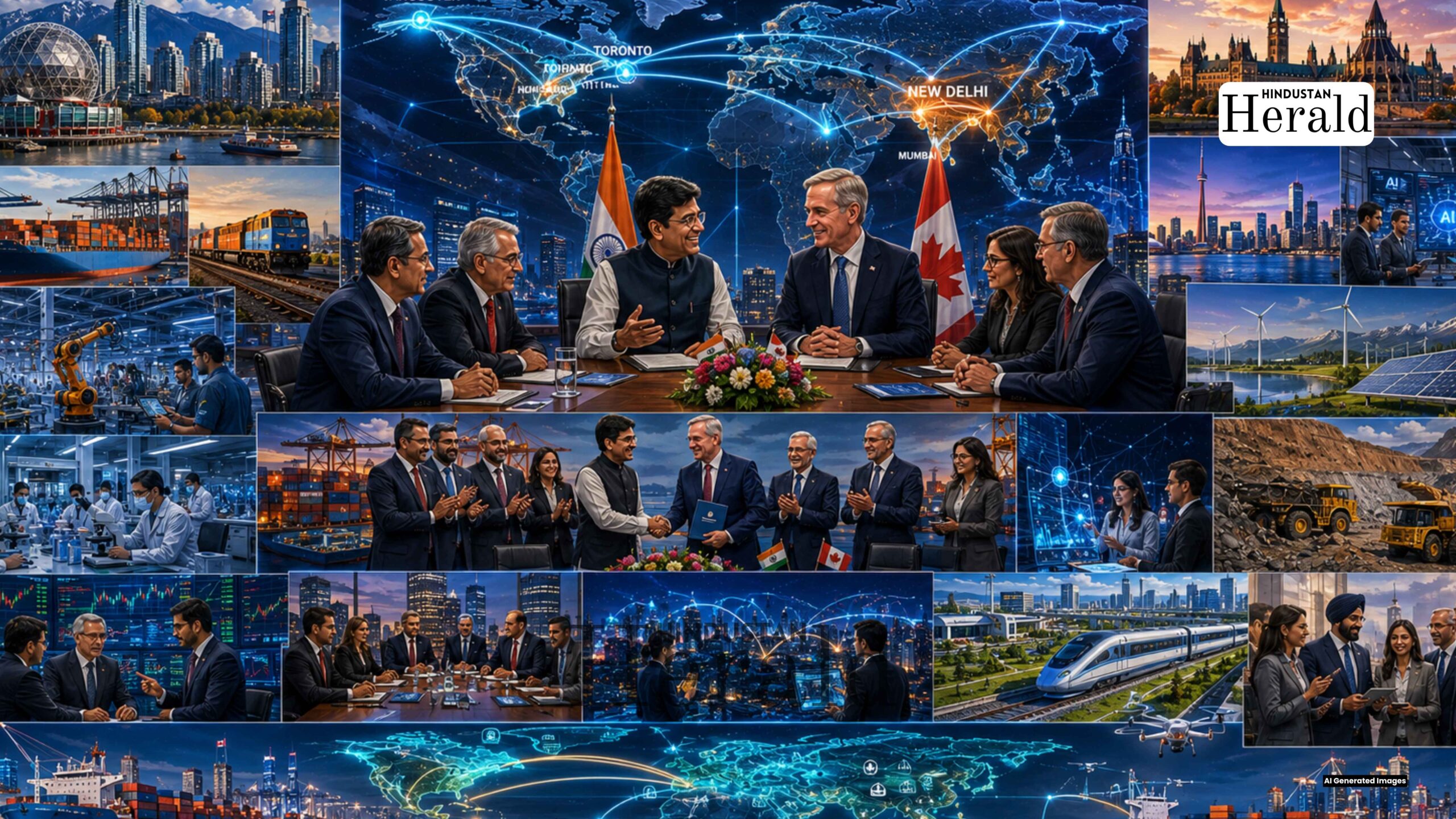
New Delhi, May 29: Two years ago, if you had told someone covering South Asian diplomacy that the India Canada Trade Deal would be back on the table and moving faster than ever, they would have given you a look.
In 2023, both countries were expelling each other’s diplomats. The accusations being traded publicly were serious enough that most business forums quietly disappeared from calendars without explanation. Nobody was talking about trade. They were barely talking at all.
So when Commerce Minister Piyush Goyal landed in Ottawa last Sunday with a delegation of over 100 Indian business leaders and spent three days meeting Prime Minister Mark Carney, Trade Minister Maninder Sidhu, and half the Canadian cabinet, it was genuinely surprising in a way that most diplomatic visits are not.
The two sides launched a standing bilateral trade forum. They pushed hard on a free trade agreement that has been stuck in some form of negotiation since the early 2000s. They set a joint target of USD 50 billion in trade by 2030, which is roughly six times what the two countries currently do in goods.
It was, to put it plainly, a lot for a relationship that was in the emergency ward not long ago. Whether any of this holds is, honestly, the more interesting question. India and Canada have had good weeks before. What they have struggled to produce is what comes after the good weeks.
Quick Summary
Six things to know before reading further:
- Goyal flew to Canada with leaders from over 100 Indian companies across energy, pharma, aerospace, and agriculture. The Commerce Ministry says it is the largest Indian business delegation ever sent to Canada.
- The Canada-India Trade and Investment Forum was formally launched in Ottawa this week, giving both sides a permanent platform for business engagement that does not depend on ministerial visits to function.
- Goods trade between the two countries sits at USD 8.5 billion today. Both governments want it at USD 50 billion by 2030. That is an enormous gap to close in four years.
- The free trade agreement, called CEPA, has completed two rounds of talks with a third running in Ottawa this week. Both ministers have publicly committed to finishing negotiations by end of 2026.
- The total bilateral commercial relationship, including Canadian pension fund investment into India, stands at roughly USD 100 billion, according to the India Brand Equity Foundation. The goods trade number alone does not capture how deep this relationship already runs.
- Canada is sending a Team Canada Trade Mission to India later this year. That visit will say more about whether this momentum is real than anything announced this week.
A Forum That Should Have Existed Ten Years Ago
Here is something that is almost embarrassing about the India-Canada commercial relationship. For years, the only thing that reliably got business people from both countries into the same room was a ministerial visit. A minister would fly in, meetings would happen, a joint statement would be issued with carefully chosen language about shared ambitions and deepening ties, everyone would go home, and then the relationship would essentially go quiet until the next visit landed on the calendar.
There was no standing mechanism. No permanent platform. Nothing that kept the conversation alive between the diplomatic peaks. The Canada-India Trade and Investment Forum, launched this week in Ottawa, is an attempt to fix exactly that. It is not a summit or a conference that happens once and produces a report. It is a standing body, designed to run continuously, bringing together business leaders from both sides for sector-specific roundtables, investor engagement sessions, and commercial matchmaking that does not need a visiting minister to justify itself.
The Union Ministry of Commerce and Industry called it a platform to foster new commercial partnerships and drive sustained business engagement. Plain language version: stop making business wait for politics, and give industry its own room. It is not a complicated idea. The fact that it did not exist until now says more about how dysfunctional the bilateral relationship has been than anything else.
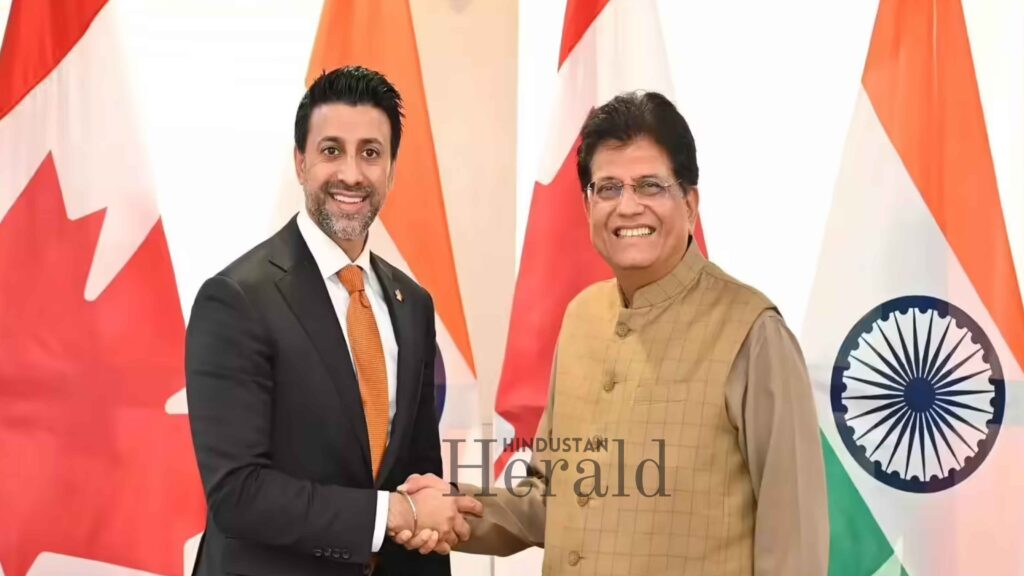
Minister Goyal and Canada’s Maninder Sidhu launched the forum jointly during their Ottawa meetings, which ranged across trade policy, investment facilitation, and the ongoing push toward the Comprehensive Economic Partnership Agreement. The mandate behind it came directly from PM Modi and PM Carney, who met in New Delhi in March 2026 and, by all accounts, told their trade teams to stop moving at a diplomatic pace and start moving at a commercial one. The forum is the first real product of that instruction.
What It Means to Show Up With 100 Companies
The delegation size is not an accident. It is not optics. It is a message sent in the clearest possible language. When a government assembles over 100 companies and puts them on planes to sit in Canadian boardrooms and government offices for three days, two things are happening simultaneously. To Canada, the signal is that Indian industry considers this corridor serious enough to invest real time in. To Indian industry, the signal is equally deliberate: the political risk that made you nervous about Canada in 2023 has receded, and this government is standing behind this relationship with its full weight.
The sectors represented told their own story. Energy, mining, automotive, aerospace, pharmaceuticals, textiles, agriculture, telecommunications. Not a narrow technology delegation or a finance-focused group. A real cross-section of the Indian economy, looking for business across the full width of what Canada has to offer.
Goyal’s own schedule on the first day in Ottawa was dense to the point of being relentless. He met PM Carney directly. He had substantive talks with Sidhu on the CEPA timeline. He sat down with Agriculture Minister Heath MacDonald on food technology and farm incomes. And he met Foreign Minister Anita Anand, which is the meeting that most coverage this week glossed over but probably should not have.
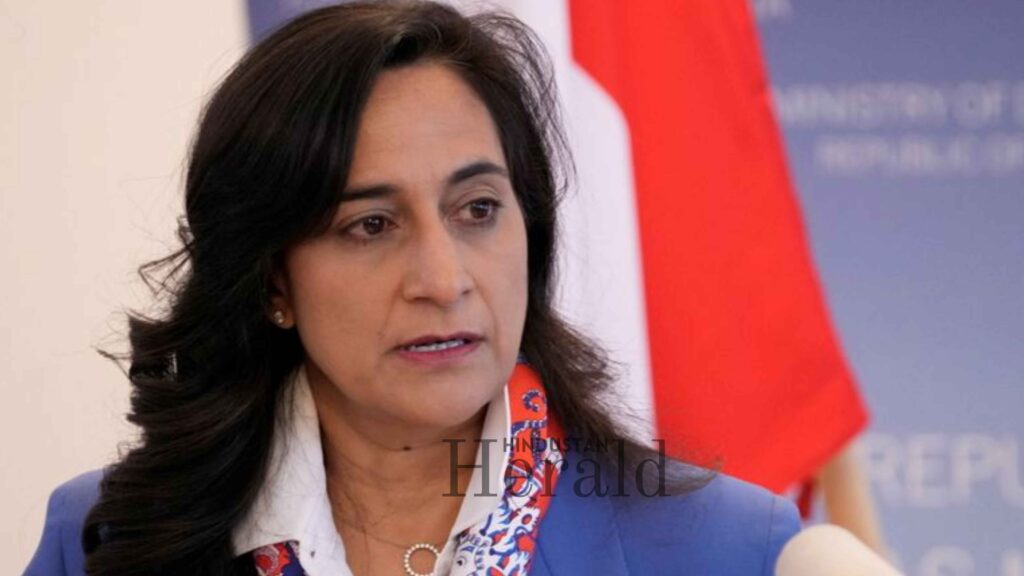
Commerce ministers do not routinely sit with foreign ministers. When they do, it usually means the economic conversation has been pulled into the strategic one. Goyal talked to Anand about India’s infrastructure pipeline, its renewable energy targets, its logistics growth, its expanding consumer market. That is not a trade statistics exchange. That is a pitch to a strategic partner about where long-horizon capital can find a home.
The Toronto leg of the visit, May 26 and 27, is where the actual groundwork began. Ottawa sets the political frame. Toronto, where Canadian pension funds, financial institutions, and industry are headquartered, is where someone eventually opens a laptop and asks: what can we actually structure here, and when?
The India Canada Trade Deal That Never Happened, Until Maybe Now
There is no gentle way to describe the history of the India Canada Trade Deal except as a long record of near-misses and quiet failures dressed up as progress. Serious conversations started in the early 2000s. Formal negotiations began around 2010. They dragged on inconclusively for years, got rebranded as an Early Progress Trade Agreement in 2022 in an attempt to inject some forward motion, and then the diplomatic rupture of 2023 ended even that smaller ambition.
That is precisely what makes this week significant. When India and Canada launch trade investment forum to boost business partnerships, as they did in Ottawa on May 25, it is not just another bilateral announcement. It is the first standing institutional mechanism this relationship has ever had, and it arrives at a moment when the free trade negotiations behind it are moving faster than they ever have before.
So when both ministers publicly committed this week to concluding the CEPA by end of 2026, the experienced observer’s honest reaction is: let us see. But the current pace is genuinely different, and it is worth being specific about why.
PM Modi and PM Carney formally announced the relaunch of CEPA talks in November 2025. The Terms of Reference were signed when Carney came to New Delhi in March 2026. A first round of virtual negotiations followed in March. A second round closed on May 8. And as Goyal was in Ottawa this week, a third technical round of negotiations was running in the same city at the same time.
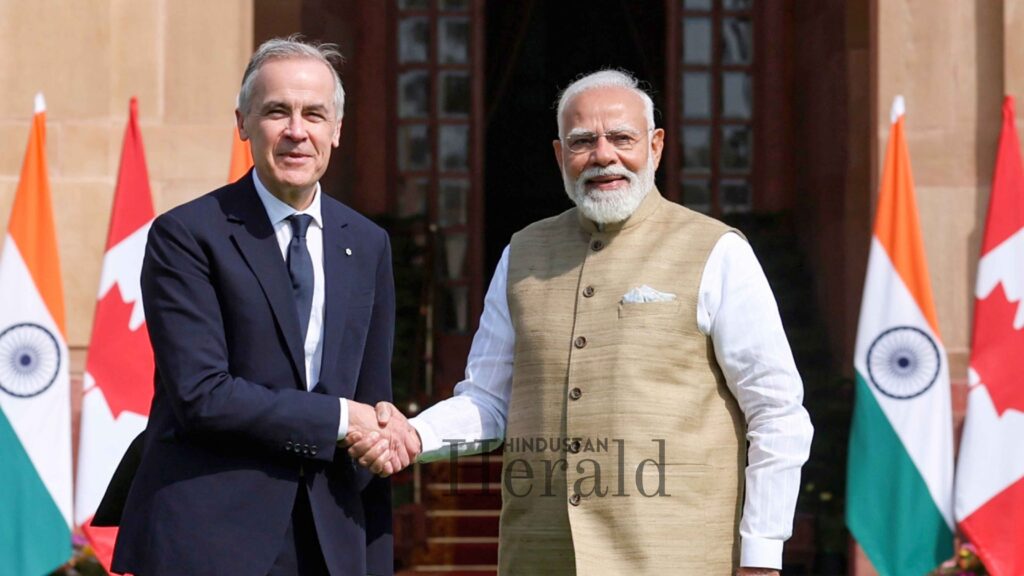
That last detail is the one worth sitting with. Running technical negotiations in parallel with a ministerial visit is not how these things usually work. It means neither side is allowing the bureaucratic process to pause while the political performance is happening. The negotiators are not waiting for ministers to finish their meetings. Everyone is working simultaneously, which is what urgency actually looks like rather than just the word urgency appearing in a press release.
The G20 Leaders’ Summit in November 2026 is the unspoken deadline behind the official one. A CEPA signing at the G20 would be a headline moment for both leaders, each of whom has domestic political reasons to show that their foreign economic policy is producing something real. Shared political incentive at that level is not nothing. It is often what finally closes a deal that technical negotiators alone cannot push over the line.
Current goods trade is USD 8.5 billion. The target is USD 50 billion by 2030, or CAD 70 billion, roughly Rs 4.65 lakh crore in domestic Indian framing. Getting there requires not just a signed agreement but an actual shift in how businesses use this corridor. Tariff cuts help. What really moves investment at that scale is the confidence that comes from having a legal framework in place, not from a ministerial commitment made at a press conference.
The Real Numbers Behind the Headlines
The USD 8.5 billion figure that has dominated coverage this week is accurate but incomplete. That number covers merchandise goods trade in FY25 only. Add services and the bilateral total for 2024 rises to USD 23.66 billion, with merchandise alone growing at roughly 10 per cent year on year according to the 2025 India-Canada Ministerial Dialogue joint statement. That is a meaningful growth rate on a base that should, given the size of both economies, be considerably larger.
Now factor in investment. Canadian pension funds have been putting patient, long-duration capital into Indian infrastructure, real estate, toll roads, airports, and listed equities for over a decade. The India Brand Equity Foundation puts the total bilateral commercial relationship, including Canadian portfolio investment into India, at approximately USD 100 billion. More than 600 Canadian companies already have a formal operational presence in India.
Six hundred companies. A hundred billion dollars in total commercial exposure. And the two governments have only now built a standing forum for business engagement. The gap between the depth of this relationship and the institutional infrastructure meant to support it has been quietly absurd for years.
Where the Business Actually Is
Not every sector on the bilateral agenda deserves equal excitement. Some of the enthusiasm this week is real. Some of it is the standard optimism of a summit that has not yet had to produce results. Here is an honest read.
Critical minerals and clean energy is where the relationship has the most urgent and genuinely mutual need. Canada has the reserves that India’s clean energy transition requires: lithium, cobalt, nickel, uranium, rare earths. India has the domestic manufacturing targets that create real demand for exactly those inputs: electric vehicles, green hydrogen, battery storage, solar at scale. This is not a politely expressed bilateral interest. It is a structural dependency that both sides would be foolish to ignore. A CEPA with serious critical minerals provisions could reshape India’s energy supply chain for the next two decades in ways that no amount of diplomatic goodwill can replicate.
Technology and artificial intelligence works partly on policy and partly on people. The Indo-Canadian diaspora across Toronto, Waterloo, and Vancouver is one of the most accomplished and well-networked immigrant communities in Canada. Indian technology companies and Canadian AI research institutions already know each other informally. A formal bilateral framework does not create those relationships. It gives them legal structure and commercial scale.
Pharmaceuticals is the sector where the logic is hardest to argue against. India makes the generics and the active pharmaceutical ingredients. Canada does the biotech research and clinical development. Both want supply chain resilience after the disruptions of recent years. The fit is almost too obvious, which is probably part of why it has taken this long to formalise.
Aerospace, food processing, and agri-tech round out the priority list. Goyal’s specific meeting with Agriculture Minister Heath MacDonald on food security and farm incomes signals that agri-tech is being taken seriously on both sides rather than being included as an afterthought.
2023 Cannot Just Be Footnoted Away
Any honest account of this week has to reckon with what happened three years ago. The diplomatic rupture of 2023 was not a minor disagreement that got overstated in the media. The allegations made publicly, at the highest levels of both governments, were serious. Diplomats were expelled. Trade missions were pulled. Business sentiment did not just cool, it collapsed. The word that people used privately about this relationship was not complicated or strained. It was broken.
The repair started at Kananaskis in June 2025 when Modi and Carney met at the G7 and made what appears to have been a personal decision to restore things. A Foreign Ministers’ joint statement followed in October 2025. The 7th Ministerial Dialogue on Trade and Investment happened in New Delhi in November. Carney came to India in March 2026 and the CEPA Terms of Reference were signed during that visit.
Each of those steps produced another. That is genuinely new for this relationship, which has historically generated energy in short bursts and then gone quiet.
Canada has confirmed that a Team Canada Trade Mission will visit India later in 2026. That visit is the next real test of whether this is a genuine reset or a well-managed performance. A serious inbound Canadian mission with real commercial intent would make the argument for the former. A visit that quietly gets pushed to 2027 or shows up thin on industry participation would make the argument for the latter.
The Pension Fund Story Nobody Is Writing About Enough
The CEPA deadline and the goods trade target are the headlines. But the more immediately consequential story from this week is quieter and far less photogenic.
Canadian pension funds are among the most patient institutional investors in the world. They invest on ten and twenty year horizons. They have been putting money into Indian infrastructure for years, into airports, toll roads, logistics parks, and real estate platforms that generate no daily headlines but do generate the kind of steady long-term returns that pension funds exist to find.
Before this week, those conversations depended almost entirely on ministerial visits to open doors. A Canadian institutional investor who wanted to understand a specific Indian infrastructure opportunity needed someone in a minister’s office to make introductions. That is an absurdly inefficient system for a USD 100 billion commercial relationship.
The Canada-India Trade and Investment Forum changes that by creating a permanent institutional space where those conversations can happen throughout the year, on their own schedule, without waiting for political conditions to be right. For Indian infrastructure developers and renewable energy promoters looking for long-duration equity partners, that is a practically meaningful improvement over what existed before.
It will not make front pages anywhere. But it will probably move more actual capital in the short term than the CEPA negotiations will, simply because the relationships and the money are already there. The forum just makes it easier for them to find each other without going through a ministry.
One Honest Assessment of Where Things Stand
The forum is built. The CEPA has a deadline, a pace, and genuine political ownership at the prime ministerial level on both sides. A Canadian trade mission to India is confirmed. Over a hundred Indian companies spent three days in Ottawa and Toronto making their case. None of that is small. For this particular relationship, in fact, it is quite a lot.
But the India-Canada relationship has had good weeks before. It has produced joint statements and communiques and carefully worded expressions of shared ambition. What it has historically been unable to produce is the sustained, unglamorous, unsexy follow-through that turns a bilateral summit into a bilateral economy.
The USD 50 billion target by 2030 is the right level of ambition. The institutional architecture being built around it is more serious than anything tried before. The political ownership sits at the right level. The business interest on both sides is real.
What comes next will not be decided in a trade forum in Ottawa or a roundtable in Toronto. It will be decided in negotiating rooms over the next eighteen months, in investment term sheets that never get announced publicly, in regulatory decisions that nobody writes about, and in the slow accumulation of actual deals between actual companies that did not have a reason to talk to each other before this week. That is the only part of this story that has ever truly mattered. And it is only just beginning.
Stay ahead with Hindustan Herald — bringing you trusted news, sharp analysis, and stories that matter across Politics, Business, Technology, Sports, Entertainment, Lifestyle, and more.
Connect with us on Facebook, Instagram, X (Twitter), LinkedIn, YouTube, and join our Telegram community @hindustanherald for real-time updates.

Tracking world politics, global markets, trade movements, policy decisions, and the changing balance of economic power.
- Shelesh Joshi

- Shelesh Joshi
- Shelesh Joshi
- Shelesh Joshi





Former financial consultant turned journalist, reporting on markets, industry trends, and economic policy.
- Kavita Iyer
- Kavita Iyer
- Kavita Iyer
- Kavita Iyer