
 By Ananya Sharma and Kavita Iyer
New Delhi, May 26: Withdrawing your own provident fund money in this country has, for the longest time, felt like applying for a favour. You filed forms. You chased your employer. You called the EPFO helpline and got put on hold. And after all of that, you still waited. Sometimes for weeks. For money that was yours to begin with.
That, if the Employees’ Provident Fund Organisation is to be believed, is changing. The body that manages retirement savings for roughly seven crore salaried workers across India has launched what it is calling EPFO 3.0 a technology and policy overhaul that, on paper at least, is the most significant shake-up the organisation has seen in decades.
Whether it delivers is another question. But what is being proposed is genuinely ambitious.
The Problem It Is Trying to Fix
To understand why EPFO 3.0 matters, you have to first understand how broken the old system felt for ordinary members.
There were 13 separate withdrawal categories. Thirteen. Each with its own eligibility rules, its own paperwork, its own quirks. Want to withdraw for your child’s education? There is a category for that. Medical emergency? Different category. Buying a house? Yet another one. And if your employer was slow to respond, or if your account had a data error a misspelled name, a wrong date of birth you were essentially stuck. The system had no good answer for you.
This is not a small inconvenience. For a large section of India’s working population, the provident fund is the biggest financial asset they will ever have. Not a stock portfolio. Not a property. Just this fund, quietly accumulating over the years. When people need that money and they do, for real reasons, at real moments of pressure the last thing they should be doing is navigating bureaucratic categories and waiting on an unresponsive employer.
EPFO 3.0 is, at least in intent, an acknowledgement that the old way was not good enough.
Three Categories Instead of Thirteen
The first big change is the simplification of withdrawal rules. Those 13 categories are gone. In their place, three broad heads: essential needs, housing needs, and special circumstances. That is it. The idea is that almost every legitimate reason someone might want to access their PF savings fits under one of these three.
Within each category, the specific rules have also been updated. For education-related withdrawals, members can now dip into the fund up to ten times over the course of their working life. For marriage, the revised limit is five times. Both require a minimum period of service and, importantly, most withdrawals still require that at least 25 per cent of the account balance stays put a floor designed to preserve the retirement function of the fund.
There are reports that under specific qualifying conditions, members may be able to access the full account balance. The details depend heavily on the individual case and the category being used, so it is worth checking the EPFO portal before assuming the most generous reading applies to your situation.
Still, the direction is clear. The new framework is designed to be more accessible, less confusing, and harder to misinterpret. Whether field-level implementation will actually reflect that simplicity remains to be seen.
UPI Withdrawals Are Coming
This is the feature that has generated the most interest, and understandably so. The plan is to allow members to withdraw their PF money via UPI, meaning the funds land in your bank account the same way any other UPI transfer does quickly, digitally, without the traditional wait.
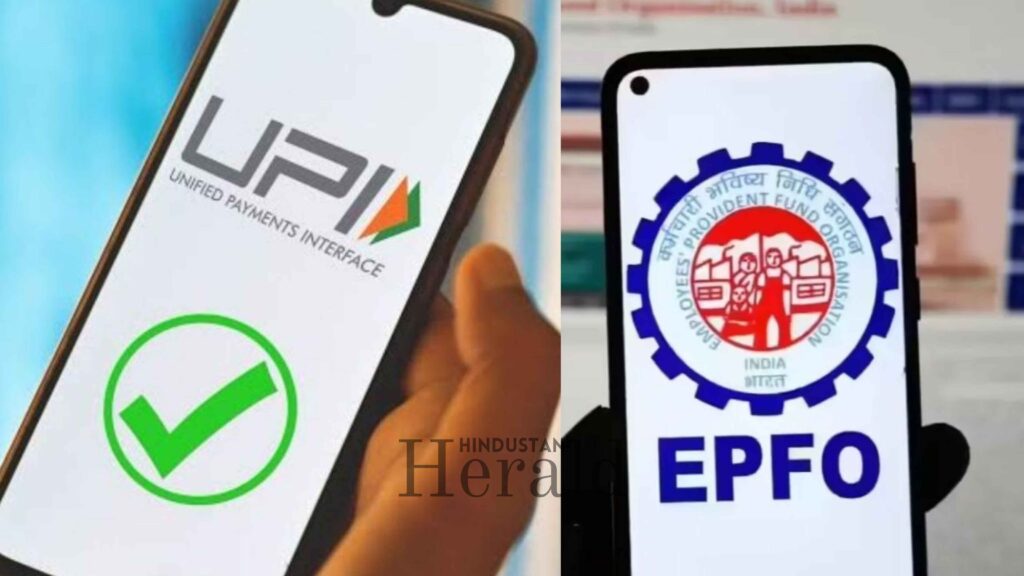
There is also an ATM-based withdrawal facility being introduced, which would let members access PF funds at an ATM almost like drawing from a regular savings account. Testing for the UPI module was reportedly completed this month, with a full public rollout expected in the weeks ahead.
A word of caution, though. EPFO has a history of announcing timelines that slip. The rollout is being done in phases, and not every account will have access to these features on day one. Before assuming you can use UPI withdrawal, check whether it is active for your specific account on the member portal.
That said, if the infrastructure holds up, this is a meaningful shift. Real-time access to provident fund money for people who often need it urgently is not a small thing.
Auto-Settlement and Less Manual Chaos
Another piece of EPFO 3.0 that does not get as much attention but probably should: auto-claim settlement. Right now, a significant portion of the delay in PF claims comes from the sheer volume of applications sitting in a queue, waiting for a human reviewer to look at them. Even claims that clearly meet all the criteria.
The upgraded system is meant to identify straightforward, eligible claims and process them automatically, without needing someone to manually push them through. This, combined with the Vishwas scheme a service efficiency initiative running alongside the main upgrade is intended to cut down turnaround times considerably.
Whether that translates to the field is something members will have to verify over the coming months. But the logic is sound, and if executed well, auto-settlement alone could meaningfully reduce the frustration that has defined EPFO interactions for years.
You Can Now Fix Your Own Account
Quietly significant. That is the phrase that comes to mind for this particular change.
Under the old setup, if there was an error in your PF account and there often was, because data entry over decades is imperfect you were almost entirely dependent on your employer to fix it. Wrong date of birth? Your employer had to initiate the correction. Name misspelled? Same story. For workers who had changed jobs, or whose employers were simply not responsive, this was a genuine dead end.
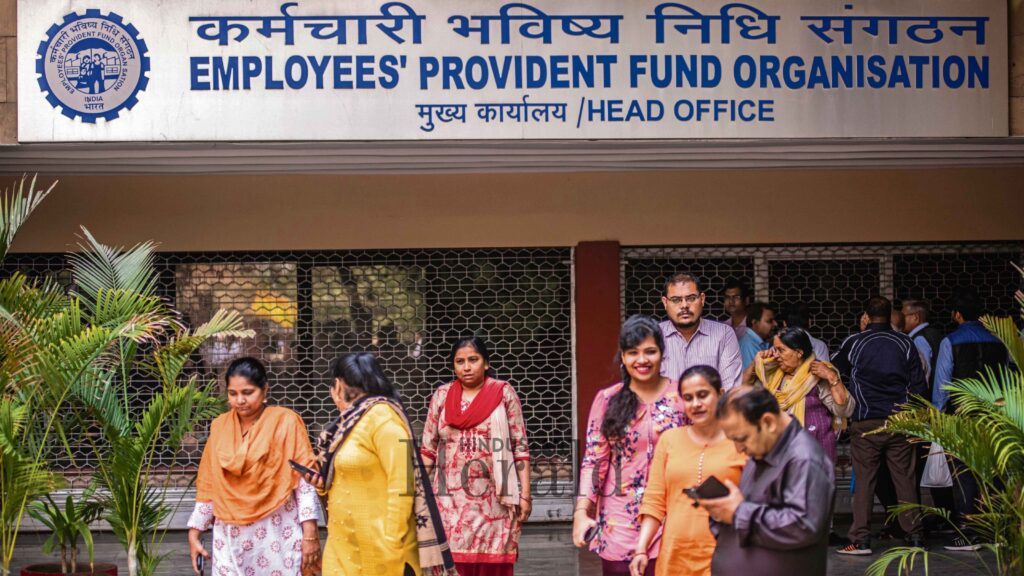
With EPFO 3.0, members can now correct their own profile details name, date of birth, marital status, employment dates directly through the online portal, without routing the request through their employer. A large-scale data correction exercise was reportedly carried out in 2025 as part of the transition, clearing up years of accumulated errors across accounts.
This sounds like a small administrative tweak. For millions of members with stuck accounts, it is anything but.
The Technology Underneath
On the backend, EPFO is rebuilding on a core-banking-style architecture. The practical meaning of this is real-time transaction processing the same principle that lets your bank balance update instantly when a transfer comes in. For a body handling tens of millions of accounts and crores of transactions daily, this is a fundamental shift from how the organisation has historically worked.
The platform is also being built with AI-driven regional language support through Bhashini, the government’s national language translation initiative. The aim is that workers in smaller towns and non-Hindi-speaking regions can access EPFO services in their own language which, given how important these savings are to people who may not be fluent in English or Hindi, is the right instinct.
For implementation, EPFO went through a formal tendering process with major IT vendors. This is not a patch job. The scale of the vendor engagement suggests the organisation is serious about making this stick.
What Should You Actually Do
Do not wait for someone to tell you what has changed in your account. Get on the EPFO member portal and check.
If there are data errors a misspelled name, a wrong date, anything that has been a friction point in the past use the new self-correction facility to fix them now, before you actually need to make a withdrawal in a hurry.
Understand the 25 per cent retention rule. In most withdrawal categories, a quarter of your balance has to stay in the account. Plan accordingly.
And for those expecting UPI withdrawals to be available immediately verify first. The rollout is phased. Your account may or may not have access yet.
Why Any of This Matters
EPFO 3.0 does not exist in isolation. It is part of a larger pattern the same push that gave India UPI, Aadhaar, DigiLocker of trying to bring creaking legacy institutions into the digital present. The ambition is consistent: take something that worked but barely, and make it actually work.
The difference with EPFO is the stakes. This is not a convenience upgrade. For hundreds of millions of people in India’s formal workforce, the provident fund is the core of whatever financial security they will have. How easily they can access it at the right moment, without unnecessary friction, without chasing an employer or waiting on a queue matters in a very human way.
For now, the system is being rolled out. Some pieces are live. Others are coming. And somewhere between the press releases and the actual implementation, seven crore members are waiting to see if this time, EPFO actually becomes what it is claiming to be.
Stay ahead with Hindustan Herald — bringing you trusted news, sharp analysis, and stories that matter across Politics, Business, Technology, Sports, Entertainment, Lifestyle, and more.
Connect with us on Facebook, Instagram, X (Twitter), LinkedIn, YouTube, and join our Telegram community @hindustanherald for real-time updates.

Covers Indian politics, governance, and policy developments with over a decade of experience in political reporting.
- Ananya Sharma

- Ananya Sharma
- Ananya Sharma
- Ananya Sharma





Former financial consultant turned journalist, reporting on markets, industry trends, and economic policy.
- Kavita Iyer
- Kavita Iyer
- Kavita Iyer
- Kavita Iyer




 Shelesh Joshi and Kavita Iyer