
 By Ananya Sharma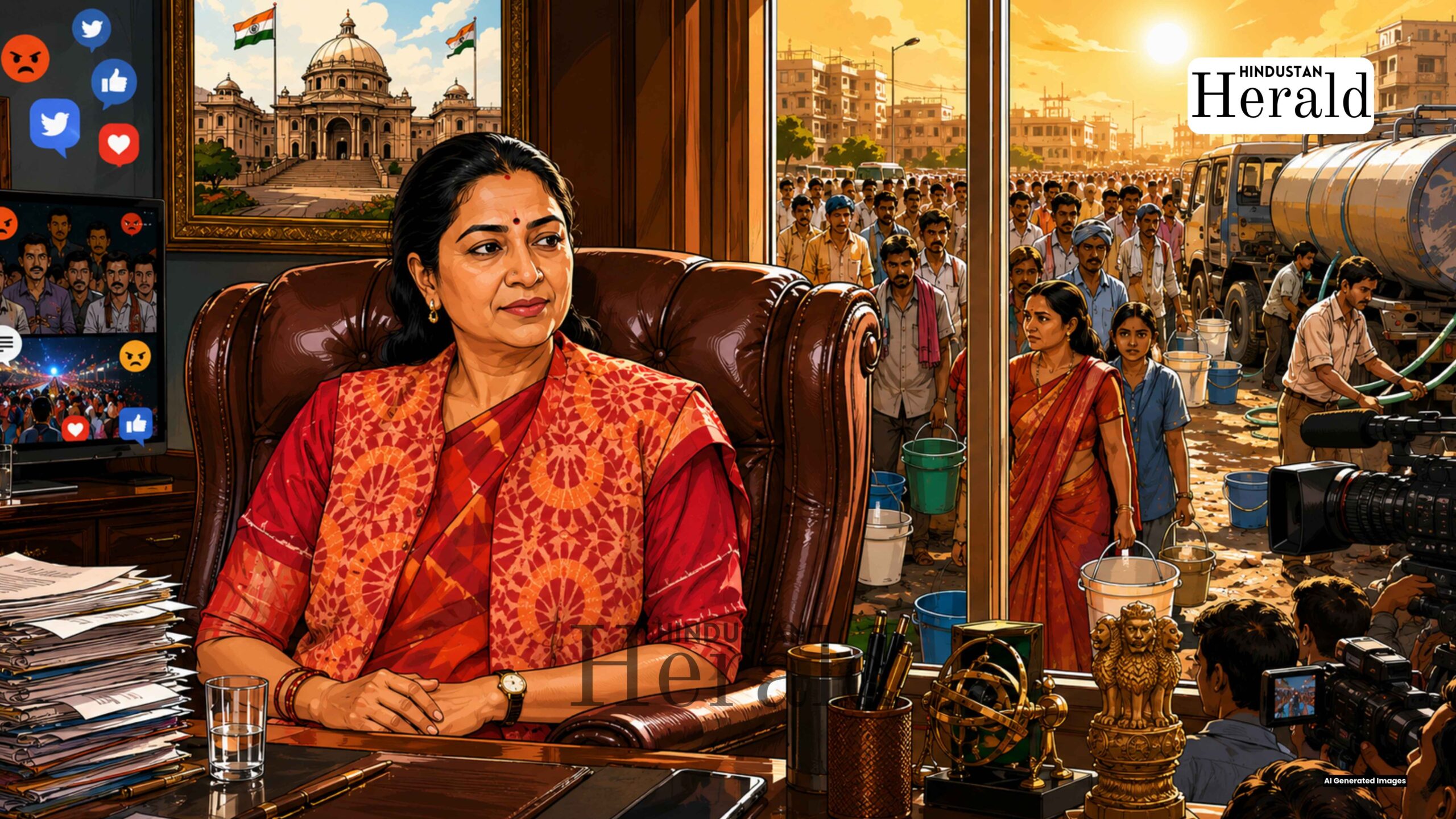
New Delhi, May 26: A photograph has done what opposition press conferences rarely manage to. It has stopped the scroll, generated thousands of shares within hours, and put Delhi Chief Minister Rekha Gupta on the defensive without her having said a word in response.
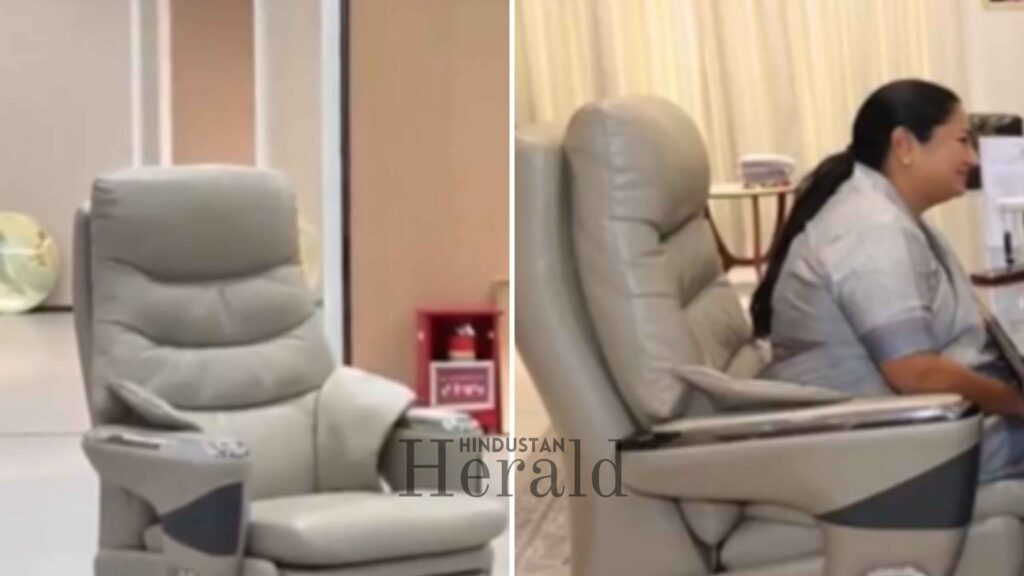
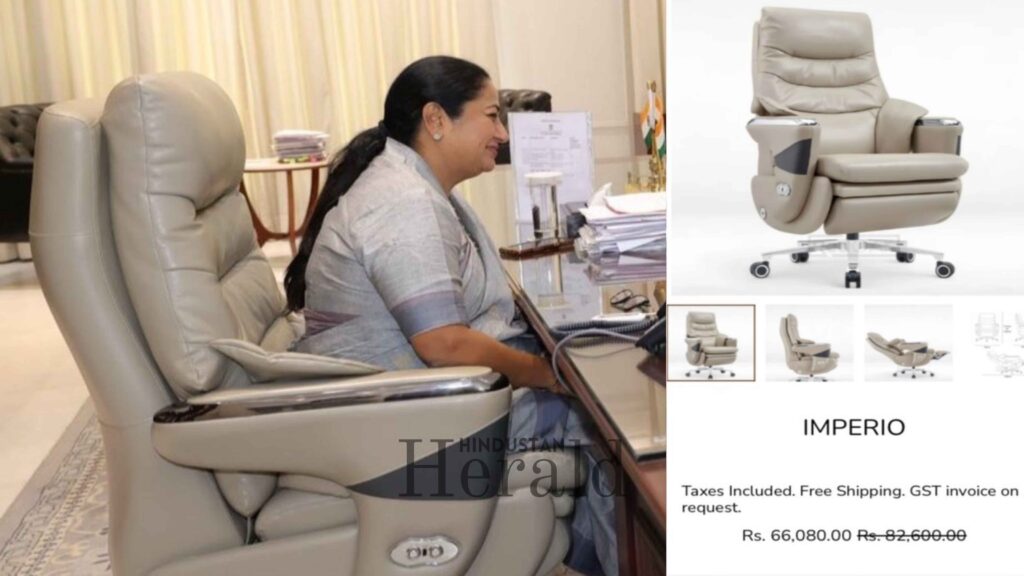
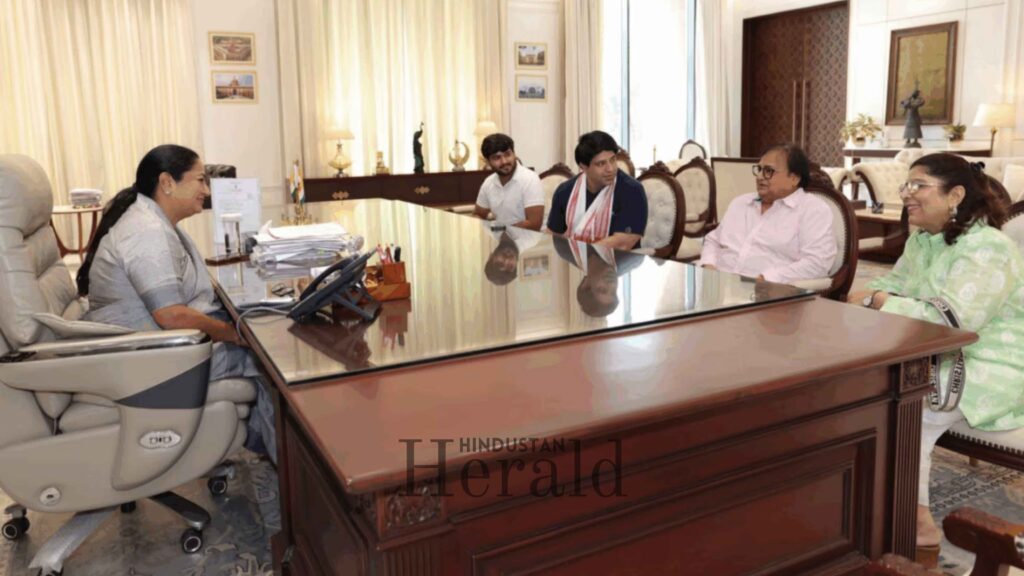
The image in question, posted to the CM’s official social media handle on May 25 during a meeting with actor Rakesh Bedi, shows Gupta seated in what critics and social media users have quickly identified as a high-end executive recliner. By Monday morning, the chair had a name, a price tag, and more online coverage than most policy announcements from the capital this month.
The Chair at the Centre of It All
The chair in question has been identified online as a luxury office seat valued between roughly Rs 66,000 and Rs 82,000, featuring an automatic footrest and deep zero-gravity reclining capabilities. It is constructed with high-density foam cushioning and upholstered in premium genuine leather. Other estimates from viral posts put the price higher, with claims that the chair could cost up to Rs 1.10 lakh. The seat also reportedly comes fitted with a built-in multi-point massage system.
To put that in context, a fully functional ergonomic office chair for a government official can be procured for well under Rs 10,000 under standard tender norms. The gap between the two figures is what has driven the controversy.
The photograph spread rapidly on X (formerly Twitter) and Instagram, attracting the kind of engagement that political communication teams spend weeks trying to engineer. Memes followed quickly. So did opposition statements.
A Contrast Delhi Cannot Ignore
Leader of Opposition Atishi has written a letter to Chief Minister Rekha Gupta seeking immediate time to discuss what she calls a pressing water crisis. In the letter, Atishi states that Delhiites, particularly women and children, are struggling as they line up in front of water tankers and purchase bottled water due to disrupted supplies.
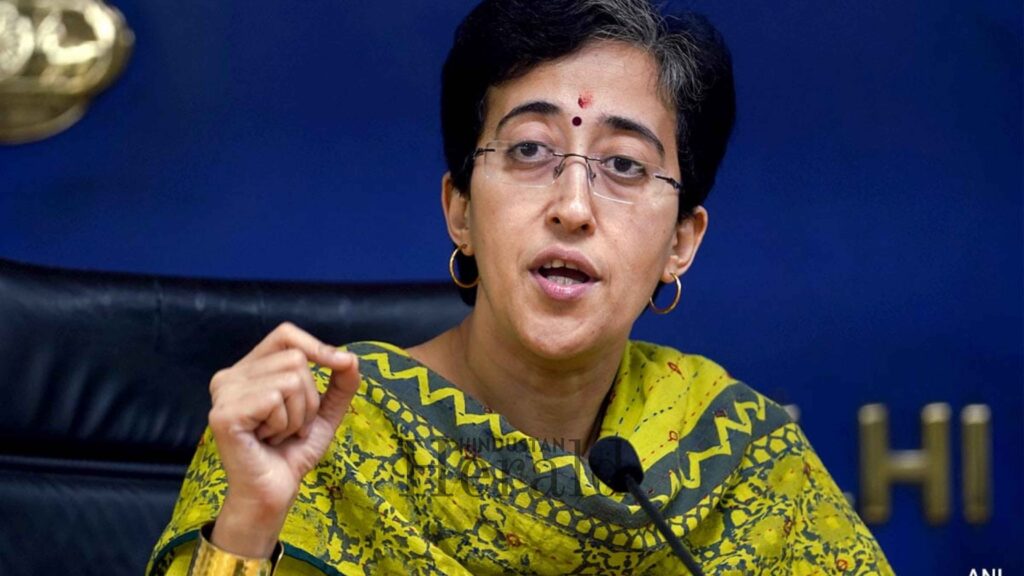
Atishi wrote directly to the CM; “It is only the month of May, summer’s true intensity is yet to arrive, but the people of Delhi are already tormented by an acute shortage of water.” She noted that women standing in queues in front of water tankers and children waiting with buckets are “fast becoming the new identity of Delhi.”
Against this backdrop, a photograph of the Chief Minister seated in what appears to be a massage-enabled, zero-gravity luxury recliner did not require much editorial framing. The internet did that work on its own.
Social media users drew sharp comparisons between the optics of the luxury chair and the government’s own messaging around austerity, pointing specifically to Gupta’s earlier, widely publicised decision to travel by Delhi Metro, which had been presented as a symbol of her no-frills governance style.
The Political Arithmetic
This controversy does not exist in a vacuum. Rekha Gupta was sworn in as Delhi’s Chief Minister in February 2025, after the Bharatiya Janata Party swept the Delhi Assembly elections and ended a decade of Aam Aadmi Party rule in the capital. The BJP entered power promising better governance, improved infrastructure, and an end to what it called the theatrics and populism of the previous government.
The AAP has consistently attacked the BJP-led Delhi government on the water issue, with Atishi stating in her letter: “Despite the BJP’s four-engine government at the Centre, with the LG, MCD and the CM’s office, Delhi’s citizens are still struggling for basic needs like drinking water.”
The BJP, for its part, has pushed back against the water crisis narrative, calling the charges a “fabricated falsehood” and attributing the current situation to the failures of the previous AAP government.
That exchange has been playing out for months. What the chair photograph has done is collapse a complex policy argument into a single, viscerally effective image. It is the kind of contrast that opposition campaigns are built on.
Defenders Push Back
Not everyone on social media was willing to join the pile-on. Supporters and defenders of the CM Rekha Gupta argued that furniture in a Chief Minister’s office is a standardised part of state government infrastructure, and that as long as standard procurement rules were legally followed, targeting a top public official over basic office seating ergonomics amounts to an engineered political distraction.
That argument has some merit on a procedural level. Government offices routinely procure furniture through official channels, and the cost of office furniture for constitutional positions is not new territory. Chief Ministers’ offices across states have always been furnished to a certain standard.
Still, the timing is the problem. This is May 2026. Temperatures in Delhi are regularly crossing 44 degrees Celsius. Localities across south and west Delhi are reporting supply cuts of 24 hours or more. Water tankers are being mobbed. And the image circulating online shows the city’s top elected official reclining in what the internet has decided to call a spa chair.
The Oxygen Tree Remark and a Difficult Week
The chair controversy is not the only thing making headlines for the Chief Minister this week. A separate viral moment has been drawing ridicule from political opponents and science communicators alike, involving a statement Rekha Gupta reportedly made at an innovation exhibition, where she allegedly claimed that certain roadside trees, specifically Babool, Safeda, and Keekar, do not release oxygen.
The claim, if accurately reported, is factually incorrect. All three are common tree species that perform photosynthesis and release oxygen. The remark has been shared widely, and AAP leaders and others on social media have used it to question the Chief Minister’s command over basic scientific facts.
Neither controversy, in isolation, would constitute a political crisis. Together, in the same week, they feed a narrative that the opposition has been trying to build since Rekha Gupta took office: that the BJP’s administration of Delhi is long on optics and short on substance.
Why Optics Matter in Indian Politics
Indian political history is littered with examples of seemingly minor symbols triggering disproportionate public reactions. The “VIP culture” debate has been a recurring fault line in Indian democracy. Lavish government offices, air-conditioned SUVs, red beacon lights, and now apparently, a massage recliner in the Chief Minister’s room, each of these becomes a flashpoint not because of its absolute cost but because of what it signals about the gap between those who govern and those who are governed.
The Red Beacon controversy that led to the removal of flashing lights from government vehicles in 2017 is a direct precedent. The Sheesh Mahal debate that surrounded AAP itself, involving alleged renovation costs at the Chief Minister’s official residence, consumed weeks of political discourse in Delhi just last year and was used extensively by the BJP during the election campaign. That argument was effective. And now the same playbook is being run in reverse.
The BJP knows this dynamic well. It used it to win Delhi. It may now be on the receiving end of it.
No Official Response Yet
As of the time of writing, neither the Chief Minister’s office nor the BJP’s Delhi unit had issued any formal statement addressing the chair controversy. That silence is itself a calculation. Responding risks amplifying the story. Staying silent risks the narrative hardening overnight.
There was no immediate response available from the Delhi government or the BJP to the broader questions being raised by the AAP about the water crisis either. The two silences, on the chair and on the water, have begun to merge in public perception.
What Comes Next
For Rekha Gupta, the path through this week involves more than issuing a clarification. The BJP’s political positioning in Delhi was built substantially on the promise of accountability and clean governance. The “Metro CM” branding was deliberate. The messaging around austerity was deliberate.
A single photograph can complicate that messaging. It cannot undo an election mandate or reverse the BJP’s structural dominance in Delhi right now. But it can shift the terms of a conversation that the ruling party would prefer to be having on its own ground.
For the AAP, this is useful material. The party is still rebuilding after its 2025 wipeout and looking for angles of attack that land with ordinary voters. A luxury chair in a CM’s office, set against images of residents queuing for water tankers, is the kind of contrast that needs no explanation.
For ordinary Delhiites standing in line with empty buckets in 44-degree heat, the photograph may read differently still.
Stay ahead with Hindustan Herald — bringing you trusted news, sharp analysis, and stories that matter across Politics, Business, Technology, Sports, Entertainment, Lifestyle, and more.
Connect with us on Facebook, Instagram, X (Twitter), LinkedIn, YouTube, and join our Telegram community @hindustanherald for real-time updates.

Covers Indian politics, governance, and policy developments with over a decade of experience in political reporting.
- Ananya Sharma

- Ananya Sharma
- Ananya Sharma
- Ananya Sharma



 Sandeep Verma