
 By Ananya Sharma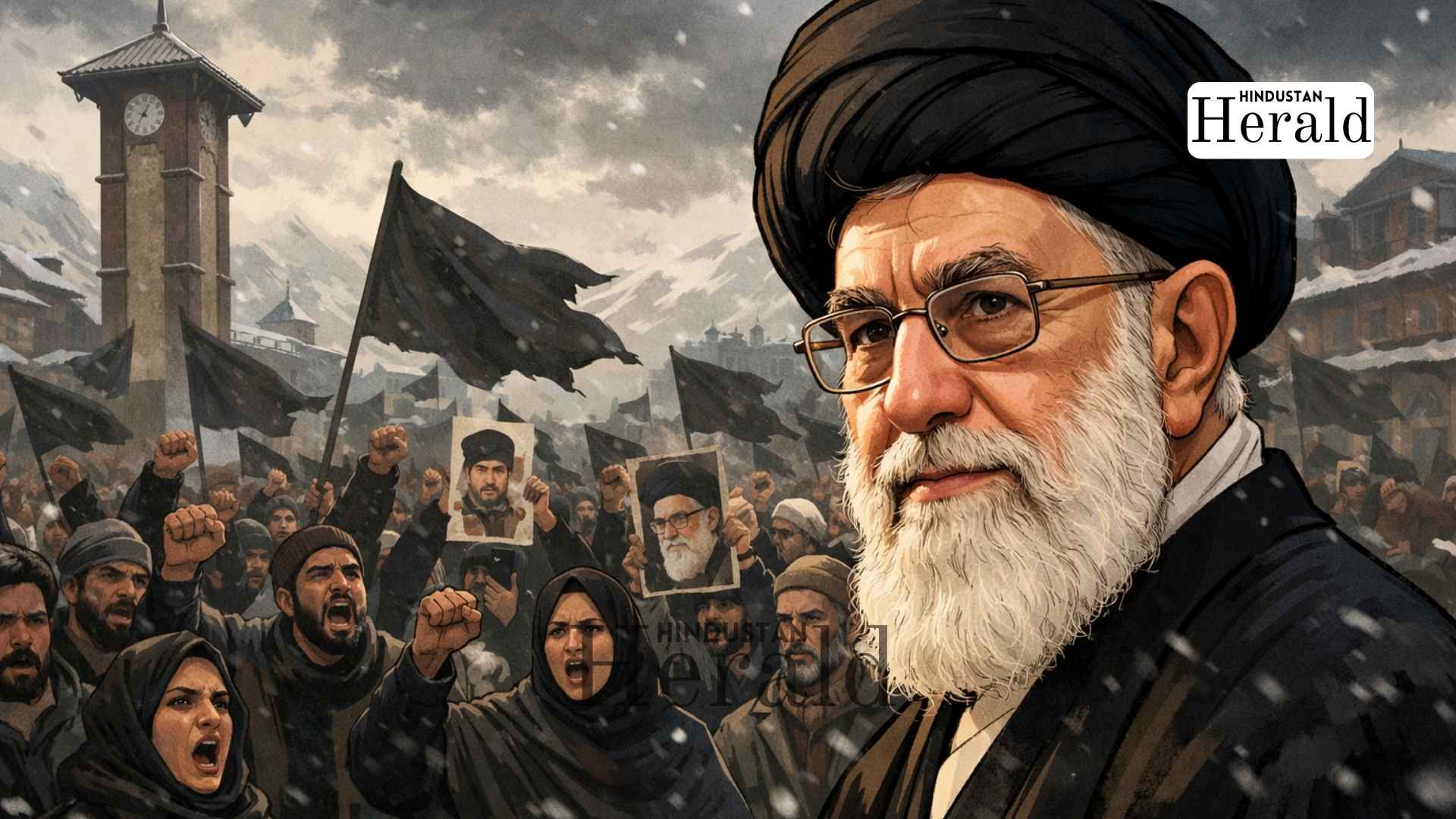
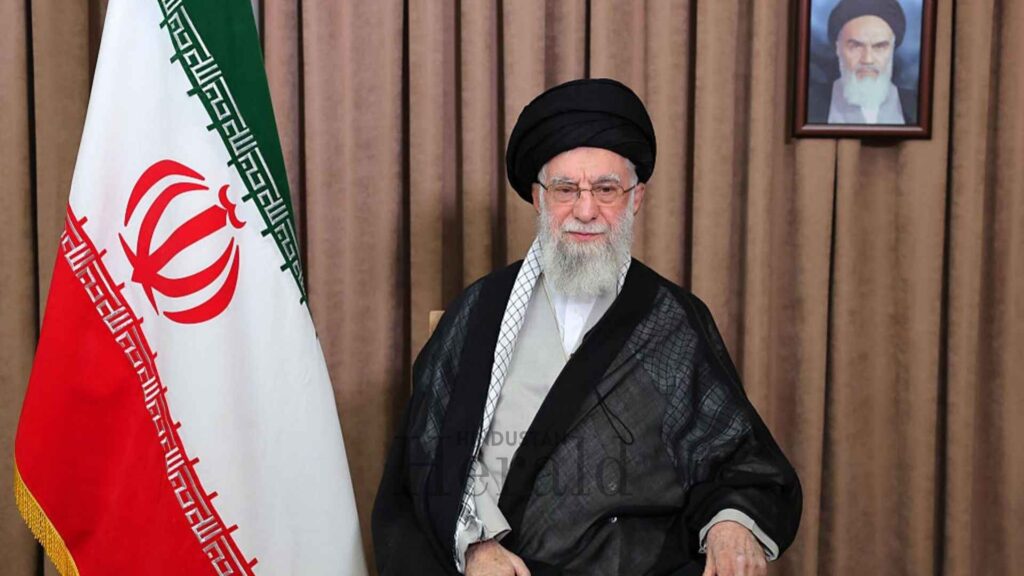
New Delhi, March 1: In parts of Srinagar, men stepped out of their homes still unsure if what they had read on their phones was true. By 7 am, it was. Iranian state media confirmed that Ayatollah Ali Khamenei, Iran’s Supreme Leader for over three decades, had been killed late February 28 in airstrikes on his Tehran residence, strikes Tehran blamed on the United States and Israel.
By noon, the news was no longer just international headlines. It was on Indian streets.
“It Feels Like We Lost Someone Ours”
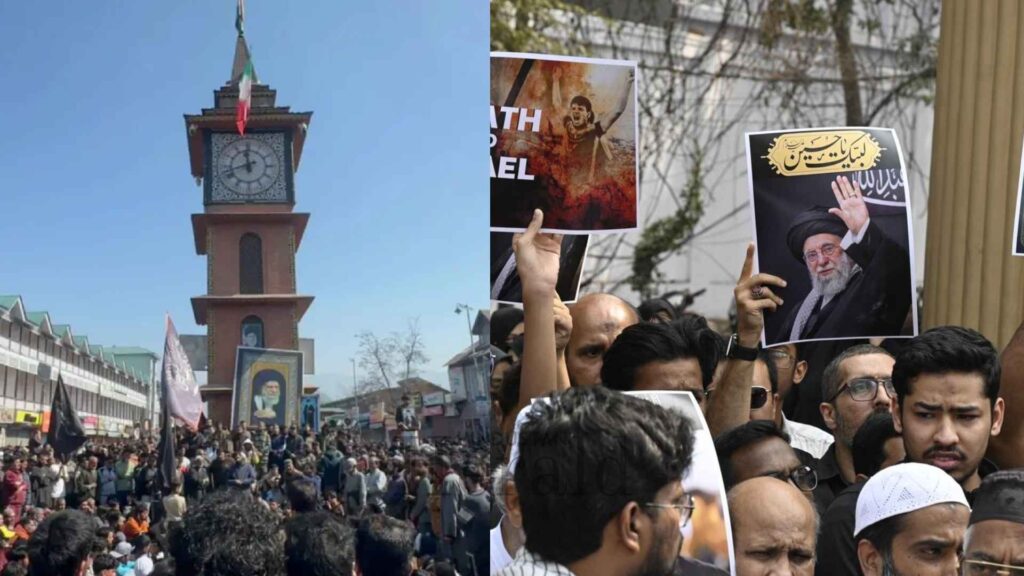
At Lal Chowk in Srinagar, the gathering was steady, not sudden. People came in twos and threes at first. Then hundreds. Then thousands.
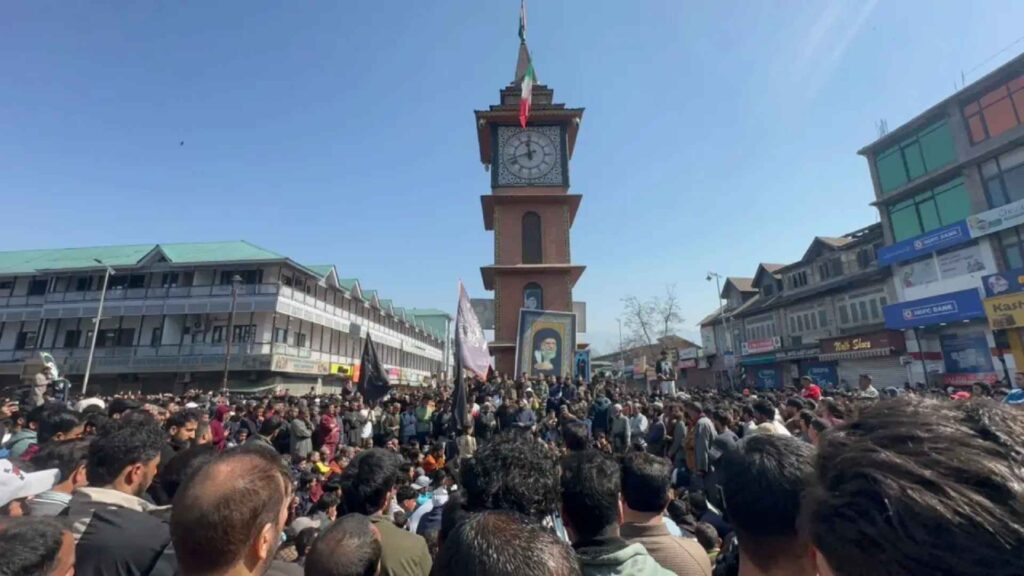
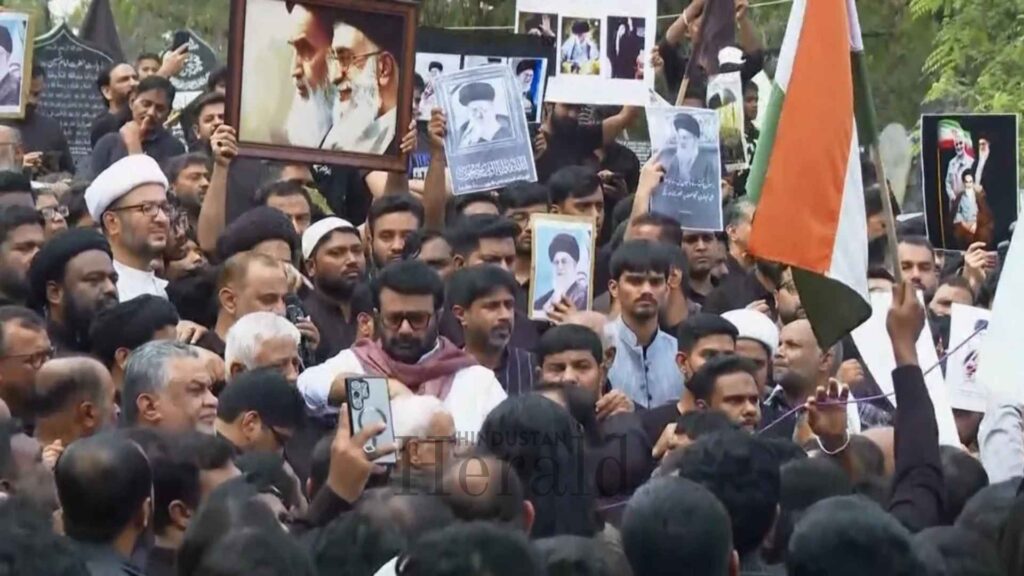
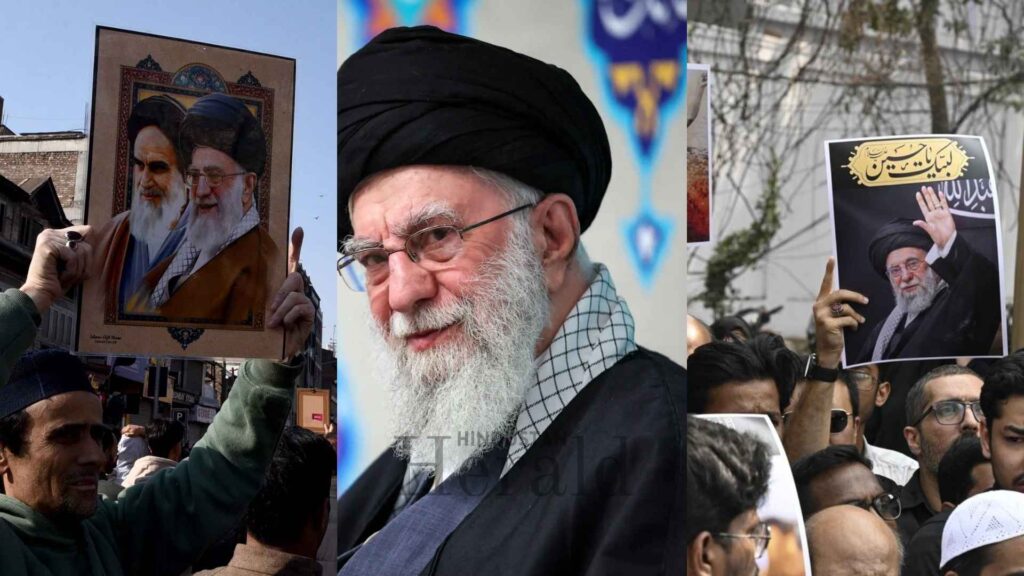
Men carried photographs of Khamenei, some printed overnight. Black flags were tied to poles and shopfronts. Slogans were raised against the United States and Israel, but they rose in waves, not in frenzy. In between, there were prayers.
Police personnel stood in rows along the roadside, alert but largely silent. According to reports by The Economic Times and The New Indian Express, the demonstrations remained peaceful through the day. No major clashes were reported.
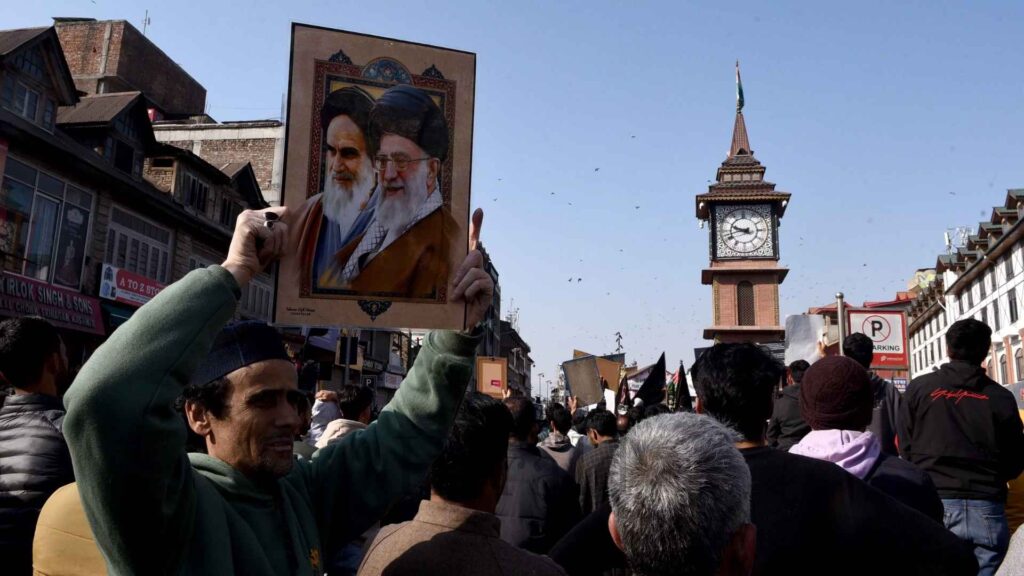
A middle-aged shopkeeper, who closed his store by afternoon, said it felt like losing someone known for years. “He was far away, yes,” he said, “but we listened to his speeches every Muharram. For us, he was not just a president or prime minister.”
That sentiment echoed through the crowd. For many Shias in Kashmir, Khamenei was a religious authority. His sermons circulated in WhatsApp groups. His statements were discussed after Friday prayers. He symbolised something larger than the office he held.
Shops in some Shia-dominated localities downed shutters voluntarily. Mosque loudspeakers announced three days of mourning.
There was anger. But there was also discipline.
Lucknow Turns To Its Imambaras
In Lucknow, the mood was more solemn than charged.
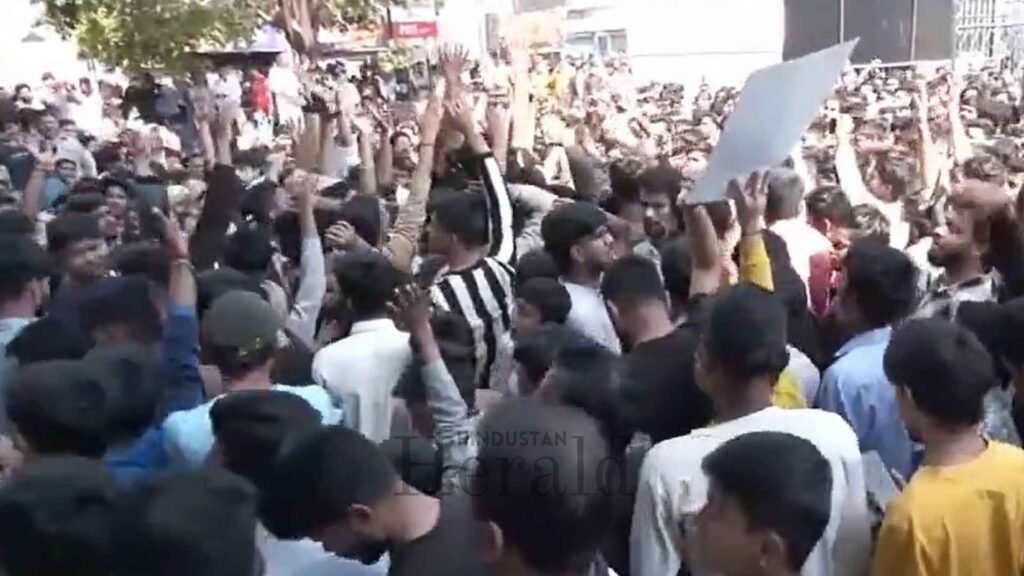
Around Bada Imambara, black flags appeared quietly above gates and balconies. Clerics addressed small gatherings inside mosques. According to The Federal and UNI, Muslim organisations organised peaceful marches and submitted memorandums condemning the strike.
The speeches did not sound like war cries. They sounded like grief. Khamenei was described as a marja, a senior religious scholar whose guidance many followed. Words like sacrifice and injustice were spoken often. So were reminders to remain calm.
One cleric told worshippers that anger should not turn into chaos. “We are mourning, not fighting,” he reportedly said.
Police presence across the old city was visible but non-confrontational. There were no reports of violence.
From Delhi To Karnataka, Quiet Protests
In Delhi, small groups gathered outside community centres and mosques. Placards were held up briefly. Some shouted slogans. Many simply stood in silence before dispersing.
In Jammu, black flags were hoisted and condolence meetings held. In parts of Bengaluru and even in certain Shia-majority villages in Karnataka, mosque announcements declared mourning periods.
What stands out is what did not happen. Despite the emotional weight of the news, there were no reports of riots or widespread unrest anywhere in India on March 1. International reports showed violent scenes in Karachi, but here the protests remained contained.
It felt less like a political uprising and more like a collective pause.
Why A Distant Leader Matters Here
To someone outside the community, the scale of emotion may seem surprising. After all, Khamenei was Iran’s leader, not India’s.
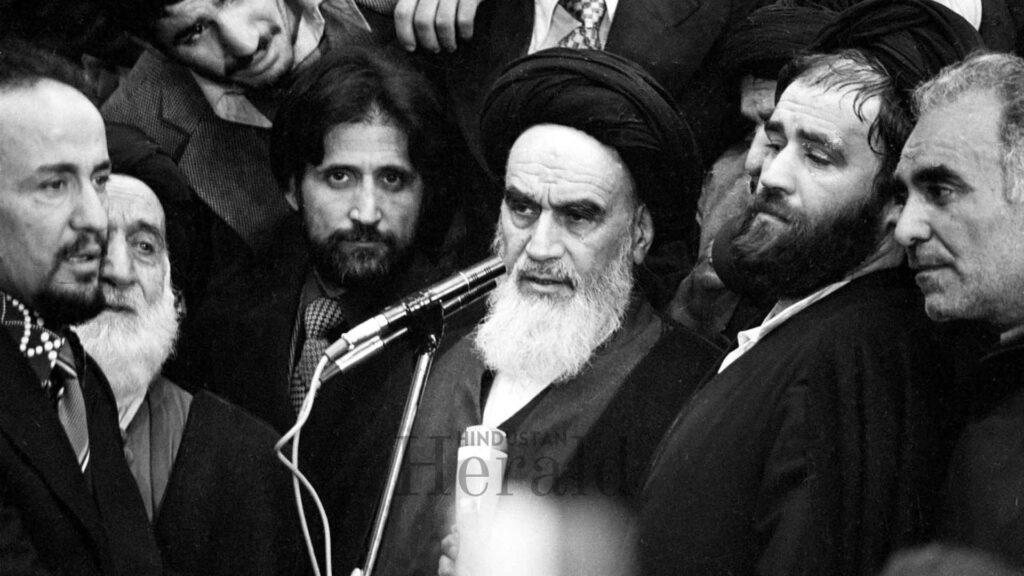
But Shia religious networks stretch across countries. Seminaries in Kashmir and Uttar Pradesh have long interacted with Iranian institutions. Religious books, scholars and ideas travel back and forth. Khamenei, who became Supreme Leader in 1989 after Ayatollah Ruhollah Khomeini, was seen by many as the guardian of that revolutionary legacy.
Not every Indian Shia followed him. There are theological differences, and Indian Shia communities have their own leadership structures. Still, his position carried weight.
His reported killing in a targeted airstrike adds another layer. For many protestors, it reinforces a long-held belief that powerful nations decide the fate of others without consequence. That belief fuels the anger heard in today’s slogans.
India Watches Carefully
Beyond the streets, there are diplomatic realities.
India has close ties with the United States and Israel. It also has strategic interests in Iran, from energy cooperation to infrastructure projects. Any escalation in West Asia affects oil prices and foreign policy calculations.
As of Sunday evening, there was no detailed official statement from New Delhi beyond expressions of concern about rising tensions. The government is likely monitoring both the international fallout and the domestic mood.
For now, the protests are expressions of solidarity and mourning, not signs of domestic unrest.
A Day That Felt Heavy
As evening settled in Srinagar, the crowd thinned but did not disappear entirely. Groups of young men stood around discussing the latest updates from Tehran. Older men headed home quietly.
A young protester said he felt angry but powerless. Another said prayer was the only response he believed in. A shopkeeper nearby said he closed early, not out of fear, but out of respect.
That seems to define the day. Not fear. Not chaos. Respect mixed with hurt.
Whether this moment remains a brief period of mourning or grows into something larger depends on what happens next in West Asia. If tensions rise further, emotions here may sharpen. If the situation cools, the black flags may quietly come down after the mourning period ends.
For now, across parts of Kashmir, Uttar Pradesh, Delhi and beyond, the death of a leader thousands of kilometres away feels deeply personal to many.
And on this Sunday, that feeling was visible on the streets.
Stay ahead with Hindustan Herald — bringing you trusted news, sharp analysis, and stories that matter across Politics, Business, Technology, Sports, Entertainment, Lifestyle, and more.
Connect with us on Facebook, Instagram, X (Twitter), LinkedIn, YouTube, and join our Telegram community @hindustanherald for real-time updates.

Covers Indian politics, governance, and policy developments with over a decade of experience in political reporting.
- Ananya Sharma

- Ananya Sharma
- Ananya Sharma
- Ananya Sharma




 Ayesha Khan
  Sandeep Verma