
 By Arun Upadhayay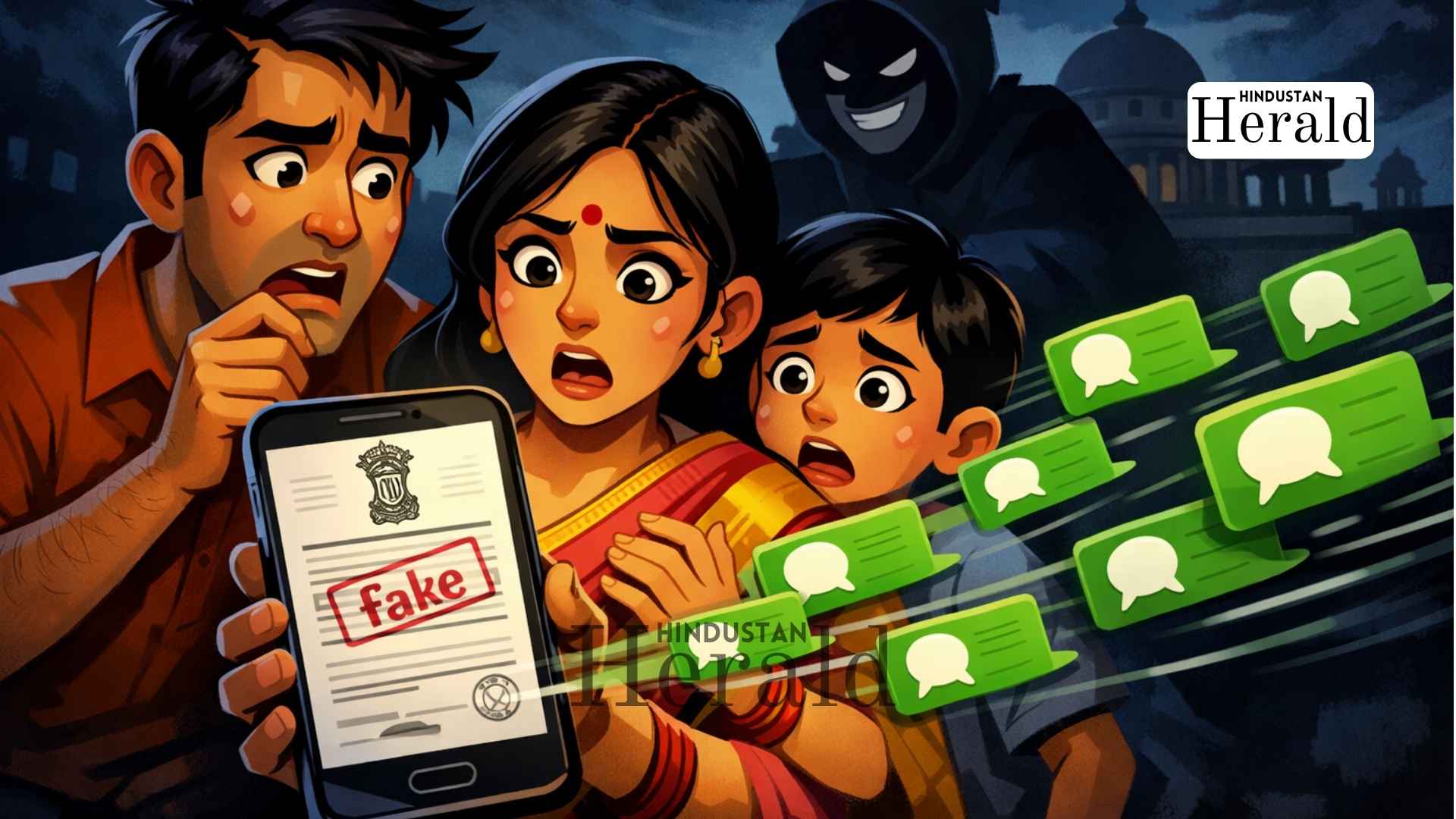
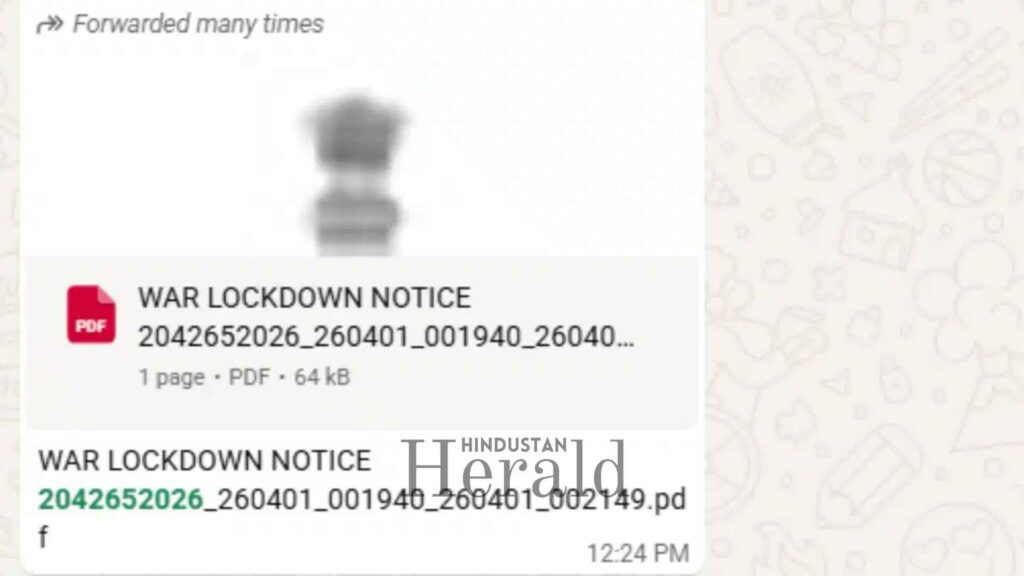
New Delhi, April 1: Someone in your family sent it. Maybe your mother. Maybe a neighbour auntie who runs the building WhatsApp group. It came with no context, just the document and possibly three fire emojis. A PDF. Official-looking. Government headers, ministry logos, the Ashok Chakra sitting right there at the top, as it belonged. Bold title: WAR LOCKDOWN NOTICE.
A lot of people did not read past the first paragraph.
They just forwarded it.
When a Prank Hits Different
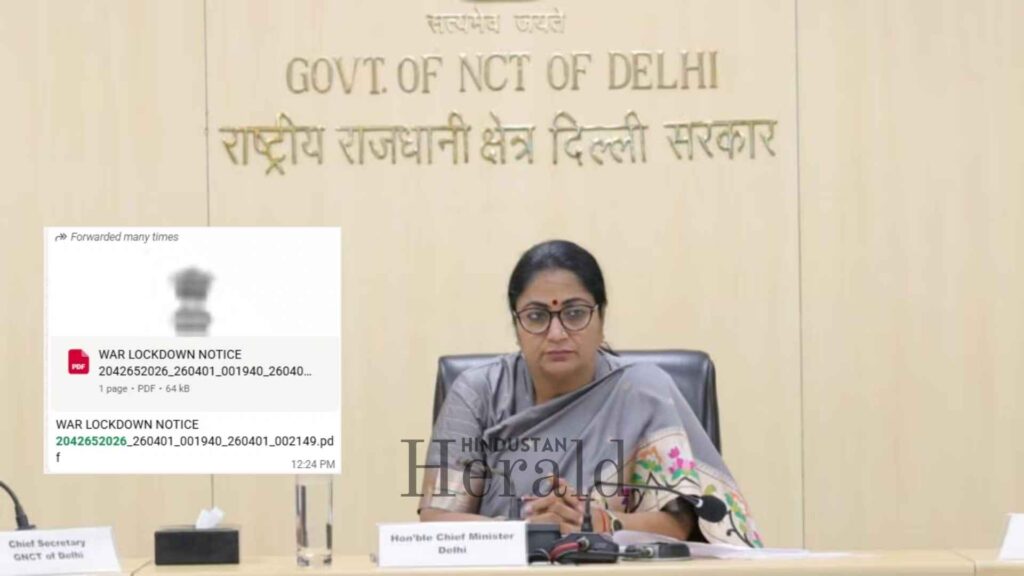
By Wednesday morning, two versions of this document were making their way through practically every WhatsApp group in the country. The first screamed “WAR LOCKDOWN NOTICE” at the top. The second was dressed up as a Delhi Government press release announcing a partial lockdown effective April 15, 2026. Both looked convincing. Both used exactly the kind of stiff, formal bureaucratic language that actual government orders use. Both were designed, quite deliberately, to make your stomach drop.
And both, if you actually read them all the way to the last page, ended with an April Fool reveal. One reportedly had a clown image. Another just had the words typed out plainly, as if the creator was proud of himself.
The problem is that most people never got to the last page. They read the headline, felt the fear hit, and hit forward.
That one second of panic, multiplied across millions of phones, is what caused Wednesday’s chaos.
So Is Any of This Real? No. Here Is the Full Picture.
To be completely direct about it: there is no war lockdown. There is no partial lockdown. There is no emergency order restricting movement. The Government of India has not issued any such notice. The Ministry of Home Affairs has not issued any such notice. The Prime Minister’s Office has said nothing of the sort. Not a single state government has announced anything resembling what that PDF described.
Multiple senior ministers have come out to say this clearly. The government has officially described the viral documents as “completely false” and “harmful and misleading.” The PIB fact-check unit has flagged it. DD News, citing official sources, confirmed that no lockdown is being planned amid the ongoing West Asia conflict. Doordarshan’s own report quoted the government reassuring that fuel prices have been stabilised and essential supplies remain intact.
This was a prank. A well-designed, poorly-timed, genuinely irresponsible prank.
Why Everyone Was Already Primed to Believe It
Here is what makes this story more than just an April Fool’s Day footnote.
The reason this fake notice spread so fast was not stupidity. It was context. India has been living under a low hum of anxiety for weeks now, ever since the US-Israel-Iran conflict began escalating in ways that started actually affecting everyday life. Crude oil prices have climbed past $100 per barrel. The rupee has touched record lows near Rs 95 to the dollar. There have been real, reported concerns about shipping disruptions through the Strait of Hormuz, the narrow waterway through which a significant chunk of India’s energy imports travel.
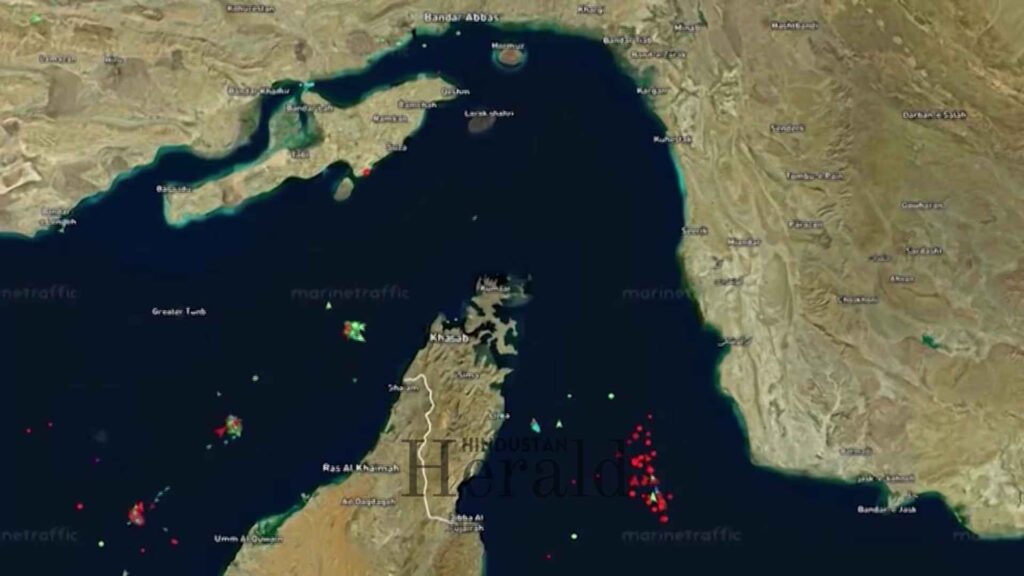
That backdrop was already doing something to people’s nerves.
Then, about a week before April 1, Prime Minister Narendra Modi addressed both houses of Parliament on the West Asia situation. He spoke about national resilience, about how India had once navigated the COVID-19 crisis through unity, about staying prepared for long-lasting economic challenges. It was a sober, measured speech, as reported by multiple outlets including The Hindu and Republic World.
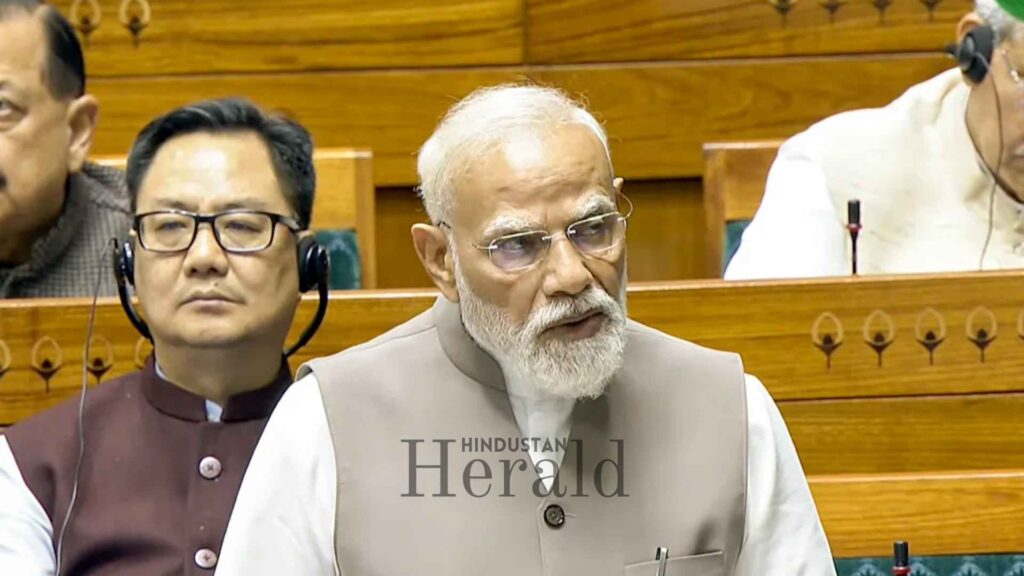
But clips of it got chopped up. Short excerpts, stripped of context, began circulating with headlines suggesting that Modi had hinted at a COVID-style lockdown. Searches for “India lockdown again” and “lockdown 2026” spiked sharply on Google. The government was forced to debunk a separate viral video that falsely claimed in its thumbnail that PM Modi had announced a lockdown.
None of that was true either. What the PM actually said was a call for preparedness, not a restriction order. He was drawing a parallel to the pandemic to emphasise national unity. That’s it. The word “lockdown” never came from him.
Still, by the time April 1 arrived, the public mind was already halfway there. The fake PDF found fertile ground.
The Document Itself: What Made It So Convincing
Both versions of the notice were built to pass a casual glance. The formatting mimicked real government press releases closely. The language was dry and procedural in all the right ways. One version carried the Ashok Chakra prominently, which is the kind of visual shorthand that signals “this is official” to most readers before they have even processed a single word.
The Delhi Government version went further. It referenced specific dates. It used the phrase “partial lockdown” deliberately, which felt more plausible than a full shutdown and therefore more believable. It was circulated under the guise of an urgent advisory, the kind of thing building secretaries and RWA groups take seriously and share immediately.
What gave it away, for those who looked, was the ending. Open the full document, and somewhere near the bottom, you’ll get your clown, your April Fool message, and your reveal. But the design relied entirely on people not reading that far. And millions didn’t.
The Real Danger in “Just a Prank”
Some people will say this was harmless fun. It was not.
India’s supply chain is already under strain from the genuine economic pressures of the West Asia conflict. A fake lockdown notice in that environment does not just cause embarrassment. It can cause panic buying, which puts pressure on fuel stations and grocery stores that are already navigating a difficult import environment. It causes people, particularly elderly citizens and those with limited digital literacy, to make real decisions based on fabricated information. People cancel travel. People pull money out. People genuinely worry.
There were already unverified reports on Wednesday of people rushing to petrol pumps in some cities. Whether or not those reports are fully confirmed, the sentiment behind them is not hard to understand. The fake notice hit exactly the fear that is most alive in people right now.
And it did so on a day when everyone knows April Fool pranks are coming, and still got fooled anyway. That says something about how well-engineered the panic was.
What India Is Actually Doing About the Crisis
Since the fake notice exploited fears about a real situation, it is worth being clear about what the government is actually doing.
There is no lockdown. But there is active, ongoing crisis management. PM Modi chaired a high-level meeting with Chief Ministers and Lieutenant Governors last week to assess India’s exposure to the Middle East conflict. He urged them to function as “Team India,” the same framing used during COVID. The government has confirmed that India has diversified its crude oil and LNG imports considerably, now sourcing from 41 countries compared to 27 previously, specifically to reduce dependence on any single supply route.
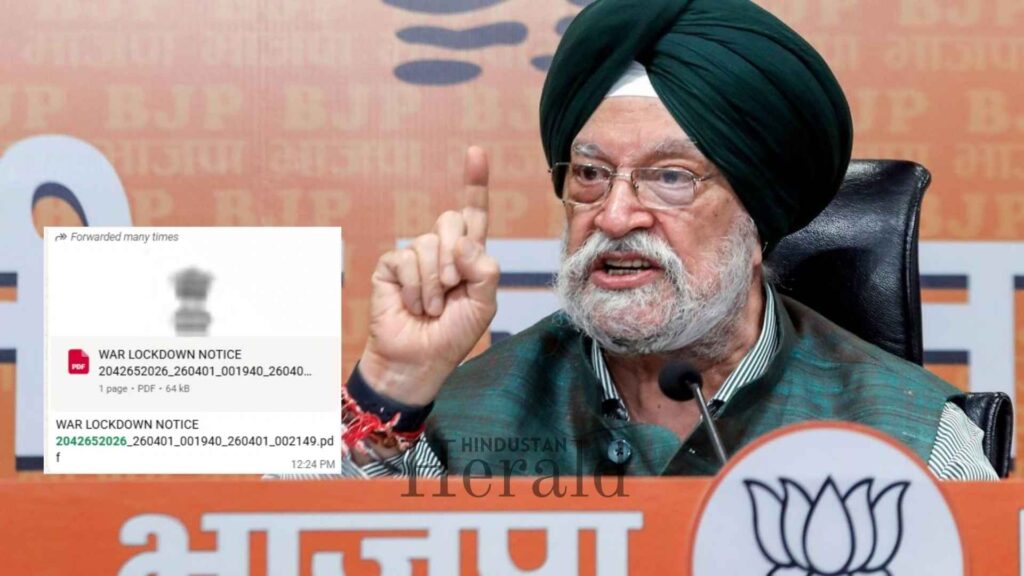
Union Petroleum Minister Hardeep Singh Puri has publicly stated that no lockdown is planned and that the government is focused on stabilising fuel and essential commodity prices. The government’s response has been diplomatic and economic, not restrictive. It is monitoring the situation. It is managing the supply side. It is not asking anyone to stay home.
Before You Forward the Next One
There is a straightforward thing you can do the next time something like this lands in your inbox. Go to pib.gov.in, the Press Information Bureau’s official website. If the government issued an actual emergency order, it would be there. If it is not there, the notice is not real. Full stop.
You can also simply wait five minutes and check any credible news outlet. A genuine nationwide lockdown announcement would be the top story on every channel and website in the country within minutes of being made.
The people who created these documents were counting on you not doing either of those things. They were counting on the fear being faster than the verification. On Wednesday, for a few hours, they were right.
For now, India is open. People are going to work, to school, to the market. The government is managing a difficult global situation through diplomatic and economic channels. There is no emergency order. There is no war curfew. There is no clampdown coming on April 15.
There was just a prank. A dangerous one, dressed in official clothes, dropped into a country that is already anxious about things that are genuinely worth being anxious about.
Read the full document before you forward. Better yet, check an official source first.
Stay ahead with Hindustan Herald — bringing you trusted news, sharp analysis, and stories that matter across Politics, Business, Technology, Sports, Entertainment, Lifestyle, and more.
Connect with us on Facebook, Instagram, X (Twitter), LinkedIn, YouTube, and join our Telegram community @hindustanherald for real-time updates.

- Arun Upadhayay

- Arun Upadhayay
- Arun Upadhayay
- Arun Upadhayay




 Ayesha Khan and Ananya Sharma
  Ananya Sharma