
 By Shelesh Joshi and Rajiv Menon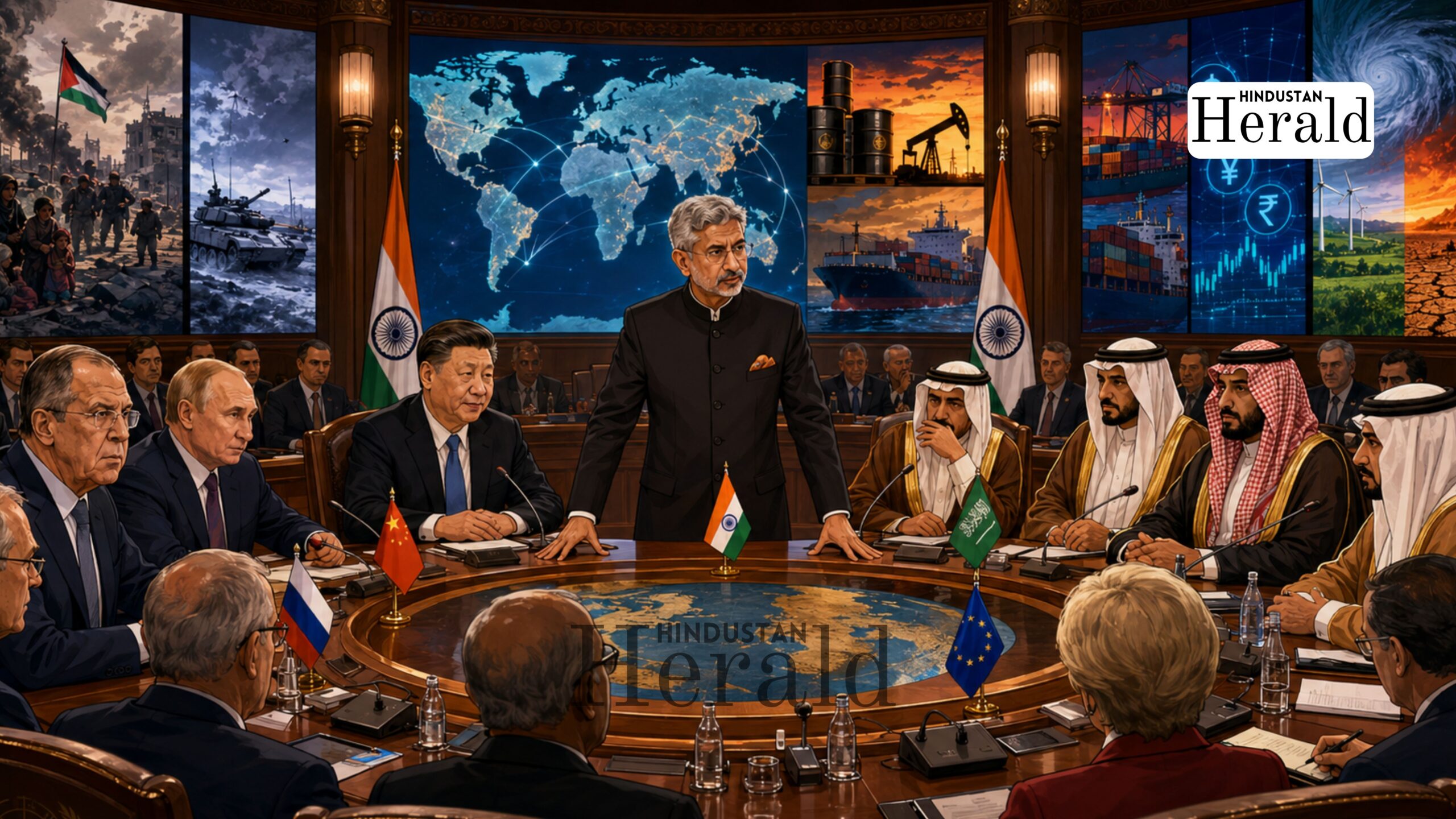
New Delhi, May 15: Let us start with something that does not get said enough about meetings like this one.
Most of the world will not read a single word about what happened at Hyderabad House this week. They will not know which ministers flew into New Delhi, what was argued behind closed doors, or what careful diplomatic language ended up in the final communiqué. And yet the conversations that took place over these two days about war, about trade, about energy, about who gets to write the rules of the international system will quietly shape things that affect all of them. The price of cooking oil in Lucknow. The cost of petrol in Chennai. Whether a young man from Kerala working in Dubai sends home more or less money next year. Whether the planet his children inherit is liveable.
That gap between what happens in rooms like this and what lands in ordinary life is exactly why it matters who is sitting in those rooms, and what they are actually saying to each other.
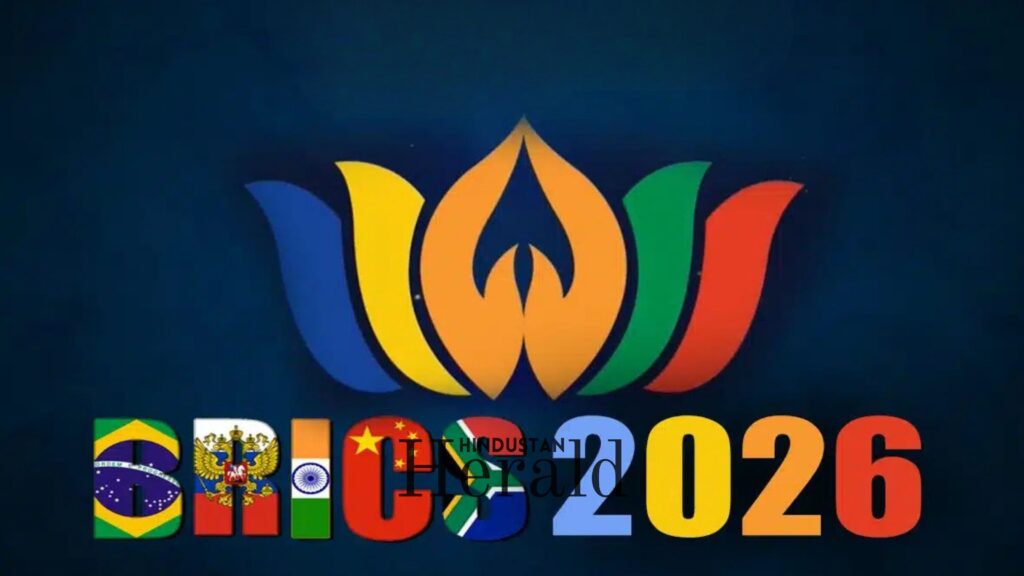
India is sitting at the head of the BRICS table this year. The BRICS presidency, now formally in New Delhi’s hands, carries more weight in 2026 than it has in any previous year. Every BRICS member arrived in New Delhi carrying a different set of pressures. And the BRICS agenda, however cleanly worded, could not contain all of them.
The table, frankly, has never been more complicated.
Eleven Countries, One Room, Every Problem in the World
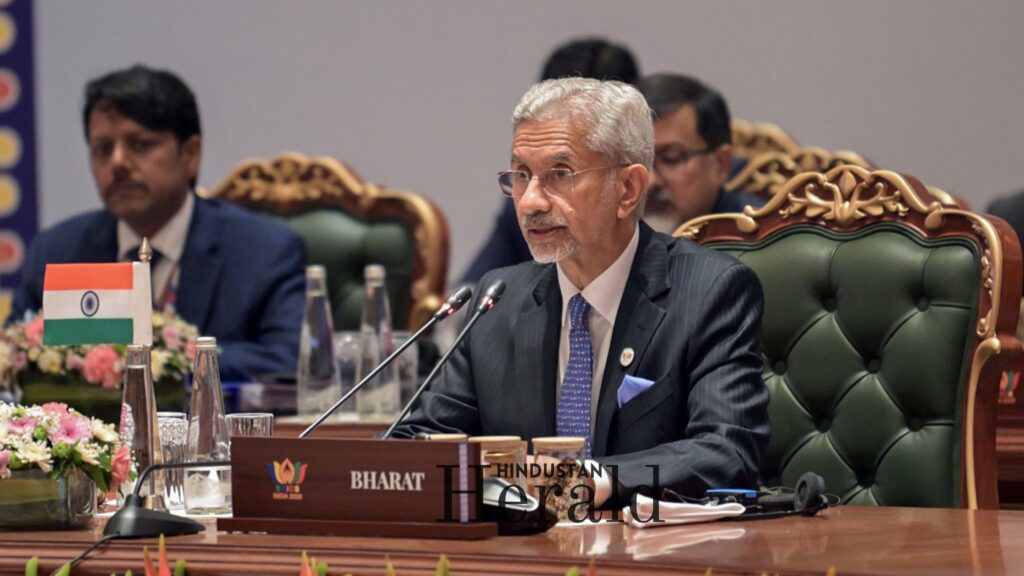
When S. Jaishankar opened the BRICS Foreign Ministers’ Meeting on Wednesday morning, he was looking at a room that contained, between its eleven delegations, almost every major geopolitical fault line currently active on earth.
Russia is fighting a war in Europe that is now in its fourth year.
Iran is under a suffocating architecture of Western sanctions.
Saudi Arabia and the UAE are deep American security partners who also happen to control a significant portion of the world’s oil supply.
South Africa has taken Israel to the International Court of Justice.
China and India share a border where soldiers died four years ago and where the normalisation of relations is still, by most honest assessments, incomplete.
Egypt and Ethiopia are two countries that nearly went to war with each other over a dam on the Nile.
Indonesia is the world’s largest Muslim-majority nation, watching events in Gaza with a domestic political intensity that its government cannot ignore.
This is the group India is trying to lead toward a coherent agenda.
To his credit, Jaishankar did not pretend that coherence was easy or that the BRICS meeting’s formal priorities multilateral reform, local currency trade, Global South solidarity existed in a vacuum separate from all of this. They do not. Every item on that agenda is downstream of something messier and more human. And the messier, more human things had a way of finding their way into the room regardless.
Gaza: You Cannot Keep This Outside
There was never a version of this BRICS meeting where Gaza stayed politely off the agenda.
Not when South Africa is the country that took Israel to the ICJ under the Genocide Convention a decision that cost Pretoria real diplomatic capital and reflected a genuine moral conviction that international law exists to be used, not just cited.
Not when Egypt shares a border with Gaza and has spent months managing the impossible pressure of a population in catastrophic humanitarian collapse on the other side of the Rafah crossing.
Not when Iran has long-standing ties to Palestinian militant groups that place it at the centre of the regional conflict architecture.
Not when Saudi Arabia which was, eighteen months ago, on a trajectory toward normalising ties with Israel has now publicly staked its position on a Palestinian state as a non-negotiable precondition for any such normalisation.
The death toll in Gaza by the time these ministers sat down had reached numbers that the UN, the ICJ, and medical organisations have described in terms most governments are still too cautious to fully echo in public. Humanitarian access has been throttled, restricted, and at times blocked entirely. The images coming out of the territory the hospitals, the children, the rubble have produced a kind of sustained global moral distress that no amount of diplomatic language can fully contain.
What BRICS offered was something quieter but not unimportant. The BRICS forum gave countries most vocal about Palestinian rights a place to speak without being dismissed. That is not nothing. And within the BRICS framework, that voice carries the collective weight of nearly half the world’s population behind it.
India’s position remains what it has been calls for humanitarian access, support for ceasefire language at the UN, careful avoidance of the explicit framing that would damage its relationship with Israel. That position draws criticism from multiple directions. It is also, if you understand the actual texture of India’s strategic relationships, about as much as New Delhi can honestly offer without pretending to a purity it does not have. Israel is a defence and technology partner. That is a real relationship with real consequences, and no speech at a multilateral forum changes it.
Getting unified BRICS language on Gaza was harder than the formal agenda suggested. Not because the humanitarian case was contested nobody around that table was defending what is happening to civilians in Gaza. The difficulty was in the words that follow. Words about accountability. About legal responsibility. About what the international community is actually obligated to do. Those words are where the careful diplomatic threading begins, and where communiqués start to sound like they were written by a committee that disagreed about everything except the importance of appearing to agree.
Ukraine: The War That Reshapes Every Other Conversation
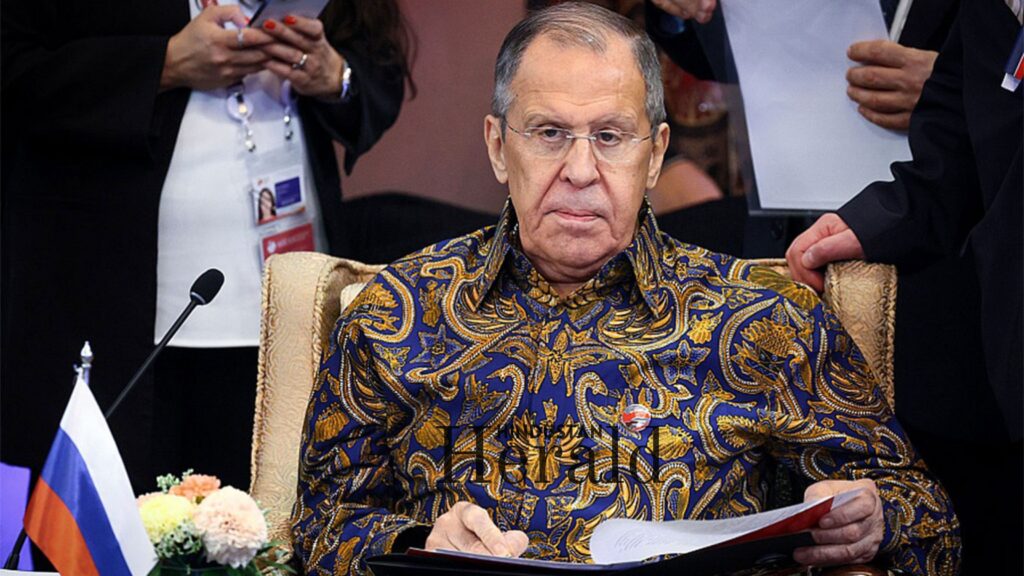
Sergei Lavrov flew into New Delhi, sat at the table, and was treated as a legitimate diplomatic counterpart.
For anyone still operating under the assumption that Russia has been successfully isolated from the international community, that image is worth sitting with for a moment.
India has never accepted the premise that isolating Russia is either possible or desirable. The BRICS table is where that position becomes most visible. Russia’s continued presence at BRICS meetings is itself a geopolitical statement. And the BRICS membership has, collectively, declined to treat that presence as a problem.
New Delhi’s argument stated plainly, without apology is that a world in which a major power is simply frozen out of all diplomatic contact is not a world moving toward resolution. It is a world deferring a problem while the costs of deferral accumulate. Whether that argument is right is genuinely debatable. What is not debatable is that India has held it consistently, under real pressure from Western capitals, and has not moved.
The Jaishankar-Lavrov bilateral was a working conversation. The rupee-rouble trade settlement mechanism announced with some fanfare, functioning with considerably less remains knotted up in the anxieties of Indian banks that do not want to find themselves in the crosshairs of American secondary sanctions.
The mechanism works on paper.
In practice, Indian financial institutions have been moving cautiously, and both sides know the gap between intent and execution.
Defence supply chains are the other live issue. India’s military runs substantially on Russian equipment. Transitioning away from that is a project measured in decades, not quarters, and pretending otherwise is not serious policy.
What the Ukraine war has done to every other conversation in this BRICS meeting is equally important. The SWIFT exclusions and asset freezes imposed on Russia in 2022 are the single biggest reason that de-dollarisation went from an ideological talking point to a practical priority for most of the countries in this room. The lesson absorbed not just by Russia, but by China, India, Saudi Arabia, and others was that dollar-denominated financial infrastructure can be weaponised. That if your foreign exchange reserves are held in Western currencies and your banks rely on Western financial messaging systems, you are not fully sovereign.
That lesson has not faded.
The disruption to Black Sea grain shipments was felt not as a geopolitical data point in New Delhi but as higher food prices in Cairo, Addis Ababa, and Jakarta. That is worth remembering when the conversation turns abstract.
Global Trade: The System Is Broken and Everyone Knows It
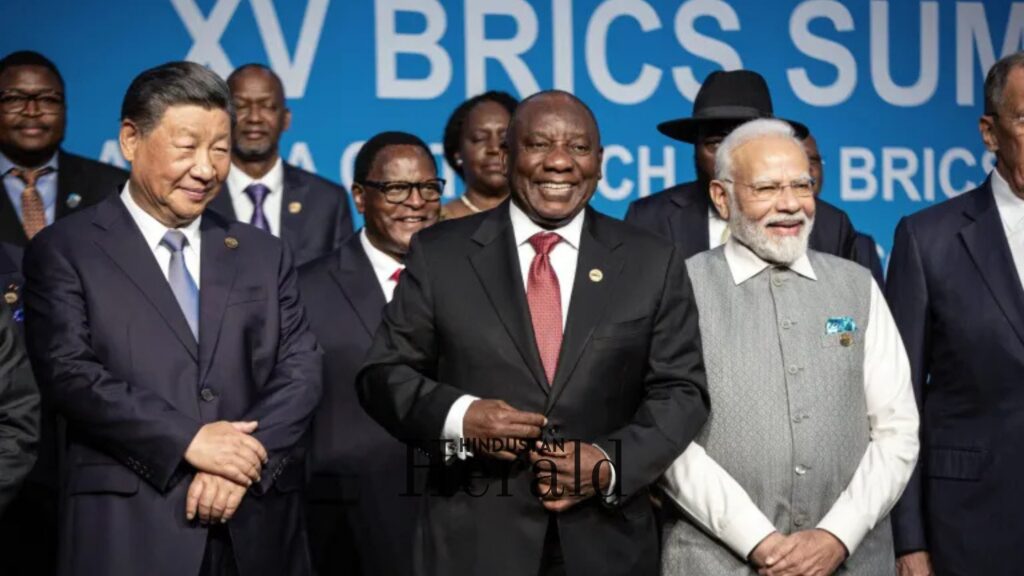
The WTO came up in BRICS discussions and the mood was somewhere between frustration and resignation.
The BRICS trade agenda has been forced to confront a rules-based order that no longer reliably follows its own rules. What most BRICS members agreed on is that bilateral and regional arrangements now matter more than they did five years ago.
The rules-based trading order that American diplomacy spent the better part of seven decades constructing is being dismantled, in significant part, by American policy. The Appellate Body the WTO’s dispute resolution mechanism, the part that gave the system its teeth has been functionally broken since the United States began blocking new appointments.
No country has offered a credible plan to fix it.
The current American administration’s approach to tariffs has been sweeping, unilateral, and largely indifferent to the multilateral architecture that was supposed to make this kind of unilateralism impossible.
For China, this is an active crisis. The tariff war with Washington has redirected Chinese export strategies toward exactly the markets represented in this room, which is partly why Beijing has been so aggressive about deepening BRICS commercial ties.
For India, it is a more complicated picture. New Delhi has been quietly positioning itself as an alternative manufacturing destination for companies reducing their China exposure. But India also knows that an administration comfortable imposing sweeping tariffs on China will not hesitate to turn the same instrument toward Indian exports if the political winds shift.
The window of opportunity is real, but it is not guaranteed to stay open.
What the BRICS discussion on trade kept returning to was the gap between the stated principles of the rules-based order and its actual functioning. The principle that trade rules apply equally to all countries. The principle that disputes are resolved through agreed mechanisms rather than unilateral action.
Those principles are worth defending. Defending them requires, at minimum, acknowledging when the countries most loudly invoking them are also the countries most actively undermining them.
Energy Security: Who Sells, Who Buys, Who Suffers When the Price Goes Wrong
There is no clean BRICS position on energy security.
The BRICS membership spans oil sellers and oil buyers, major emitters and climate-vulnerable nations. That internal tension is what makes the BRICS energy conversation genuinely complicated.
Russia needs to sell hydrocarbons to someone, and the western market has largely closed.
Saudi Arabia and the UAE need oil prices at a level that funds their domestic transformation agendas without triggering a global recession that destroys demand.
India and China have been buying Russian crude at a discount since 2022 a decision that is economically rational, that both governments have made without apology, and that has given both countries a degree of leverage over Moscow that purely commercial relationships rarely provide.
Ethiopia and Egypt need energy to simply be affordable, because when it is not, the domestic political consequences land fast and hard.
India’s increased dependence on Russian oil deserves honest acknowledgment. New Delhi’s import bill has been substantially managed over the past three years partly because of access to discounted Russian crude. That is not a coincidence or a side effect. It is a deliberate policy choice.
It has drawn criticism from Washington and London.
India has absorbed that criticism and continued the policy, because the alternative paying significantly more for oil on principle is not a trade-off that any government managing the cost of living for 1.4 billion people can make with a straight face.
The energy conversation at ministerial level touched on long-term supply frameworks, the role of the New Development Bank in financing clean energy infrastructure for lower-income members, and the coordination of strategic reserves. These are important conversations. Whether they produce functioning architecture or remain aspirational is a different question.
Climate Change: The Money Argument Dressed in Scientific Language
The science of climate change is not what gets argued in rooms like this.
The science is settled, and the urgency is understood arguably more viscerally by countries like Ethiopia, Egypt, and Indonesia, whose agricultural systems, coastlines, and water supplies are already registering consequences, than by the wealthy nations that did most of the emitting.
What gets argued is money.
Who owes what to whom. Whether the historical emitters the industrialised economies that built their wealth on fossil fuels across two centuries will actually deliver on the climate finance commitments they keep making and keep falling short of.
BRICS members, almost without exception, view the EU’s carbon border adjustment mechanism with suspicion and frustration. The BRICS position on climate finance is not that climate action is wrong. It is that the terms being set by wealthy nations are unfair. And the BRICS argument on historical emissions is one that no amount of diplomatic language has managed to fully answer.
The argument is not complicated. You spent a hundred and fifty years industrialising on cheap carbon. You got rich. Now you want to impose financial penalties on our exports because our carbon pricing does not match yours even though your historical emissions dwarfed ours, even though the financing you promised for our clean energy transition has not arrived at the scale needed, even though we are trying to develop while simultaneously decarbonising on a timeline that you did not have to meet.
That argument is not unreasonable.
It is also not going to disappear from climate negotiations no matter how many times it is acknowledged in principle and ignored in practice.
Brazil is hosting COP30 later this year. Brasilia arrived in New Delhi with climate finance reform as a clear priority, and the convergence of the COP host and the BRICS presidency in the same year creates a political window for pushing that agenda.
Whether the window produces something real depends on whether wealthy nations decide this is the moment to close the gap between what they have promised and what they have delivered.
History on this point is not encouraging.
India’s own renewable energy transition targeting 500 gigawatts of capacity by 2030 is among the most ambitious in the developing world. It is also substantially dependent on technology transfer and concessional financing that has not arrived at the required scale. There is something genuinely difficult about being asked to lead by example on clean energy while the financing conditions that would make the example replicable for others keep falling short.
Reforming the Institutions: The Argument That Sits Under Everything
Strip away every specific issue Gaza, Ukraine, trade, energy, climate and what you are left with is one argument, stated in different vocabularies by different countries around that table.
The international system was built after the Second World War by a small group of powerful nations, largely to serve their interests, and it has never been seriously reformed to reflect the world as it actually exists today.
The UN Security Council still gives veto power to five countries based on who won a war eighty years ago.
The IMF still weights votes toward the countries that funded it at its founding.
The WTO is broken, and the country most responsible for breaking it is the same country that built it.
BRICS did not create this argument. But BRICS is where it is made most loudly. The BRICS platform gives the Global South a forum that the G7 cannot simply veto or ignore. Whether the BRICS Leaders’ Summit later this year converts that platform into something concrete is the question that will define India’s BRICS presidency.
Jaishankar used India’s G20 presidency and the successful push for an African Union seat at that table as a case study in what collective advocacy from the Global South can achieve when it is organised and persistent. The BRICS Leaders’ Summit later this year, which Narendra Modi will chair, is being shaped around exactly this kind of advocacy.
Concrete proposals on UN Security Council reform.
Multilateral development bank governance.
A trading order that actually enforces its own rules.
Whether eleven countries with genuinely different interests, different relationships to the existing order, and different visions of what should replace it can hold together long enough to push that agenda through is uncertain. It has always been uncertain.
The uncertainty is part of the story, not a reason to dismiss the attempt.
What happened at Hyderabad House this week was imperfect, incomplete, and in places frustratingly vague. It was also eleven countries in a complicated world finding enough common ground to stay in the same conversation.
Given what those eleven countries are dealing with individually, that is harder than it sounds.
And right now, the conversations that stay open are the ones that matter most.
Stay ahead with Hindustan Herald — bringing you trusted news, sharp analysis, and stories that matter across Politics, Business, Technology, Sports, Entertainment, Lifestyle, and more.
Connect with us on Facebook, Instagram, X (Twitter), LinkedIn, YouTube, and join our Telegram community @hindustanherald for real-time updates.

Tracking world politics, global markets, trade movements, policy decisions, and the changing balance of economic power.
Specializes in South Asian geopolitics and global diplomacy, bringing in-depth analysis on international relations.
- Rajiv Menon

- Rajiv Menon
- Rajiv Menon
- Rajiv Menon



 Ananya Sharma and Kavita Iyer
  Sandeep Verma