
 By Ayesha Khan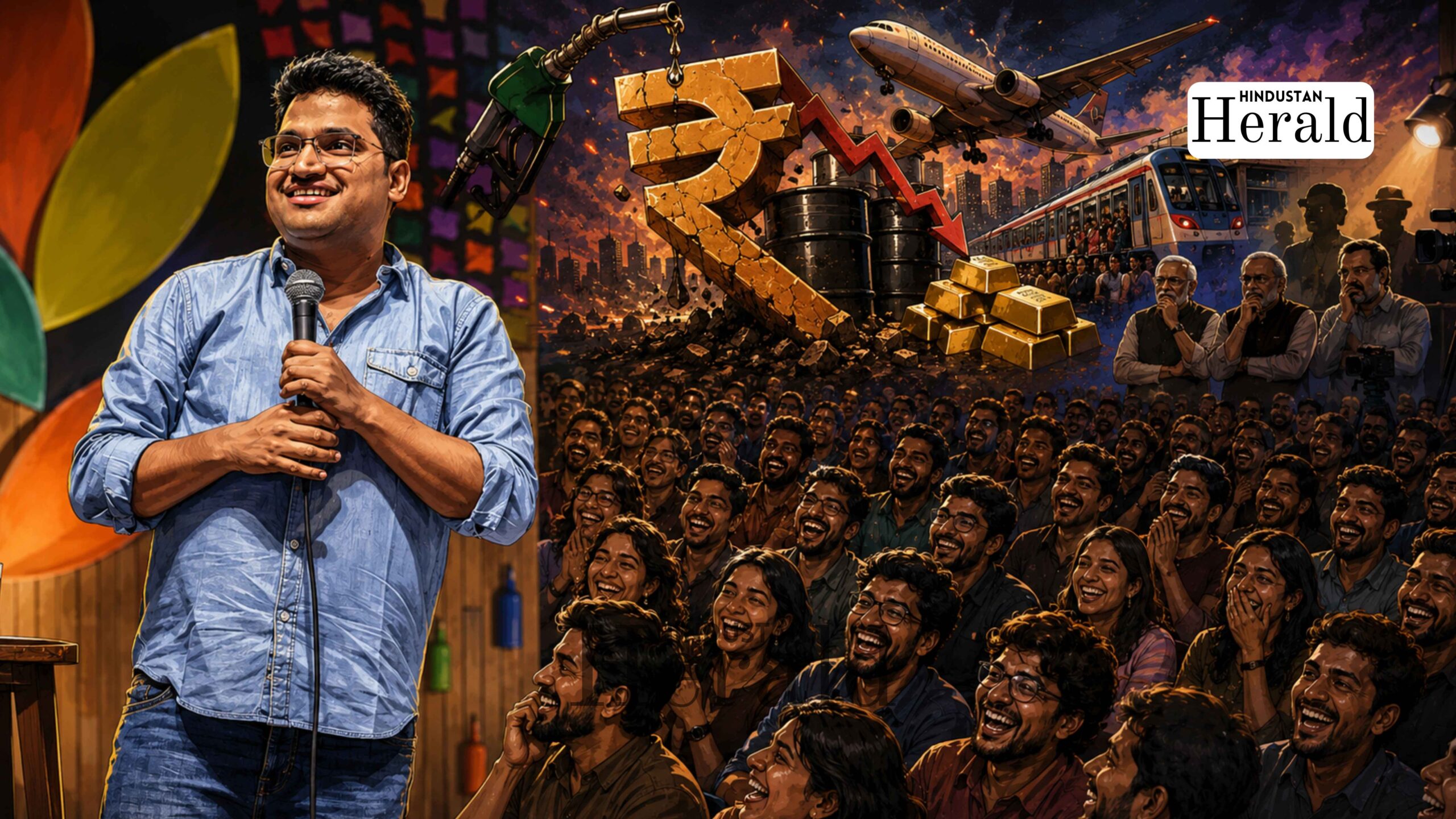
New Delhi, May 15: There is something very particular about the moment a comedian steps into a space that politicians and journalists have been tiptoeing around.
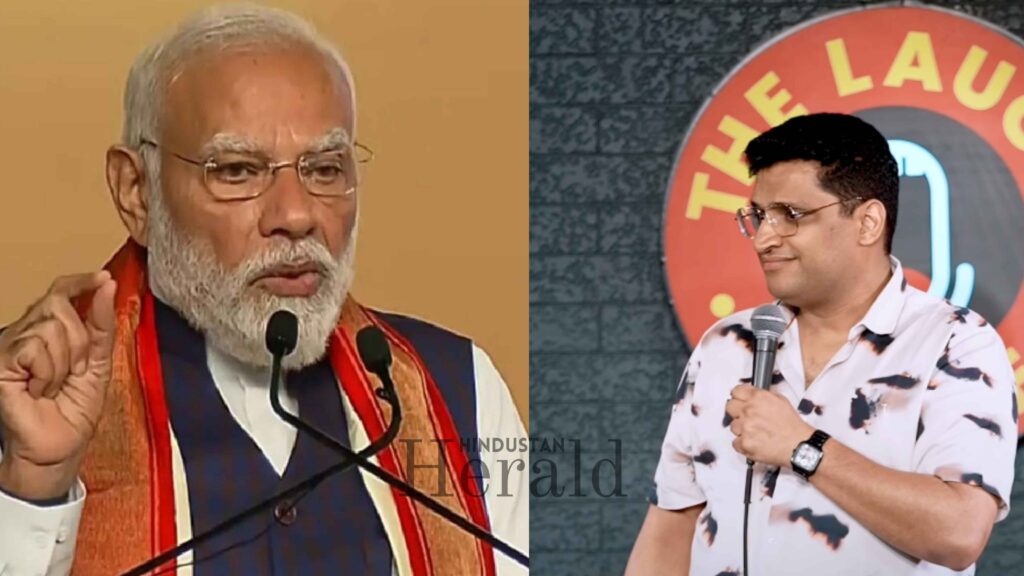
Gaurav Gupta did not tiptoe. In a 2.5-minute clip uploaded through The Laughter Store this week, the Delhi-based stand-up comic took Prime Minister Narendra Modi’s May 10 speech in Hyderabad and turned it inside out. The bit has crossed 350,000 views. It is still climbing. And the conversation it has triggered is considerably less funny than the routine itself.
The Speech That Started It
On May 10, Modi stood before a public gathering in Hyderabad and made seven appeals to the Indian people. Use the metro. Carpool. Work from home. Cut back on gold. Do not travel abroad unless you must. Switch to electric vehicles. Reduce dependence on chemical fertilisers.
The backdrop was not abstract. According to DD News, crude oil prices had touched a 52-week high of 126 dollars a barrel at the end of April, and were still trading above 100 dollars at the time of the speech, with the deadlock in the Strait of Hormuz showing no sign of breaking. As reported by CNBC, India imports nearly 85 percent of its fuel needs and depends on that single chokepoint for roughly half its crude, 60 percent of its LNG, and nearly all of its LPG. The numbers explain the anxiety in the room.
According to Business Today, retail petrol and diesel prices had remained stable through this period, with Oil Marketing Companies quietly absorbing the pressure. That kind of cushioning does not last forever, and Modi’s speech was read in most quarters as a signal that a price revision was coming. Perhaps soon.
So the message itself was not without logic. It is what surrounded the message that became the problem.
What Gupta Saw
The comedian did not dispute the oil crisis. He went after something harder to defend: the image of a government asking ordinary people to scrimp while showing no equivalent willingness to scrimp itself.
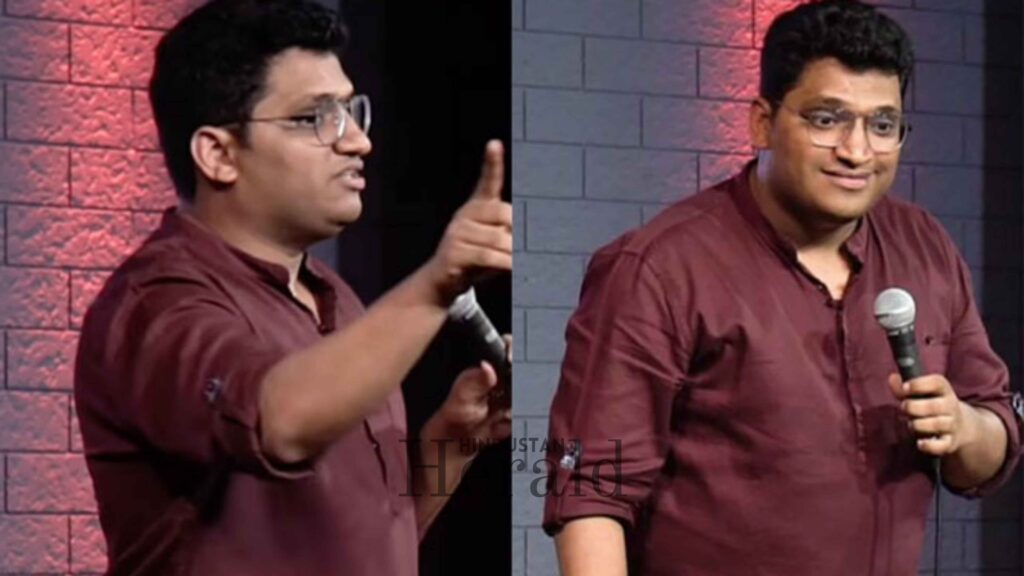
The routine mimics the Hyderabad advice with the kind of timing that only works when the audience already knows the joke is true. References to skipping drives. Chilling bottles. Taking the metro in cities where the metro does not go where people need to go. The crowd did not need much prompting. The laughter came fast.
Congress leaders and opposition voices were quick to amplify the clip, framing it as exactly the kind of boldness mainstream political commentary had failed to produce. For supporters, Gupta was saying plainly what everyone was thinking. For critics of the bit, that reading was too convenient. The Strait of Hormuz crisis is not a domestic policy failure. Shipping routes have been disrupted, tanker insurance costs have surged, and the pressure on India’s import bill is the result of a regional war that New Delhi did not start and cannot finish. Mocking conservation advice in that context, the argument goes, is a little like laughing at fire safety instructions because the fire station looks fancy.
Both positions have something to them. That is usually how it goes when a comic touches something real.
The Inconvenient Itinerary
Still, the criticism that stuck was not Gupta’s. It came from The Diplomat, which noted that the morning after the Hyderabad austerity address, the Prime Minister flew to Gujarat for roadshows and rallies. No announcement followed about cutting politician perks. No word on reducing convoy sizes. No visible change in the daily rhythms of the government whose citizens were being asked to take the bus.
The publication also flagged the timing. The fuel conservation message came over a week after election results, raising questions about why the urgency surfaced when it did. These are fair observations. The kind that tend not to get heard in the noise of a news cycle but have a way of resurfacing when a comedian puts them in a punchline.
Austerity as a one-way instruction has a long and frustrating history in Indian public life. It tends to land badly not because the public is unwilling to sacrifice but because they have seen too many instances of sacrifice being unevenly distributed.
The Actual Stakes
The comedy and the outrage are, in some ways, distractions from the part that genuinely warrants attention.
As reported by CNBC, India spent 174.9 billion dollars on crude and petroleum products in the financial year ending March 2026. That is 22 percent of the country’s entire import bill. The country is also the world’s second-largest gold buyer after China, importing nearly 72 billion dollars worth. And in 2025, according to the same report, roughly 32.7 million Indians traveled abroad, including over 14 million leisure travelers.
Modi was not asking people to give up luxuries for the optics of it. The numbers are real. The foreign exchange pressure is real. The risk that a prolonged disruption in the Persian Gulf could force a sharp and sudden revision in retail fuel prices is real. These are facts that do not get funnier the more closely you look at them.
The problem is the delivery. Asking a population that is already managing rising food costs, a punishing summer, and stagnant wages to quietly reduce its fuel use, without a clear and visible commitment from the political class to do the same, is a communications decision that almost always backfires. Not because the ask is wrong but because the messenger does not appear to be listening to himself.
Why 350,000 People Pressed Play
The Laughter Store is not a fringe platform. It has built a consistent audience for the kind of comedy that sits just close enough to political reality to feel like something more than entertainment. Gupta fits that space well. His material tends to come from recognisable middle-class life. The families trying to stretch salaries, the aspirational decisions that run into policy headwinds, the daily negotiations with a system that often seems designed for someone else.
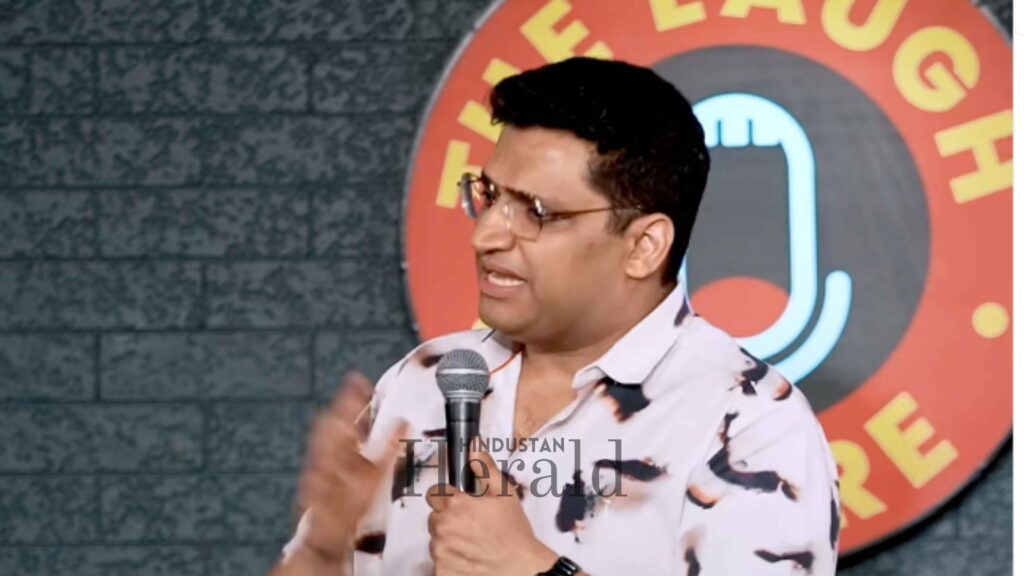
A 2.5-minute clip that compresses all of that into a coherent laugh will always move faster than a measured editorial. That is not a failure of the audience. It is just how information travels now.
For now, the clip is still circulating. The oil prices are still above 100 dollars. The government has not responded to the routine specifically, and Gupta has said nothing publicly beyond what the clip says for him. Somewhere in the middle of all this, an actual policy challenge is waiting for an actual solution.
Comedy found the gap. Policy still needs to fill it.
Stay ahead with Hindustan Herald — bringing you trusted news, sharp analysis, and stories that matter across Politics, Business, Technology, Sports, Entertainment, Lifestyle, and more.
Connect with us on Facebook, Instagram, X (Twitter), LinkedIn, YouTube, and join our Telegram community @hindustanherald for real-time updates.

Covers films, television, streaming, and celebrity culture with a focus on storytelling trends.
- Ayesha Khan

- Ayesha Khan
- Ayesha Khan
- Ayesha Khan




 Arun Upadhayay