
 By Ananya Sharma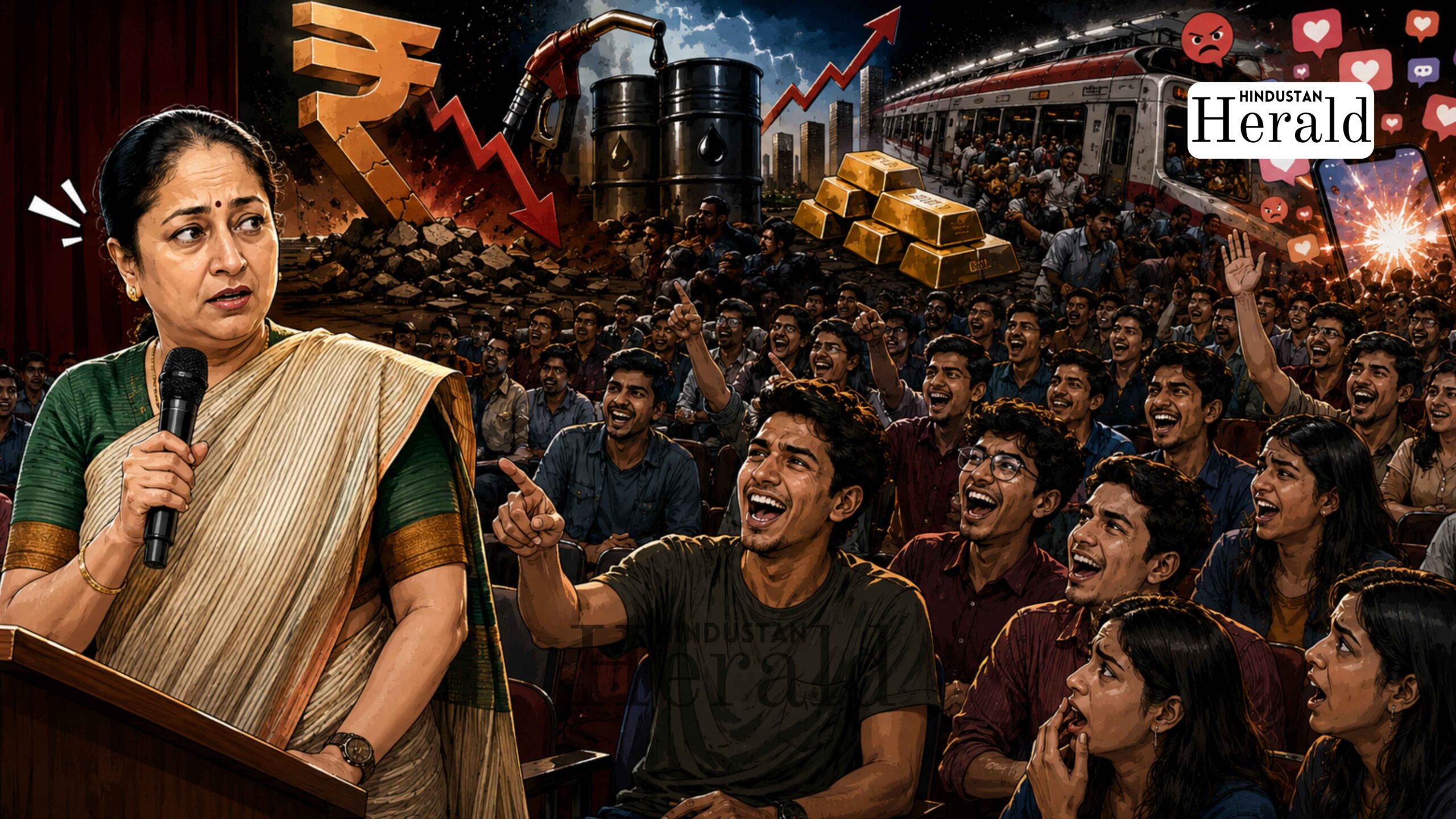
New Delhi, May 15: A video clip running barely two minutes has, in the space of a day, done what months of policy debate could not it put the question of economic austerity squarely in the court of ordinary young Indians, and their answer was a resounding, collective, and thoroughly unimpressed “Yesss.”
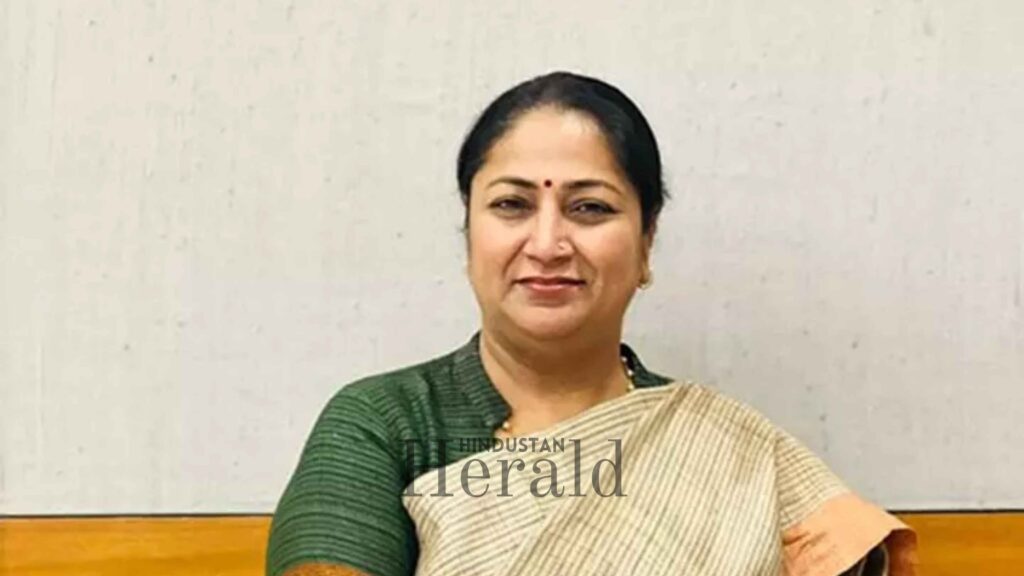
The clip, which spread rapidly across X on Thursday, shows Delhi Chief Minister Rekha Gupta addressing a gathering of students and attempting to build public support for Prime Minister Narendra Modi’s recent call for economic sacrifice. The setting appeared to be a student-facing event in the capital. What followed turned into something the Chief Minister almost certainly did not intend a moment of raw, spontaneous political theatre.
Standing before her audience, Gupta posed a series of questions, framing each one as a test of whether Modi’s austerity measures were really all that unreasonable. The students responded each time. Loudly.
“If the Prime Minister says don’t buy gold for six months to a year, is it harsh?” she asked. “Yes,” came the reply. She pressed on. “If he says don’t travel abroad?” “Yesss,” the students shot back, louder this time. By the time she reached carpooling and public transport, the room had made its position unmistakably clear.
The video went viral within hours.
What Modi Actually Said And Why It Matters
To understand what Gupta was defending, it helps to go back to the original appeal. The rupee has come under significant strain and is trading near an all-time low against the dollar. It crashed to its weakest-ever level earlier this week, touching 95.63 to a dollar. At the same time, India spent roughly 174.9 billion dollars on crude and petroleum products in the financial year ended March 2026 about 22 percent of its total imports underscoring just how exposed the economy is to overseas commodity prices.
The trigger for all of this is the ongoing US-Israel war against Iran, which has sent global oil prices surging well past the $100 per barrel mark. For India, a country that imports nearly all of its crude requirements, this is not an abstract geopolitical event. It is a direct hit to the import bill, to forex reserves, and ultimately to the everyday cost of living.
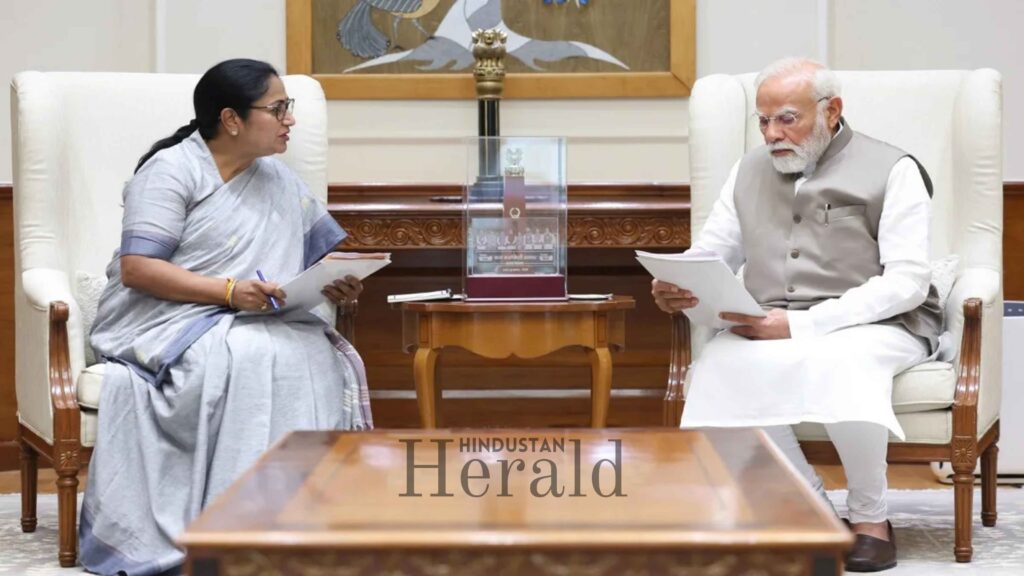
It was against this backdrop that Modi, at a public event in Hyderabad earlier this week, urged Indians to make voluntary sacrifices. He asked citizens to reduce fuel consumption, postpone gold purchases for one year, and consider moving to COVID-era arrangements like work-from-home and virtual meetings. He also urged citizens to avoid foreign travel to protect India’s foreign exchange reserves.
The International Monetary Fund has projected that India’s current account deficit will touch $84 billion in 2026. Indians imported gold worth $72 billion in the 2025-26 fiscal year, second in the world only to China. And Indians travelling abroad spent an estimated $31.7 billion in 2023-24, with about 30.9 million Indian nationals departing India in 2024. The arithmetic, in other words, is not difficult to follow. These three categories oil, gold, and foreign travel collectively represent a massive drain on dollar reserves, and the government wants at least some of that to slow down voluntarily.
The Machinery of Compliance
The appeal did not remain at the level of rhetoric for long. Across BJP-ruled states, the machinery of government began visibly demonstrating its commitment to the PM’s call.
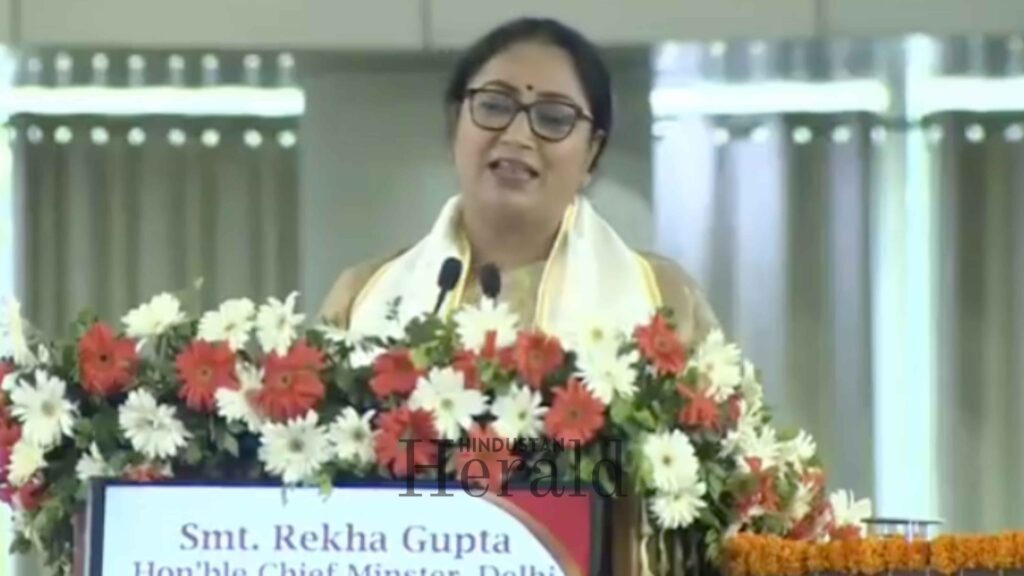
Chief Minister Rekha Gupta announced that ministers, MLAs, officials and departments would minimise official vehicle use, prioritise carpooling and use metro and bus services wherever possible. She also urged residents to reduce dependence on private vehicles and act responsibly during the ongoing global energy uncertainty.
She further announced that all government offices, private companies and institutions would be advised to observe work from home for two days every week, with an advisory to be issued soon and the Labour Department tasked with monitoring its implementation. The official petrol and diesel quota of officers’ vehicles was also slashed by 20 percent monthly limits of 200 to 250 litres have been brought down to 160 to 200 litres.
Delhi minister Kapil Mishra travelled to his office by metro, sharing the video on X and stating that Delhi’s CM Rekha Gupta and all ministers had begun implementation with resolve.
In Bihar, Deputy Chief Minister Vijay Kumar Chaudhary reduced the number of vehicles in his cavalcade by half and pledged to undertake official travel only when necessary. Building construction minister Leshi Singh appealed to women to avoid purchasing gold for one year, citing national interest.
Still, optics and policy are two different things. And the students in that Delhi hall were responding to something beyond optics.
The Sarcasm That Landed
What made the viral clip sting was not anger, exactly. It was a kind of dry, generational exasperation the kind that does not need to explain itself because the room already understands the joke.
The students being asked whether it was “harsh” to skip gold purchases are largely not gold buyers. Many of them do not have the income for international holidays. Public transport, for a significant share of urban Indian youth, is already the default not a sacrifice. When Gupta asked whether these requests were unreasonable, she was, perhaps inadvertently, asking the wrong crowd.
But there is also a sharper edge to the pushback. Videos of the Prime Minister’s own past speeches on India’s falling rupee during the UPA period are now being widely circulated by his political adversaries, framing the current moment as a mirror of what he once criticised. The irony is not lost on the internet, and it has fed directly into the meme cycle surrounding the Rekha Gupta clip.
The stock markets reacted badly to the PM’s appeal, crashing in the immediate aftermath as investors tried to process the scale of the concern being signalled. India’s forex reserves, which appeared comfortable at around $720 billion in early February, have since dropped to $688 billion. Economists caution that actual liquid reserves available to stabilise the market in the event of a currency attack may be less than $500 billion.
The Larger Economic Alarm
This is not simply a story about a viral video or about one Chief Minister’s awkward exchange with students. It is a window into how the Indian government is trying to manage a crisis without calling it a crisis.
India was already facing structural constraints in the external sector even before the Iran war. The Economic Survey three months ago had flagged that the rupee was punching way below its weight and that foreign investments were shying away from India. India has been net FDI negative for two years, and foreign institutional investors have also been leaving in significant numbers in 2025 and 2026. Net FII outflows this calendar year have been $21 billion, while many other emerging markets in Asia and Latin America have received impressive inflows.
Every single time that commodity prices have spiked globally, India has come close to a financial crisis. In normal times, it can export enough to pay the dollars needed to cover imports, but not when the cost of fuel it buys spikes sharply. There are also worries about drought this year, with an expected El Nino weather pattern likely to result in below-normal rainfall. The combination of an oil shock and a potential agricultural disruption is, to put it plainly, a serious compounding risk.
Some economists argue that the government must allow the price of imports to rise if it is serious about cutting the import bill and ensuring financial stability, and that the Reserve Bank may have to let the rupee fall further. An increase in fuel prices, which the government has held artificially steady for around four years by absorbing losses through state-run oil companies, may become unavoidable.
Between Sacrifice and Policy
What Modi asked for this week was voluntary. That is both its strength and its weakness. Voluntary compliance works when the public trusts the framework asking for sacrifice, and when the sacrifice is seen as broadly shared. Neither condition is fully in place right now.
The students who said “Yesss” in that Delhi hall were not being unpatriotic. They were being honest. They were telling a Chief Minister, in the only language available to them in that moment, that the weight of this crisis should not simply be passed down to ordinary people through appeals to their goodwill. That the gap between what is being asked and what is being offered in return in terms of accountability, in terms of economic management, in terms of credible policy feels wide.
For now, the video keeps circulating. The economy keeps adjusting. And the rupee, stubborn as ever, hovers where it does not want to be.
Stay ahead with Hindustan Herald — bringing you trusted news, sharp analysis, and stories that matter across Politics, Business, Technology, Sports, Entertainment, Lifestyle, and more.
Connect with us on Facebook, Instagram, X (Twitter), LinkedIn, YouTube, and join our Telegram community @hindustanherald for real-time updates.

Covers Indian politics, governance, and policy developments with over a decade of experience in political reporting.
- Ananya Sharma

- Ananya Sharma
- Ananya Sharma
- Ananya Sharma




 Sandeep Verma