
 By Ananya Sharma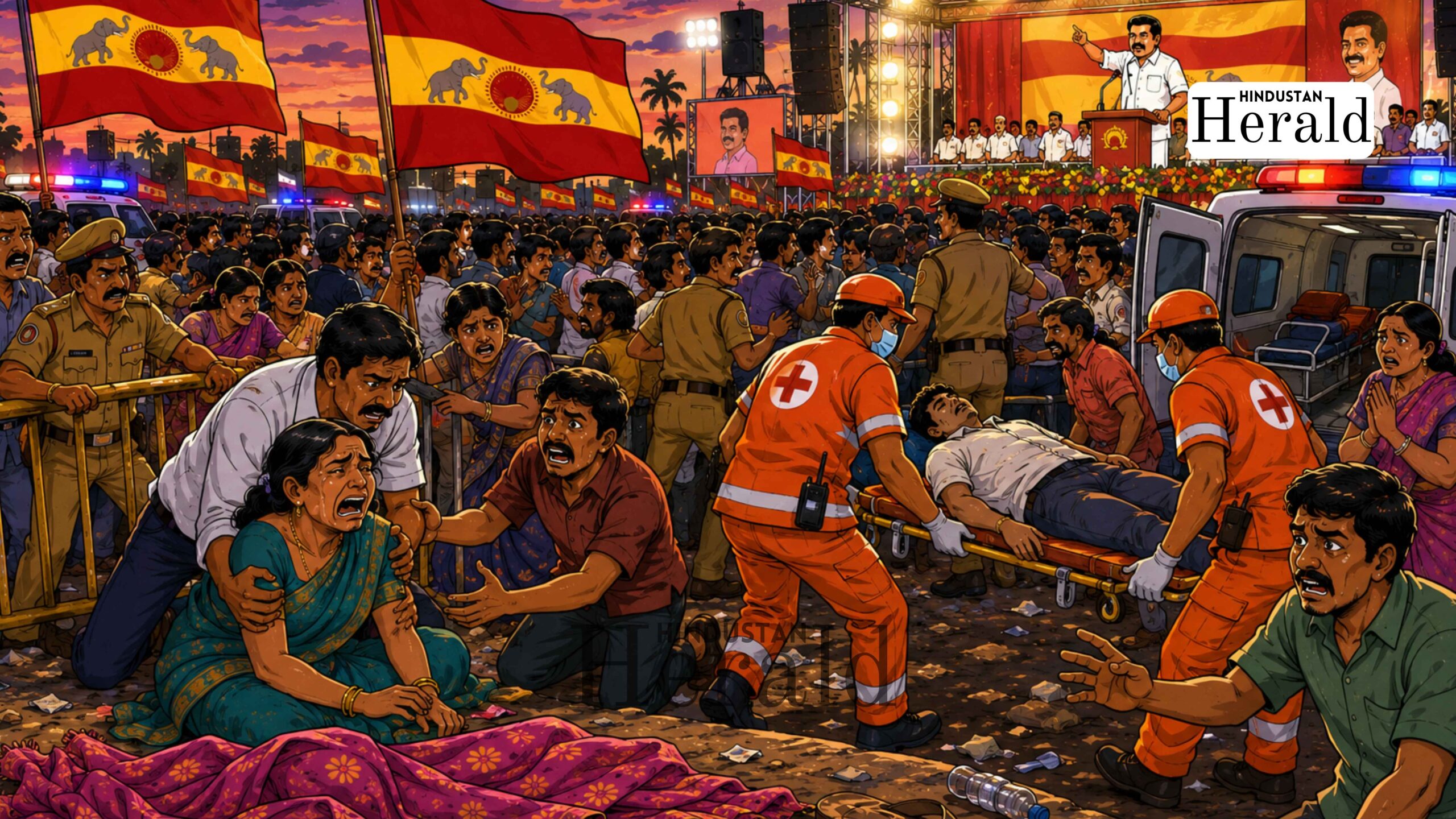
Karur, May 13: Suguna was 65 years old. She had gone to see Vijay speak. Her family could not find her after the stampede, and they spent anxious hours searching before someone told them to check the government hospital. By the time they got there, she was in the ICU, on a ventilator. She did not survive.
She was the 41st person to die.
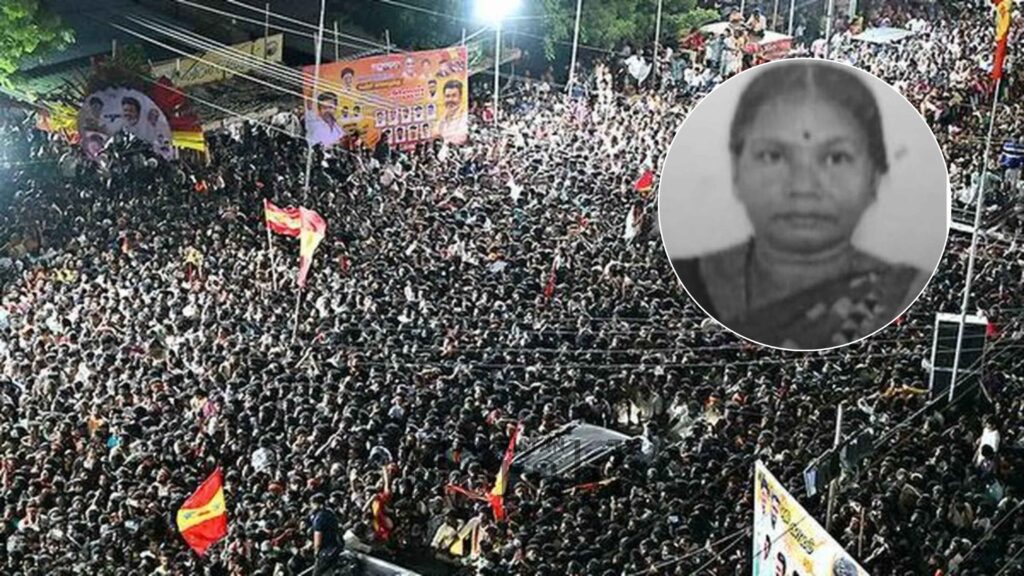
Eighteen women. Thirteen men. Five girls. Five boys. And Suguna. That is what September 27, 2025 left behind in Veluchamipuram, a village on the Karur-Erode highway that most people outside Tamil Nadu had never heard of before that Saturday evening. Most of Tamil Nadu still has not come to terms with it. And now, with Vijay sitting in the Chief Minister’s chair, the question of what the state owes those 41 families has become harder to ask, not easier.
The Evening Everything Came Apart
The rally had been moved up from December. The change was announced on September 24, just three days before the event. That alone should have been a red flag for organisers. You do not shift a mass political gathering by weeks, with three days’ notice, and expect crowd management to hold.
Permission had been granted for the event to run between 3 pm and 10 pm. But announcements going out in the days before suggested Vijay would arrive around noon. People started showing up from 11 in the morning. They waited through the afternoon. Through the early evening. Through the heat of a Tamil Nadu September day, standing in an open field, with no shade worth mentioning, with insufficient water, with the kind of patience that only comes from real devotion.
By the time Vijay arrived, nearly 27,000 people had packed into a venue that had permission for 10,000. He reached the stage at 7:40 pm. The crowd had been standing there for close to seven hours.
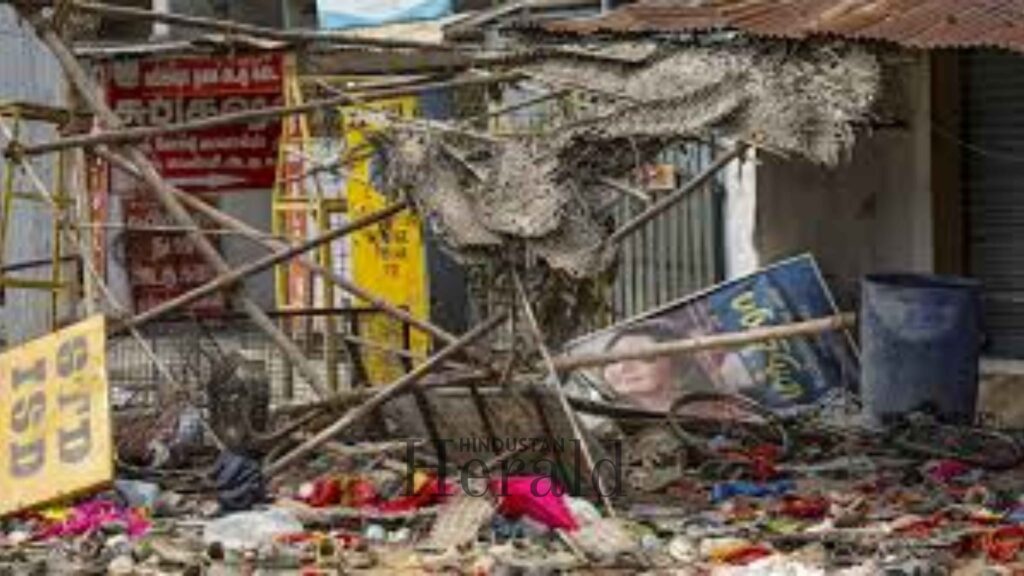
What happened next was almost inevitable. A large section of the crowd surged forward to catch a glimpse of Vijay’s convoy. People got trapped in narrow exit lanes. Some fainted. Others were trampled. A brief power disruption reportedly made the panic worse.
The first ambulance call came at 7:14 pm. The second at 7:15. By 7:25, multiple casualties were already being reported from different points in the crowd. Vijay kept speaking until 7:33.
That eight-minute gap is not a small detail. It sits at the centre of every serious question about accountability that evening.
Ambulances could not get through. TVK supporters reportedly confronted drivers and obstructed vehicles trying to reach the injured. Volunteers eventually formed human chains just to carve out a path. By then, for many people inside that crowd, it was already too late.
How the Numbers Kept Rising
The death toll that night started at 29. Then it was 31. Then 36. Then 38, then 39, then 40. It reached 41 on Monday morning, September 29, when Suguna passed away at the Government Medical College Hospital in Karur.
Of the 41 who died, 34 were from Karur district itself. Two each from Erode, Tiruppur, and Dindigul. One from Salem. These were not outsiders bussed in for optics. These were local people, neighbours, people who lived close enough to walk or take a short ride to the venue. They came because they believed in the man speaking. Some of them never went home.
The Money and the Inquiry
The government moved quickly, at least on paper. Chief Minister M.K. Stalin announced Rs 10 lakh for each deceased family and Rs 1 lakh for those undergoing intensive care treatment.
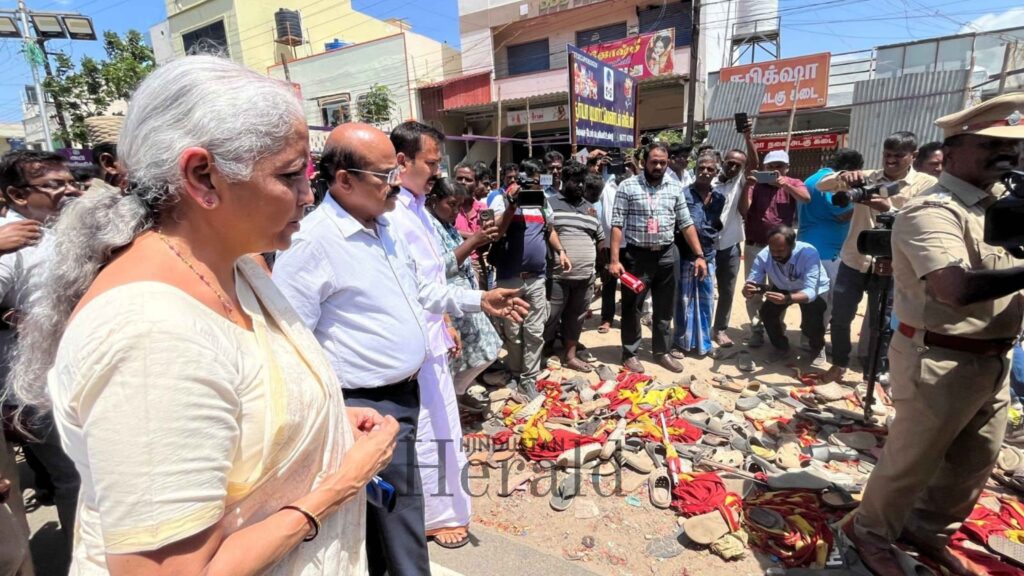
A one-member Commission of Inquiry was immediately constituted, headed by retired Justice Aruna Jagadeesan, a former Madras High Court judge, to probe what had gone wrong and submit a report to the administration.
Prime Minister Narendra Modi announced Rs 2 lakh from the PM’s National Relief Fund for each family of the deceased, and Rs 50,000 for the injured.
Vijay, for his part, went further in terms of the numbers. He announced Rs 20 lakh each to the bereaved families and Rs 2 lakh each to those injured, and posted on X that he was at a loss for words, that the faces of the deceased kept flashing through his mind.
The posts were emotional. The figures were significant. But compensation is not the same as accountability, and in the weeks that followed, it became clear that the two were being treated as though they were.
Who Got Booked, Who Got Questioned
On September 28, senior TVK members including general secretary N. Anand, joint secretary C.T. Nirmal Kumar, and Karur district secretary Mathiazhagan were booked under the Bharatiya Nyaya Sanhita for culpable homicide, attempted culpable homicide, and endangering life. Mathiazhagan was arrested two days later and granted bail in mid-October.
The police also turned their attention to Vijay directly. Tamil Nadu Police alleged that Vijay had entered Karur district at 4:45 pm but stopped along the way to conduct a roadshow without permission, effectively delaying his own arrival and compounding the crowd situation.
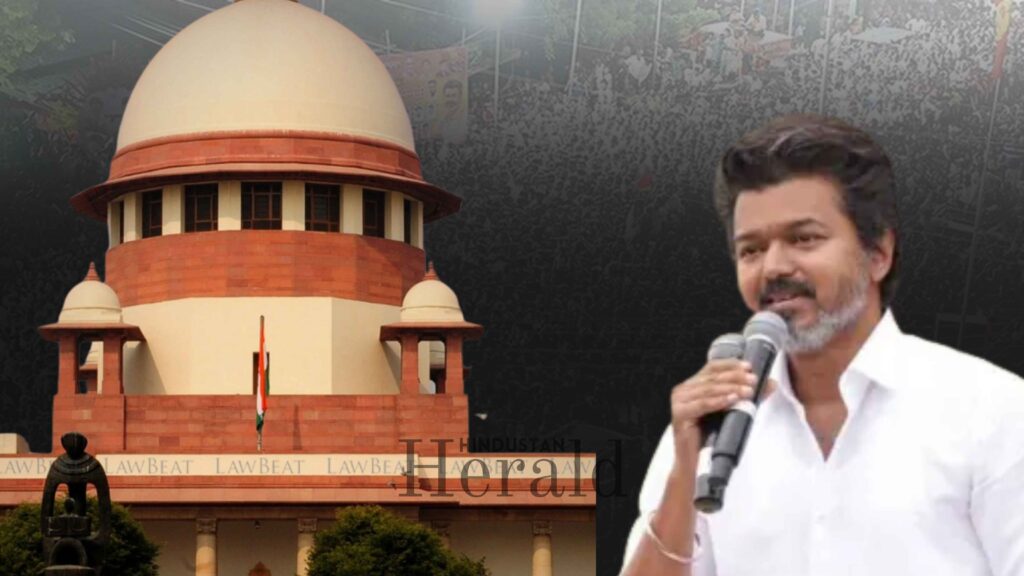
Then the Supreme Court stepped in. According to reports in National Herald India, the court described the Karur stampede as an incident that “shook the national conscience” and ordered the CBI to probe the matter.
In January 2026, Vijay appeared at CBI headquarters in New Delhi on two separate occasions, questioned about the prelude to the crowd crush — his delayed arrival, his decisions that evening, and why he left early once the situation worsened.
TVK’s response to the CBI involvement was to frame it as political persecution. The party accused the BJP-led central government of using the probe to pressure Vijay into joining the NDA alliance, claiming the repeated summons to Delhi were coercion disguised as investigation. The TVK categorically rejected any tie-up, calling the BJP an ideological foe. Even the Congress, no natural ally of Vijay’s, reportedly questioned whether the CBI was being deployed for political ends.
Both things can be true at once. The CBI may have political motivations, and TVK’s leadership may still bear real responsibility for what happened in Karur. One does not cancel out the other.
This Was Not the First Warning
That is perhaps the most difficult part of this story to sit with. Karur was not unprecedented. It was the third time that a TVK public event had ended with deaths.
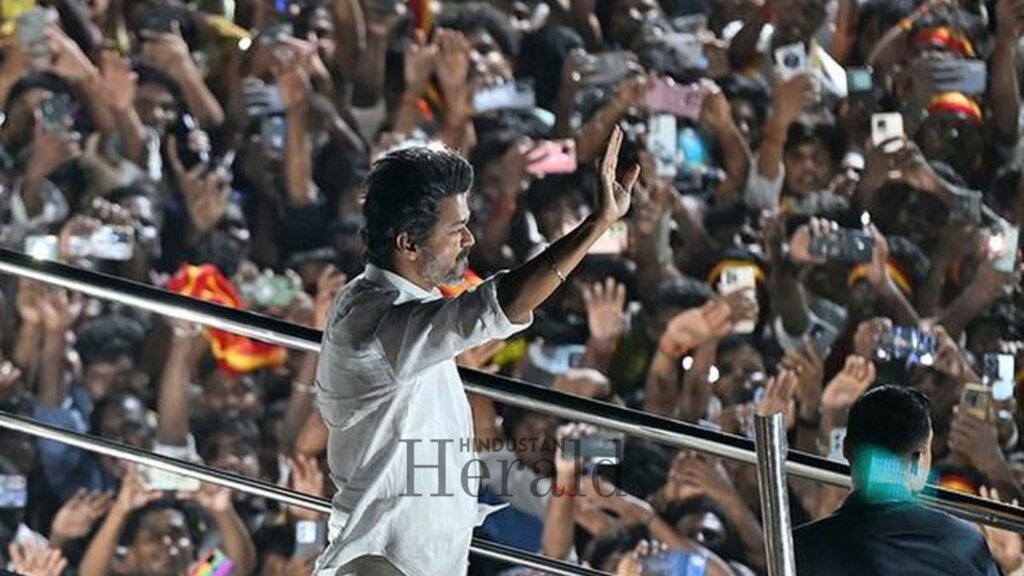
In Vikravandi, six people had died in accidents connected to a TVK gathering. In Madurai, three more lost their lives, including a young man named Roshan from the Arundhathiyar community who collapsed from sunstroke after standing without shelter in severe heat. He was his family’s sole breadwinner. TVK never formally acknowledged his death. In Trichy, Vijay’s convoy had taken over five hours to travel 8 kilometres from the airport to the venue, with supporters blocking roads and overwhelming any crowd control that existed.
After each of these, the rallies continued. The crowds kept growing. The safety arrangements stayed roughly the same.
The Karur tragedy was, in that sense, a product of repeated negligence and ignored warnings. Forty-one lives might have been saved if both the state government and TVK had simply coordinated to manage the crowd responsibly. The same urgency that came after the deaths should have been shown before them.
That sentence is worth reading again. The urgency that came after the deaths should have been shown before them.
A Closed-Door Meeting at a Resort
On October 27, 2025, Vijay met with victims’ families. Not in Karur. In Mamallapuram, a coastal town near Chennai. The families were brought by bus to a resort for a private, closed-door meeting. About 30 families attended.
Not 41. Thirty. And they were brought to him.
Whatever was said in that room, it was not made public. No press. No accountability to the wider community of people who lost someone that evening. A quiet, private meeting at a beach resort, while the state was still in the middle of processing what had happened. It is hard to read that as anything other than an attempt to manage the optics of grief rather than genuinely reckon with it.
The Man Who Won After All of This
Here is where the story takes a turn that Tamil Nadu’s political commentators are still trying to fully process.
In the 2026 Tamil Nadu Legislative Assembly elections, TVK emerged as the single largest party, winning 108 of 234 seats. Vijay became Chief Minister.
The voters of Tamil Nadu were aware of Karur. They voted anyway. That is their democratic right, and the mandate is real. But a mandate does not settle a moral account. The families of those 41 people did not vote for forgiveness when they stepped into the booth.
During his election campaign, Vijay publicly claimed that the Karur tragedy was “a joint machination” — a conspiracy against him. “I, who have come to ask justice for you, also want justice,” he told his crowds.
Whatever one makes of that framing, it signals something important: the new Chief Minister has not accepted responsibility. He has accepted the role of aggrieved party. Whether that position is sustainable from the chair of government is a question Tamil Nadu will be watching closely.
The Open Files
The Justice Aruna Jagadeesan commission’s findings have not been fully made public. The culpable homicide cases against TVK’s senior leadership have not reached any kind of conclusion. The CBI investigation continues. And the families of 41 people are waiting — not just for closure, but for someone to stand up and say, plainly and without political qualification, that what happened in Veluchamipuram was wrong, that it was preventable, and that it will never happen again.
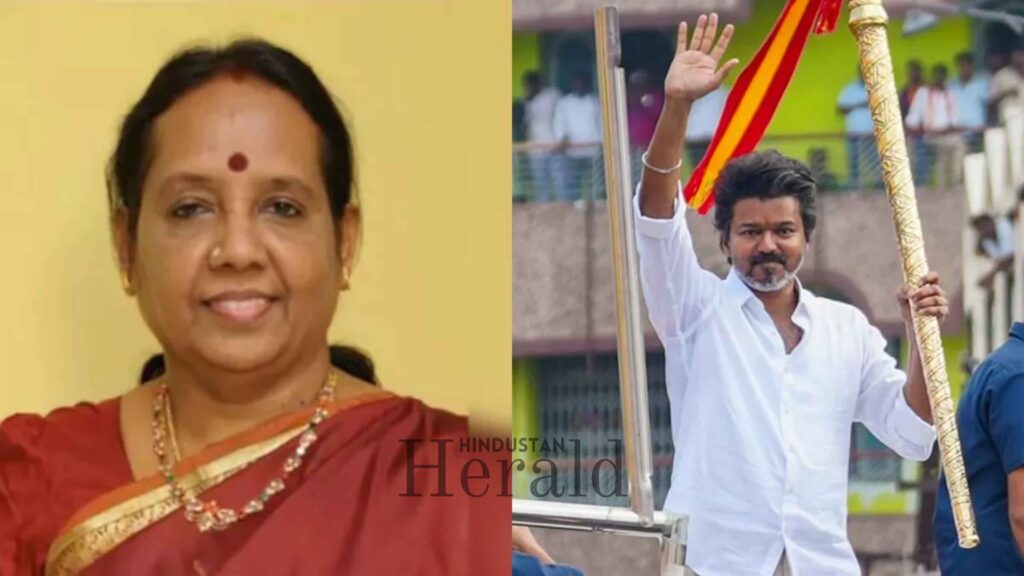
As it turns out, that is harder to say from the Chief Minister’s office than it was from a campaign podium. Power changes the calculus. What was once a political tragedy to be leveraged becomes, in government, a liability to be managed.
Tamil Nadu has seen enough of that kind of management. What Karur demands is something rarer: honesty.
Suguna waited seven hours in the heat to hear a man speak. She deserved better than that. So did the other 40 people who did not come home.
Stay ahead with Hindustan Herald — bringing you trusted news, sharp analysis, and stories that matter across Politics, Business, Technology, Sports, Entertainment, Lifestyle, and more.
Connect with us on Facebook, Instagram, X (Twitter), LinkedIn, YouTube, and join our Telegram community @hindustanherald for real-time updates.

Covers Indian politics, governance, and policy developments with over a decade of experience in political reporting.
- Ananya Sharma

- Ananya Sharma
- Ananya Sharma
- Ananya Sharma



 Sandeep Verma