
 By Sandeep Verma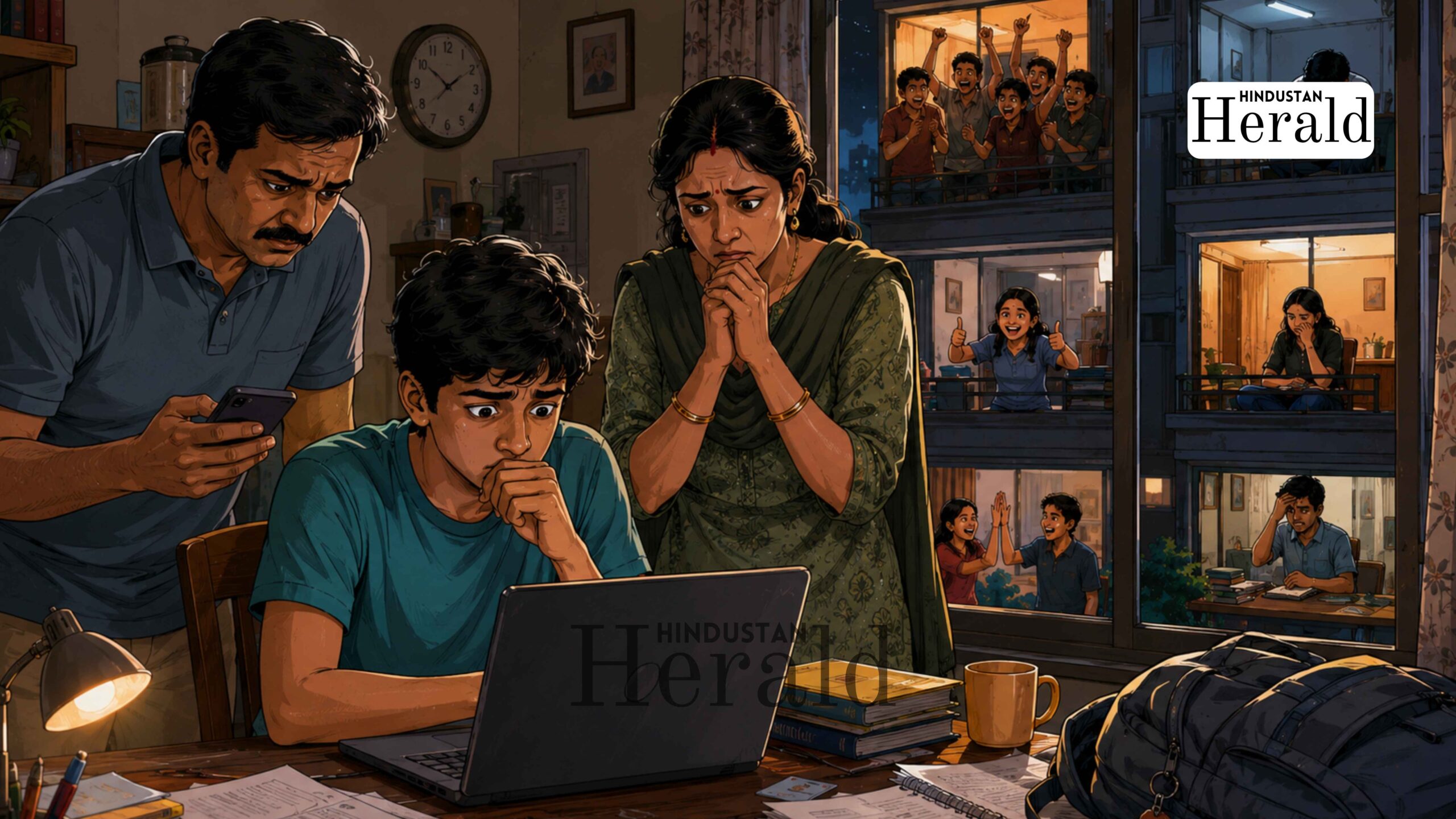
New Delhi, May 13: There is a particular kind of quiet that settles over Indian households on board result mornings. Not silence exactly, more like everyone doing something else while actually doing nothing, waiting for one person to be brave enough to type in the roll number. That was Wednesday for millions of families across the country, as CBSE finally put out the Class 12 results for 2026.
The servers, as always, did not handle it gracefully. results.cbse.nic.in slowed to a crawl within minutes of the announcement. DigiLocker held up better. UMANG too, for most students. By afternoon, the scorecards were reaching people, one way or another.
85.20 Per Cent, And What That Number Hides
The pass percentage this year is 85.20. Last year it was higher, by about 3.19 percentage points. That gap is not enormous in isolation, but it is not nothing either, particularly for the families on the wrong side of it.
A total of 17,68,968 students appeared for the examination. Of those, 15,07,109 passed. In absolute terms, that is more students clearing the board than in 2025. But the pool was also bigger this year, and the share that did not make it through has grown.
The board has offered no explanation. It rarely does, beyond the statistics themselves. What the numbers suggest, to anyone who has followed CBSE policy over the last few years, is that the quiet tightening of evaluation standards is producing results. The On-Screen Marking system, which the board expanded to reduce evaluator inconsistency, was always going to trim some of the informally generous marking that students in tougher regions had sometimes benefited from. The grace marks policy is still in place, but it is calibrated more carefully now. The era of broad moderation that once nudged borderline students across the pass line has been winding down for a while.
None of this makes it easier to explain to a seventeen-year-old who fell short by a few marks.
Girls Are Pulling Further Ahead
The gender gap in CBSE Class 12 results has been a talking point for years, but this year the numbers are striking enough to demand more than a passing mention. Girls passed at 88.86 per cent. Boys at 82.13 per cent. That is a difference of 6.73 percentage points, and it has been widening steadily across board cycles.
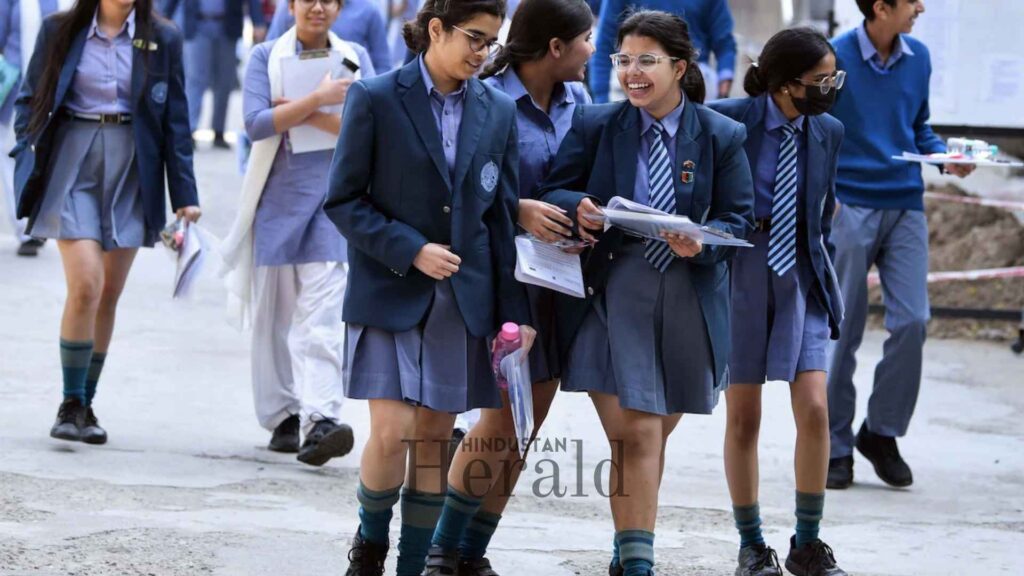
It is tempting to frame this as a success story for girls, and in one sense it is. But the other side of that story is that something is going wrong for a significant share of boys in the 15 to 17 age group, and the education system does not appear to be particularly troubled by it. Are boys dropping out of serious academic engagement earlier? Is family pressure pushing them toward vocational or income-generating activity before they have finished school? Is the exam format itself, which rewards consistent effort and neat presentation over a long academic year, favouring girls in ways that no one has properly studied?
These are not rhetorical questions. They are ones that should probably be sitting on someone’s desk at CBSE headquarters, though there is little evidence that they are.
The KV-Private School Divide Is Not Going Away
Kendriya Vidyalayas posted a 98.55 per cent pass rate. Jawahar Navodaya Vidyalayas came in at 98.47 per cent. Independent schools, the catch-all category that includes everything from well-funded urban institutions to barely-resourced private schools in district towns, came in at 84.22 per cent.
The difference is close to 14 percentage points, and it is not a new story. KVs and JNVs have structured support systems, teacher oversight that actually functions, and in the case of JNVs, a student body that has been selected through a national entrance process. Independent schools are a far messier category. Some are excellent. Many are middling. Quite a few are operating on skeleton budgets with underqualified staff and classrooms that see more absent teachers than present ones.
Averaging them all together and calling it the independent school pass rate is technically accurate and practically misleading. But that is how the data comes out, and that is how it gets reported.
Trivandrum To Prayagraj: Twenty-Three Points Of India
Trivandrum was the best-performing region in the country at 95.62 per cent. Prayagraj was the worst at 72.43 per cent. The gap between them is 23.19 percentage points.
Same board. Same syllabus. Same exam. Wildly different outcomes.
The reasons are not mysterious. Trivandrum sits within Kerala, a state that has invested heavily in public schooling for decades, has teacher vacancy rates that are among the lowest in India, and has a cultural relationship with formal education that goes back generations. Prayagraj is in Uttar Pradesh, which has among the highest teacher vacancy rates in the country, infrastructure challenges that are well-documented and largely unaddressed, and a significant population of first-generation learners trying to clear a national board exam without the safety net of coaching centres or educated parents who can fill the gaps.
This comes up in the data every year. It will come up again next year. At some point, the gap either becomes a political priority or it becomes permanent.
1.63 Lakh Students, And A Second Chance
Just over 1.63 lakh students, around 9.26 per cent of those who appeared, have been placed in compartment. These are students who cleared some subjects but not all, and who now face the choice of whether to sit the supplementary examination or figure out a different path entirely.
The compartment exam is not the catastrophe it used to feel like. Over the years, the process has become more accessible, and colleges have become more accustomed to students who arrive with a supplementary clearance rather than a clean first-attempt scorecard. It is still a difficult conversation to have at home, particularly in families where the board result was carrying the weight of a great deal of expectation.
Registration for the compartment exam goes through the school, not directly through CBSE. Admit cards come out roughly a week to ten days before the exam begins. The supplementary result is expected in August. For students in this category, the next three months are not wasted time. They are the whole point.
Getting The Scorecard In Hand
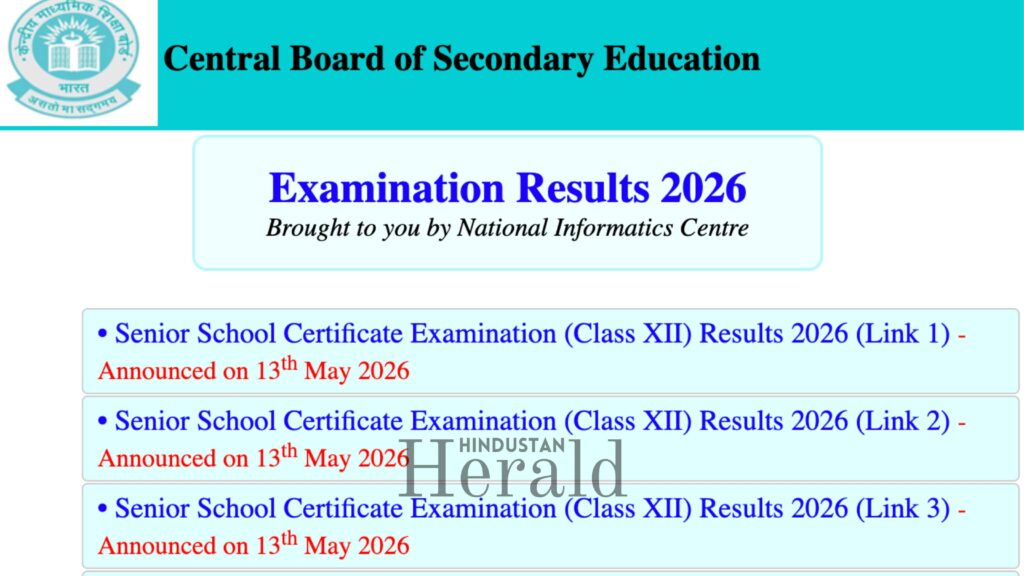
For students still trying to access results, the official website is cbseresults.nic.in If that is not loading, which it probably is not for anyone who tried before noon, DigiLocker has the digital marksheet, migration certificate, and pass certificate all available once you log in with the credentials sent via SMS. The UMANG app is another option and has been reasonably reliable in recent years across Android and iOS.
Students in areas with poor data connectivity can use the SMS service. Type CBSE12 followed by your roll number and send it to 7738299899. Keep the admit card handy regardless of which method you use. Roll number, school number, admit card ID, and date of birth are the four things every portal is going to ask for.
No Toppers List, And The Board Is Not Changing Its Mind
CBSE has not published a toppers list in several years, and this year is no different. The board’s position is that ranking students publicly contributes to an unhealthy culture of comparison and creates disproportionate pressure on high performers. Merit certificates go to the top 0.1 per cent of students in each subject. That is the recognition, and the board considers it sufficient.
Some in the higher education space disagree. Admissions offices at competitive universities have said that the absence of a national rank makes it harder to contextualize scores during the selection process. The board has heard this feedback and has, so far, not found it persuasive.
Both sides have reasonable points. The debate will continue next year, and the year after.
Where Students Go From Here
For students with strong scores, the next few weeks are going to be a different kind of exhausting. JEE counselling is in motion for engineering aspirants. NEET results are awaited by medical hopefuls. CUET scores are being calculated for students targeting central universities. Commerce students are looking at CA Foundation timelines and IPMAT deadlines. Everyone is tracking merit lists, cutoffs, and seat availability in real time.
It is a lot. And it starts immediately, before the relief of today’s result has even fully settled.
For students who did not score what they needed, the options depend on what exactly went wrong. A compartment in one subject is a different situation from a low aggregate that affects college eligibility. Improvement exams allow students to reappear in specific subjects to boost their overall score. A gap year, still treated as something close to shameful in many Indian households, has quietly become a legitimate and often productive choice for students preparing seriously for competitive entrance exams.
None of these feel like good news on a Wednesday morning in May. By September, the perspective tends to shift.
The Same Map, Drawn Again
What CBSE’s annual result data produces, year after year, is essentially the same map of India’s educational inequality, redrawn with slightly updated numbers. The southern regions outperform the north. Central government schools outperform the broader private sector. Girls outperform boys. Wealthier, better-resourced environments produce better-equipped students.
None of this is the board’s fault, exactly. CBSE administers examinations. It does not build schools, train teachers, set state budgets, or determine which child is born into which household. But the data it releases every May is one of the most comprehensive annual audits of how India’s education system is actually functioning, and it consistently points to the same structural failures that policy announcements have been promising to address for the better part of three decades.
For the 15 lakh students who cleared the exam today, that broader picture is not the immediate concern. They have admissions to chase and forms to fill and families who are, right now, considerably relieved.
For the 1.63 lakh in compartment, and the unknown number who passed but did not get what they needed, today is a harder day. It will not stay this hard. These things rarely do.
The results are out. The year moves on.
Stay ahead with Hindustan Herald — bringing you trusted news, sharp analysis, and stories that matter across Politics, Business, Technology, Sports, Entertainment, Lifestyle, and more.
Connect with us on Facebook, Instagram, X (Twitter), LinkedIn, YouTube, and join our Telegram community @hindustanherald for real-time updates.

Regional journalist bringing grassroots perspectives and stories from towns and cities across India.
- Sandeep Verma

- Sandeep Verma
- Sandeep Verma
- Sandeep Verma




 Ananya Sharma