
 By Ananya Sharma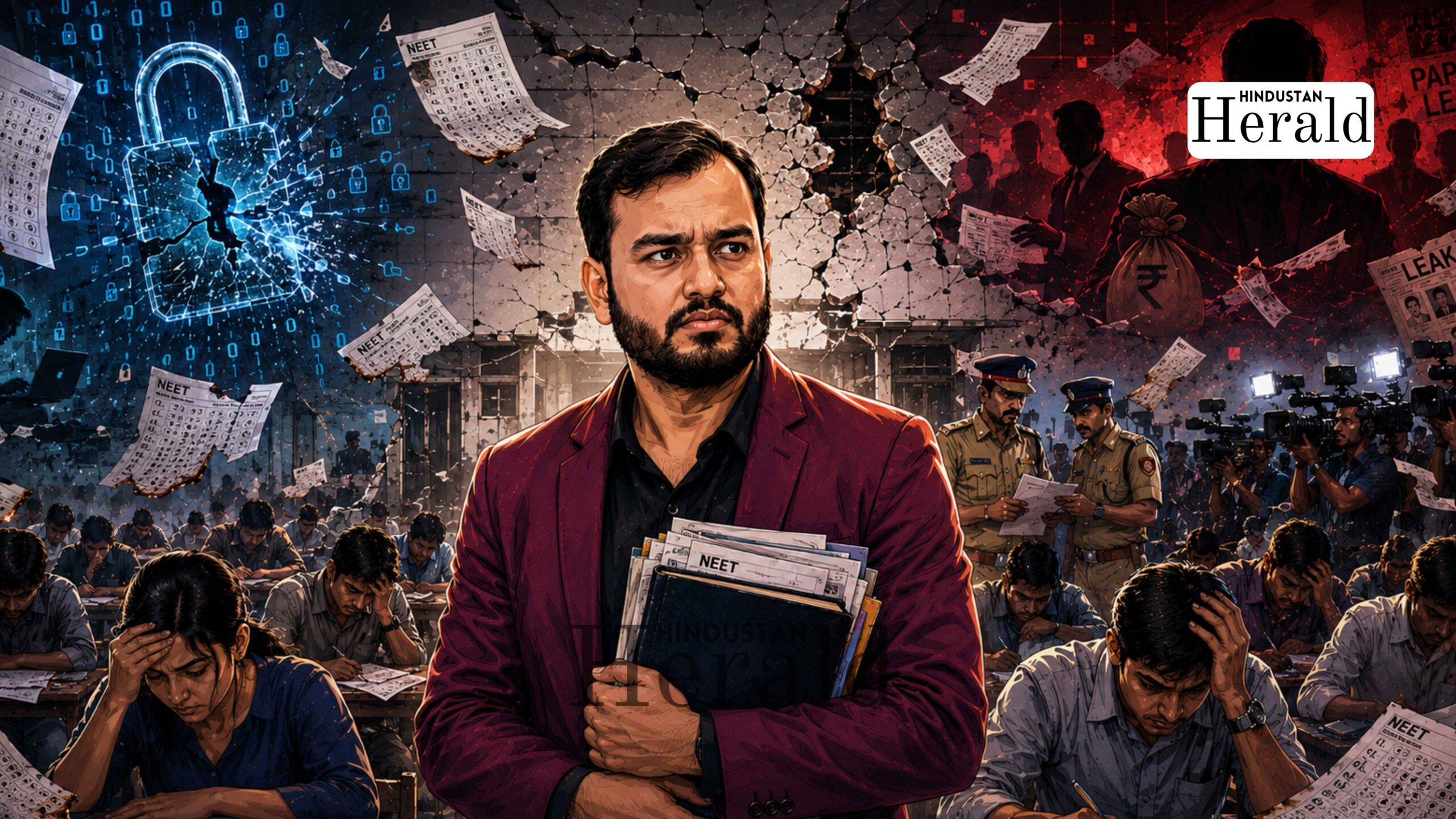
New Delhi, May 13: When Alakh Pandey, the founder and CEO of Physics Wallah, sat down for an interview with News Pinch and went on record against the National Testing Agency, he was not speaking as a businessman protecting market share. He was speaking as someone who has watched this system fail the same students, over and over again.
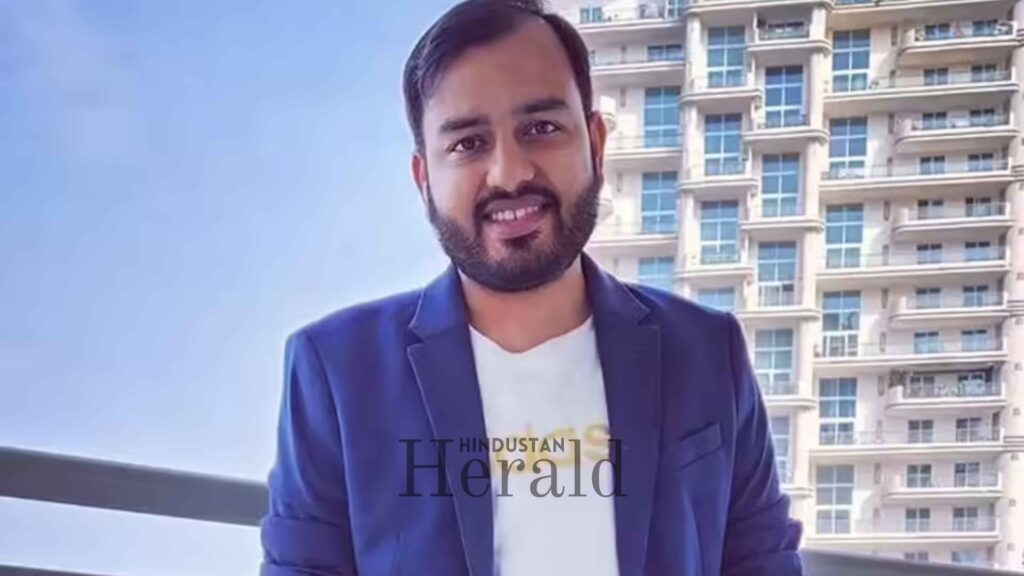
The video clip went viral within hours. And the reason it spread so fast has nothing to do with social media algorithms. It is because every line he said landed like something millions of people had already been thinking but nobody in power was willing to say out loud.
This time, the anger has a face, a timeline, and a criminal case attached to it.
The Exam That Never Should Have Stood
NEET-UG 2026 was conducted on May 3 across the country. Around 22 lakh students appeared for the exam. Within days, reports began surfacing from Rajasthan that something was deeply wrong.
According to the Rajasthan Special Operations Group (SOG), a message containing a “guess paper” was circulated on Telegram channels days before the exam on May 3. The guess paper contained nearly 410 questions, 120 of which matched the actual exam paper. These papers were reportedly sold for up to Rs 2 lakh.
That figure is worth sitting with. A paper that decides who becomes a doctor in this country was being sold in a private market, at prices that only the wealthiest families could afford. The students who bought it did not just cheat. They bought an unfair start in a race that the other 22 lakh aspirants were running with everything they had.
The Rajasthan SOG found a handwritten suggestion paper whose 120 questions matched with the actual NEET paper, including around 90 Biology questions and 30 Chemistry questions.
A preliminary probe also revealed that an MBBS student in Kerala allegedly circulated test material resembling the actual NEET questions days before the May 3 examination. Initial investigation traced the origin of the “guess paper” to Kerala, with investigators also probing how the student obtained the material in the first place.
The Rajasthan SOG arrested NEET paper leak masterminds Manish Yadav and Rakesh Mandavriya.
On May 12, the government did what it had spent two weeks trying to avoid doing. The National Testing Agency announced the cancellation of NEET-UG 2026 and confirmed that the exam will be reconducted on a later date. The decision was taken after inputs received from central and law enforcement agencies indicated serious irregularities in the conduct of the examination.
The Central Bureau of Investigation registered an FIR for alleged irregularities and paper leaks connected with the exam, invoking sections of the BNS, Prevention of Corruption Act, and other applicable provisions.
What Alakh Pandey Actually Said
The News Pinch interview, parts of which were also carried by ABP News and ANI, became the defining moment of public reaction to the cancellation. Pandey did not speak in the cautious, hedged language that educators typically use when they are worried about upsetting the establishment. He went straight at the NTA.
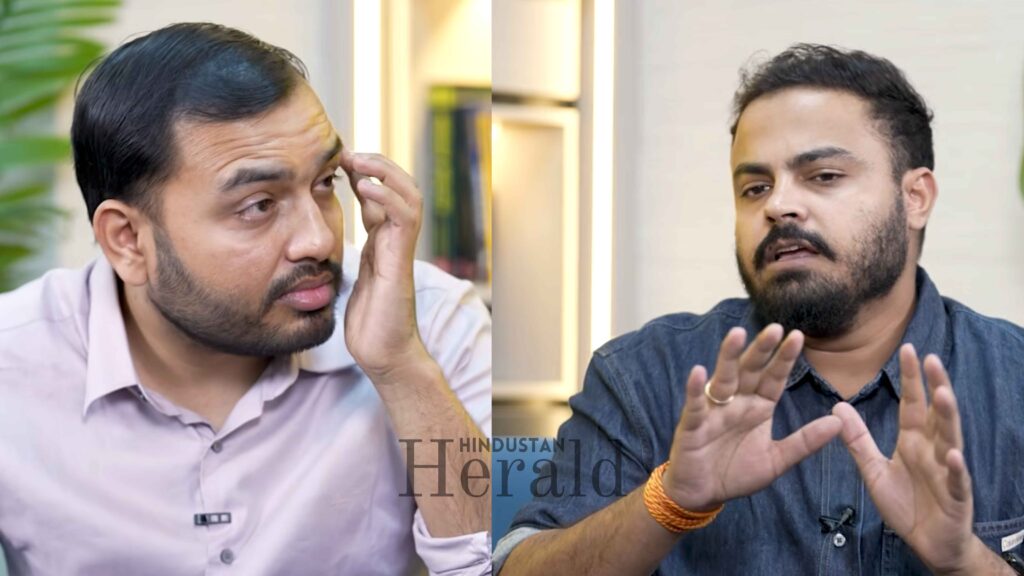
Pandey said that even schools manage exams better than NTA, adding that kids are depressed and their families were heavily invested in the exam for the last two years. He noted that some of these children even dropped out of their 11th, 12th, and preparation years specifically to give this exam.
The quote that cut deepest, and the one that spread most widely on social media, painted a picture that the policy language of exam cancellations never captures. As reported by Business Today, Pandey described what this exam means to ordinary families: “There are 1 crore people who are unhappy and sad today.
The children have not attended any party in 2-3 years, nor have they had any fun. It is possible that his mother sold jewellery to buy his books. It is possible that his father did not buy new clothes, and there was a whole family that was fighting to make this child a doctor, and all of a sudden, the child goes to give the paper, and he is happy and says, ‘I am getting 600 marks’
That description is not rhetorical flourish. It is the lived reality of medical aspirants across Uttar Pradesh, Bihar, Rajasthan, Madhya Pradesh, and dozens of other states where cracking NEET is considered the highest possible achievement for a middle-class or lower-middle-class family. The sacrifice is generational. And the betrayal, when a leak happens, lands on the entire household.
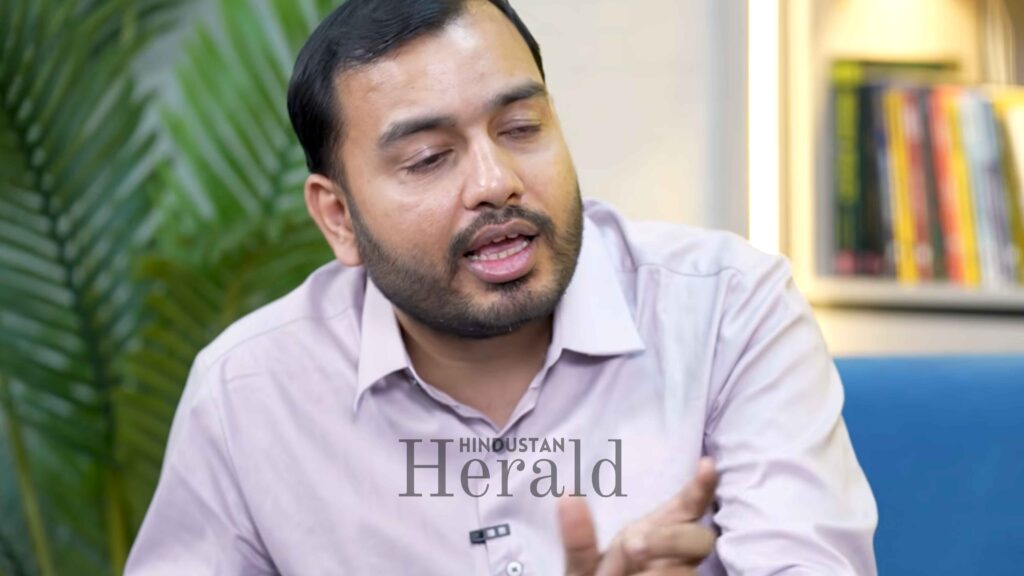
Pandey further claimed that the exam cancellation was aimed at concealing the source of the leak and demanded harsher punishment for both sellers and buyers of leaked papers. He stated that this was not the first time it had happened, but that this year it blew up like never before, and questioned why those responsible had not faced jail time despite repeated incidents.
His most striking demand: Pandey questioned why the perpetrators were not treated as terrorists, arguing that the ones buying leaked papers are even more guilty than the ones selling them.
Speaking to ANI, Pandey alleged that paper leaks are carried out by an organised nexus involving insiders and influential individuals seeking quick money, and questioned why strict action is rarely taken against those responsible.
“It You vs a System” – Why That Framing Matters
The phrase being used across social media to caption the viral clips is telling: “It’s you vs a System.” That framing is not accidental. It captures something real about the structural power imbalance that defines NEET and, more broadly, the relationship between ordinary aspirants and the bureaucratic machinery that controls their futures.
The NTA was established in 2017 with the explicit purpose of bringing professionalism, technology, and rigour to national-level entrance examinations. The argument at the time was that a dedicated agency would do better than the ad hoc arrangements that had existed before. As one advocate quoted in reports put it, ever since the NTA entered the picture in 2017, instances of fraud have only escalated further, prompting calls for the agency’s name to be changed to the “National Tampering Agency.”
That is a brutal assessment. But the track record makes it hard to argue with.
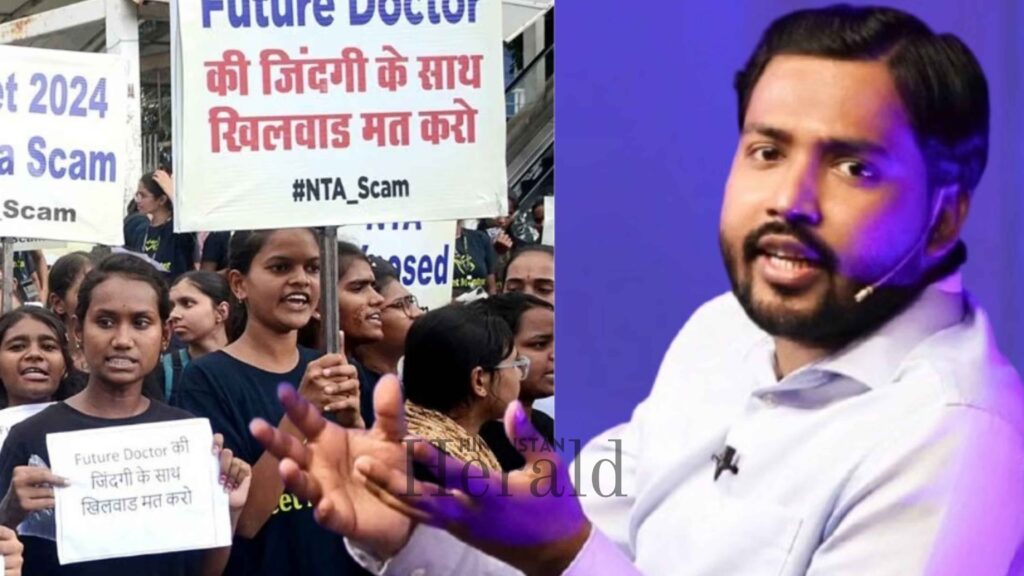
The controversy follows a history of friction between Pandey and the NTA. He previously filed a lawsuit against the agency in 2024 regarding the awarding of grace marks, which led to a Supreme Court intervention. The 2024 NEET controversy involved grace marks awarded to students in specific centres, mass cancellations, and CBI investigations that, as Khan Sir pointed out in a PTI report, yielded absolutely no results. He noted that no government agency detected or reported the 2024 paper leak either it was the students themselves who first alerted the government.
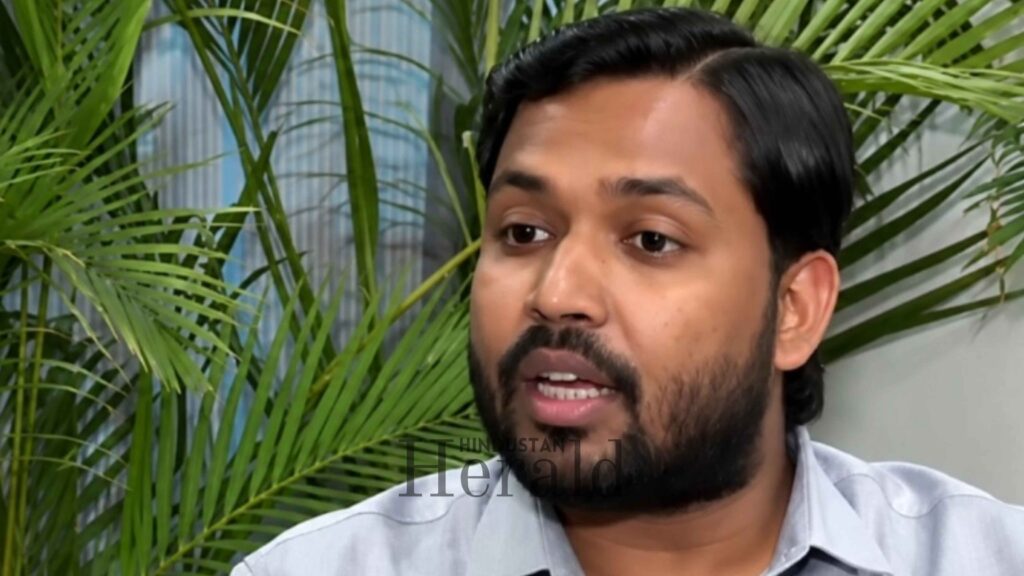
That pattern is the heart of the problem. The system consistently fails to detect its own compromises. Students and educators outside the system are the ones who blow the whistle. And the institutional response, every single time, is delay, cancellation, and the appointment of a probe that rarely produces accountability at the level where it needs to happen.
What the NTA Said In Its Own Defence
The NTA did not stay entirely silent. NTA Director General Abhishek Singh confirmed at a press conference in New Delhi that all examination fees paid by candidates would be refunded and that a fresh examination would be conducted without charging students any additional fee. He stated that the decision to cancel the exam was taken because even “the slightest doubt” over the fairness of the process could not be ignored.
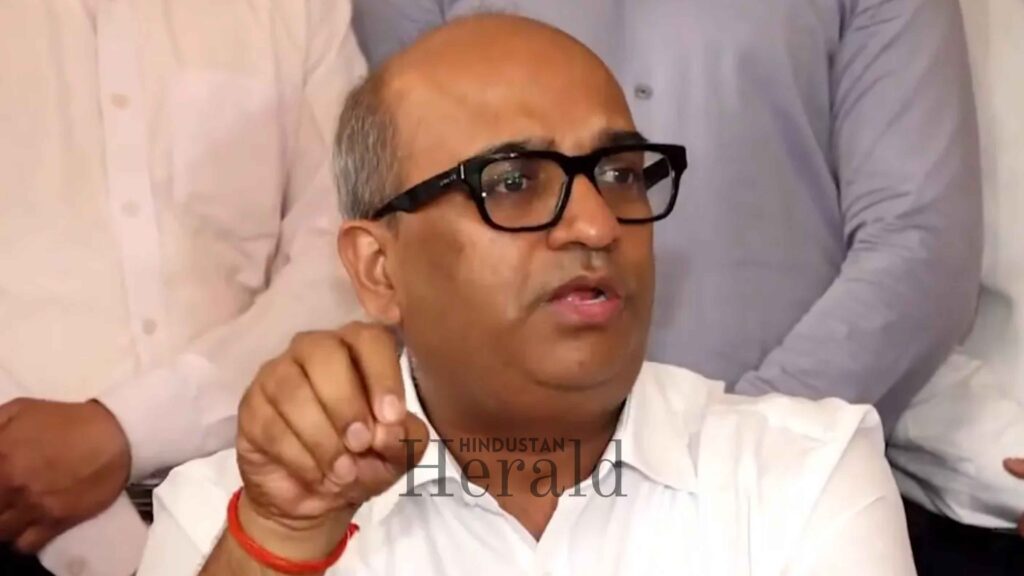
NTA stated that the decision was taken in the interest of students and in recognition of the trust on which the national examination system rests, acknowledging that the re-conduct will cause real and significant inconvenience to candidates and their families.
According to the NTA, all registration details, candidature data, and examination centre preferences submitted for the May 2026 cycle will be carried forward for the reconducted exam. No fresh registration or additional fees will be required.
That is the minimum the agency could have done. It is not a defence. It is a damage control statement, and the country’s 22 lakh medical aspirants know the difference.
What Pandey Is Proposing Instead
Beyond the anger, Pandey laid out a specific reform agenda, which is worth taking seriously because it comes from someone who has thought about examination systems for years.
He proposed that the NTA should move away from the current single-day, pen-and-paper format and adopt a digital, multi-shift model similar to the Joint Entrance Examination for engineering. According to Pandey, the offline model involves too many human touchpoints from printing presses to transportation drivers which increases the risk of information theft.
He also called for severe legal consequences for both the “solver gangs” organised groups that provide answers to leaked papers and the wealthy parents who purchase leaked exams. He argued that current penalties fail to create a sufficient deterrent and that these actions should be treated as national threats.
To support the affected student community, Pandey announced that his institution would provide free coaching for the re-examination, urging other coaching centres across India to waive fees for the 2026 cycle.
Still, what the situation requires is not just Pandey’s coaching centre stepping up. It requires structural overhaul of how paper logistics are handled, how printing contracts are awarded, who has access to question papers before exam day, and crucially, what happens to people who are caught.
The Political Reaction and the Larger Stakes
Leader of Opposition Rahul Gandhi posted on X calling the cancellation “not just a failure it is a crime against the future of the youth.”
Former Chief Minister Ashok Gehlot alleged that the BJP government in Rajasthan had concealed information about the leak for two weeks, tampered with the future of the youth, and had previously tried to suppress an OMR sheet scam in the Employee Selection Board.
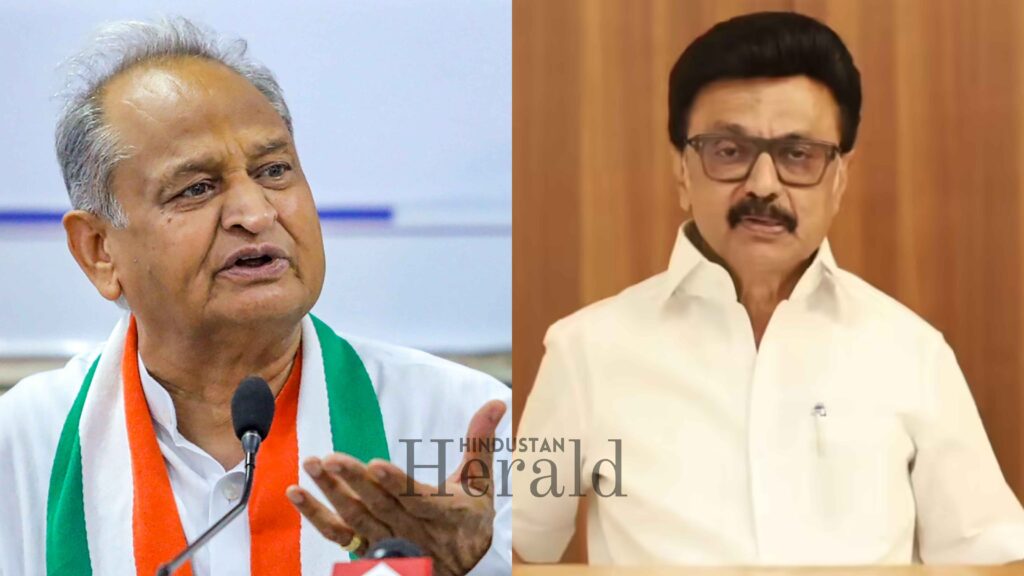
DMK president M K Stalin said the exam was playing with the lives of students and called NEET a qualifying exam that has become a scam, arguing it affects the future of medical infrastructure of the states.
The political temperature around NEET was already high before this year’s crisis. Several states, most notably Tamil Nadu, have long argued that NEET is structurally biased against state board students and have demanded the right to conduct their own medical entrance examinations. The 2026 leak will add considerable fuel to that argument.
For now, the CBI is investigating, the masterminds are in custody, and 22 lakh students are waiting to find out when they will get another chance at the exam they spent years preparing for.
As Pandey put it: “Nobody knows whether the next examination will be tough, easy, or whether another leak may happen. How can students trust the system again?”
That is the question that no press conference has answered. And until it is, the viral clips will keep circulating, the anger will keep building, and the gap between the system and the people it is supposed to serve will keep widening.
Stay ahead with Hindustan Herald — bringing you trusted news, sharp analysis, and stories that matter across Politics, Business, Technology, Sports, Entertainment, Lifestyle, and more.
Connect with us on Facebook, Instagram, X (Twitter), LinkedIn, YouTube, and join our Telegram community @hindustanherald for real-time updates.

Covers Indian politics, governance, and policy developments with over a decade of experience in political reporting.
- Ananya Sharma

- Ananya Sharma
- Ananya Sharma
- Ananya Sharma



 Sandeep Verma