
 By Ananya Sharma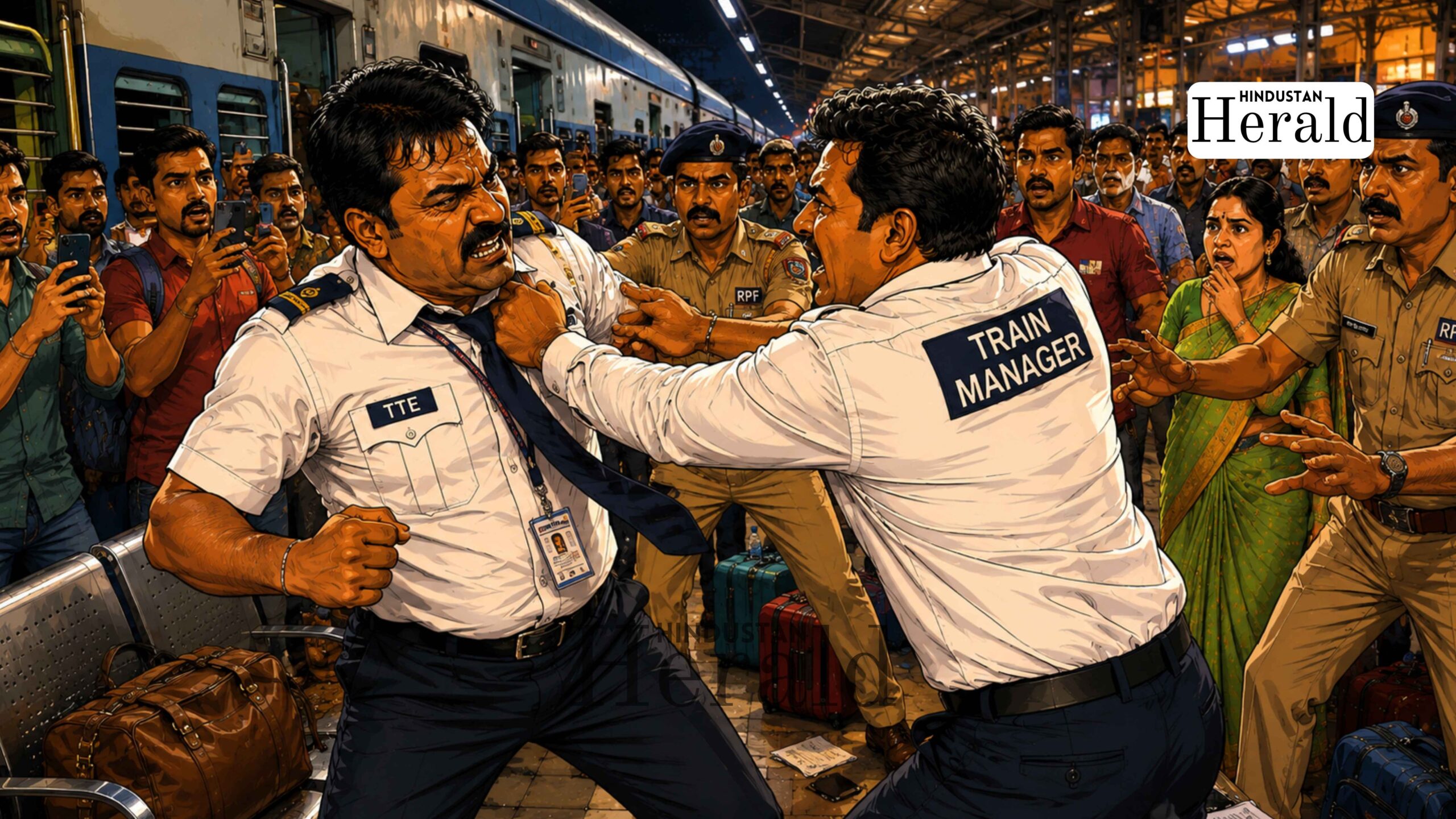
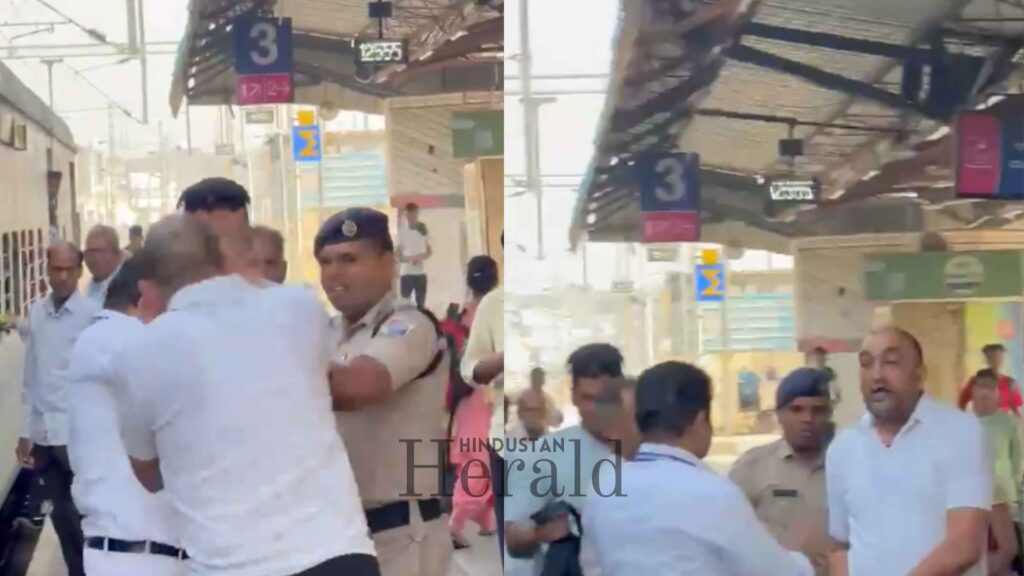
Bhiwani, May 12: Two men in uniform came to blows on a railway platform in Haryana on Sunday. One was a Travelling Ticket Examiner. The other was a Train Manager. Both are employees of Indian Railways. And both, apparently, had run out of words.
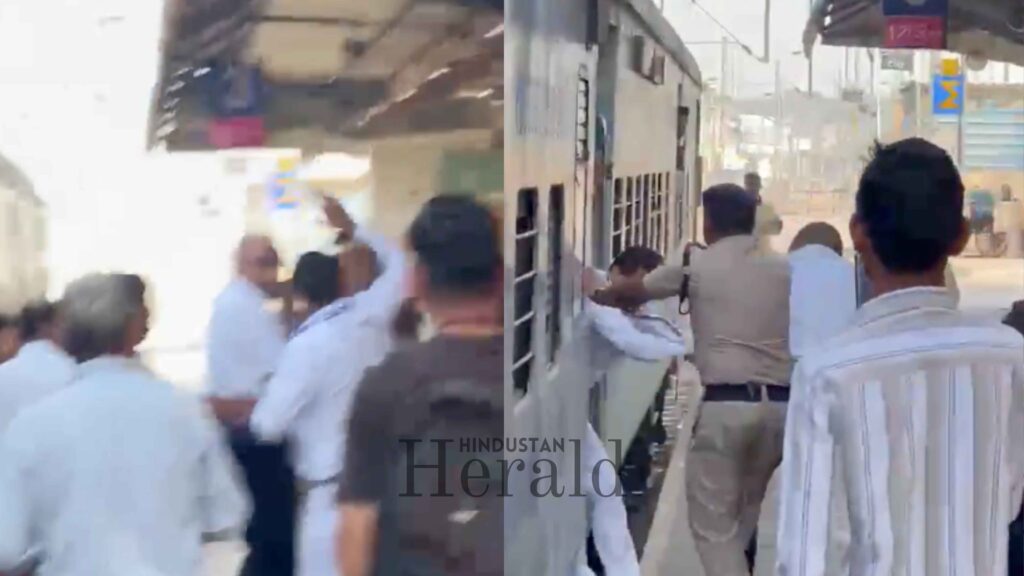
The video surfaced on social media without much warning. Within hours it had been shared widely enough to draw genuine public outrage, not the performative kind that lasts a day and disappears, but the kind where people watch the clip twice and feel genuinely unsettled. Because what the footage shows is not just a fight. It is two uniformed officials of a national institution trading kicks and punches on a public platform, in front of passengers, while life goes on around them.
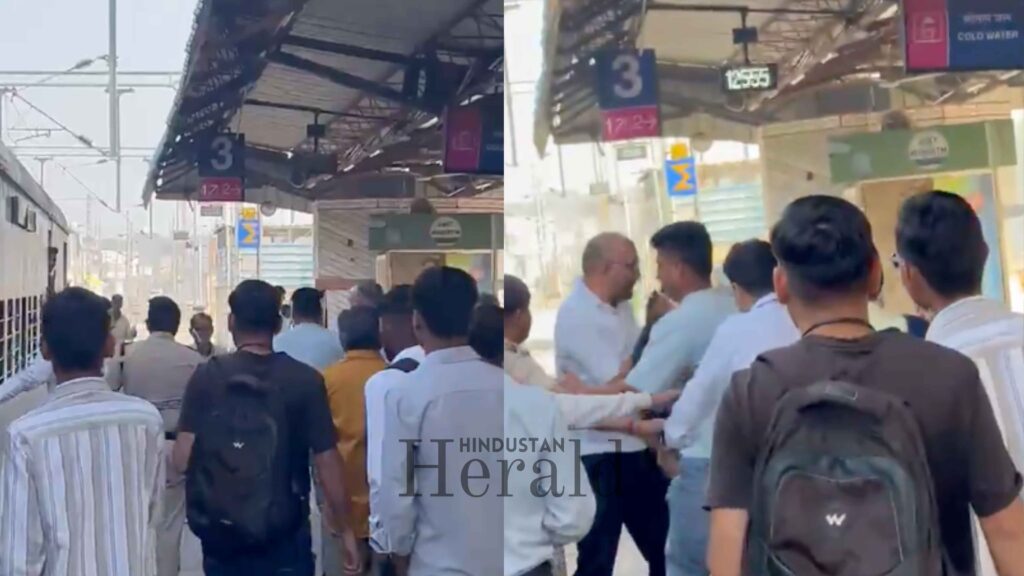
The incident reportedly took place at Bhiwani Junction, a railway station in the Bikaner Division of North Western Railway in Haryana. According to reports carried by Rail Hunt, which first published the video, the Guard struck the TTE first, going at him with punches and kicks. The TTE hit back. The whole thing played out even as RPF personnel were present on the platform. Railway staff nearby tried to get between them. It did not work, at least not quickly. What started the dispute is not known. Rail Hunt noted it could not independently verify the footage.
As for the passengers, they watched. Some filmed it. Nobody seemed sure what to do.
The Setting Matters as Much as the Fight Itself
Railway platforms occupy a strange place in Indian life. They are simultaneously public and intimate, chaotic and oddly familiar. People sleep on them, eat on them, cry on them, wait for hours on them. They are where families say goodbye and where workers arrive in new cities for the first time. There is a kind of unspoken expectation that, whatever else might go wrong with the railways, at least the people in uniform will hold things together.
That expectation got shredded at Bhiwani on Sunday.
A brawl between two random strangers on a platform would have been bad enough. This is something different. The TTE and the Train Manager are not peripheral figures. They are among the most visible frontline officials that passengers interact with, or at least see, on every single journey. The TTE checks your ticket, deals with seat disputes, reallocates vacant berths. The Train Manager controls the departure, operates the guard van brake, carries the train papers. He is expected to remain vigilant, maintain order, and assist the most vulnerable passengers on board. These are not decorative roles. These are people with real operational authority and real public responsibility.
Watching two such officials go at each other while passengers scrambled out of the way, with RPF constables present and apparently unable to stop it immediately, it is hard to know whether to feel angry or just tired.
Two Departments, One Long-Running Tension
Here is something that does not usually make it into coverage of incidents like this. The TTE belongs to the Commercial Department of Indian Railways. The Train Manager belongs to the Operating Department. These are two separate chains of command. They work on the same train, toward the same basic goal, but they report to different superiors, operate under different pressures, and have historically had friction between them.
That friction is not news inside the railways. It is well known to anyone who has spent time talking to frontline staff. What is generally not known is how often that friction quietly simmers without anyone on the outside noticing. Because usually it stays below the surface. Usually.
What happened at Bhiwani is what happens when it does not.
It would be unfair, and also frankly dishonest, to look at this only as a story about two badly behaved individuals. The working conditions that frontline railway staff deal with are genuinely brutal. Train Managers run duties that stretch twelve to sixteen hours. TTEs handle passenger confrontations, fare disputes, and unauthorized occupants across long journeys, often with no meaningful backup. Rest facilities at crew lobbies across the country are, by most accounts, inadequate. The pressure is constant and the appreciation is minimal.
None of that is an excuse. But context matters when you’re trying to understand why something happened, not just express disgust that it did.
What the Silence from the Administration Tells You
As of now, no official statement has come from the North Western Railway or the Bikaner Division administration. No inquiry announced. No action confirmed. No transfer. No suspension. Nothing.
That silence is its own kind of communication.
Indian Railways has a conduct and discipline framework that is clear enough on paper. Physical misconduct by employees in public spaces is a serious matter. It can attract departmental proceedings, pay penalties, suspension, even dismissal. Whether the Railway Vigilance mechanism gets activated here, or whether this ends with a quiet internal note that nobody ever follows up on, will tell you something about how the institution actually treats accountability when the cameras are pointing at it.
The presence of RPF personnel in the video also raises a question that nobody has answered yet. What were they doing while this was happening? Why did it take as long as it did to bring the situation under control? That is not a hostile question. It is a fair one.
This Is Not the First Time, and Everyone Knows It
The Bhiwani incident is not an isolated embarrassment. Indian Railways employees have appeared in viral videos before, caught being rude to passengers, demanding money, sleeping on duty, using their positions in ways that no passenger who paid for a ticket should ever have to deal with. Each time, there is a cycle. Outrage online. A statement from the zone or division. An assurance that the matter is being looked into. And then, nothing. The news moves on. The institutional memory resets.
What is different about a brawl like this is that it is hard to explain away. Rudeness can be framed as a misunderstanding. A request for informal payment can be denied and muddied. But two men in uniform hitting each other on a platform, caught clearly on camera, with passengers standing around watching? There is no version of that which looks good in any light.
Still, the risk is that this too becomes a moment that passes. That the two officials involved are transferred somewhere, quietly, and the whole thing is absorbed into the system. That has happened before. It will happen again unless something structural changes.
What the Railways Owes Its Passengers
Indian Railways carries roughly 2.3 crore passengers every single day. That is not a statistic to be proud of in the abstract. It is a responsibility. Every one of those passengers is trusting the institution, trusting the system, trusting the people in uniform, to hold things together for the duration of their journey.
What happened at Bhiwani is a breach of that trust. Not a procedural one. Not a technical failure. A very human, very visible, very avoidable breach.
The Railway Board and the Ministry of Railways have an obligation here. Not just to investigate, which is the minimum expected, but to do so transparently, and to make the outcome known. An internal memo that results in a quiet transfer to another division is not accountability. It is the appearance of accountability, which is different, and which passengers increasingly see through.
For now, the video is still circulating. The outrage is still fresh. The two officials at the center of it have not been publicly identified or heard from. And the institution they both represent has said nothing.
That silence, given what the whole country just watched, is hard to justify.
Stay ahead with Hindustan Herald — bringing you trusted news, sharp analysis, and stories that matter across Politics, Business, Technology, Sports, Entertainment, Lifestyle, and more.
Connect with us on Facebook, Instagram, X (Twitter), LinkedIn, YouTube, and join our Telegram community @hindustanherald for real-time updates.

Covers Indian politics, governance, and policy developments with over a decade of experience in political reporting.
- Ananya Sharma

- Ananya Sharma
- Ananya Sharma
- Ananya Sharma


 Sandeep Verma