
 By Ananya Sharma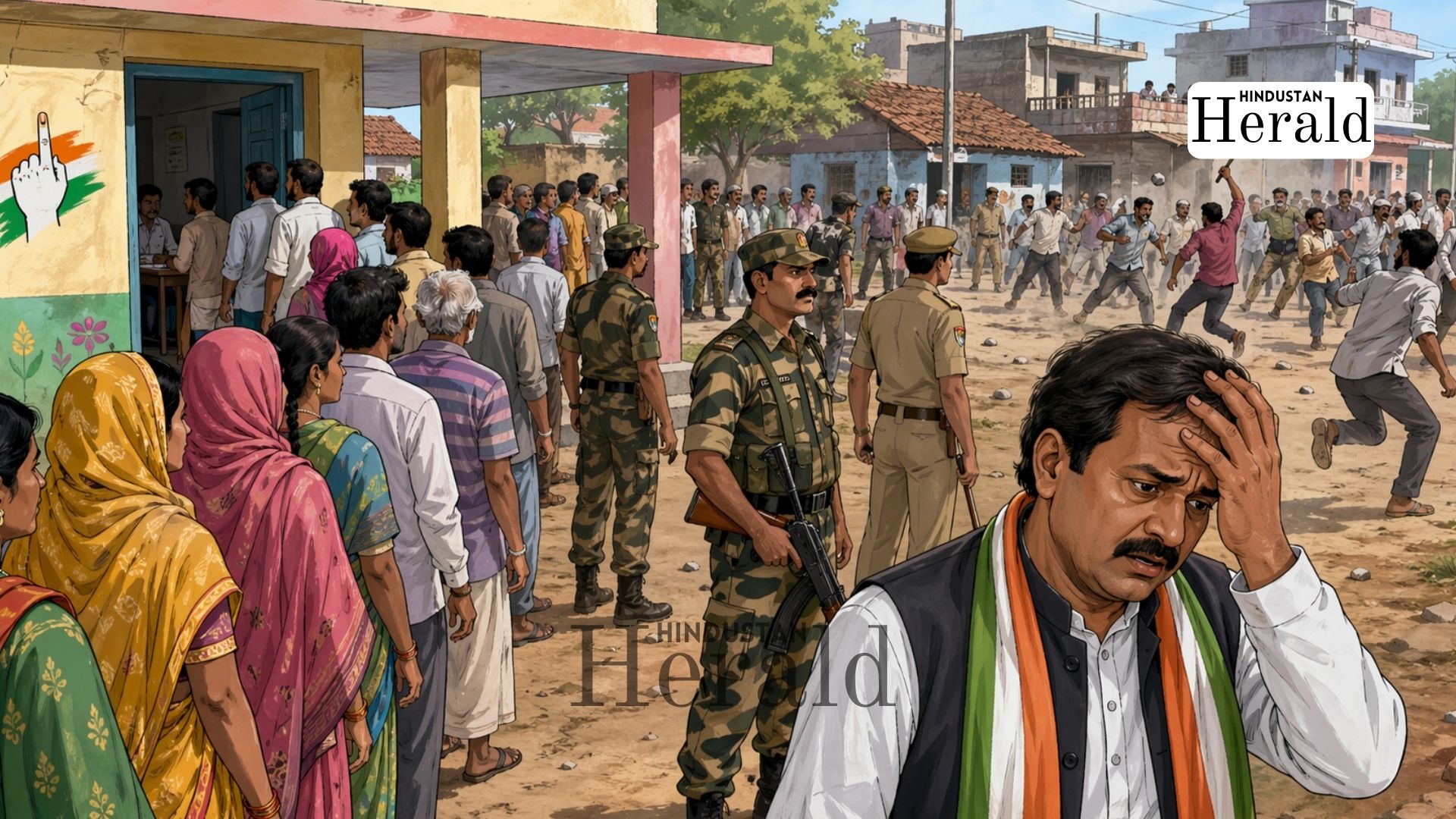
New Delhi, April 23: West Bengal voted today. And for the most part, it voted hard. Queues formed before sunrise in dozens of districts. Old men arrived with their voter slips folded carefully into shirt pockets. Women in groups walked to booths in the early morning before the heat set in. By five in the evening, the Election Commission was reporting a turnout of close to 90 percent across the 152 constituencies going to polls in Phase 1. That is a remarkable number by any standard.
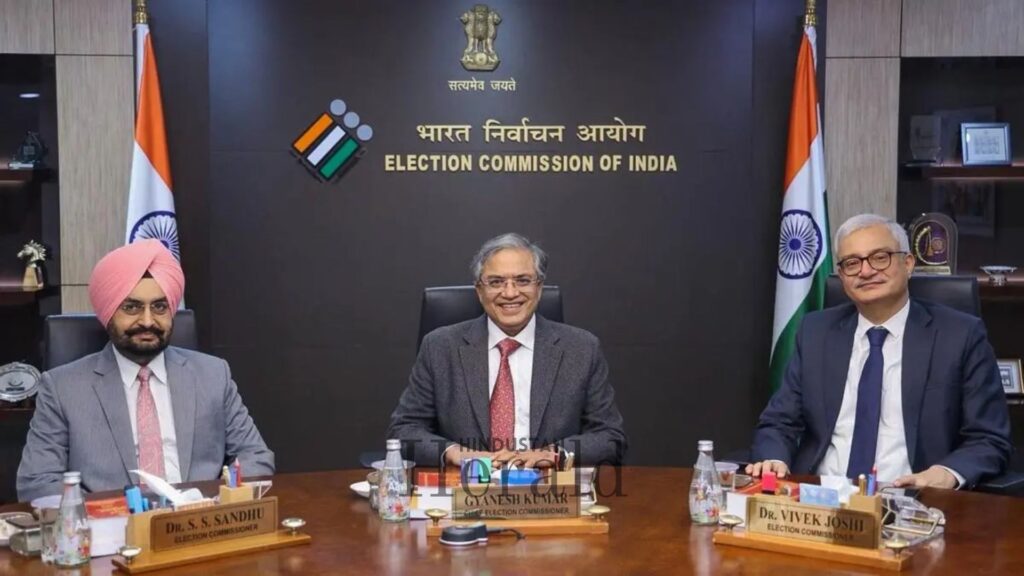
But numbers do not tell you about Kumarganj. They do not tell you about the crude bomb in Nowda, or the stones that landed on Agnimitra Paul’s car in Asansol, or the women at a booth in Uttar Dinajpur who, according to the Trinamool Congress, were allegedly roughed up by CRPF personnel. Numbers do not capture what it actually felt like to be a voter, a candidate, or a polling agent in parts of West Bengal today. For that, you had to be there.
This is Bengal’s election story in 2026. High participation and real fear, sometimes in the same neighbourhood, sometimes at the same hour.
A Candidate Running Across Fields
Let us start with Kumarganj, because that is the image most people outside Bengal will carry from today.
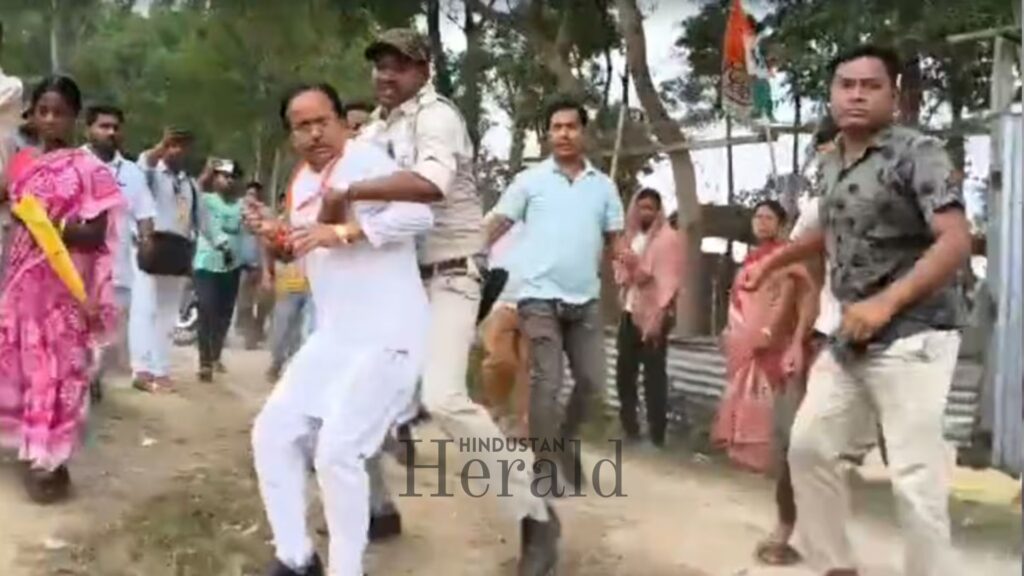
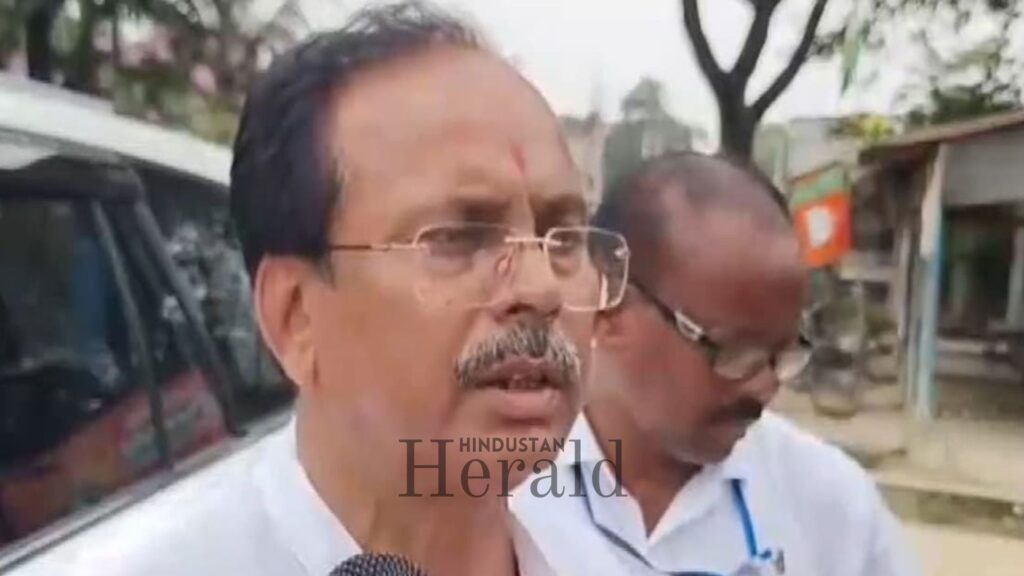
A video circulated widely on social media showing BJP candidate Suvendu Sarkar being chased across open agricultural land by a group of men. Not jostled. Not blocked at a gate. Chased across fields, on foot, in broad daylight, while polling was underway in his own constituency. Sarkar later said he was injured in the assault and that his vehicle was vandalised. He also claimed that his party’s polling agents had been forcibly removed from booths in the area, which would have left those booths effectively unmonitored.
The Trinamool Congress denied the allegations. They accused the BJP of manufacturing drama. That denial is now a reflex. It arrives before the dust settles. And while the BJP has certainly learnt the value of political theatre over the years, the footage from Kumarganj is not easily dismissed with a press statement.
Murshidabad: The District That Never Seems to Cool Down
Murshidabad has a way of concentrating whatever is most tense about Bengal politics in a small geography. Today was no different.
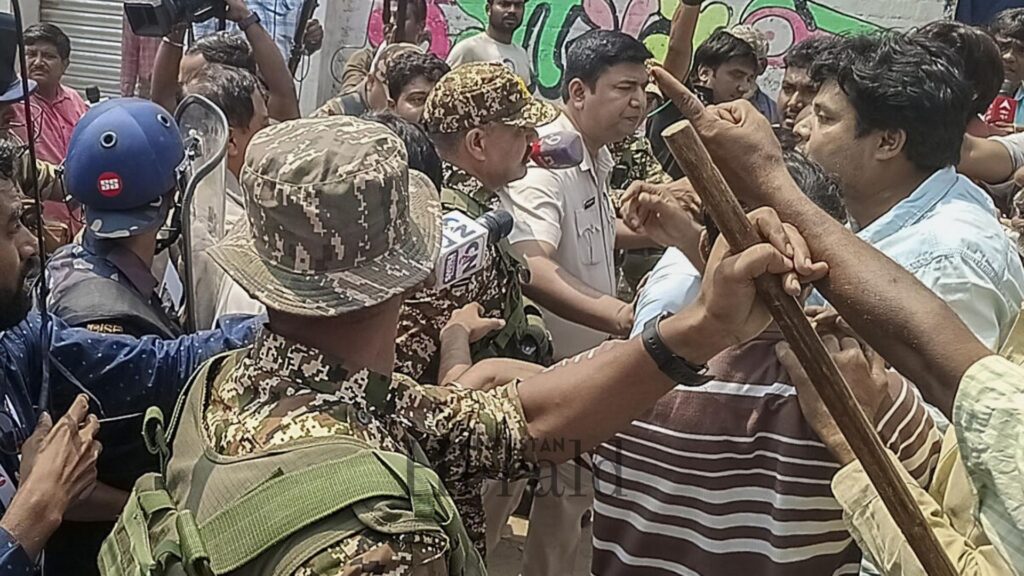
A crude bomb went off in the Nowda area during polling hours. Clashes followed between TMC supporters and those of the Aam Janata Unnayan Party. Vehicles were damaged. Stones were thrown. AJUP chief Humayun Kabir, who visited the site to see things for himself, had his convoy pelted. In Raninnagar, reports emerged that voters were being stopped at the gate of Booth No. 54 and prevented from entering. The Election Commission took note, called the Chief Electoral Officer, and the CRPF Inspector General got on the phone with the district’s Superintendent of Police and Collector.
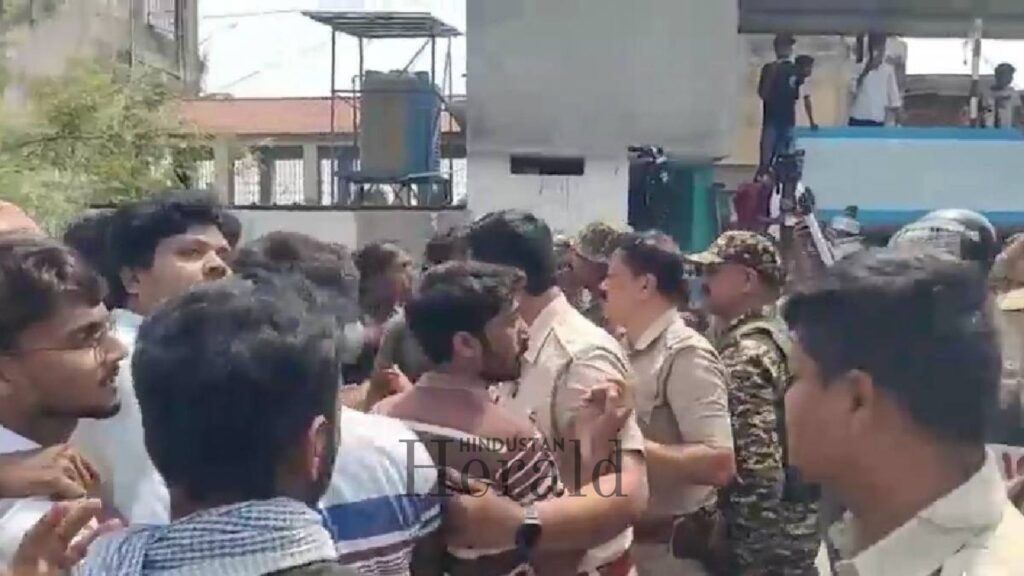
Whether any of that translated into actual change on the ground by afternoon is, frankly, unclear.
In the Dangipara area of Siliguri, CRPF personnel had to disperse a crowd near a polling station. Mild force was used, officials said. In Murshidabad district itself, the turnout crossed 62 percent before afternoon, which suggests voters were still getting through somehow, somewhere. But the number sits alongside the allegations in a way that is genuinely hard to reconcile.
Asansol, Birbhum, and the Spread of It All
The violence was not contained. That is the honest description. It spread across the phase in a way that veteran observers of Bengal elections have come to recognise as structural rather than situational.
Agnimitra Paul, the sitting BJP MLA contesting from Asansol Dakshin, had her car attacked. The rear windowpanes were shattered by stones near Rahmat Nagar. In Birbhum’s Labhpur and in Malda’s Chanchal, BJP polling agents were allegedly beaten up by TMC supporters. These are not the same story. They are different incidents, different districts, different dynamics. But they cluster in a way that is difficult to explain as a coincidence.
Then came the Dubrajpur incident in Birbhum’s Kharisaol area, and this one was different in character. Locals alleged that the EVM at a polling booth was malfunctioning, specifically that votes intended for the TMC were being registered for the BJP. Polling was suspended for close to thirty minutes. Arguments broke out between voters and polling staff. A crowd gathered. When security personnel moved to disperse them, stones were thrown at the CRPF and police. Mild force was used in response.
The EVM allegation is one that the Election Commission has heard before and consistently pushed back on. But at a booth where voters believe their votes are going somewhere they did not intend, what follows is predictable. And it did.
On the other side of the ledger, the Trinamool Congress filed its own complaint. The party alleged that three women at Lakhipur ward in Uttar Dinajpur’s Booth No. 163 were assaulted by CRPF personnel, with one sustaining a head injury. The central forces had not responded to that allegation formally by the time of writing. That matters too, because central forces are not above reproach and the allegation deserves follow-up, not dismissal.
The Election Commission Tried. It Was Not Enough.
To be fair to the Election Commission, they did not come to this polling day unprepared. They began deploying central forces in sensitive areas from March 1 onwards, weeks before the election schedule was even formally announced. The moment the schedule dropped on March 15, senior state officials were removed. More than 400 observers were posted across the state. Observers were specifically instructed to visit every police station in their jurisdictions, file detailed reports, and flag trouble spots in advance.
That is a serious pre-emptive framework. And it still was not enough to prevent what happened today in Kumarganj, Nowda, Asansol, and Birbhum.
The commission’s structural problem in Bengal runs deeper than deployment numbers. State police, whose cooperation the EC depends on at the granular level of individual booths and village lanes, answer in practice to the state government. Central forces can hold a perimeter, but they cannot be present at every flash point simultaneously. They cannot stop a crowd forming a hundred metres from a booth. They cannot always tell, in real time, whether an agent is being removed because he is misbehaving or because someone wants him gone.
What the Commission can do is pursue accountability after the fact. FIRs, show-cause notices to errant officials, and recommendations for repoll in compromised booths. Whether that machinery moves with any conviction after the counting day on May 4 is the question nobody wants to answer in advance.
The Question Nobody Is Asking the Central Government Loudly Enough
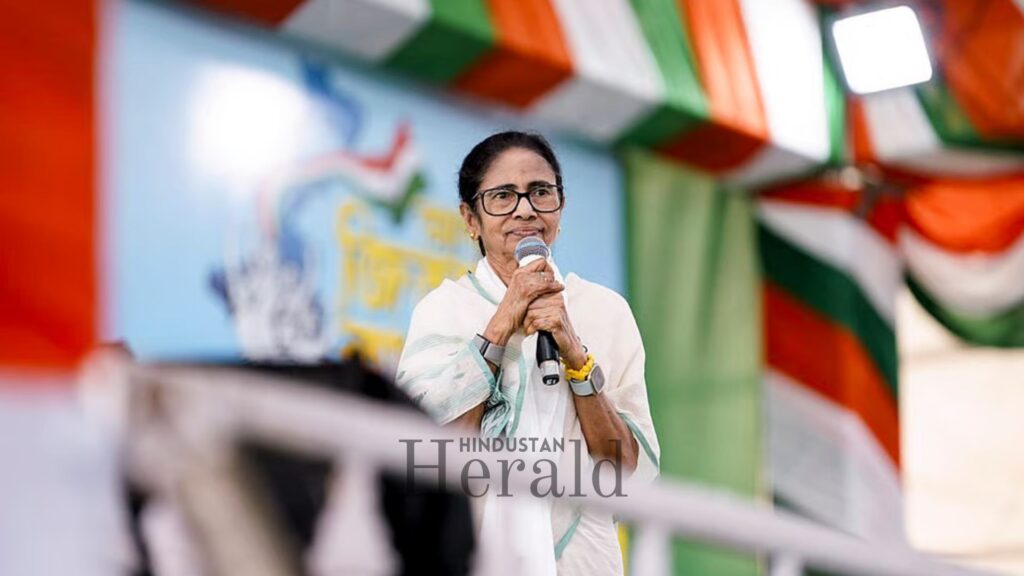
There is a conversation happening loudly around Bengal’s election violence, and almost all of it is directed at one address: the state government and Mamata Banerjee’s administration. That scrutiny is legitimate. The Trinamool Congress has governed this state since 2011, and the pattern of violence has not diminished under its tenure. TMC workers and local strongmen have been credibly implicated in incidents across multiple election cycles. That record exists, and it should be interrogated.
But here is the question that deserves to be asked with equal directness, to the Central Government: what exactly are you doing about this, and why has it still not worked?
The CRPF, the BSF, and the CISF answer to the Union Home Ministry in New Delhi. The Election Commission, while constitutionally independent, depends on the Centre’s administrative machinery for enforcement. The Centre has the authority to press for mandatory compliance from state police during elections, to recommend suspension of non-cooperative officials, and to insist the commission’s orders carry real consequences. It has the bully pulpit, the political motivation, and, in this case, the resources deployed on the ground.
And yet, the same footage surfaces every election. The same districts. Sometimes, the same booths. Kumarganj is not a new name in Bengal’s violence map. Murshidabad is not a new name. Birbhum is not a new name. If the violence keeps returning to the same coordinates, it means something structural is failing, and the failure is not only Mamata Banerjee’s to own.
Union Home Minister Amit Shah addressed a public rally in Hooghly today itself, hours after polling began, referencing TMC intimidation. That is a legitimate political statement to make. But what comes after the rally? What institutional change follows the rhetoric? What accountability mechanism has the Centre pushed for that would make the next phase and the next election any different from this one? Those questions deserve straight answers, and they are not getting them.
The BJP has spent over a decade building a political identity in Bengal around the issue of TMC violence. It is now arguably the ruling narrative of their Bengal campaign. At some point, a party that has been in power at the Centre for over a decade and controls the country’s paramilitary forces cannot simply continue to be the opposition in spirit while holding the levers of central authority in practice.
What the Turnout Actually Says
Here is the thing about 89 to 90 percent voter turnout in a state where polling day looks like this: it is not a sign of normalcy. It is a sign of determination.
Jhargram crossed 90 percent. Malda touched nearly 90. Even in Murshidabad, where crude bombs and blocked booths were reported, voters turned out in numbers. These are people who woke up, assessed the situation, accepted whatever risk existed, and went anyway. That is not something a turnout figure captures on its own.
Bengal’s voters have historically done this. They show up under conditions that would suppress participation elsewhere in the country. And that stubbornness is worth acknowledging, separately from the political battle being fought over their heads, because it belongs to them and not to any party.
Still, they deserve better than this. They deserve a polling day where the main story is the vote itself and not the violence surrounding it. They deserve a system, central and state, that has moved past the point of explaining why it could not stop what everyone knew was coming.
Phase 2 is on April 29. Another 142 seats. In and around Kolkata. Counting happens on May 4.
For now, West Bengal has voted. And as always, it has done so despite itself.
Stay ahead with Hindustan Herald — bringing you trusted news, sharp analysis, and stories that matter across Politics, Business, Technology, Sports, Entertainment, Lifestyle, and more.
Connect with us on Facebook, Instagram, X (Twitter), LinkedIn, YouTube, and join our Telegram community @hindustanherald for real-time updates.

Covers Indian politics, governance, and policy developments with over a decade of experience in political reporting.
- Ananya Sharma

- Ananya Sharma
- Ananya Sharma
- Ananya Sharma