 By Ananya Sharma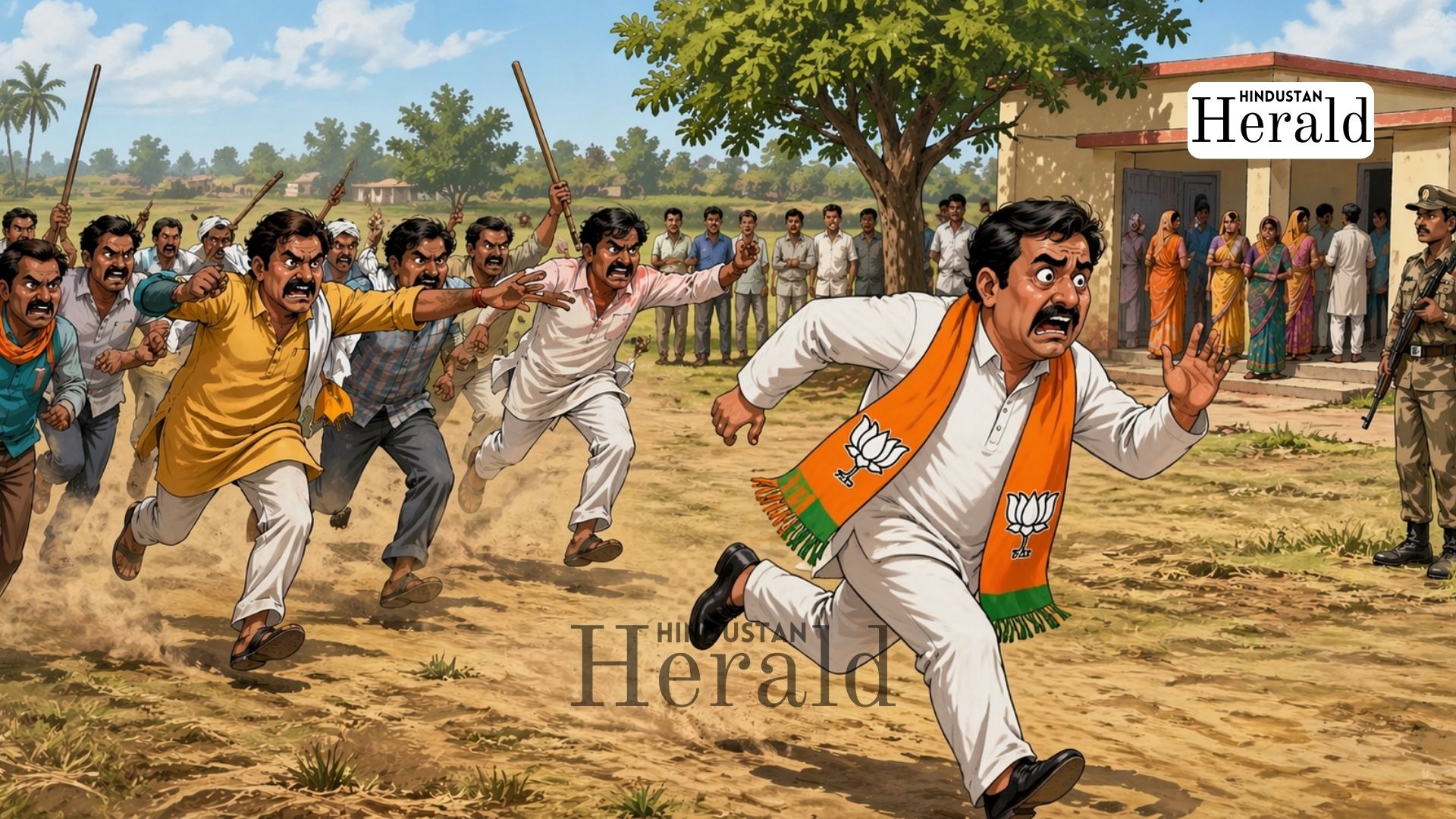
Kolkata, April 23: There is a video going around today. And once you watch it, it is hard to forget.
A man is running. Not walking fast. Not jogging. Full sprint, across an open field, looking over his shoulder, absolutely terrified. A group of men are chasing him. They catch up. They hit him. And right there in the frame, close enough to do something, stands a security personnel. Watching.
The man being chased is Suvendu Sarkar. He is the BJP candidate contesting from Kumarganj, a constituency in South Dinajpur district of West Bengal. And what happened to him on Wednesday morning was not a minor incident. It was not a push or a shove that got blown out of proportion. It was a mob attack. In daylight. At a polling booth. On election day.
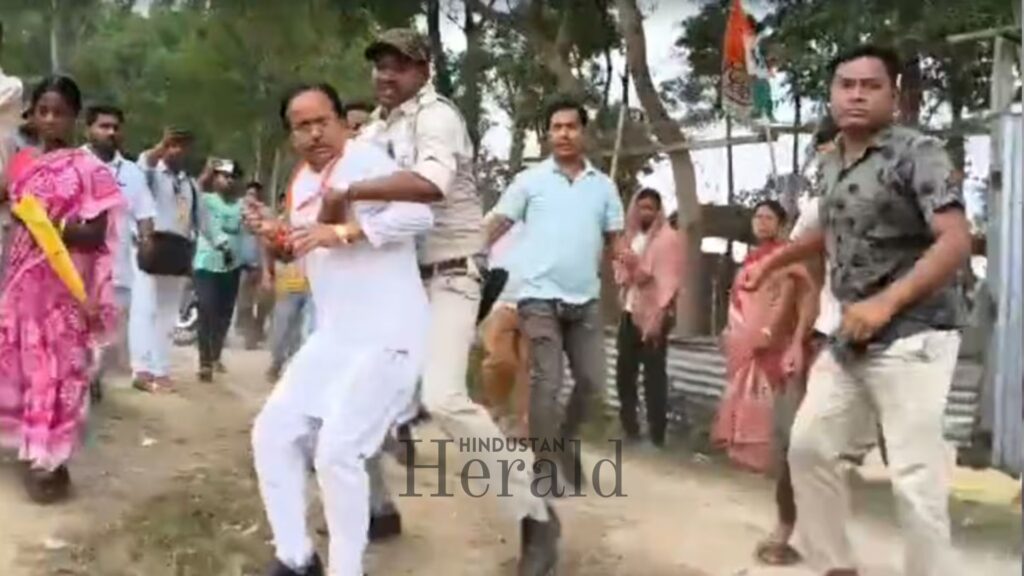
By the time most people in the state had finished their morning chai, the video was already everywhere.
He Went to Check on His Booth. He Came Back Injured.
This is what Suvendu Sarkar says happened. He went to the polling booth the way any candidate does on election day. You go to your booth area, make sure your polling agents are in place, make sure the process is running properly, and make sure your voters are not being harassed. Standard stuff. Except when he got there, things were already wrong.
His polling agents, he says, had already been thrown out of the booth before the attack even started. Stop here for a second, because this part matters a lot.
When a candidate’s polling agents are removed from a booth, it means the voting happening inside that booth has no opposition witness. Nobody to object. Nobody to flag irregularities. Nobody keeping a check. That is not just a problem for the BJP. That is a problem for democracy itself. Because a booth without independent observers is a booth where anything can happen and nobody can prove it later.
After the agents were removed, Sarkar says he was attacked by the mob. His vehicle was damaged. He was injured. And the whole thing was caught on camera.
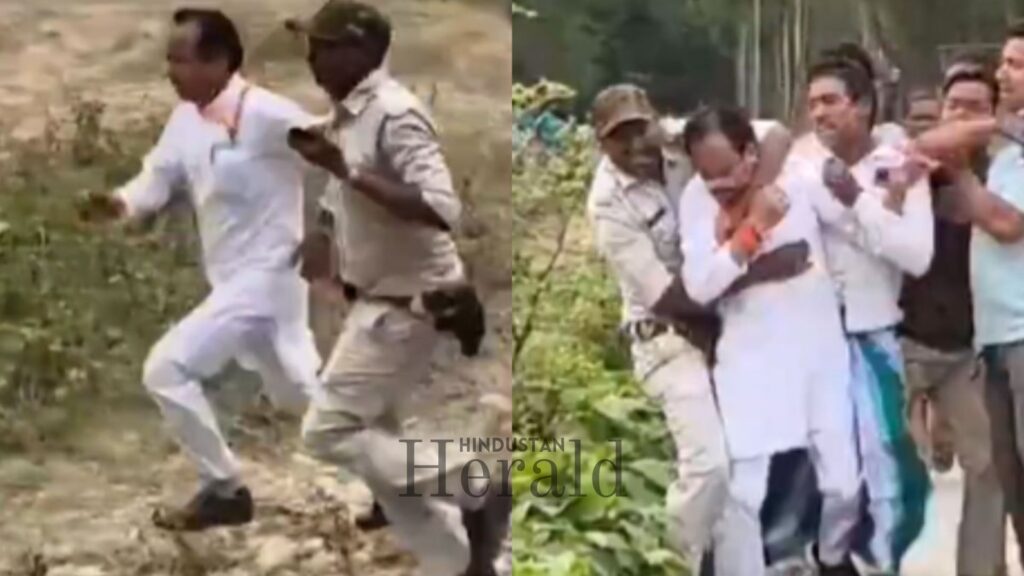
The Election Commission was informed and reportedly ordered that the attackers be identified and arrested. Whether those orders actually result in arrests, whether anyone actually faces consequences, that is the part Bengal has seen fail too many times to feel confident about.
Kumarganj Was Not the Only Place
If you were tracking the news throughout the day, Kumarganj was the loudest story. But it was far from the only one.
In Murshidabad, a local party chief named Humayun Kabir had his vehicle pelted with bricks and sticks. In Asansol, the sitting MLA and BJP candidate Agnimitra Paul had her car attacked too. In Siuri, a BJP candidate got into a fierce argument near a polling booth, accusing a TMC representative of threatening voters and demanding she be kept at least a hundred metres away from the booth. At a school booth in Gorabazaar, voters found the voting machine was not working, which meant they had to wait in the heat with no certainty about when things would resume.
Reports of booth capturing and intimidation kept coming in from multiple districts, most of the morning and well into the afternoon.
It was, by any honest reading, a rough day.
Both Sides Are Pointing Fingers. Obviously.
Leader of the Opposition Suvendu Adhikari went around affected areas throughout the day. He told reporters that TMC-backed groups had been trying to intimidate voters, though he also said the ruling party had largely failed to cause major disruption beyond a few areas. Whether that is a genuine assessment or political spin is hard to say from the outside.
The Trinamool Congress came back with its own complaints. A party team went to the Chief Electoral Officer and formally alleged that the police in Purba Medinipur were not acting neutrally and were effectively helping the BJP. TMC candidate Sabina Yasmin from Sujapur went further and accused the Central Forces of disrupting polling in her area.
Both sides blaming each other. Both sides claiming to be the victim. Both sides filing complaints. This is West Bengal on election day. It has been this way for a long time.
What you cannot argue with, though, is the video. A candidate running for his life across a field while men chase and hit him is not a political allegation. It is footage. It happened.
And Yet, People Voted
Here is the part that is easy to miss when you are focused on the violence.
Despite everything that happened through the day, West Bengal’s voters showed up. By one in the afternoon, turnout had already crossed 62%, which was actually higher than Tamil Nadu’s turnout in the same window. By five in the evening, Phase 1 was pushing toward 90% turnout across the state.
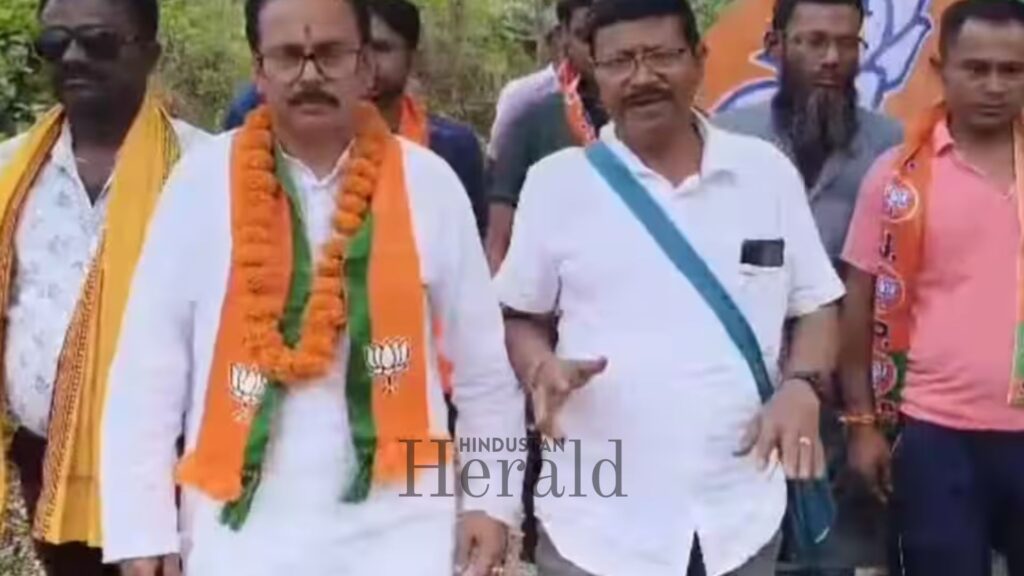
Think about that. Booth violence, agent removal, vehicle attacks, intimidation reports coming in from multiple districts, and still, people stood in lines and voted. That tells you something about how seriously Bengal’s voters take this election. They are not easily scared away. Whatever is happening outside the booth, many of them decided they were going in anyway.
Phase 1 today covered 152 constituencies across 16 districts, with about 3.60 crore voters choosing between 1,452 candidates. Some of the seats being contested today carry enormous political weight. In Nandigram, opposition leader Suvendu Adhikari is fighting against his own former colleague who recently switched to the TMC. In Kharagpur Sadar, former BJP state president Dilip Ghosh is in a straight contest against a TMC candidate. These are not small, forgettable fights. There are years of history and personal rivalry packed into these booths.
What Comes Next
Phase 2 is on April 29, covering another 142 constituencies. Votes get counted on May 4.
Home Minister Amit Shah had already made his intentions clear at a public rally, warning what he called trouble-makers not to step outside on the 29th. The national BJP leadership is clearly treating Bengal 2026 as a battle they intend to win hard. The TMC, sitting in power and trying to hold it, is not going to back down either.
BJP candidate Dibyendu Adhikari said something on polling day that was blunt and worth sitting with. He said that among all the states that voted this season, West Bengal is the only one where violence happens before polling, during polling, and after polling. He said there was not a single complaint from any of the other states voting the same day.
That is a pointed observation. It may not be entirely complete. But it is not unfair either.
West Bengal has been going through this for decades. Every election cycle, the same cycle plays out. Violence breaks out, complaints are filed, the Commission promises action, some FIRs are registered, and by the time the next election comes around, not much has fundamentally changed on the ground. The problem keeps repeating because accountability rarely comes.
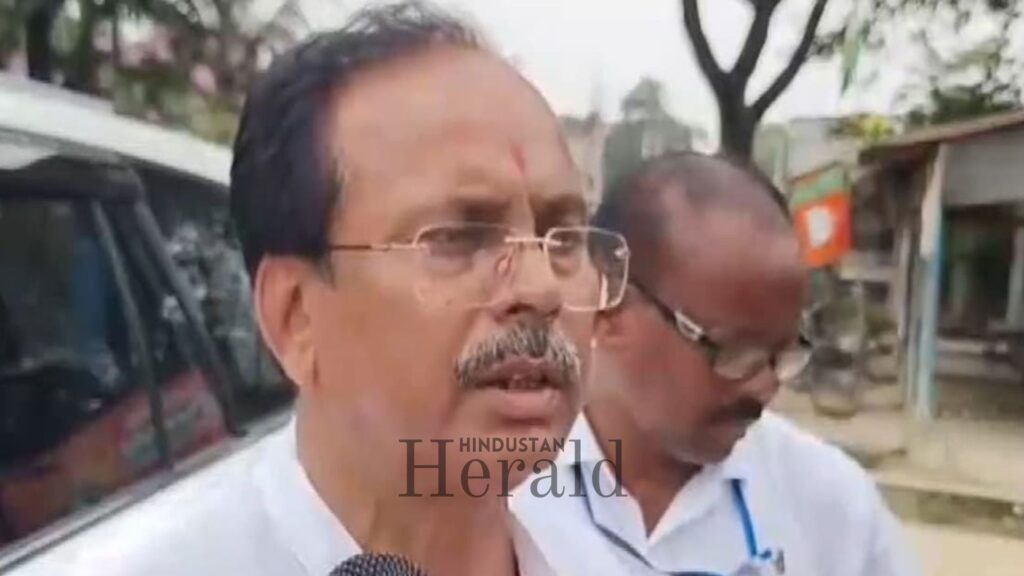
Suvendu Sarkar went to a polling booth this morning to do what candidates are supposed to do. He ended up running across a field to escape a mob. His agents were thrown out. His vehicle was smashed. He was hit.
On May 4, when the votes are counted and the results come in, that video will still exist. The people who attacked him will still exist. And if no one is actually punished for what happened today, the people planning to do the same thing in Phase 2 will know exactly what they can get away with.
That is the part worth paying attention to. Not just the video. But what happens, or does not happen, because of it.
Stay ahead with Hindustan Herald — bringing you trusted news, sharp analysis, and stories that matter across Politics, Business, Technology, Sports, Entertainment, Lifestyle, and more.
Connect with us on Facebook, Instagram, X (Twitter), LinkedIn, YouTube, and join our Telegram community @hindustanherald for real-time updates.

Covers Indian politics, governance, and policy developments with over a decade of experience in political reporting.
- Ananya Sharma

- Ananya Sharma
- Ananya Sharma
- Ananya Sharma