
 By Ananya Sharma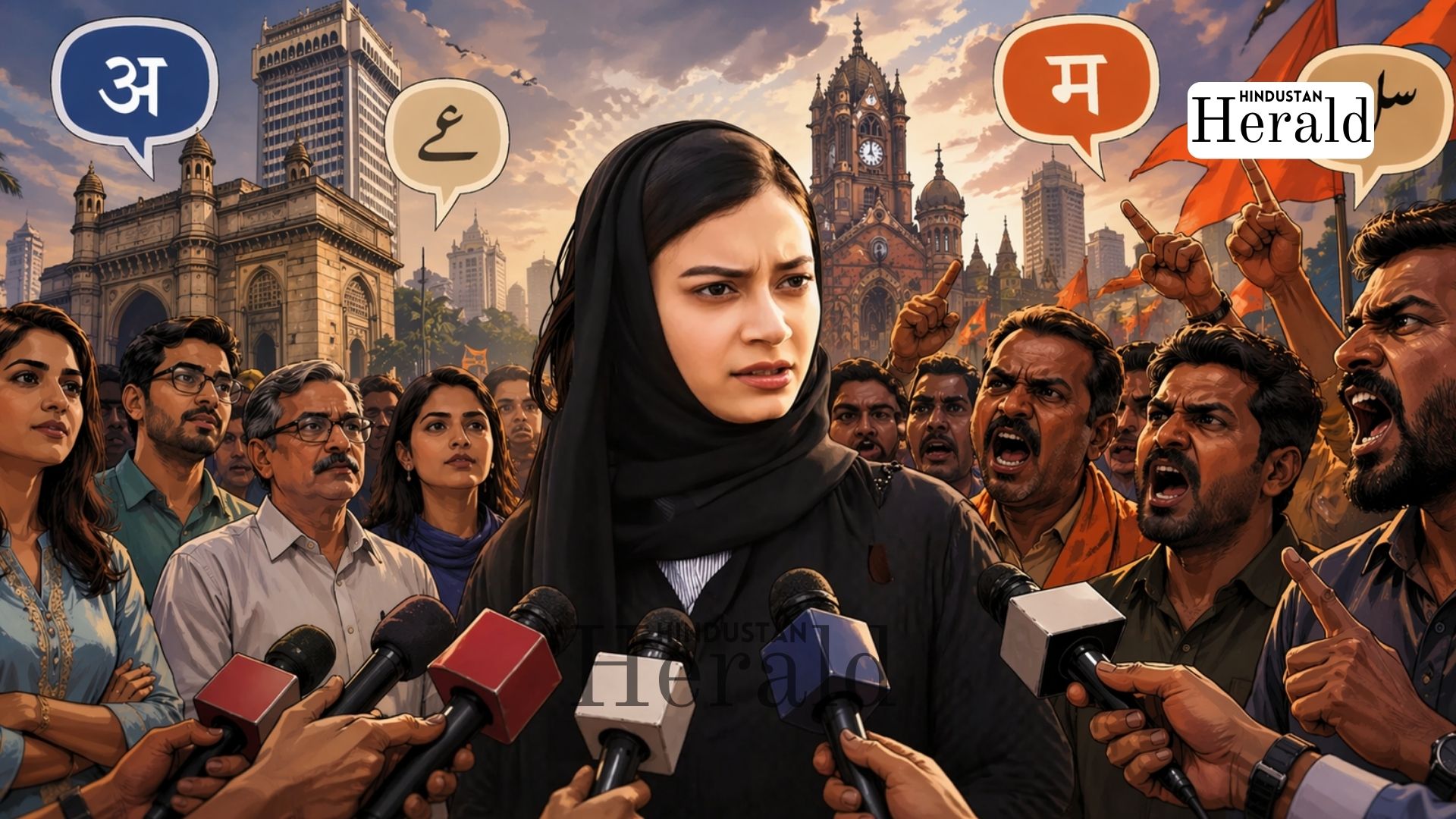
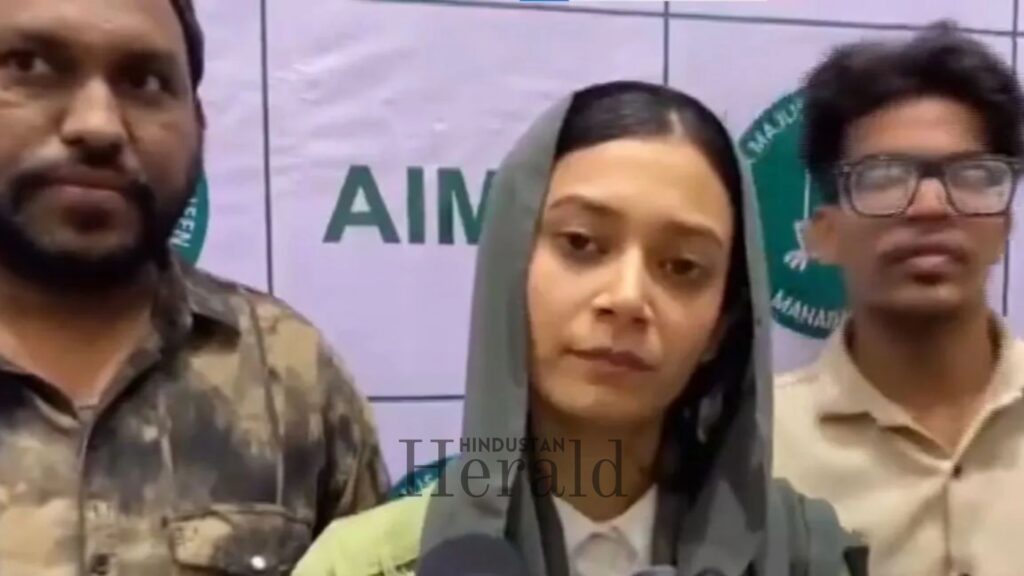
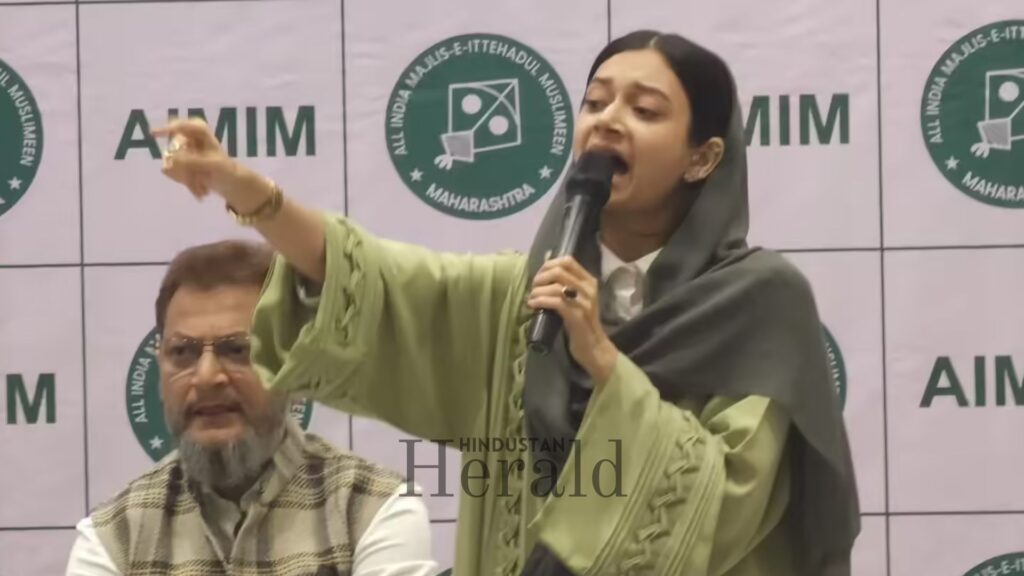
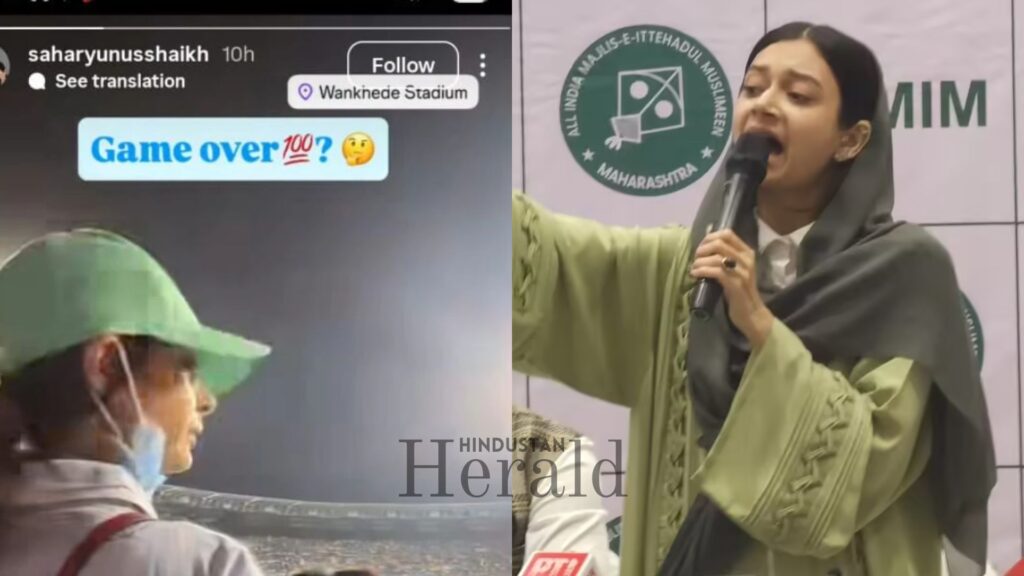
Mumbai, April 21: A journalist pointed a mic at Sahar Shaikh, asked her to speak in Marathi, and what came back was calm, unbothered, and, depending on who you ask, either refreshingly honest or deeply revealing.
Sheikh, an AIMIM corporator from Mumbra in Thane district, said simply that her Marathi is not strong. She is not comfortable with the language. She will speak in whichever language suits her, and nobody has the right to tell her otherwise.
She is not entirely wrong about that last part. Nobody can legally compel you to speak a particular language. But Sheikh is not a private citizen explaining herself at a grocery counter. She is an elected representative. And in Maharashtra, of all places, language is never just language.
What Gets Said, and What Doesn’t
The statement itself took maybe thirty seconds. But the silence that followed it, politically speaking, has stretched on considerably longer.
Because everyone paying attention already knows what this situation would look like with different people in it. Swap Sahar Shaikh with a Hindi-speaking labourer from Gorakhpur or Patna, put him in front of the same mic, let him say “I am not comfortable in Marathi, I will speak in my own language”, and watch how quickly the mood changes. Watch the party workers show up. Watch the clips spread. Watch the statements roll in from politicians who suddenly remember that Maharashtra has a language and it must be respected.
That man would not be getting the benefit of the doubt. He would be getting a very different kind of attention.
That is the uncomfortable truth sitting in the middle of this incident, and very few people seem interested in saying it plainly.
Mumbra, AIMIM, and the Arithmetic of Selective Outrage
Mumbra is not a random location. It is a town with a significant Muslim-majority population, tucked into the expanding urban belt of Thane. AIMIM has been building ground there for years, the same patient, community-focused groundwork the party has done in Aurangabad, in pockets of Pune, in parts of Mumbai. It works because the constituency is real and the grievances are real.
None of that is the issue here.
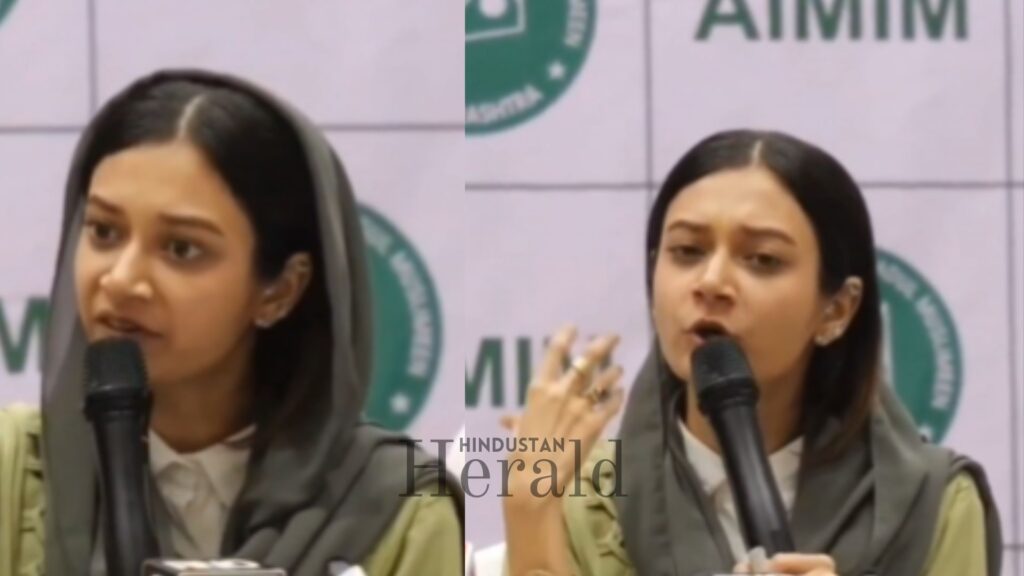
The issue is that Sheikh is a public representative, not a community spokesperson. She holds a ward. She attends civic meetings. She receives government correspondence. She is, by definition, embedded in the institutional life of a Marathi-speaking state. And the expectation, the one that has been applied loudly and sometimes physically to people far lower on the social and economic ladder, is that you make some effort with the language of the place where you serve.
That expectation has apparently not reached her.
The MNS Yardstick
Let us be specific about what happens in Maharashtra when ordinary people push back on Marathi.
Over the years, shop owners have been forced to repaint signboards. Auto rickshaw drivers have been confronted for speaking in Hindi to passengers. Street vendors from Bihar and UP have been roughed up for not responding in Marathi when addressed. These are documented incidents, some caught on video, some reported in local papers, most forgotten quickly because they happen to people without political protection.
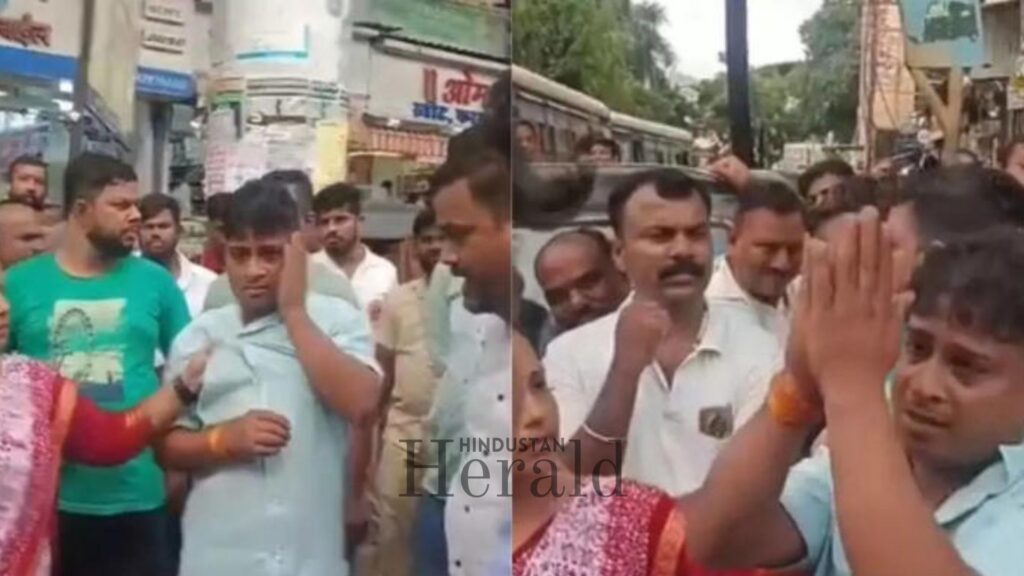
The justification, when offered, has always been cultural. Maharashtra has a language, a heritage, a pride. Those who come here must respect it. The movement built around this belief has been called Marathi Asmita, and it has real political weight. It has shaped elections. It built the original Shiv Sena. It is still a live current in the state’s politics.
So the question is worth asking directly: where is that current now?
Some social media voices have raised it. A few comments, some retweets, the usual online noise. But organised political pressure of the kind that descends swiftly on others? That has been quiet. Notably, pointedly quiet.
Two Possible Explanations, Neither Flattering
There are really only two ways to read the muted response.
One is that the Marathi language movement has, over time, become less about the language and more about targeting specific communities. That the outrage over Hindi-speaking migrants was never purely linguistic. It was always partly about who was speaking the other language. And that is when someone from a different community, a community with its own organised political voice, makes the same assertion, the calculus changes because the political cost changes.
The second explanation is more charitable but only slightly. It is that Maharashtra’s ruling parties, whichever combination happens to be in power at the moment, are too deep in electoral math to risk alienating Muslim voters over a language controversy involving an AIMIM corporator. That this is not ideological protection but purely transactional silence.
In neither case does the Marathi establishment come out looking principled.
And in both cases, the person who pays the price is not Sahar Shaikh. It is the next Hindi-speaking shopkeeper in Mulund who gets a visit from party workers demanding he fix his signboard.
The Corporator Standard
Here is what tends to get lost in these debates. The question of language and public representatives is not really about personal comfort. It is about professional accountability.
When a Tamil Nadu politician addresses a constituency in Chennai, they speak Tamil. When an Assamese MLA addresses her ward, she speaks Assamese. Not because the law mandates it in every specific instance, but because that is the basic communicative contract between a representative and the people she represents.
If Sheikh’s voters in Mumbra are primarily comfortable in Urdu and Hindi, then fine, she should communicate with them in those languages. But when she is interacting with the press, with civic institutions, with the broader machinery of a Marathi-speaking state, some working familiarity with Marathi is a reasonable expectation. Not fluency. Not perfection. But effort.
She did not offer effort. She offered refusal.
There is a difference.
What Consistency Would Actually Look Like
This is simple, really. Almost embarrassingly simple.
If Maharashtra believes that language is identity and that those who work and live in the state owe it a basic linguistic acknowledgement, then that applies to the corporator the same way it applies to the construction worker. Seniority does not exempt you. Community does not exempt you. Party affiliation does not exempt you.
If, on the other hand, Maharashtra is willing to give Sahar Shaikh the full grace of her personal linguistic comfort and accept that people speak in whatever language they prefer, that is also a legitimate position. But then that grace must be extended to every person who has ever been harassed on a local train for speaking Bhojpuri. To every North Indian vendor who ever got a politician on his doorstep because his shop sign was not in Marathi.
One standard. Applied without exception. That is all.
For Now
The clip will keep circulating. There will be some political statements, probably from MNS, maybe from a Sena faction, expressing the required outrage. Then the news cycle will swallow it whole and move on, as it always does.
But what this moment has done, quietly and without much drama, is hold up a mirror to a very particular kind of hypocrisy. The kind that wears cultural pride as its public face and political convenience as its private operating system.
Sahar Shaikh said she will speak in the language she is comfortable with. In isolation, that is a reasonable thing to say.
In Maharashtra, in 2026, surrounded by the specific history of how language has been used as a weapon against the powerless while staying politely sheathed when aimed at the politically connected, it is something else entirely.
Stay ahead with Hindustan Herald — bringing you trusted news, sharp analysis, and stories that matter across Politics, Business, Technology, Sports, Entertainment, Lifestyle, and more.
Connect with us on Facebook, Instagram, X (Twitter), LinkedIn, YouTube, and join our Telegram community @hindustanherald for real-time updates.

Covers Indian politics, governance, and policy developments with over a decade of experience in political reporting.
- Ananya Sharma

- Ananya Sharma
- Ananya Sharma
- Ananya Sharma