
 By Shelesh Joshi and Kavita Iyer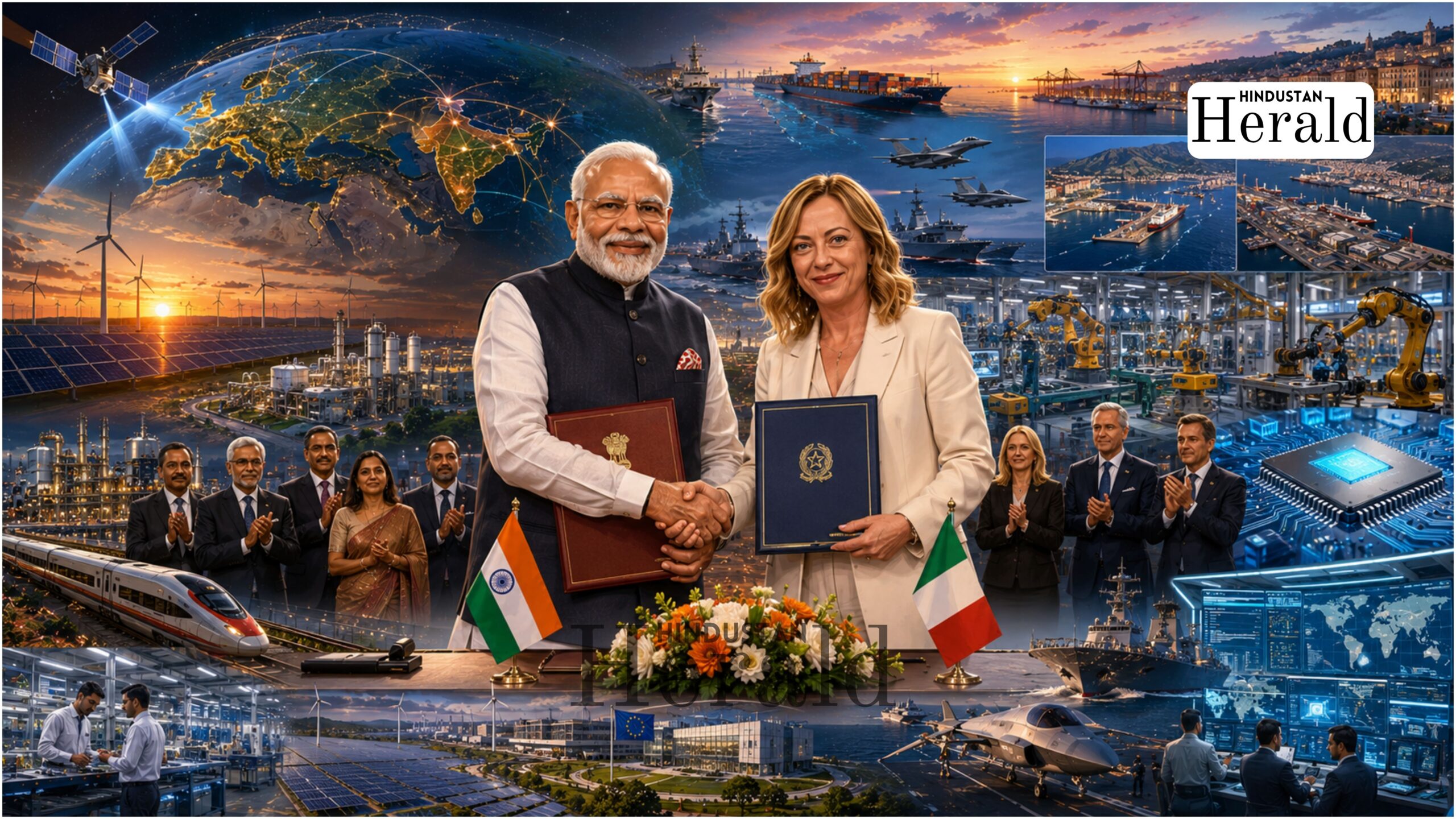
New Delhi, May 21: For years, India and Italy have had the kind of relationship where both sides know they should be doing more together but never quite get around to it. Something shifted this week.
Nobody Saw Italy Coming
Ask most Indian trade analysts which European economy they are most excited about right now and you will probably hear Germany, maybe France. Occasionally the Netherlands comes up because of port access.
Rome almost never comes up first. That is not because the European partner is unimportant. It is because the bilateral relationship has always had this strange quality of being better in conversation than in practice. Businesspeople on both sides will tell you they like each other, they see the opportunity, they want to do more. Then nothing much happens and the conversation restarts at the next trade delegation visit.
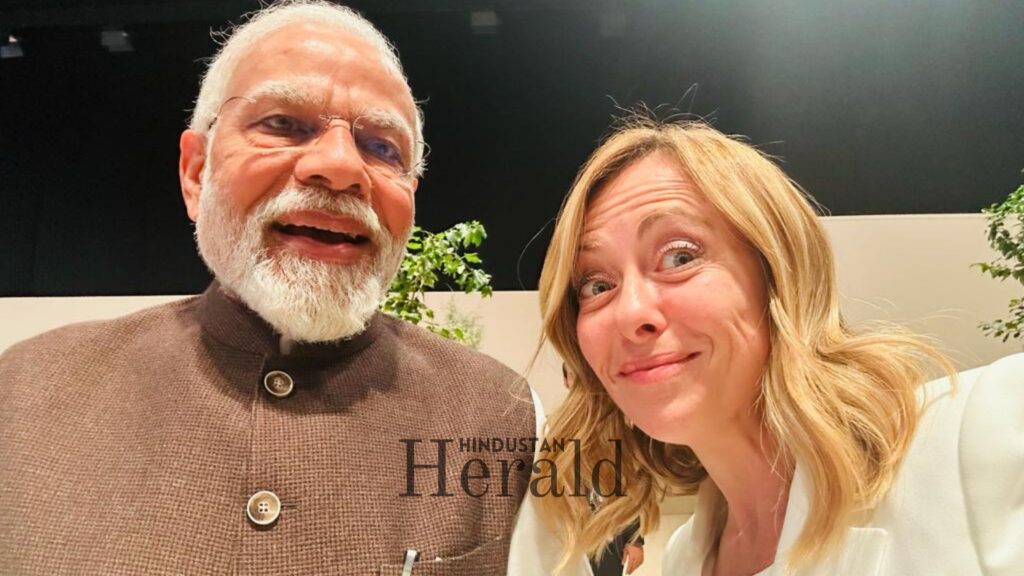
Something broke that pattern this week. Prime Minister Narendra Modi and Prime Minister Giorgia Meloni sat down and formalised a Strategic Partnership, a term India uses carefully and does not attach to relationships it is not serious about. The joint vision document, confirmed by the Ministry of External Affairs and reported by PTI, covers defence manufacturing, green energy, and advanced technology.
But honestly, the sector breakdown is almost secondary to the fact that this is happening at all. Two governments looked at a relationship that has been coasting on goodwill for thirty years and decided that goodwill alone is not good enough anymore.
What Is Actually Driving This
Spend time with people inside the commerce ministry or in CII’s international affairs division and a consistent picture emerges. India has done the hard work of building structured economic partnerships with Japan, with the United States, with several Gulf states. Europe has been frustratingly slow to respond at the same level of seriousness.
Part of that is the India-EU Free Trade Agreement, which has been dragging through negotiations since 2007 with the kind of momentum that makes you wonder if anyone actually wants it to finish. Part of it is that European capitals have historically been more focused on China as their primary Asian economic relationship.
Both of those dynamics are shifting. The Mediterranean nation under Meloni has been among the most explicit in Europe about not wanting to repeat the China dependency mistake. Her government came to office in October 2022 and has spent much of its foreign economic policy energy building relationships with large democracies outside the traditional Euro-Atlantic circle. India is near the top of that list.
From the Indian side, the manufacturing push is real and urgent. The Production-Linked Incentive scheme has created genuine industrial capacity that needs technology partners and market access to reach its potential. The engineering clusters of Lombardy and Veneto offer exactly the kind of precision manufacturing expertise New Delhi is looking for.
Neither side is doing this out of sentimentality. They are doing it because continuing to underutilise an obvious opportunity is starting to look like a strategic error.
The Honest State of Affairs
Before anyone gets too excited, it helps to look at the current numbers clearly. Bilateral merchandise trade sits at roughly USD 15.2 billion for FY 2023-24, per data from the Confederation of Indian Industry and ICE Agency. India exports engineering goods, pharmaceuticals, textiles, chemicals, and leather products. Rome sends back machinery, luxury goods, defence equipment, and fashion inputs.
Fine numbers. But compare them to what India trades with Germany or France and the gap is striking, with no obvious reason for it. The demand is there on both sides. The complementarity is there. What has been missing is the framework to channel it.
Foreign direct investment from the European partner into India has crossed USD 3.5 billion cumulatively, through companies like Magneti Marelli, Piaggio, and Benetton. Over 600 Indian companies are now operating in the European nation, according to the bilateral Chamber of Commerce. The commercial relationship exists. It just has not been running anywhere near full capacity. That is the problem this partnership is trying to solve.
Defence: Where the Real Action Is
If you are tracking where actual money is likely to move in the near term, start here. India’s Defence Acquisition Council has been clearing procurement worth hundreds of billions of rupees. The catch, and it is a deliberate one, is that most of it requires technology transfer. The government does not want to keep importing finished weapons systems. It wants foreign partners who will build things here, train Indian engineers, and transfer real capability over time.
Leonardo S.p.A. has been in Indian defence conversations for years. Helicopters, naval electronics, radar systems, all of it sits on New Delhi’s current shopping list, and the European manufacturer makes credible versions of all of it. Fincantieri has reportedly been talking to Mazagon Dock and Cochin Shipyard about naval construction partnerships that could be significant.
The co-production model that Make in India and Atmanirbhar Bharat demand is not one that every foreign defence contractor is comfortable with. Firms from Rome’s industrial base, perhaps because of their own tradition of partnership within European consortiums, seem more at ease with it than some competitors. For investors, companies like Bharat Forge, Paras Defence, and Data Patterns in the listed defence space are worth watching if co-production arrangements start moving from conversation to contract.
Clean Energy: The Engineering India Desperately Needs
India’s 500 GW renewable target by 2030 gets repeated so often it has started to sound like background noise. It should not. That target represents one of the largest energy infrastructure procurement programmes anywhere in the world, and the technology to deliver it has to come from somewhere.
Industrial firms from the European partner have built strong positions in offshore wind engineering, solar manufacturing equipment, and grid modernisation systems over the past fifteen years. These are not glamorous technologies but they are foundational ones. You cannot hit a 500 GW target without serious grid infrastructure, and Rome has companies that know how to build it.
According to Business Standard, European industrial groups have been lobbying for a dedicated investment corridor inside the India-EU trade negotiations. The bilateral framework gives partner companies a more direct route while those broader talks continue their slow progress. Sometimes the bilateral lane moves faster than the multilateral highway, and this looks like one of those cases.
The Port Story Nobody Is Telling
Here is something that has not been getting nearly enough coverage in the discussion around this partnership. The India-Middle East-Europe Economic Corridor, launched at the G20 New Delhi Summit in 2023, needs a western European endpoint to be commercially viable. The corridor runs from Indian ports through the Gulf states into Europe, and where it lands on the European side matters enormously for Indian exporters.
The Mediterranean ports at Trieste and Genoa sit exactly where that corridor needs to arrive. As reported by The Economic Times, port authorities have been in active conversations with New Delhi about formally anchoring those facilities within the IMEC framework.
For Indian pharmaceutical exporters, engineering hardware manufacturers, and any Indian company trying to reach European consumers, a formalised gateway through this bilateral relationship would cut logistics cost and transit time in ways that would actually show up in their margins.
Rome also quietly carries weight inside Brussels. The government has been a consistent supporter of the India-EU Free Trade Agreement within the European Council, where the deal still faces resistance on data rules, automotive tariffs, and procurement access. Having a major EU member state actively pushing for it matters more than it sounds.
The Premium Consumer Angle
This part of the story tends to get buried under the defence and energy headlines but it carries real commercial substance. Luxury and food brands from the European partner have been eyeing India’s premium consumer market for years. The growth story is compelling and everyone in European consumer goods knows it. The problem has always been regulatory friction. FSSAI certifications for food products and BIS approvals for manufactured goods take time and money that smaller heritage brands often cannot absorb.
The joint working groups coming out of this partnership are supposed to address that friction directly. If they actually deliver, it could meaningfully accelerate brand entry into Indian retail, which benefits both exporters and Indian consumers who have been paying steep grey-market premiums for products that could be sold here legitimately and affordably.
On the flip side, Indian textile and leather exporters stand to gain from deeper integration into the luxury supply chains on the other side. That is not a volume play. It is a margin and quality upgrade, which is exactly the direction Indian export policy has been trying to move toward.
Space and Technology
It is worth mentioning that the strategic partnership includes cooperation between ISRO and ASI on satellite communications and earth observation. The European nation contributes meaningfully to the European Space Agency and carries independent satellite manufacturing capability. As India opens its space sector commercially through IN-SPACe, adding a credible European technology partner fills a gap that currently exists in the programme’s international network. This dimension of the deal may be smaller in headline value today but it could compound into something significant over the next decade.
What Indian Industry Is Actually Saying
The reaction from Indian business bodies has been noticeably warm. Not the polite, obligatory warmth that usually accompanies diplomatic announcements. Genuine enthusiasm about a specific opportunity.
The CII Director General, speaking to The Hindu BusinessLine, called the relationship an “untapped but high-potential corridor” for Indian capital goods and pharmaceutical exporters. That framing reflects something real. The commercial interest has always been there. What has been missing is institutional infrastructure to scale it.
FIEO made a point worth highlighting: this partnership could create specific market access channels for MSME exporters in leather, handloom, and processed foods. Most bilateral relations discussions of this kind default to large corporate deal-making. The MSME dimension, if it actually gets implemented, would have a broader and more distributed economic impact than any individual defence contract.
What Could Still Go Wrong
There is no shortage of ways this could disappoint and being honest about that seems more useful than pretending otherwise. The India-EU FTA is still stuck. Several chapters remain genuinely contested and a bilateral partnership cannot substitute for that broader framework permanently. At some point the ceiling becomes binding.
Defence co-production in India takes time. The history of Make in India in defence is full of partnerships that looked promising at the announcement stage and then spent years sitting in Ministry approval queues. Firms going into this with realistic timelines will be better served than those expecting fast results.
Regulatory harmonisation moves slowly regardless of what leaders agree to at summits. The agencies responsible for FSSAI certifications and BIS approvals operate on their own timetables and political direction from the top does not eliminate the process. And the coalition in Rome, while more stable than its reputation suggests, is not entirely predictable. Meloni has been consistent in her approach toward India. But coalition governments have their own internal dynamics and any change in composition could affect the follow-through at working group level.
Where This Leaves Us
The relationship between the two nations entering a new phase as a Strategic Partnership represents an honest attempt to change something that has spent too long being politely described as having enormous unrealised potential.
The joint vision document will mean very little if the working groups that follow it operate the way working groups usually do. It will mean a great deal if defence co-production talks produce signed agreements, if European capital starts flowing into Indian manufacturing zones, and if Trieste becomes a name that Indian export managers know as well as they know Rotterdam.
India has pulled off this kind of industrial partnership upgrade before. The relationship with Japan took years to build into something substantive and it is now among the most productive bilateral economic ties the country has. There is no structural reason this new strategic framework cannot follow a similar path. The direction is right. The ambition on both sides is real. The work starts now.
Stay ahead with Hindustan Herald — bringing you trusted news, sharp analysis, and stories that matter across Politics, Business, Technology, Sports, Entertainment, Lifestyle, and more.
Connect with us on Facebook, Instagram, X (Twitter), LinkedIn, YouTube, and join our Telegram community @hindustanherald for real-time updates.

Tracking world politics, global markets, trade movements, policy decisions, and the changing balance of economic power.
- Shelesh Joshi

- Shelesh Joshi
- Shelesh Joshi
- Shelesh Joshi





Former financial consultant turned journalist, reporting on markets, industry trends, and economic policy.
- Kavita Iyer
- Kavita Iyer
- Kavita Iyer
- Kavita Iyer