
 By Rajiv Menon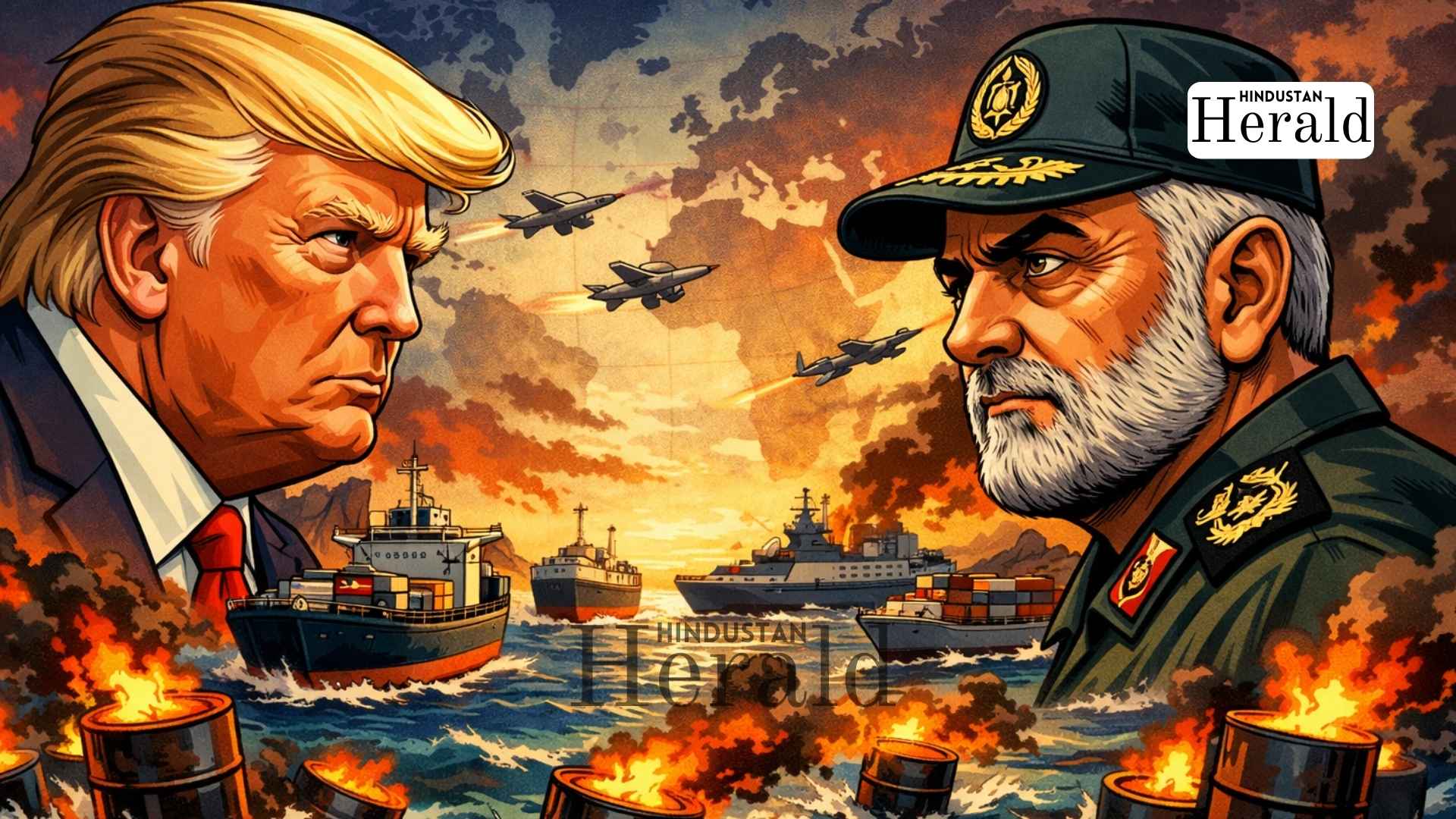
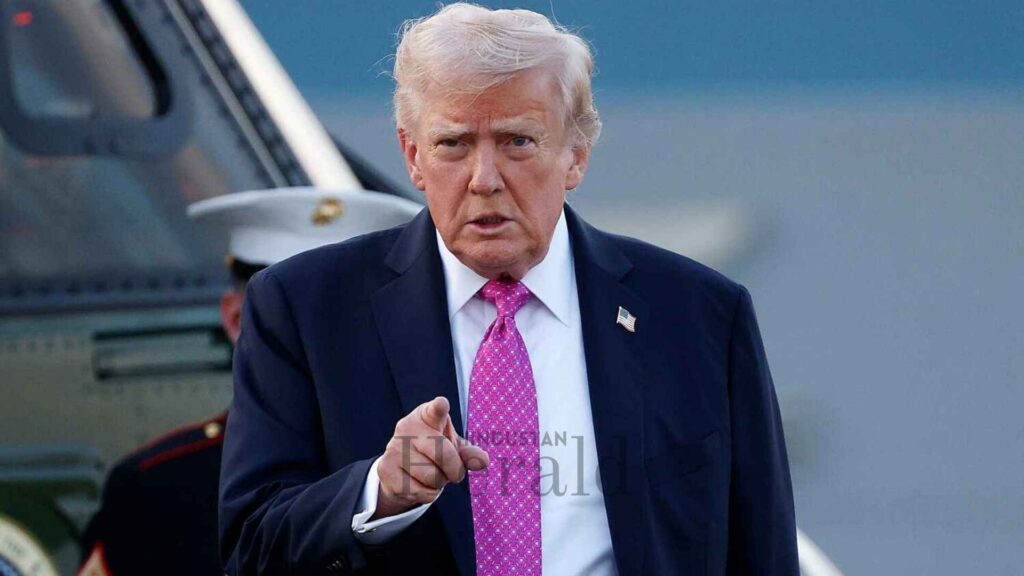
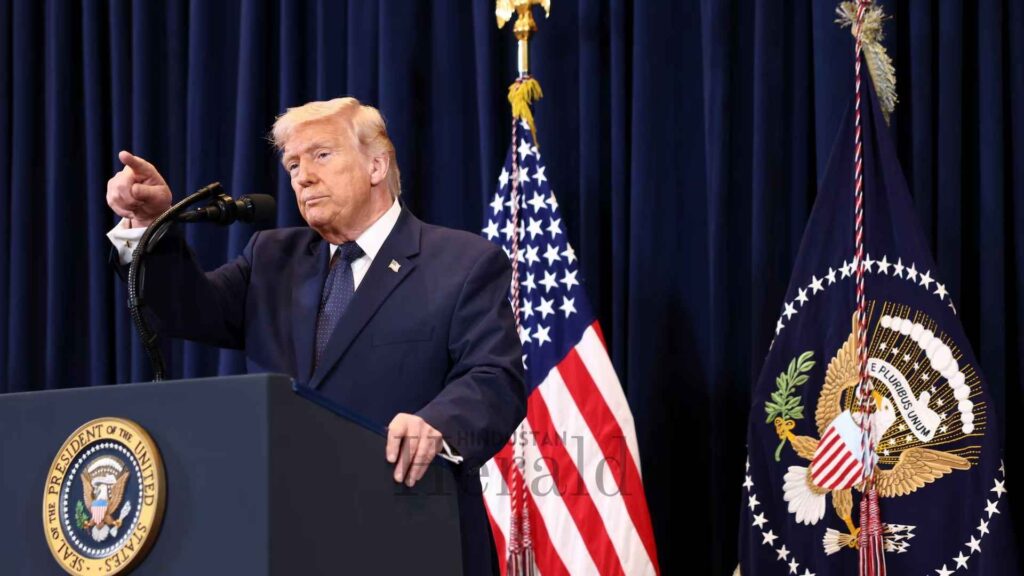
New Delhi, March 11: When President Donald Trump picked up the phone for an interview with Axios on Tuesday, he sounded less like a commander overseeing an active military theatre and more like a businessman wrapping up a deal. The war with Iran, he suggested, was essentially done. The heavy lifting was over. “Any time I want it to end, it will end,” he said, in what may rank among the more extraordinary statements made by an American president during an active armed conflict.
That confidence, however measured against reality on the ground, tells a more complicated story. And the gap between Trump’s self-assured narration and the facts unfolding across the Strait of Hormuz, in Iranian cities, and in global energy markets is widening by the hour.
The President’s Version of Events
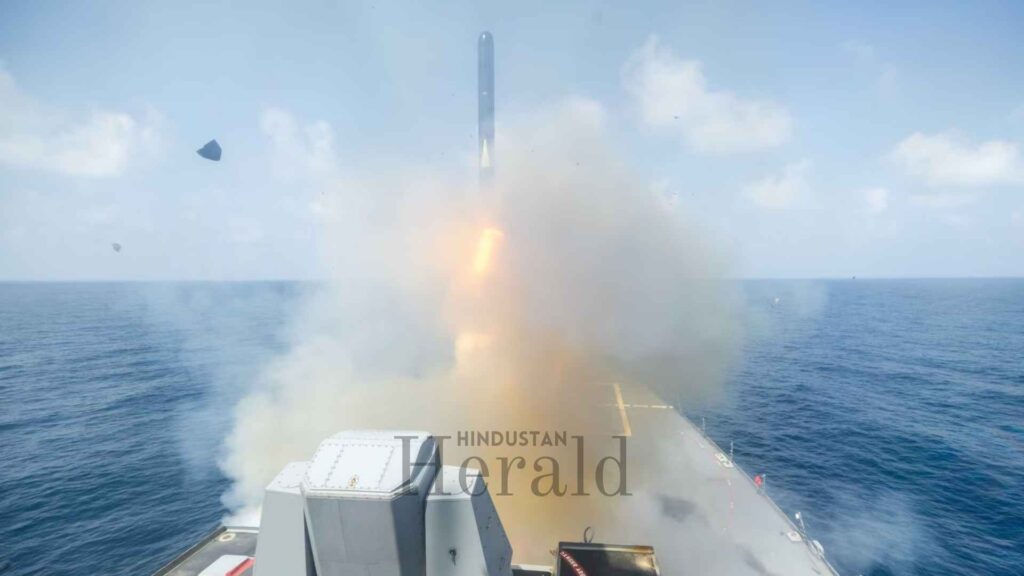
Trump told Axios that there is “practically nothing left to target” in Iran following nearly two weeks of intensive airstrikes conducted jointly by U.S. and Israeli forces under what has been officially dubbed Operation Epic Fury. He claimed the operation was “way ahead of the timetable,” characterized the campaign as long-overdue “payback” for decades of Iranian regional destabilization, and declared that the damage inflicted in the opening phase had exceeded original projections.
Reading between the lines, Trump appeared to be constructing a narrative arc toward a quick exit. The framing was consistent with a leader managing domestic political optics as much as a foreign military campaign. With U.S. midterm elections on the horizon, a declared victory, even a partial one, carries obvious appeal.
As it turns out, the people prosecuting the war alongside Washington do not share that timeline.
Israel Pushes Back on the “Soon” Framing
Israeli Defense Minister Israel Katz offered a sharply different assessment. The operation, he stated publicly, would continue “without any time limit” until all strategic objectives are decisively met. That is a significant divergence. When a co-belligerent publicly contradicts the lead power’s exit signals, it creates operational uncertainty, diplomatic friction, and the kind of ambiguity that adversaries often exploit.
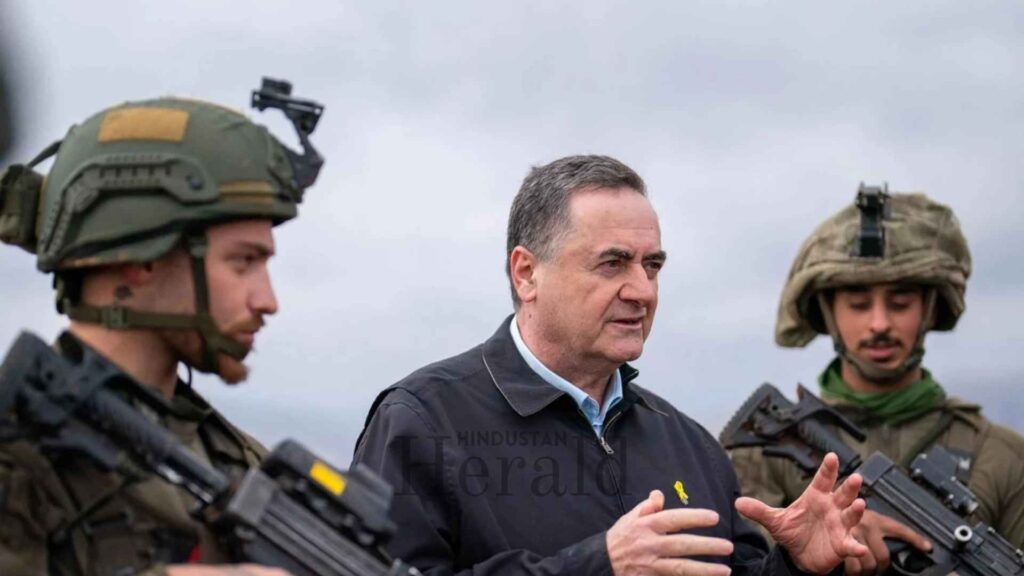
Israel’s calculus is, in some ways, understandable. From Tel Aviv’s perspective, the objectives of degrading Iran’s nuclear infrastructure, dismantling its regional proxy network, and neutralizing long-range missile capability cannot be declared complete by a presidential tweet. These are structural goals that require sustained pressure, not a news cycle.
The visible contradiction between Washington and Tel Aviv will now be watched closely by Tehran, by Gulf states, and by every other actor that has spent the past two weeks recalibrating risk.
The Ground and Sea Picture Contradicts “Practically Nothing Left”
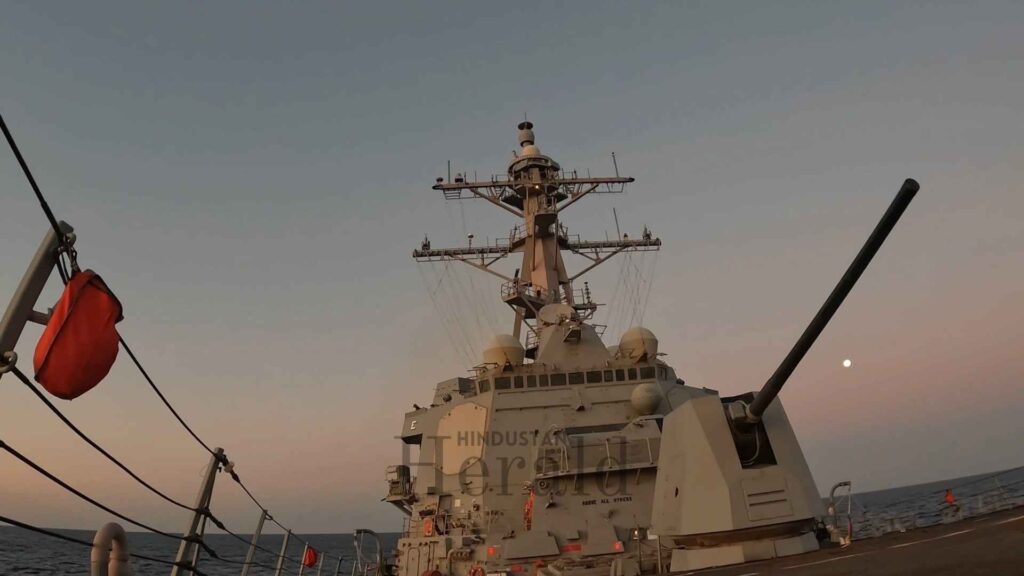
Whatever Trump meant by his claim that targets have been exhausted, U.S. Central Command (CENTCOM) was simultaneously confirming that 16 Iranian mine-laying vessels had been destroyed on Tuesday. That is an active mine-clearing operation, not a post-conflict cleanup. And on Wednesday, the Islamic Revolutionary Guard Corps (IRGC) struck three commercial ships in the Strait of Hormuz, including Thai and Liberian-flagged vessels, effectively targeting the world’s most critical energy chokepoint.
The Strait of Hormuz is not a peripheral theatre. Roughly 20 percent of global oil trade and a significant share of liquefied natural gas pass through this 33-kilometre-wide passage. When the IRGC targets commercial shipping here, it is not simply retaliating against military assets. It is sending a message to the global economy.
Iran has compounded that message with direct warnings that it will target regional economic centres and banking infrastructure. Civilians, according to Iranian official statements reported internationally, have been advised to stay at least one kilometre away from financial institutions. Whether that is operational warning or psychological warfare, the effect on regional business confidence is real and immediate.
Civilian Casualties and a Targeting Error That Cannot Be Ignored
Any accounting of this conflict must include what happened on February 28, when a Tomahawk missile struck an Iranian school in what CENTCOM has described as a “targeting mistake.” The incident has received less sustained coverage than the strategic military updates, but it carries enormous implications.
Civilian casualties from targeting errors in conflicts of this scale are not anomalies; they are, in a grim statistical sense, predictable outcomes of high-tempo operations in dense urban environments. That does not make them acceptable or legally straightforward. Under international humanitarian law, the proportionality principle requires that anticipated civilian harm not be excessive relative to concrete military advantage. The school strike will feature prominently in any future accountability proceedings, regardless of how the conflict concludes.
Iranian state media and government officials have amplified the incident extensively, and it has become a central mobilization point domestically. The human cost of the campaign, set against Trump’s businesslike “payback” framing, has deepened anti-American sentiment across significant portions of the global south.
Iran’s Strategy: Outlast, Not Overwhelm
Tehran’s official response to the campaign has been to reframe the conflict entirely. Rather than seeking a quick resolution, Iranian leadership has formally declared a posture of “long-term war of attrition” designed to erode the U.S. and global economy over time. It is a strategy that acknowledges military inferiority in conventional terms while betting on economic and political endurance.
The IRGC’s commercial shipping strikes are a direct expression of that strategy. So is the disruption to global energy markets. Iran cannot match American airpower, but it can make the war expensive, protracted, and politically unsustainable in Washington boardrooms and European capitals.
In an unexpected but symbolically charged move, Iran’s Sports Minister announced that the country would not participate in the 2026 FIFA World Cup following the airstrikes. The withdrawal from a global sporting event is less a military decision and more a statement of national posture, an assertion that Iran refuses to normalize relations with a world that, in its framing, has permitted or enabled the attacks.
The Energy Crisis: Record Emergency Reserves Released
The International Energy Agency (IEA) has authorized the release of 400 million barrels of oil from member nations’ strategic reserves. According to reports, this is the largest coordinated emergency reserve release in the IEA’s history, surpassing even the releases triggered by the 2011 Libyan civil war and the 2022 post-Ukraine shock.
The scale of that intervention reflects the degree to which energy markets have been destabilized. Oil prices have been swinging wildly, and the disruption to commercial shipping through the Strait of Hormuz has added freight risk premiums across supply chains well beyond petroleum.
For India, this is not a distant concern. As one of the world’s largest crude importers, India sources a substantial share of its energy from Gulf producers whose export routes pass through the strait. Indian refiners, already navigating the end of discounted Russian supply arrangements, are now facing a compounded risk environment. The Rupee has come under additional pressure, and domestic fuel prices are likely to reflect the volatility in the weeks ahead if the disruption continues. The Ministry of Petroleum and Natural Gas has not issued a formal public statement on contingency planning, though sources in the energy sector indicate that alternatives are being assessed.
Reading Trump’s Endgame
Analysts tracking the White House’s communication patterns suggest that Trump’s Axios remarks were not accidental. The claim that the war is “way ahead of schedule” and could end “any time I want” is the kind of language designed to create political optionality. If the conflict ends soon, Trump can claim it ended on his terms. If it continues, the framing positions him as the one holding the restraint card.
Still, the domestic political arithmetic is getting complicated. Energy prices, disrupted shipping lanes, and rising insurance costs for goods transiting the Persian Gulf all feed into inflation data that will land in American consumers’ awareness well before any midterm ballot. The administration will need to manage those pressures carefully.
The contradiction between Trump’s “practically nothing left” assurance and the IRGC’s continued capacity to strike commercial vessels, issue credible economic threats, and sustain a declared attrition posture suggests that the endgame, whatever Trump’s preferred timeline, has not yet been written.
For now, the world watches a conflict in which one side claims victory is imminent, the other vows to outlast the century, and the gap between those two positions is measured in barrels of oil, commercial ship hulls, and civilian lives.
Stay ahead with Hindustan Herald — bringing you trusted news, sharp analysis, and stories that matter across Politics, Business, Technology, Sports, Entertainment, Lifestyle, and more.
Connect with us on Facebook, Instagram, X (Twitter), LinkedIn, YouTube, and join our Telegram community @hindustanherald for real-time updates.

Specializes in South Asian geopolitics and global diplomacy, bringing in-depth analysis on international relations.
- Rajiv Menon

- Rajiv Menon
- Rajiv Menon
- Rajiv Menon




 Neeraj Kapoor