By Ananya Sharma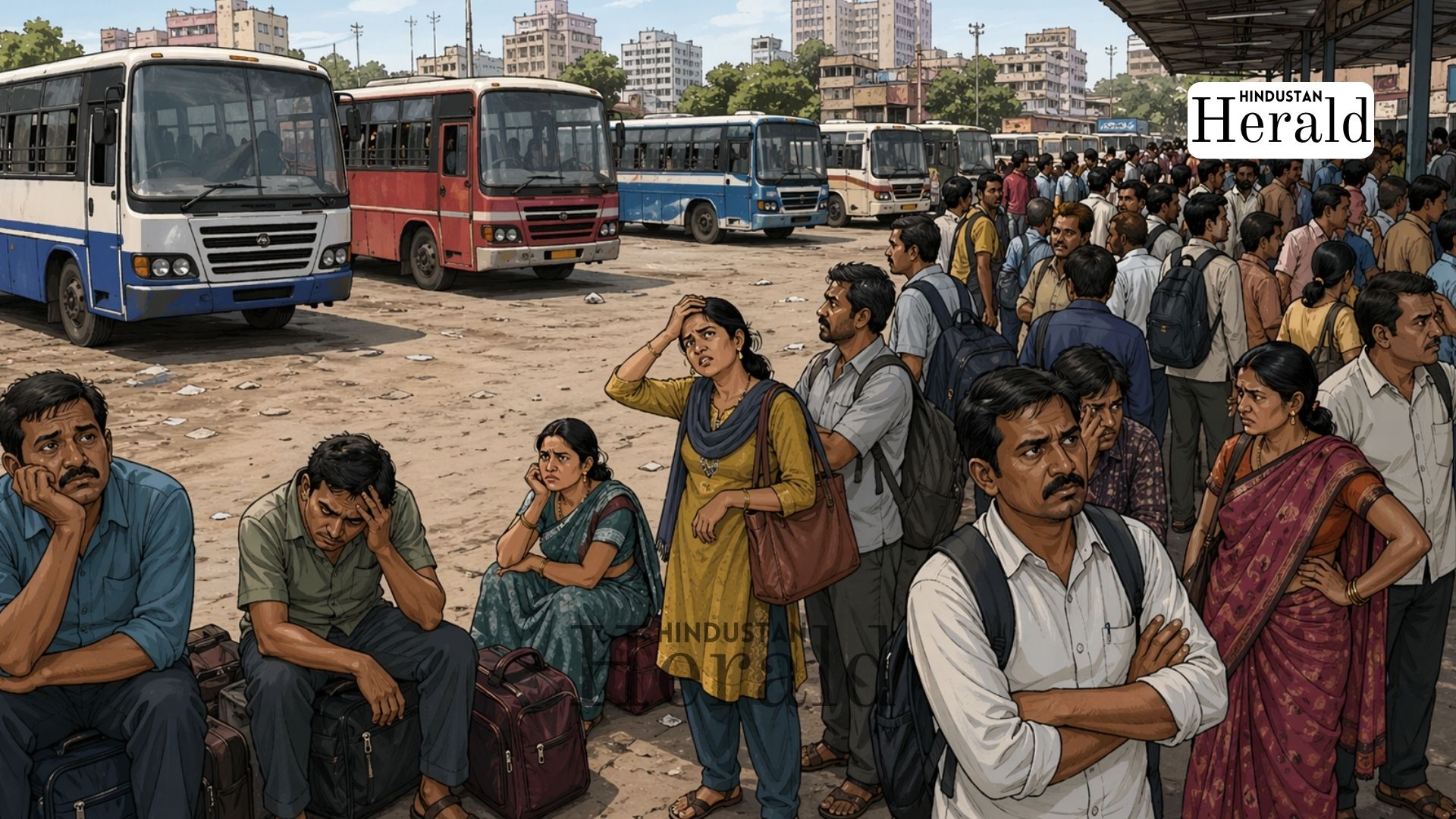
New Delhi, April 23: There is a particular kind of exhaustion that settles over a person who has been standing at a bus stop for three hours. Not just physical tiredness, something deeper. The slow dawning realisation that the system you paid into, voted for, and depended on your whole life simply does not consider you important enough to show up.
That feeling spread across two states today. Tamil Nadu was holding an election. Telangana was watching its bus workers go on indefinite strike for the second day running. The specific reasons were different in each place. The result was identical. Millions of ordinary people, students, factory workers, old women with shopping bags, and men carrying overnight bags to go vote in their hometowns were stranded. And India, as it tends to do, reacted with shock, having no memory of the last time this happened.
When Two Thousand Buses Are Not Enough
Tamil Nadu’s election was always going to create a movement problem. Thirty million people live outside the districts where they are registered to vote. That is not a secret. It is not a surprise. The Election Commission knows it. The State Transport Corporation knows it. The government knew it when it scheduled polling for a Thursday, which, as every Chennaiite immediately calculated, meant a four-day weekend if you took Friday off. The exodus was going to be enormous.
The State Transport Corporation announced around 2,000 additional services from Chennai. Commuters said these fell short of demand. Quite dramatically short, as it turned out.
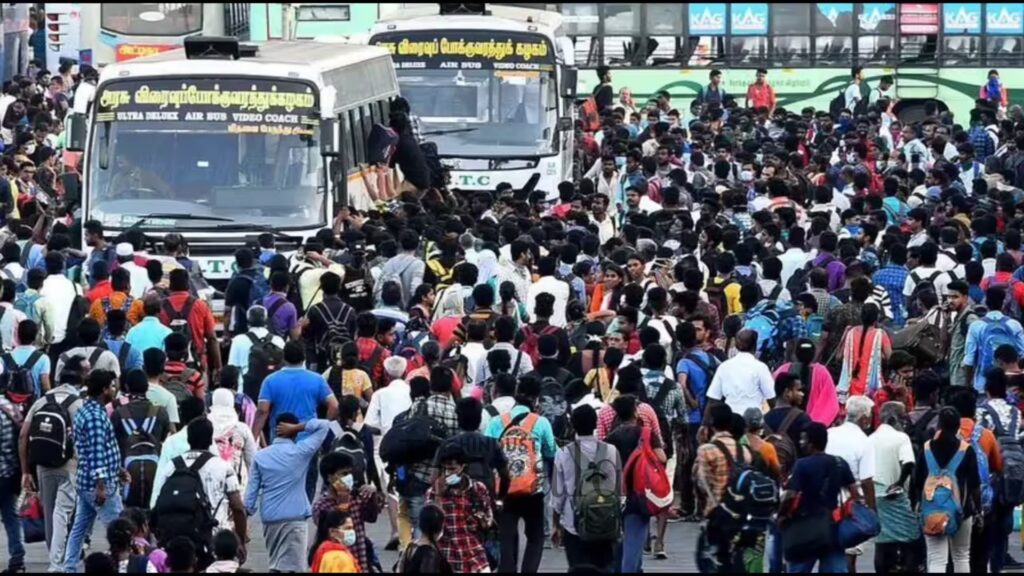
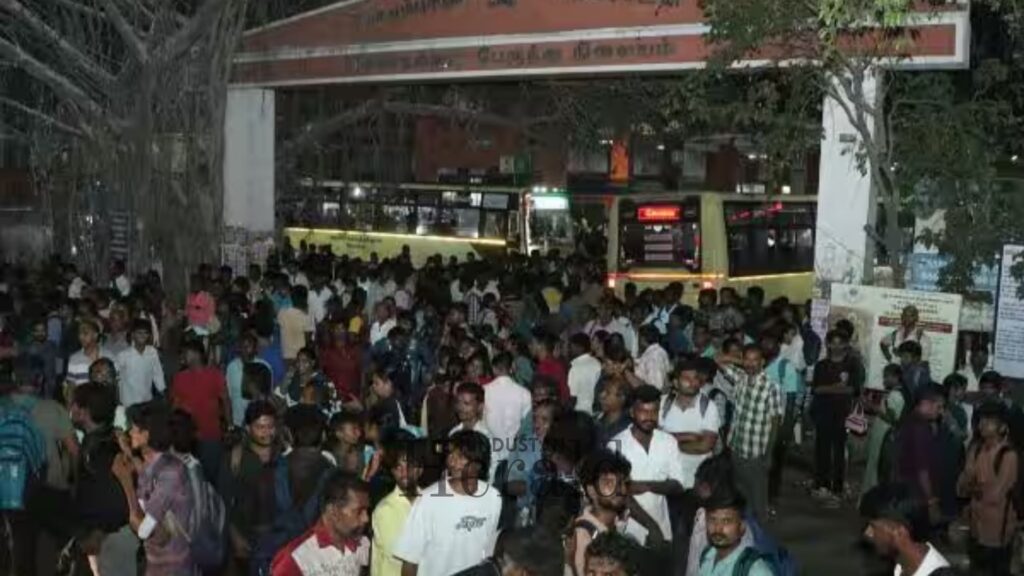
By Wednesday night, Kilambakkam, Koyambedu and Madhavaram, Chennai’s major bus hubs, had descended into scenes of genuine chaos, passengers waiting for hours, tempers running hot. People who had booked tickets days in advance watched their departure times come and go. Buses arrived late, already packed. Some people climbed on anyway, hanging off footboards. Others gave up and went home, voting rights effectively forfeited by a scheduling problem that nobody fixed.
Some travellers reported journeys of more than five hours for distances of around 35 kilometres. People who boarded buses on Wednesday night were still on the road Thursday morning, having barely reached Tindivanam or Villupuram. These are not remote hill stations. They are towns within a reasonable distance of Chennai on a normal day. Nothing about that night was normal.
In Coimbatore, hundreds of passengers at the Singanallur bus terminus blocked Trichy Road in protest. People from Madurai, Theni, Tirunelveli districts that are not exactly around the corner had been waiting since the previous night. They were not being theatrical. They were genuinely stuck.
The political response came fast. Actor and TVK chief Vijay wrote to Tamil Nadu Chief Electoral Officer Archana Patnaik, describing what he saw as a collapse of the state’s transport duty toward its own voters. He called the breakdown a serious threat to voters’ rights and asked for emergency public transport to be deployed immediately. He also requested that polling hours be extended by two hours, until 8 pm, to accommodate those delayed by the disruption.
Whether or not one agrees with Vijay’s politics, the request itself is worth sitting with. A leader had to write to the election authority asking for extra time because the government’s own buses could not move voters to their hometowns before polls opened. That is not a transport story. That is a democracy story.
Hyderabad’s Buses Were Already Gone
A thousand kilometres northwest, the situation in Telangana required no election to trigger it. The buses were simply not running, and had not been since Tuesday midnight.
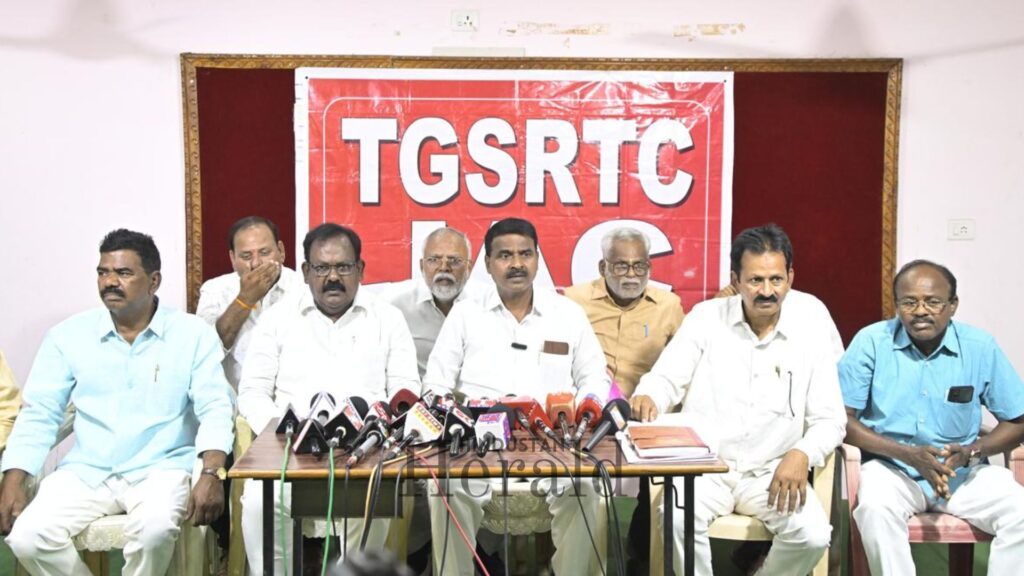
The TGSRTC Joint Action Committee had called an indefinite strike after talks with the state government broke down over 32 demands salary revisions, job security, and the merger of the corporation with the government. What makes this harder to dismiss as ordinary union agitation is the timeline. Workers had issued a strike notice 41 days ago. The state government, by the workers’ account, delayed negotiations through all of that time and arrived at the table with nothing resolved.
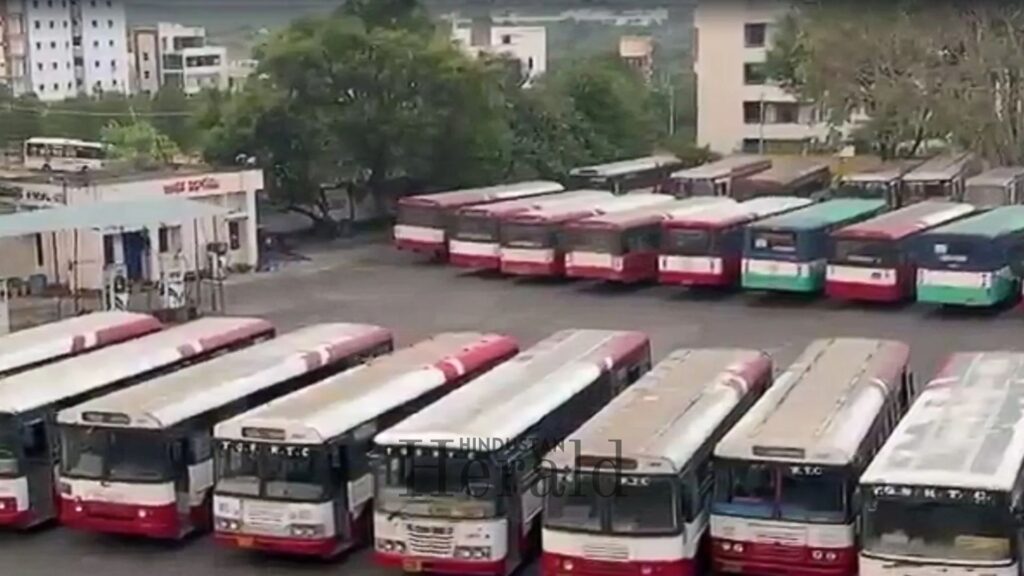
The depots told the story more plainly than any press release. At Ibrahimpatnam in Ranga Reddy, 75 RTC buses and 63 private buses sat still inside the compound. At Uppal depot, four buses ran against a scheduled 90 morning trips. At Rajendranagar, nothing moved at all.
The Mahatma Gandhi Bus Station in Afzalgunj and the Jubilee Bus Station in Secunderabad places that are normally incapable of stillness wore a deserted look. The government scrambled to arrange hired buses and ran some electric buses on busy corridors. It was not enough. Passengers waited at stops for long periods with no clear sense of when or whether anything would arrive.
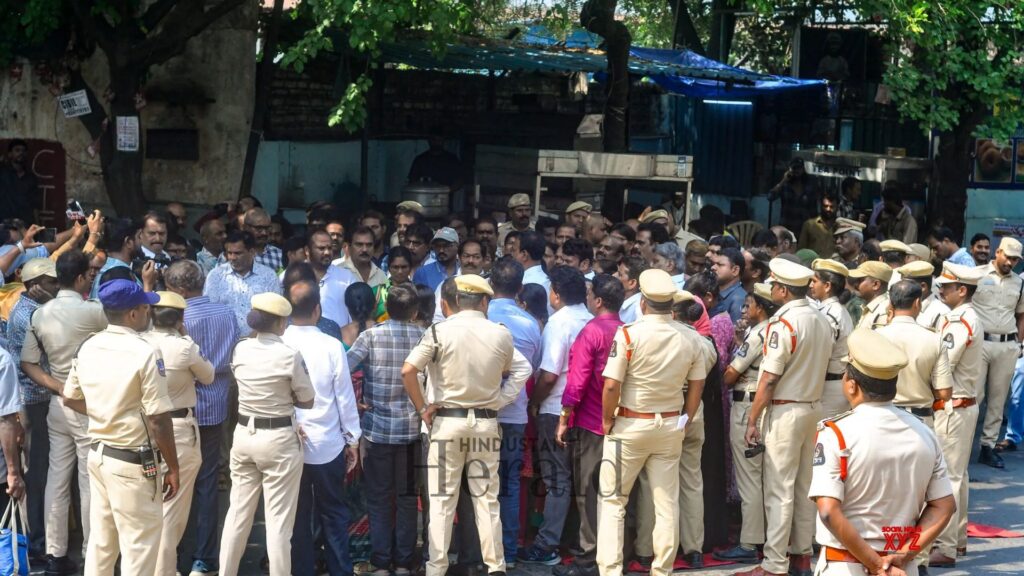
Private operators moved fast. Fares shot up. Most commuters who could not afford the new rates drifted toward the Metro and the MMTS, which were packed well beyond comfortable capacity. People who take the bus precisely because they cannot afford alternatives were now paying more for worse service on a system not designed to absorb sixty lakh extra daily commuters.
TGSRTC Managing Director Y Nagi Reddy said the government was open to resolving things, that a committee of IAS officers had been formed to examine the demands, and that some issues might take up to four weeks to address.
Four weeks. The people waiting at those stops heard that and made their own calculations.
The System Was Always Going to Break Here
Neither of these situations emerged from nowhere. They are where India’s public transport policy has been heading for a long time, and what happened today in two states is simply the point where the accumulated neglect became impossible to ignore.
The numbers sketch the shape of the problem. Only 63 out of 458 Indian cities with populations exceeding one lakh have formal city bus networks. Buses carry over 90% of all public transport in Indian cities. Yet two-wheelers and cars account for more than 80% of all vehicles in most large cities. The bus is doing most of the work while receiving almost none of the investment.
The funding structure explains part of this. State Transport Undertakings depend on a combination of state subsidies, grants, and loans that vary across states. No level of government has dedicated taxes automatically earmarked for public transport. Every year, bus services compete in budget negotiations against health, education, infrastructure, and political priorities. They rarely come out ahead.
Tamil Nadu’s free bus travel scheme for women is a useful case study in how good intentions and bad planning can produce the same mess. The scheme was widely welcomed and rightly so. More women travelling freely on public buses is a genuine social good. But ridership increased substantially without any proportionate expansion of the fleet, stretching existing services and creating overcrowding and longer wait times, particularly in cities like Trichy. The scheme succeeded at getting people onto buses. The infrastructure failed to keep up with its own success.
That is a policy failure, not a welfare failure. The two are worth distinguishing.
What the Workers Are Actually Saying
The TGSRTC workers’ demands are easy to reduce to a headline salary hikes, merger with the government in ways that make the strike sound like standard union pressure. That reading misses the structural anxiety underneath it.
RTC corporations across India operate at a chronic loss. They provide an essential public service with no guaranteed revenue base, heavily dependent on political will for survival. Merger with the state government is not an abstract demand for prestige. It is a demand for the kind of job security that workers in genuinely essential services arguably deserve and that private operators will never offer.
When buses become unreliable, commuters give up and shift to rickshaws and private vehicles. That reduces ridership, which reduces revenue, which weakens the case for investing in more buses. It is a deterioration spiral with a predictable endpoint. Workers who have watched that spiral up close, across years, are not wrong to be anxious about where it leads.
That said, sixty lakh commuters paying the price of a labour dispute that 41 days of prior notice failed to resolve that failure is shared. The workers did not create this crisis alone, and neither did the government entirely. But someone has to be the adult in the room, and in this case, neither side managed it in time.
Who Is Left Holding the Ticket
Tamil Nadu has around 5.73 crore registered voters spread across 234 constituencies. Over 75,000 polling stations were set up. Roughly 1.4 lakh police and paramilitary personnel were deployed. Nearly 1.89 lakh people had already travelled from Chennai alone using special services by April 21, with over 10,000 buses running across the state.
Ten thousand buses. For a state of that size, on election day, that number should be the beginning of a conversation, not the end of one.
In Telangana, sixty lakh people. On a working Thursday. With four buses running at a depot that should have had ninety.
These are not edge cases. They are the daily arithmetic of a country that decided at some point not loudly, not in any single policy decision, but through a thousand small budget choices and deferred procurements and unresolved strikes that the people who ride buses simply matter less than the people who drive cars.
Plans exist to procure over 12,000 new buses and introduce electric vehicles to modernise fleets. The government is aware of the problem. The question is whether implementation will actually happen on any timeline that helps the commuter who is standing outside right now.
Awareness has never been in short supply in India. Follow-through is.
The Stop That Nobody Plans Around
There is something quietly revealing about the image of the Kilambakkam terminus on Wednesday night. Built to handle large volumes, lit up, official and still unable to move the people inside it to where they needed to go. Or the MGBS in Hyderabad, one of the busiest bus stations in the country, empty and echoing on a Thursday morning because the people who drive the buses decided, with 41 days of warning, that enough was enough.
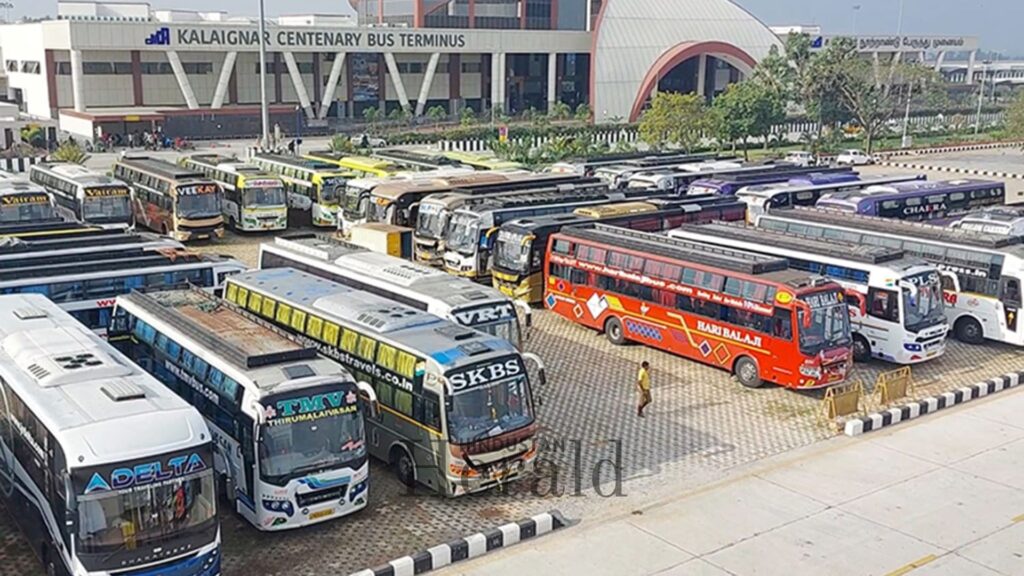
The commuter caught between those two failures had no good option. Cab fares were up. The metro was beyond capacity. Walking was not realistic. And the next bus if it came at all was anyone’s guess.
For now, Tamil Nadu’s voters appear to have gotten there, most of them, one way or another. The TGSRTC talks are ongoing, somewhere in a government office, among people who do not depend on the bus to get to work. The buses will eventually run again.
But the person who stood at that stop for three hours, who missed a shift or a vote or a doctor’s appointment because the system did not hold they will remember. They usually do. It just tends not to make it into the policy review.
Stay ahead with Hindustan Herald — bringing you trusted news, sharp analysis, and stories that matter across Politics, Business, Technology, Sports, Entertainment, Lifestyle, and more.
Connect with us on Facebook, Instagram, X (Twitter), LinkedIn, YouTube, and join our Telegram community @hindustanherald for real-time updates.

Covers Indian politics, governance, and policy developments with over a decade of experience in political reporting.
- Ananya Sharma

- Ananya Sharma
- Ananya Sharma
- Ananya Sharma