
 By Ananya Sharma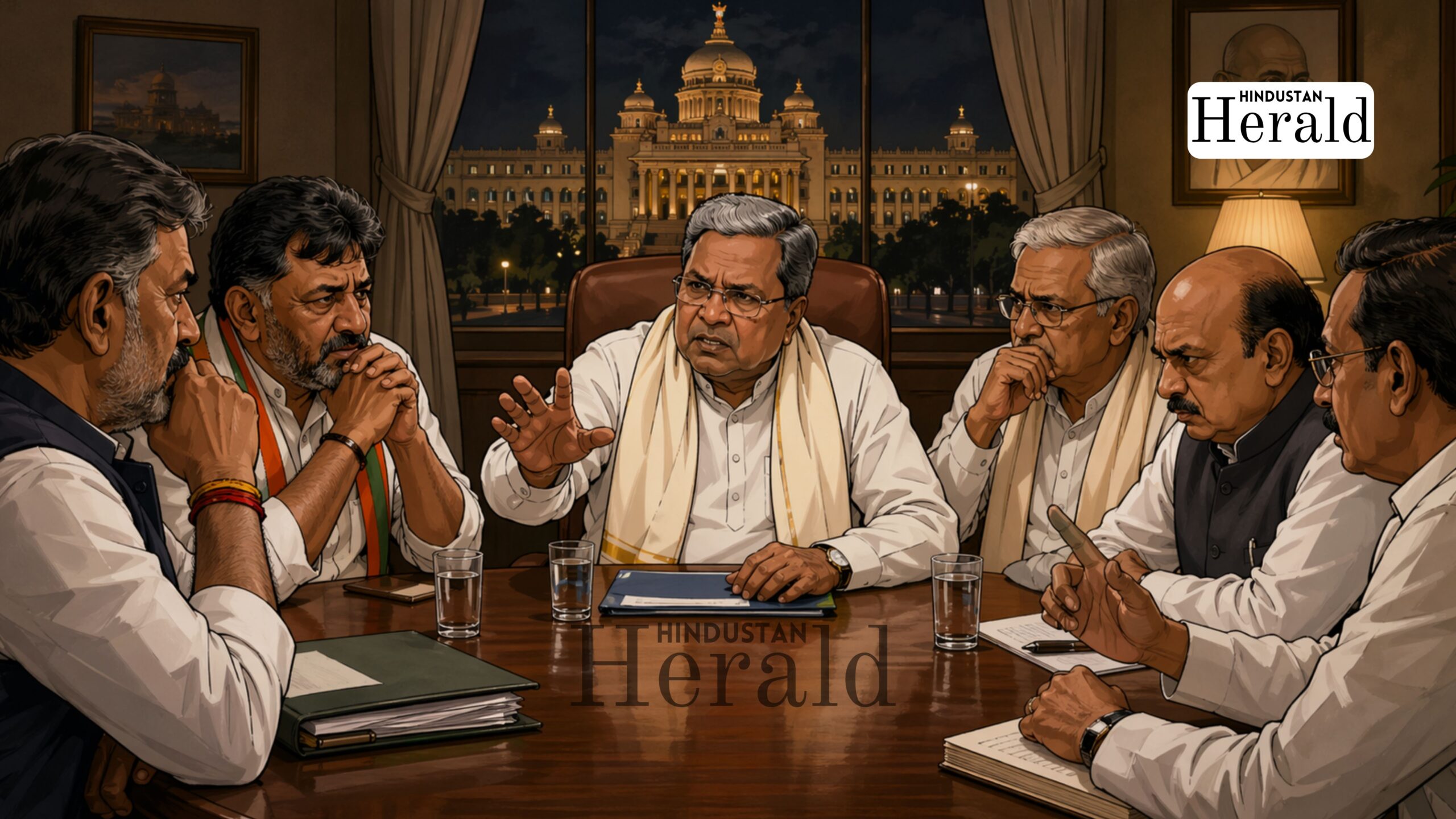
Bengaluru, April 24: Nobody calls it a secret meeting publicly, of course. But in Karnataka’s Congress circles, everybody already knows it happened.
Chief Minister Siddaramaiah quietly gathered a handful of his most trusted ministers and party colleagues at a private building on Cunningham Road in Bengaluru sometime this week. Not at the Chief Minister’s official residence. Not at a party office. A private building, belonging to an influential minister, chosen precisely because it draws less attention than any official venue would.
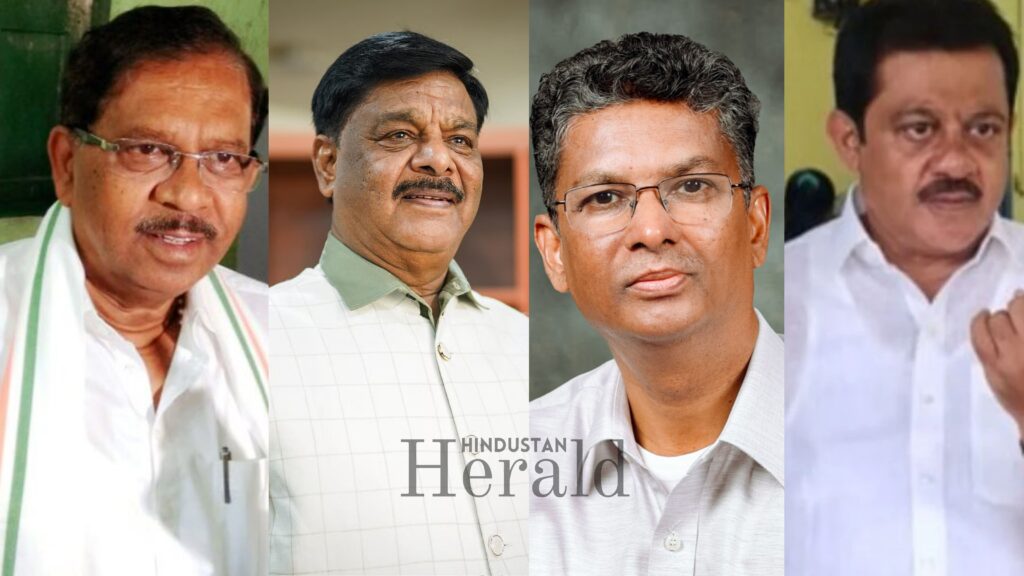
The men in that room are not hard to identify as a group. Home Minister G. Parameshwar, H.C. Mahadevappa, Satish Jarkiholi, Zameer Ahmed Khan, Dinesh Gundurao, and Bairati Suresh are Siddaramaiah’s people, by and large. Not all of them agree on everything, and some carry their own ambitions, but they share a broad interest in what happens to the Chief Minister’s chair over the next few weeks.
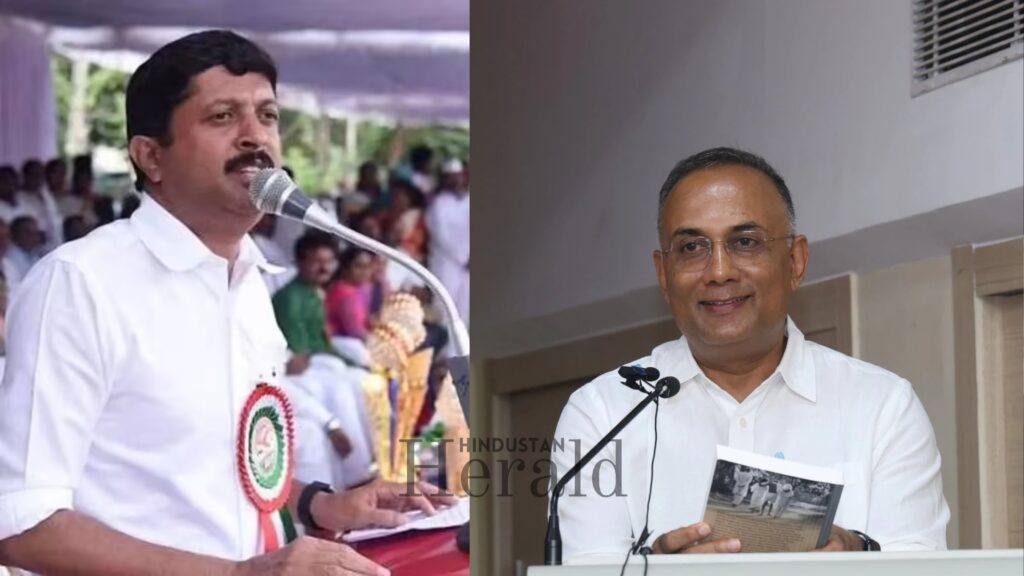
The May 4 vote counting covering five state assembly elections and the Bagalkot and Davanagere South by-elections is around the corner, and in Karnataka’s Congress, that kind of proximity to results tends to sharpen everyone’s focus considerably.
Why This Meeting, Why Now
To understand why a sitting Chief Minister feels the need to gather loyalists at a private address, you have to go back to May 2023. When the Congress swept back to power in Karnataka after years in opposition, the party faced an immediate internal problem: two powerful leaders, both of whom believed they had earned the top job.
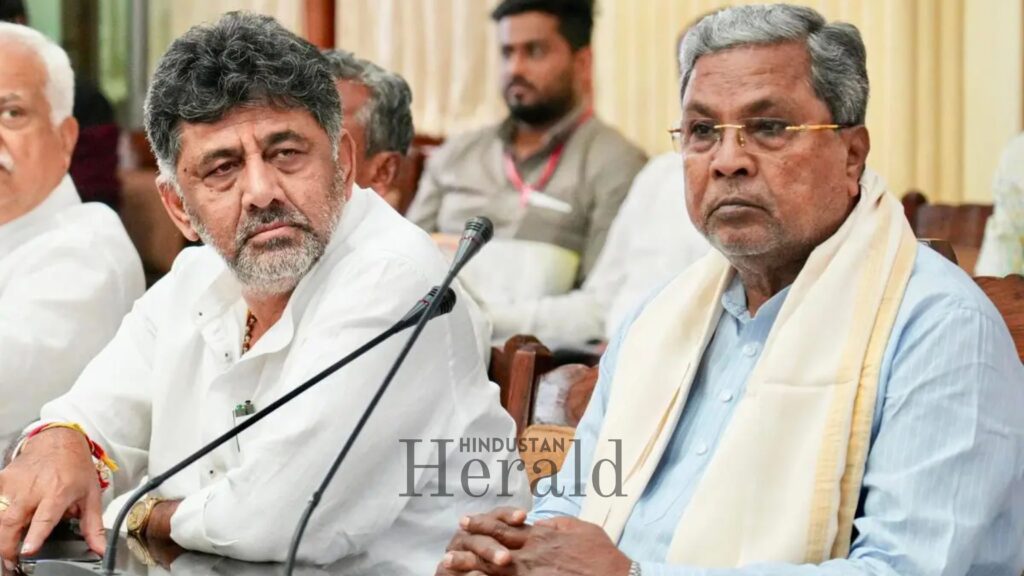
Siddaramaiah had the MLA numbers. D.K. Shivakumar had built and largely bankrolled the party’s recovery. The high command gave the Chief Minister’s post to Siddaramaiah but left the question of succession deliberately open, at least in spirit. Shivakumar became Deputy Chief Minister and continued as KPCC President, a dual role that gave him leverage, but not the chair.
That informal ambiguity has been a slow-burning problem ever since. And now, with the Congress government approaching its three-year mark on May 21, the question has started moving from the party’s background noise into the foreground of its daily functioning.
The Cunningham Road meeting was essentially about that. According to sources, those present discussed how to handle the increasingly realistic possibility that Shivakumar makes a formal move for the Chief Minister’s post in the coming weeks. The message from the room, as it has filtered out, is straightforward: Siddaramaiah should stay, a cabinet reshuffle can be used to keep various factions reasonably satisfied, and nobody should be making decisions about the party’s future in Karnataka without first accounting for the interests of the people who were in that room.
What Siddaramaiah Actually Said
One line attributed to the Chief Minister from that gathering has made its way through party circles with some speed. Siddaramaiah reportedly told those present that he would step aside only if Rahul Gandhi personally told him to.
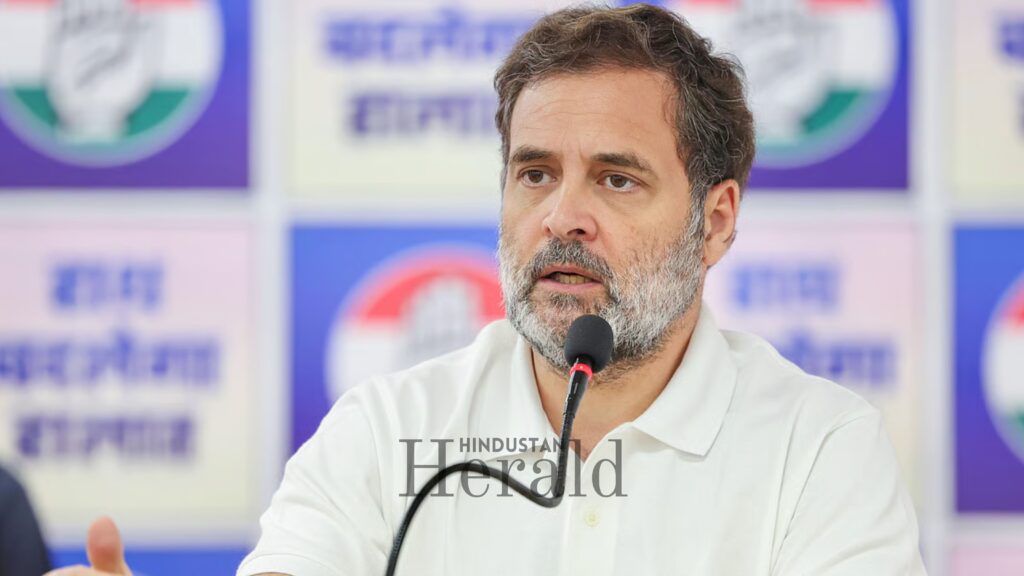
It sounds like a strong statement, and it is. But it is also a calculated one. Siddaramaiah is not saying he will fight the party. He is saying he will not yield to pressure that originates within the state, from Shivakumar’s camp or from anyone else. The bar, as he has set it, is a direct instruction from the Congress’s most significant leadership figure. That is a very high bar to clear, and everyone in that room understood exactly what it meant.
The sequencing question within the party has become its own quiet battle. Siddaramaiah’s camp is pushing for the high command to approve a cabinet reshuffle first, while Shivakumar’s side wants the leadership question settled before any reshuffle is considered. The reason that order matters is not complicated. If Siddaramaiah gets a reshuffle sanctioned by Delhi, it effectively signals that he will serve the full five-year term. That closes Shivakumar out entirely. If the leadership question is settled first, it opens the door. Both camps understand this completely, which is why neither side is budging on the sequencing without a fight.
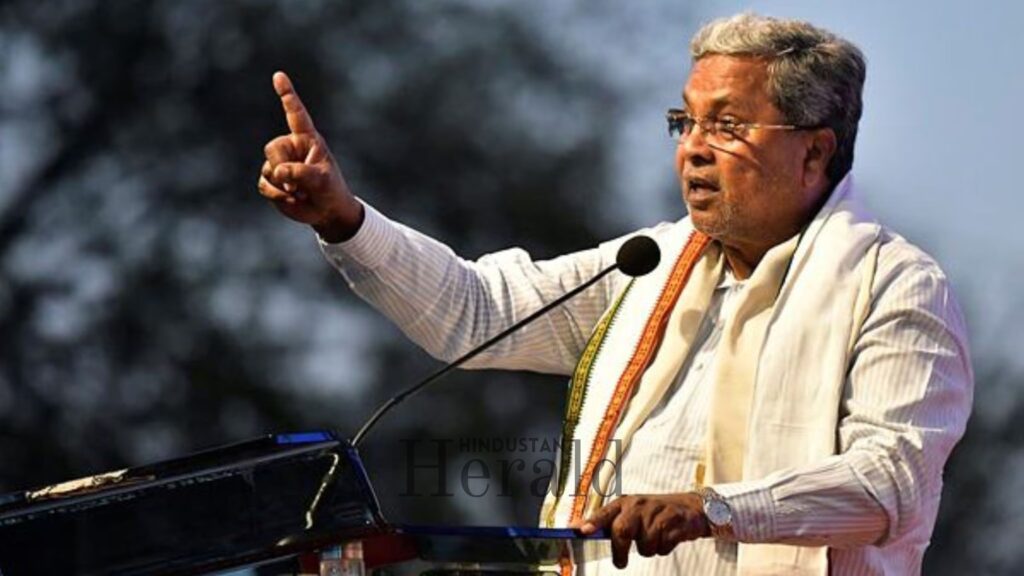
The Cunningham Road meeting also produced something more concrete: a timeline. Former minister K.N. Rajanna is reportedly being sent to Delhi on May 5 to meet high command leaders and make the case for his inclusion in a future cabinet. After May 10, Siddaramaiah himself is likely to travel to Delhi, along with Jarkiholi and Parameshwar. These are not casual visits. This is the Siddaramaiah faction putting boots on the ground at the high command level before Shivakumar can consolidate his own narrative there.
The Davanagere Mess And Why It Stings
There is another thread running through all of this, and it is an uncomfortable one for Siddaramaiah’s camp.
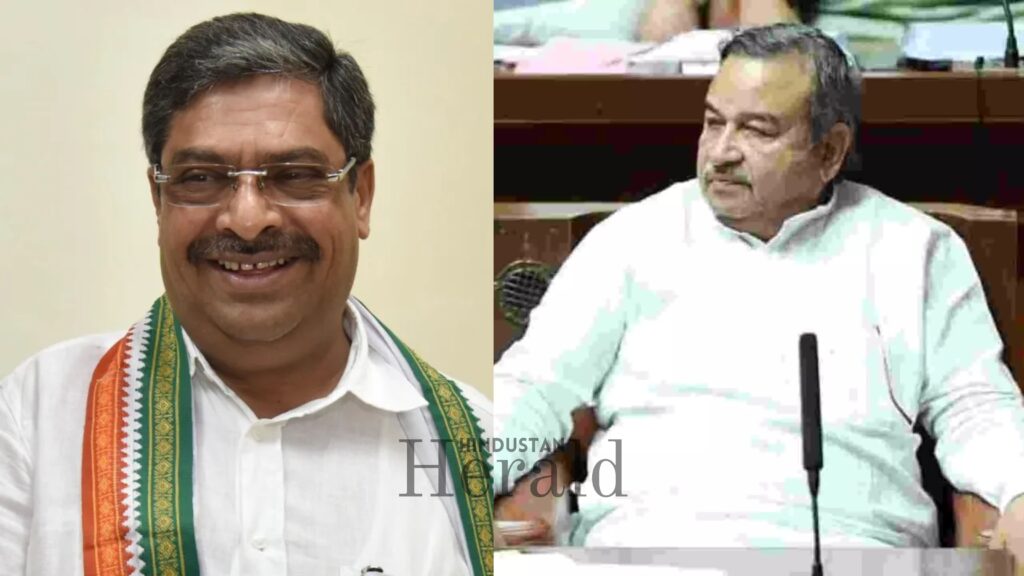
The Davanagere South by-election has triggered a genuine political controversy within the party. Two prominent Muslim leaders, MLC Abdul Jabbar and Naseer Ahmed, who served as the Chief Minister’s Political Secretary, were both hit with disciplinary action. Jabbar was suspended from the party’s primary membership, and Ahmed was removed from his post over allegations that they had worked against the Congress candidate during the by-poll.
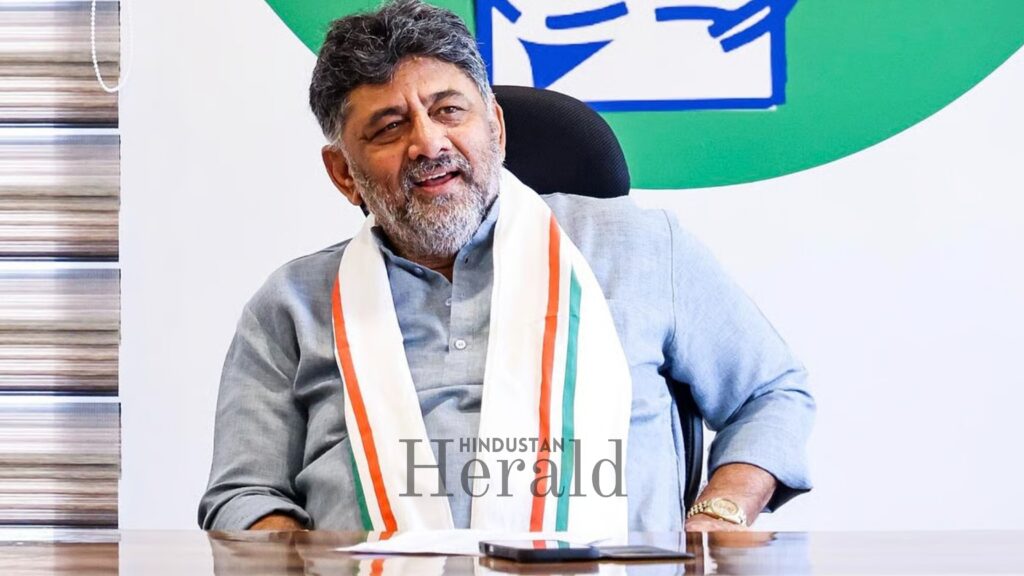
KPCC President D.K. Shivakumar dissolved the party’s Minority Cell after Jabbar stepped down as its chairman, and the suspensions have since drawn a visible reaction from sections of the Muslim clergy and community leadership in the state.
The problem for Siddaramaiah is that these are not peripheral figures. Naseer Ahmed was his Political Secretary. The disciplinary action hits the Chief Minister’s own political network and threatens to create a perception of distance between his government and minority communities that have been central to his Ahinda political base for over two decades.
Members of Ulema-e-Karnataka held a press conference questioning the basis of the action, alleging that similar measures were not taken against others who had openly criticised the party during the by-election. They rejected claims that Muslim leaders had actively worked to damage Congress’s prospects, and said no evidence had been publicly presented.
The Cunningham Road meeting apparently touched on this. Siddaramaiah is said to have told those present that Shivakumar had no involvement in the decision to initiate the disciplinary proceedings. Whether that is accurate or a political claim designed to prevent the issue from becoming another fault line between the two camps is not entirely clear. What is clear is that the Davanagere situation has added stress to a government that already had enough of it.
Jarkiholi And The Succession Signal Nobody Wants To Name
Satish Jarkiholi is, by most accounts, a careful political operator. He says enough to signal intent without saying so much that he creates a target on his back. His recent comments have followed that pattern almost exactly.
When reporters asked him about what comes after May 4, Jarkiholi confirmed that significant decisions a cabinet reshuffle and a possible change in the KPCC Presidency are expected once the counting is done. That much is not surprising. But then he added something else. He mentioned the first Ahinda rally in Hubballi on July 24, 2005, noting that he had been part of the movement since its earliest days.
That reference was not accidental. The Ahinda platform, the Kannada acronym representing minorities, backward classes and Dalits, is Siddaramaiah’s political signature more than anyone else’s in Karnataka. By invoking his own long association with that movement, Jarkiholi was placing himself in a line of succession, quietly, without actually saying it. He is the one who aspires to lead Ahinda after Siddaramaiah. He is also the one whose name keeps coming up most prominently in connection with the KPCC President position.
If Shivakumar does eventually become Chief Minister, Jarkiholi’s camp is reportedly ready to push hard for the KPCC Presidency as a condition. Holding the organisational reins of the party in Karnataka, while someone from the Vokkaliga community occupies the Chief Minister’s chair, is not a bad position to be in for someone with Jarkiholi’s ambitions.
The Dalit CM Question
Running alongside all of this, in slightly quieter tones, is a conversation about G. Parameshwar. Sources indicate that within the party, there is active discussion about the possibility of positioning Parameshwar as a candidate for the Chief Minister’s role under a Dalit representation framework. Karnataka has a large and politically significant Dalit population, and the argument being made in some corners is that a Dalit Chief Minister would be both symbolically important and electorally useful for the party heading into the next election cycle.
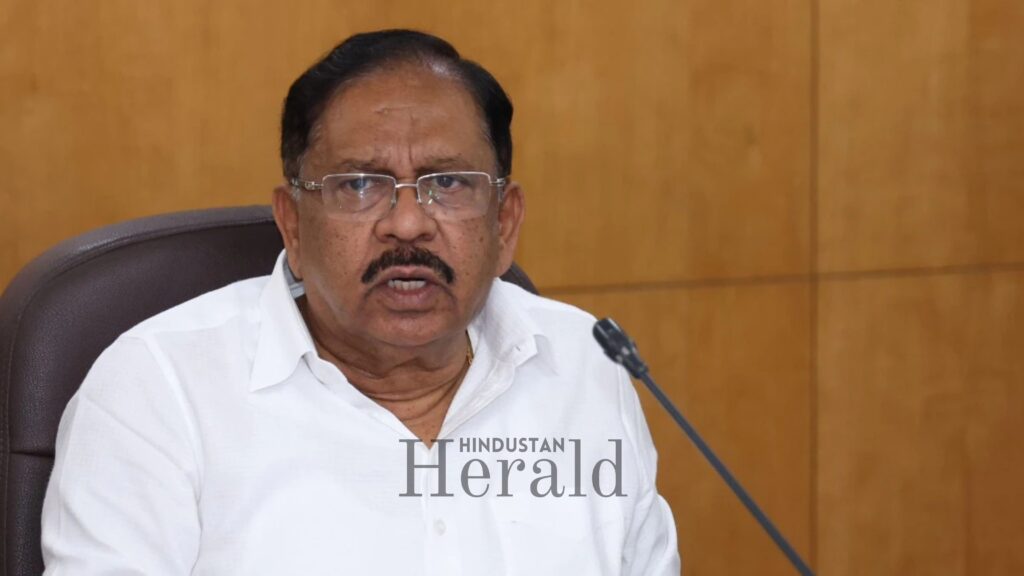
Whether this is a genuine policy discussion or a tactical move by the Siddaramaiah camp to complicate Shivakumar’s push is hard to say with any certainty. It may well be both. What it does is introduce another variable into an already complex political equation, and it keeps Shivakumar’s path to the top from looking like a clear road.
The Real Stakes On May 4
By the time votes are counted on May 4, Karnataka’s Congress will be watching two sets of numbers simultaneously. One is the official result in Davanagere South and Bagalkot. The other is the internal accounting that every faction will do in the hours immediately after.
A decent result, particularly in Davanagere South, gives Siddaramaiah room. He can go to Delhi after May 10 and make the case that the government is delivering, that disruption at the top would be counterproductive, and that the party’s interests are best served by staying the course. A poor result, especially if the minority voter backlash over the disciplinary controversy turns out to be real, gives Shivakumar’s camp exactly the ammunition it has been waiting for.
That is the calculation that drove a sitting Chief Minister to gather his closest allies at a private address on Cunningham Road before the results are even in. In Karnataka’s Congress, you do not wait for events to unfold and then react. You prepare for every outcome, plant your arguments with the high command in advance, and make sure your people are positioned before your opponents know what you are doing.
Siddaramaiah has been in this business long enough to know all of that better than most. The May 21 three-year mark is less than four weeks away. Between now and then, quite a lot is going to happen.
Stay ahead with Hindustan Herald — bringing you trusted news, sharp analysis, and stories that matter across Politics, Business, Technology, Sports, Entertainment, Lifestyle, and more.
Connect with us on Facebook, Instagram, X (Twitter), LinkedIn, YouTube, and join our Telegram community @hindustanherald for real-time updates.

Covers Indian politics, governance, and policy developments with over a decade of experience in political reporting.
- Ananya Sharma

- Ananya Sharma
- Ananya Sharma
- Ananya Sharma




 Arun Upadhayay
  Prakash Nair