
 By Ananya Sharma
Pathanamthitta, April 24: Sannidhanam expected to look up and see a helicopter bearing down on them Thursday morning.
But that is exactly what happened. A Coast Guard Chetak helicopter flew low over the Sree Ayyappa Temple complex at Sabarimala, right over the Sannidhanam, the sanctum zone that sits at the spiritual and administrative heart of one of India’s most visited pilgrimage sites. Pilgrims on the ground froze. Temple staff were caught off guard. And the Pamba Police, whose job it is to know everything that happens in and around that restricted zone, reportedly had no idea the aircraft was coming.

By the end of Thursday, a formal case had been registered. An inquiry was underway. And the Indian Coast Guard was explaining that bad weather made them do it.
When the Sky Broke Protocol
The incident unfolded on the morning of April 23. According to multiple Kerala news reports, the Chetak helicopter, a Coast Guard aircraft, was spotted flying at a conspicuously low altitude directly over the Sreekovil area at Sannidhanam. This is not open sky over a paddy field. This is the innermost perimeter of a temple complex that sits inside the Periyar Tiger Reserve in Pathanamthitta district, governed by a dense web of security clearances, forest conservation protocols, and civil aviation rules that together make any unannounced aerial entry a serious matter.

Devotees present at the time saw the helicopter pass overhead and, understandably, panicked. In a place where even the arrival of a new vehicle at Pamba base camp draws scrutiny, a low-flying aircraft above the shrine was not something anyone had a script for.
What has particularly agitated authorities is that the Pamba Police station, the primary law enforcement post covering the Sabarimala zone, reportedly had no prior knowledge of the helicopter or its route. That detail sits at the centre of the investigation now taking shape.
The Coast Guard’s Weather Argument
The Coast Guard did not take long to respond. Their position, as reported by Malayalam news outlets including Manorama News and Madhyamam, is straightforward: the weather turned bad, the sky clouded over, and the aircraft was forced off its planned route. The Chetak ended up over Sannidhanam not by design but because the Western Ghats did what they often do they closed in fast, left the pilots with deteriorating visibility, and forced a deviation.
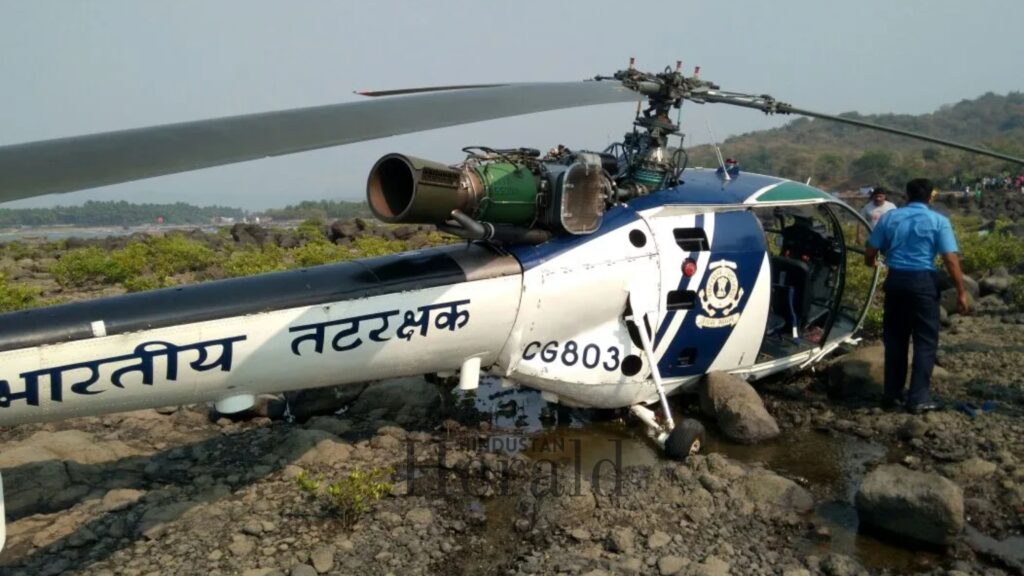
It is, in isolation, a plausible explanation. The hills around Sabarimala are notorious for sudden weather shifts. Cloud cover can descend in minutes, and navigation in those conditions is genuinely difficult even for experienced crews. The Chetak is an older platform that has served the Coast Guard for decades reliable, but not equipped with the kind of redundant navigation systems found on more modern aircraft.
That said, a weather deviation explains the error. It does not explain the silence. At no point, as per sources tracking the inquiry, did the Coast Guard alert local authorities that their aircraft might be operating in the vicinity of a restricted zone. That absence of communication is the harder thing to account for.
A Case and a Probe
Pamba Police registered a formal case by the end of Thursday. The grounds: the helicopter flew over a high-security zone without the required permissions or advance coordination with local authorities. Simultaneously, an ADGP-level inquiry was ordered, as reported by Manorama News, to examine how this happened, why local police were in the dark, and what the flight’s original mission parameters were.
Officials posted at Sannidhanam will be asked to submit detailed accounts. The Coast Guard crew will be required to explain their route, the nature of the weather disruption, and the decision-making process that led them over the temple. What happens next depends, in part, on how cooperative the central agency proves to be with a state police inquiry a dynamic that has historically produced friction in cases involving jurisdiction across state and central lines.
Sabarimala Is Not Just Any Location
It is worth pausing on the geography here, because it matters enormously to understanding why this incident carries the weight it does.
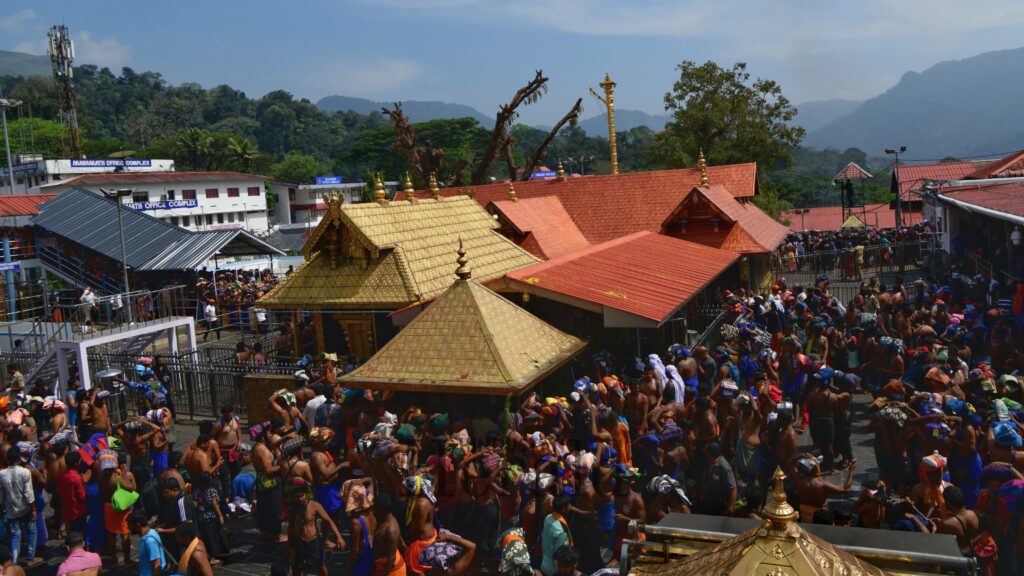
Sabarimala sits at roughly 914 metres above sea level in the middle of dense forest in the Pathanamthitta district. The Sannidhanam zone, where the main shrine stands, is accessible only on foot from Pamba, a trek of several kilometres through protected forest. There is no road to the temple. During the pilgrimage season, the corridor from Pamba through Neelimala to Sannidhanam hosts tens of thousands of pilgrims daily, all moving under the watch of the Kerala Police, the Travancore Devaswom Board, forest department personnel, and disaster response teams.
The airspace over this zone is restricted by a combination of civil aviation rules and forest reserve regulations. Scheduled overflights, including those by government agencies, require specific approvals from multiple authorities. This is not a procedural nicety. It is a hard boundary, established partly because of Sabarimala’s ecological sensitivity and partly because a location that draws millions of devout visitors every year is also, by definition, a location that demands the highest security standards.
A helicopter appearing low and unannounced above that zone is, in security terms, a scenario that falls into the category of things that are not supposed to be possible.
The Institutional Gap This Exposes
There is a pattern here worth naming. Sabarimala’s security architecture is built primarily around the pilgrimage season, the months between November and January, plus certain festival windows. During those periods, the state government deploys massive resources, coordinates with central agencies, and maintains tight protocols across every access point. Outside those windows, or at the margins of those windows, coordination tends to thin out.
It is not that the rules stop applying. It is that the density of enforcement and inter-agency communication drops. And when a Coast Guard mission is being planned somewhere along the Kerala coast or the interior, the question of whether Sabarimala’s restricted zone has been factored into the route planning may not receive the attention it deserves, especially from personnel whose usual operational theatre is maritime.
That is the gap Thursday’s incident has landed squarely in the middle of. It is not a gap born of malice or indifference. But institutional gaps do not need malice to create real problems. They just need one morning of cloudy skies and a route deviation that nobody anticipated.
What the Pilgrims Felt
This part tends to get lost in the institutional back-and-forth that follows incidents like this, so it deserves a moment.
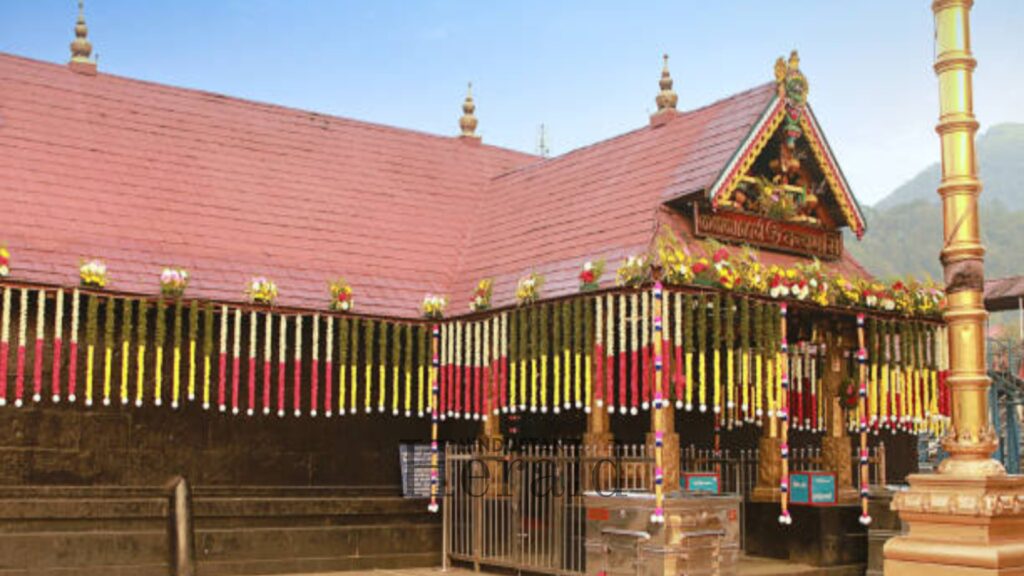
For the devotees standing at Sannidhanam on Thursday morning, the sudden appearance of a low-flying helicopter above the shrine was not a procedural event. Sabarimala is, for the people who climb that hill with their irumudi on their heads, one of the most charged spiritual experiences of their lives. The Sannidhanam is where that experience peaks where the 18 sacred steps lead to the idol of Lord Ayyappa, where the air itself seems to carry a different quality of silence.
A military aircraft dropping low over that space, without warning, without explanation in those first moments, nobody knew what it was. Nobody knew if it was a threat. The confusion and fear that spread through the crowd on Thursday morning was real, and it will not be resolved by a Coast Guard weather report or a police FIR.
For Now, Questions Outnumber Answers
The probe is young. The Coast Guard has offered its initial explanation and will presumably submit a formal response to the ADGP inquiry in the days ahead. Pamba Police have their case on record. The Travancore Devaswom Board has not yet made a public statement, nor has the Kerala government at the ministerial level both conspicuous silences, given how politically sensitive Sabarimala has historically been.
What investigators will want to establish is not just what went wrong on Thursday but whether the airspace protocols governing Sabarimala are actually fit for purpose. If a central government agency operating in good faith, navigating genuinely bad weather, can still end up flying low over the sanctum of one of India’s most important temples without any local authority being aware, then the system has a problem that one inquiry will not fix.
Whether that system-level question gets asked and answered honestly is perhaps the more important test of what comes out of this episode.
Stay ahead with Hindustan Herald — bringing you trusted news, sharp analysis, and stories that matter across Politics, Business, Technology, Sports, Entertainment, Lifestyle, and more.
Connect with us on Facebook, Instagram, X (Twitter), LinkedIn, YouTube, and join our Telegram community @hindustanherald for real-time updates.

Covers Indian politics, governance, and policy developments with over a decade of experience in political reporting.
- Ananya Sharma

- Ananya Sharma
- Ananya Sharma
- Ananya Sharma




 Arun Upadhayay
  Prakash Nair