
 By Ananya Sharma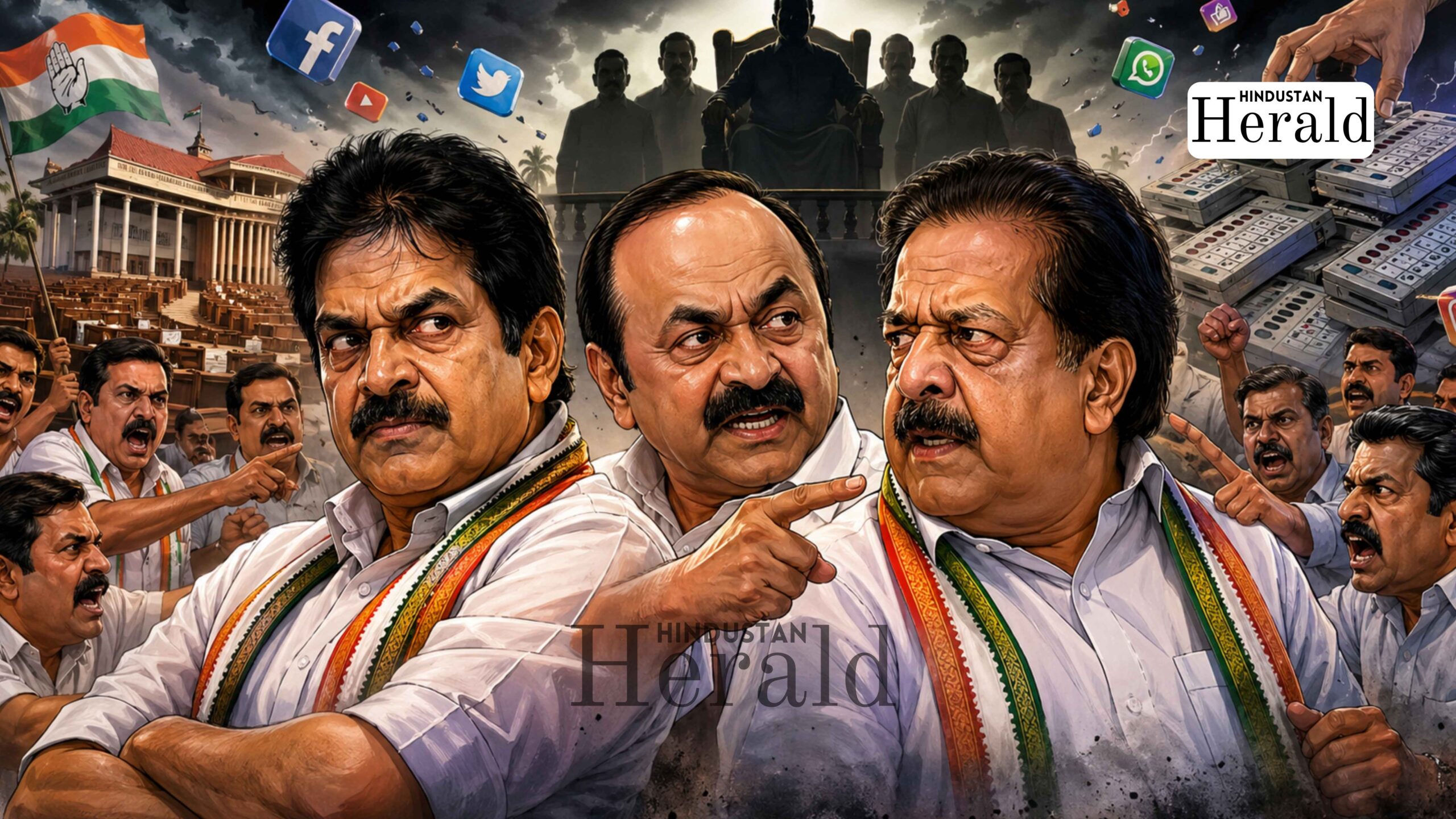
Thiruvananthapuram, April 25: The Congress party in Kerala is fighting over who gets to be chief minister, and the results have not even been counted yet.
With the Kerala Assembly election concluded on April 9 and votes set to be counted on May 4, a noisy, faction-driven leadership contest has broken out within the United Democratic Front. The squabble is happening not in private meetings or party offices but on Instagram reels, Facebook posts, WhatsApp forwards, and viral comment sections. Senior party leaders are rattled. The high command in Delhi has already stepped in. And the Left watching from the other side could not have asked for better material.
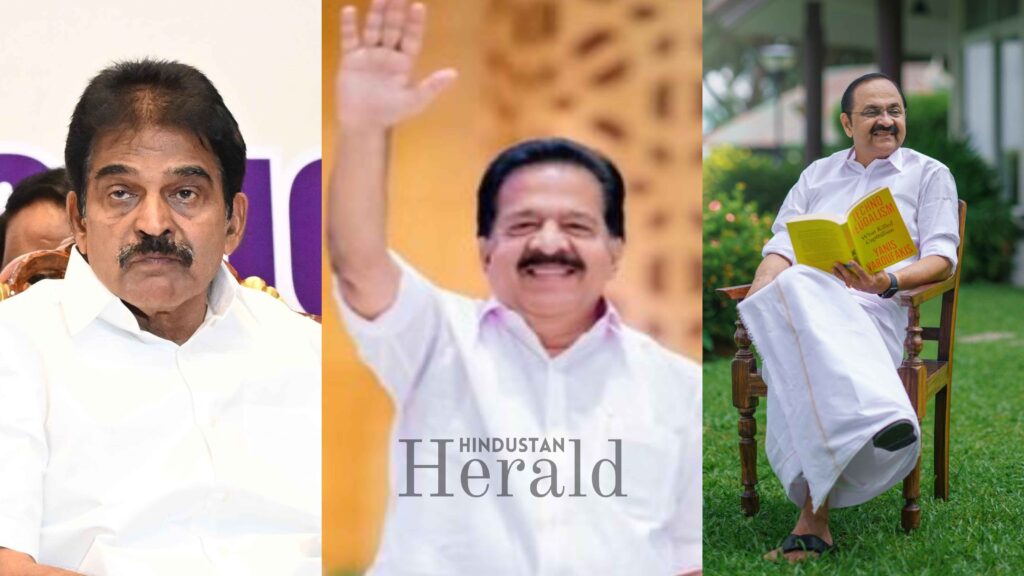
Three names are at the centre of it: AICC General Secretary and Alappuzha MP K.C. Venugopal, Kerala’s Leader of Opposition V.D. Satheesan, and Congress Working Committee member Ramesh Chennithala. Each has loyalists. Each camp has decided that waiting ten days is too long.
How a Facebook Post Broke the Dam
It did not start with a press conference. It started with a social media post as most political fires do now.
Mohammed Shiyas, the Ernakulam District Congress Committee president and a Satheesan loyalist, made the first public move. He suggested the next chief minister should come from Ernakulam district. Everyone understood what he meant. Satheesan himself quickly played it down, but the comment had already done its job.
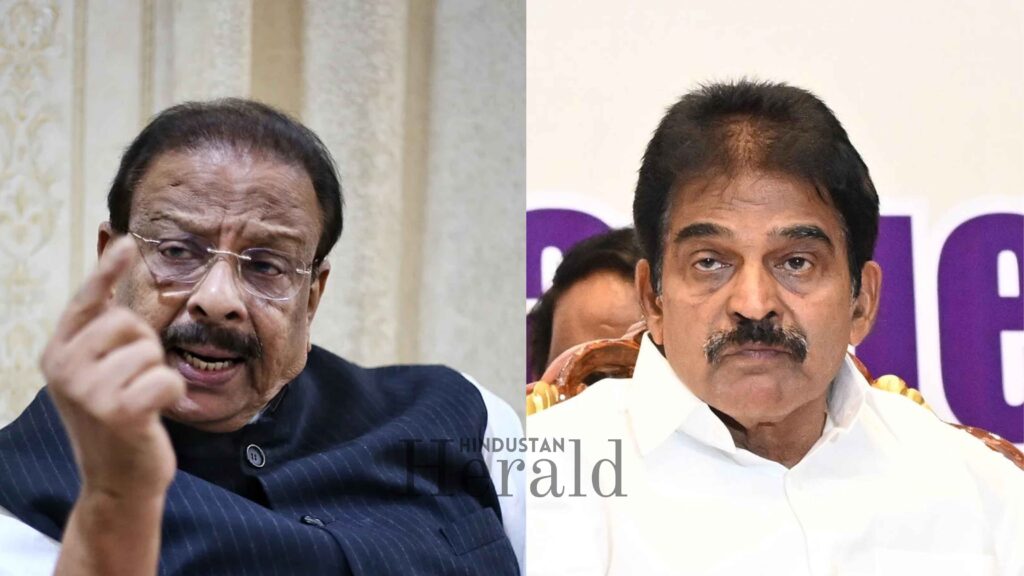
Then came Kannur MP K. Sudhakaran, who took to Facebook to back K.C. Venugopal. He praised Venugopal’s organisational abilities and credited him for the party’s recent successes. Notably, he made no mention of Chennithala a pointed omission that nobody missed. The post drew immediate backlash from Satheesan’s supporters, and Sudhakaran eventually locked the comments section.
Venugopal responded with careful restraint. He acknowledged Sudhakaran’s right to speak his mind but made clear that this kind of public discussion was not helpful before the results.
Chennithala, who is himself very much in the running, called the entire episode unnecessary. “People have already voted, and the machines are in safe custody,” he told journalists in Kochi. “There is no meaning in creating such controversies before the counting starts.” He smiled when asked about Sudhakaran backing Venugopal. “Sudhakaran is a good friend of mine,” he said.
Reels, Tributes, Podcasts, and a High Command Losing Patience
What sets this episode apart from ordinary Congress infighting, and there is plenty of ordinary Congress infighting in Kerala, is the medium and the scale. Each camp has deployed social media like a campaign machine. Promotional reels. Long-form videos dressed up as political documentaries. Podcast-style discussions making the case for their candidate. Comment sections turned into arenas.
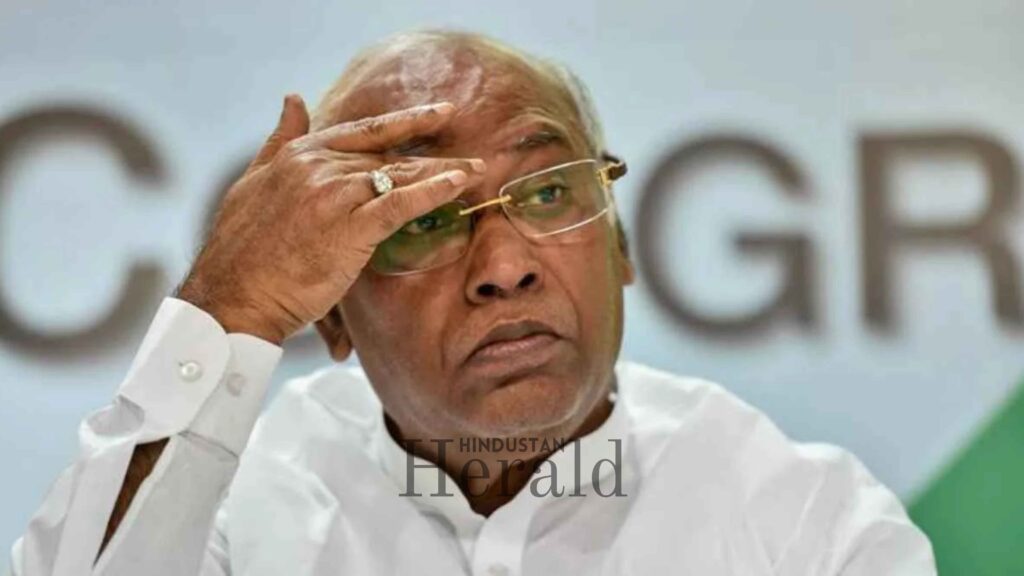
The AICC eventually had enough. Congress president Mallikarjuna Kharge personally called senior Kerala leaders to assess how bad things had got. The party issued a strict directive: no public comments on the chief minister’s post until results are declared.
The leaders dutifully fell in line. Their online armies, not so much.
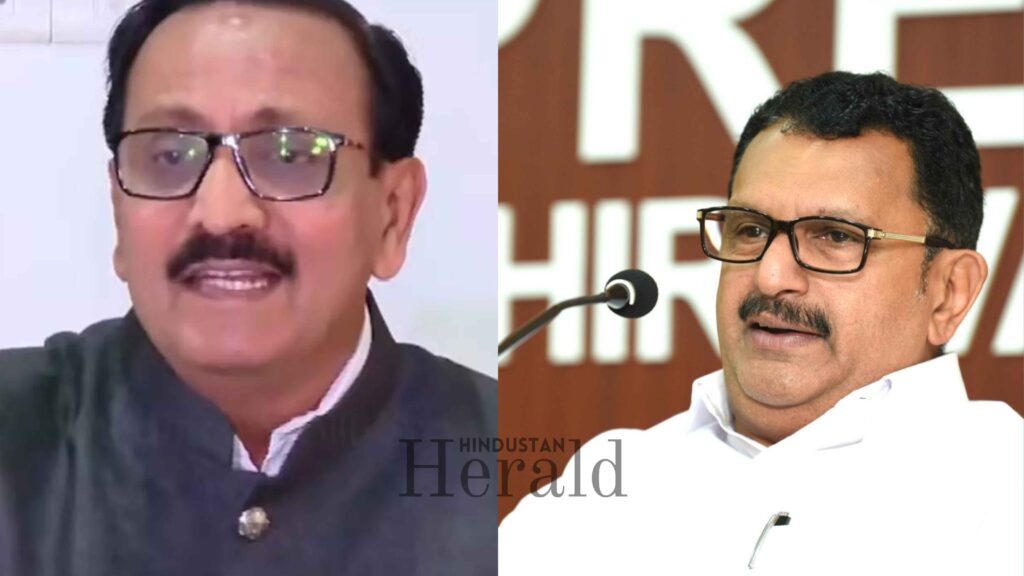
Veteran Congress MP M.K. Raghavan publicly called the whole thing strange, questioning why the debate originated from Ernakulam in the first place. Senior leader K. Muraleedharan warned that this kind of posturing was only demoralising the workers who had put in months of ground-level effort. Coalition ally IUML has also signalled its discomfort. A new government that cannot sort out its leadership before it has even won is not a good look for anyone in the alliance.
Three Men, Three Arguments
The fight is not random. Each candidacy represents something specific within the Kerala Congress ecosystem, and understanding that matters for anyone following national news India politics.
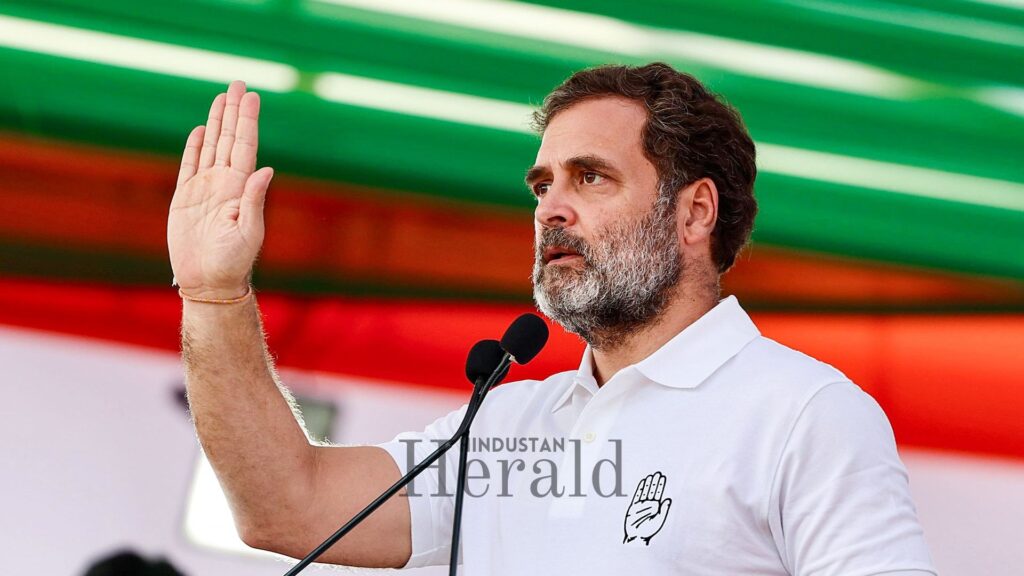
Venugopal’s case rests on his proximity to Rahul Gandhi, his role managing party affairs at the national level, and his reputation as someone who can hold difficult factions together. His backers argue he is a consensus figure. His critics point to an unavoidable structural problem: he is a Rajya Sabha MP, not an MLA. Making him chief minister would trigger a double bypoll one for an Assembly seat so he can assume office, and a second for his Alappuzha Lok Sabha seat. Two by-elections, high political cost, and a new government immediately on the defensive.
The deeper irony is that Sudhakaran himself had earlier led resistance against the high command’s rule barring sitting MPs from contesting Assembly seats, citing precisely the bypoll problem. He is now backing a candidate who would create two of them. Inside the party, this is being read as a move against Satheesan, not a move for Venugopal.
Satheesan is an elected MLA, ran an aggressive opposition campaign that won him genuine respect among younger workers, and is seen as having genuinely earned the position. The counterargument from veterans is that he has never served as a state cabinet minister and still needs to build stronger relationships with key community organisations. Some feel he is not quite ready yet.
Chennithala is the experienced candidate. Long years in government, deep administrative knowledge, and the kind of political durability that comes from surviving multiple election cycles. His camp says he is the safest choice. His detractors, mostly in the Satheesan corner, say his moment has passed.
The Disease That Never Quite Gets Treated
Factionalism is not new in the Kerala Congress. It is, in many ways, its default operating condition. What is different this time is the timing and the stakes.
The UDF appears to be heading into May 4 with real momentum. Ground sentiment and early exit signals have pointed toward a genuine chance of ending the LDF’s second consecutive term. Pinarayi Vijayan’s government has governed for ten years. The anti-incumbency is real. This should be a moment for Congress to project confidence and unity.
Instead, the national news cycle in India is filled with stories about Congress leaders squabbling over a chair nobody has formally won yet. The CPM, watching all of this, has had very little to say.
The results are due on May 4. The Assembly’s tenure ends on May 23. If the UDF does cross the majority line, there will be days, not weeks, to settle on a name. At that point, the high command will step in and make the call, which has always been how these things ultimately end in Congress. MLAs will be consulted, numbers will be counted quietly, and a decision will come down from Delhi.
But the damage from the past two weeks, the reels, the documentaries, the podcast debates, the flooded comment sections, the locked comment sections, the Rahul Gandhi loyalists versus the Kerala-first voices that will linger. Inside the UDF, the distrust that this episode has surfaced does not simply dissolve after the results are read out.
For now, the official line holds: the high command decides, the process will be followed, and no one should be talking about this. Ten days from counting day in one of India’s most politically literate states, the Congress is trying very hard to project discipline it clearly does not have.
Stay ahead with Hindustan Herald — bringing you trusted news, sharp analysis, and stories that matter across Politics, Business, Technology, Sports, Entertainment, Lifestyle, and more.
Connect with us on Facebook, Instagram, X (Twitter), LinkedIn, YouTube, and join our Telegram community @hindustanherald for real-time updates.

Covers Indian politics, governance, and policy developments with over a decade of experience in political reporting.
- Ananya Sharma

- Ananya Sharma
- Ananya Sharma
- Ananya Sharma




 Sandeep Verma
  Arun Upadhayay