
 By Ananya Sharma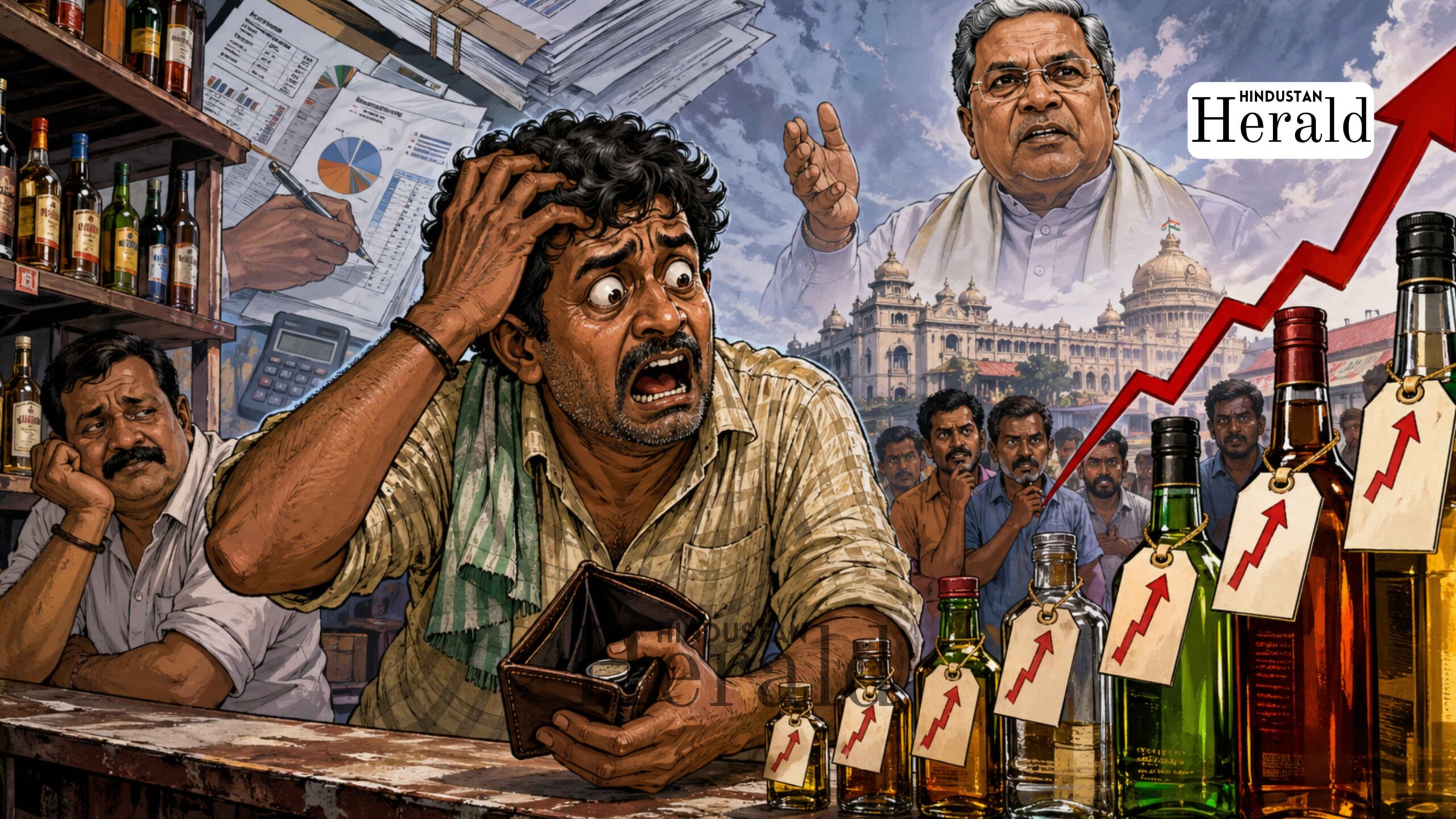
Bengaluru, April 25: Karnataka government has once again reached into the pockets of the state’s liquor consumers, and this time, it is dressing the move up in the language of global best practices and taxation modernisation. The fifth excise revision since the Congress came to power in 2023 is on its way, likely from May 1, and the people who will feel it most are the ones who can least afford to.
A draft notification published on April 18 is at the centre of this. It proposes a fundamental change to how liquor is taxed in Karnataka, replacing the existing price-linked slab model with something called the Alcohol-in-Beverage framework, or AIB. Sounds sophisticated. In practice, for anyone buying a quarter of whisky on the way home from a ten-hour shift, it means paying more. Quite a bit more.
The Old System and Why It Is Being Replaced
Under the current setup, Karnataka’s excise duty is tied to a brand’s Maximum Retail Price. Expensive brands pay higher taxes. Budget brands sit in lower slabs and attract lower duties. It is not a perfect system, but it has one unambiguous virtue: it does not punish the budget buyer as aggressively as the new model threatens to.
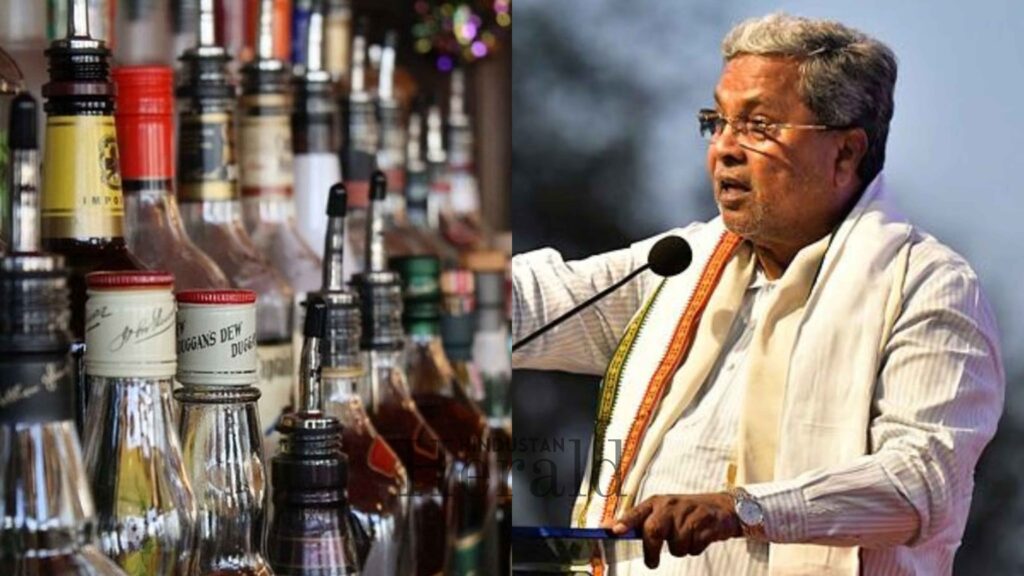
The AIB model changes the basic unit of taxation from price to potency. Tax is now calculated on the volume of pure alcohol per litre, with a uniform duty of Rs 1,000 per litre of pure alcohol applied across categories, whether you are buying whisky, rum, brandy, beer, or wine. The more alcohol in the bottle, the more you pay. Full stop.
The government’s logic is not entirely without merit. Several Western countries use alcohol-by-volume-based taxation, and there is a reasonable public health argument to be made for it. If you tax stronger drinks more heavily, you theoretically nudge consumption toward lower-strength options. Karnataka, if this goes through, would be the first Indian state to formally adopt this kind of framework. That is a headline the Siddaramaiah government will not be unhappy with.
That said, what works in Denmark or Scotland does not transplant cleanly into a state where the most common liquor purchase is a Rs 95 quarter of Indian-made whisky and where the buyer is often a construction worker, an auto driver, or a daily-wage earner. The policy’s global pedigree does not make it locally fair.
What the Numbers Actually Say
Here is the part that matters most to the person standing at the wine shop counter. The price of a quarter bottle in the first slab goes from Rs 80 to Rs 95. The second slab moves from Rs 95 to Rs 110. Third slab, Rs 120 to Rs 135. Fourth slab, which is currently at Rs 150, gets revised to Rs 170. That is a Rs 20 jump in one go.
Taken together, the MRP on a standard full bottle across these popular categories is expected to climb by Rs 50 to Rs 100. And that is before the bar or restaurant adds its service charge on top. An evening out in Bengaluru, already not a cheap affair, just got a little more expensive. Again.
These first four slabs, it is worth emphasising, account for 80 percent of the state’s total excise revenue. They are also the categories consumed overwhelmingly by middle-class and lower-income buyers. That is not a coincidence. It is also not a comfortable statistic when the government justifies these hikes in the name of funding welfare schemes for the same demographic.
Who Is Actually Celebrating
There is a group that is quietly pleased with this notification: the brewers. Beer is a low-alcohol beverage. Under a system that taxes alcohol content rather than retail price, beer manufacturers pay proportionally less duty than distillers of whisky or rum. Brewers have called this a watershed moment, and that enthusiasm is genuine.
The stock market noticed too. Shares of United Breweries and Radico Khaitan moved up by as much as 3 percent after the news broke. Investors are reading the AIB shift as a sign of structural efficiency in the excise regime. Maybe it is. But investors and the auto driver buying a quarter after a long day live in very different financial universes, and the market rally does not tell you much about what May 1 feels like at the wine shop counter.
Distillers, for their part, have been vocal in their opposition. They argue that a uniform tax on pure alcohol ignores the economic diversity of Karnataka’s drinking population. A premium whisky buyer and a budget whisky buyer may both be drinking 42.8 percent alcohol, but one of them is stretching a tight budget to do it. Taxing them at the same rate per unit of alcohol is technically equitable and practically regressive.
Five Hikes in Three Years
This is the number that has genuinely angered people: five. Five rounds of exercise revision since May 2023. Each one accompanied by some version of the same explanation that the state needs revenue, that the guarantee schemes must be funded, and that liquor taxation is a necessary instrument of fiscal management. All of that may be technically true. It does not make the accumulation any less exhausting for the consumer at the receiving end.
Liquor traders have been saying for months that this level of revision frequency makes it nearly impossible to run a stable business. Pricing changes, inventory gets repriced, consumers balk, sales dip, and then the cycle begins again. A wine shop owner in Mysuru or Hubballi is not operating in an environment of policy certainty. They are adapting to a moving target, and the adaptations have costs that ultimately pass down the chain.
Consumer groups have framed it even more bluntly. The government, they say, has repeatedly identified liquor consumers, specifically budget liquor consumers, as a reliable ATM for funding its political commitments. Free electricity, cash transfers for women, free bus travel: all worthwhile in their own right, all expensive, and all partly underwritten by the quarter-bottle buyer who has no organised political voice and no real lobby fighting his corner.
The Label Issue Nobody Is Talking About
Buried at the back of the same draft notification, almost as an afterthought, is a proposal to remove the mandatory ingredient disclosure requirement for beer manufacturers. Currently, brewers must list composition details, including sugar content, on labels for ales, porters, stouts, and similar drinks. The government wants to scrap that requirement, arguing it reduces compliance burden and improves ease of doing business.
Consumer rights advocates are not impressed. At a moment when urban Indians are paying more attention than ever to what goes into what they eat and drink, removing nutritional transparency from a widely consumed beverage reads as a step in the wrong direction. The government’s framing, that this is about helping business is not inaccurate. It is just that helping business and serving the consumer are not always the same thing, and this notification is a fairly good illustration of that gap.
The Bigger Picture
Karnataka’s excise department is one of the state’s most significant revenue generators. The pressure to keep that revenue growing is real, and liquor taxation is politically easier to defend than most other options because it can always be packaged as a public health measure. Drink less, the subtext goes. Or at least drink less of the strong stuff.
As it turns out, that argument wears thin after the fifth revision. The state is not taxing to discourage consumption in any meaningful public health sense. It is taxing because it needs the money, and liquor consumers are a captive, recurring revenue source who do not march in protest and do not have a sympathetic media narrative on their side.
The AIB model may well be the future of liquor taxation in India. It is rational, it is internationally aligned, and in the long run, it may even produce fairer outcomes if implemented thoughtfully. But right now, in Karnataka, in April 2026, it is arriving as the fifth price hike in three years, on top of a population that is already stretched, without meaningful offsetting relief, and with the fine print of a label transparency rollback tucked quietly alongside it.
May 1 is days away. The quarter-bottle buyer will find out soon enough what the new arithmetic looks like. Something tells them they already know.
Stay ahead with Hindustan Herald — bringing you trusted news, sharp analysis, and stories that matter across Politics, Business, Technology, Sports, Entertainment, Lifestyle, and more.
Connect with us on Facebook, Instagram, X (Twitter), LinkedIn, YouTube, and join our Telegram community @hindustanherald for real-time updates.

Covers Indian politics, governance, and policy developments with over a decade of experience in political reporting.
- Ananya Sharma

- Ananya Sharma
- Ananya Sharma
- Ananya Sharma




 Sandeep Verma
  Arun Upadhayay