
 By Neeraj Kapoor
New Delhi, May 2: Most people in India had no idea what was coming this morning. One moment you are making chai, arguing with someone over the TV remote, or just lying around doing nothing in particular on a Saturday. Then your phone goes off. Not a regular notification ping. Something louder. More aggressive. The screen lights up with a message from an authority called NDMA, and for a second, genuinely, you wonder if something has gone wrong somewhere.
Cell broadcast alert
Nothing had gone wrong. But the government wanted you to feel exactly that jolt.
Welcome to India’s new emergency alert system. It buzzed its way into millions of pockets and purses today, and whether people liked it or not, it did its job.
Nobody Saw It Coming, And That Was the Point
Here is the thing about emergency alerts. If everyone knows exactly when they are coming, they stop being alerts. They become scheduled announcements. The whole purpose of a system like this is to interrupt you, to break through whatever you are doing and make you look at a message that could, on any given future day, save your life.

Today was a test. Officials made that clear well in advance, at least to those who follow government updates closely. But a large number of ordinary people had no idea. And so when the alarm sounded, they panicked for a second, checked the screen, and then felt a mix of relief and mild irritation.
That reaction, chaotic and human and slightly annoyed, is actually a sign that the technology worked.
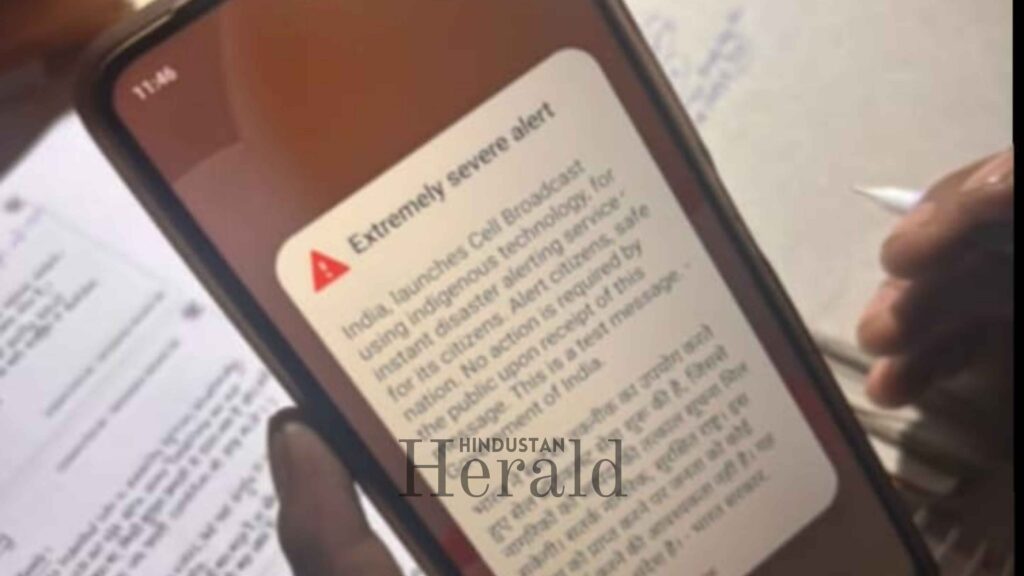
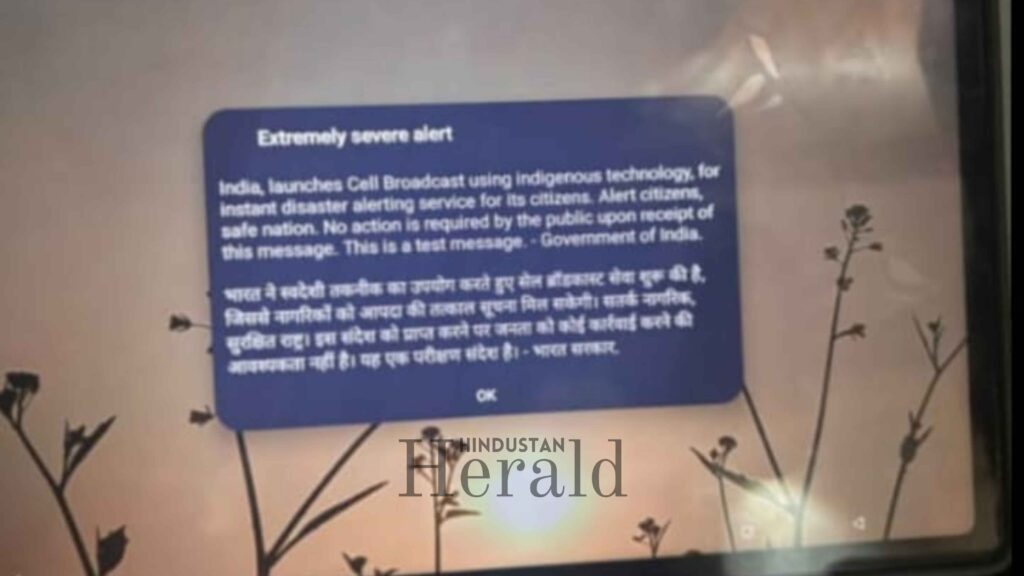
The message most people received said something like: “NDMA will test Cell Broadcast Alerts on 2 May 2026 in your area. On receiving the message on your mobile phone, no action is required. Please do not panic.”
Please do not panic. Written right there in the alert. Which is the kind of instruction that makes you panic a little, if you are being honest.
So What Exactly Did the Government Launch Today
Union Home Minister Amit Shah and Communications Minister Jyotiraditya Scindia formally unveiled a new disaster alert technology called Cell Broadcast today. The launch happened alongside a live nationwide test that sent alerts to phones across Delhi NCR and all state and union territory capitals simultaneously.
The system was built by an Indian government body called C-DOT, which stands for the Centre for Development of Telematics. It works through a platform the government has named SACHET. That name is the easy part to remember. The technology behind it is worth understanding too, because it is genuinely different from what existed before.
For years, India’s disaster warning system has worked through SMS. You get a text message warning about a cyclone, a flood, or extreme weather. The system is not bad. According to the Ministry of Communications, SACHET has already sent over 134 billion SMS alerts in more than 19 languages since it went live. That is not a small number. That is a number so large it stops making intuitive sense.
But SMS has a problem. When a disaster actually hits, when thousands of people are suddenly trying to call, message, and access the internet all at once, the mobile network gets choked. Messages slow down. Some do not arrive at all. In a situation where you have maybe four or five minutes to move to higher ground before a wave arrives, a delayed message is not a message.
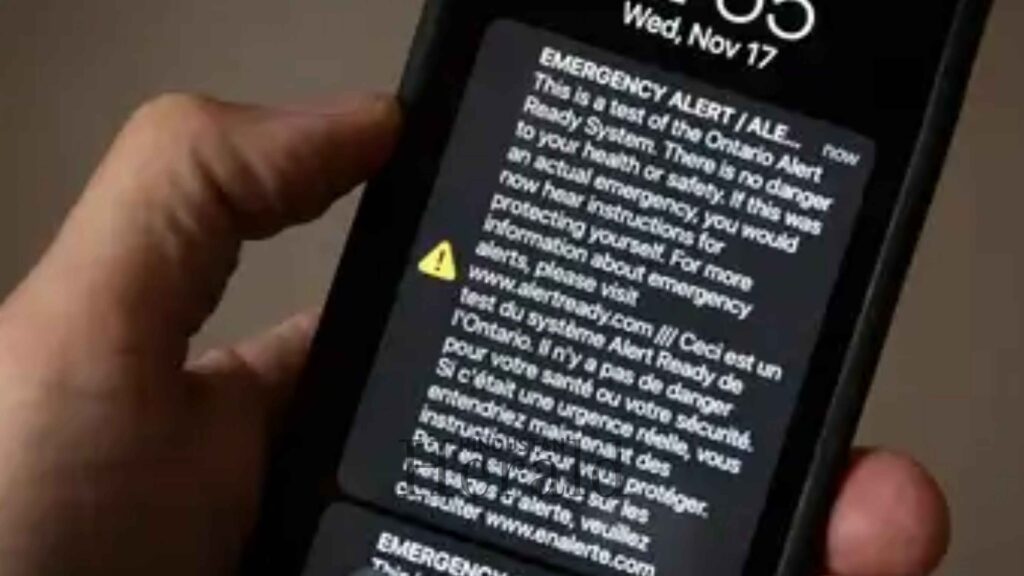
Cell Broadcast solves this differently. Instead of sending individual messages to individual phones, it broadcasts a signal across an entire geographic zone at once. Every phone in that area receives the alert at roughly the same moment. It does not go through the usual message queue. It does not depend on network traffic. It just arrives.
And it arrives loudly. Even if your phone is on silent. Even if it is face down on a table. Even if you are one of those people who perpetually have the ” do-not-disturb switched on. The alert overrides all of that. It forces itself onto your screen with sound and vibration because there are situations where a polite notification is not enough.
Made in India, Not Bought From Abroad
This is worth saying plainly because it often gets buried in official language. C-DOT built this system in India. The government did not license a foreign product or buy an off-the-shelf solution from another country. Indian engineers, working under the Department of Telecommunications, developed the core technology domestically.
It follows international standards, specifically something called the Common Alerting Protocol endorsed by the International Telecommunication Union, so it is globally compatible. But the platform itself is indigenous. That matters both practically and in a broader sense, because a system this critical to national safety should not depend on foreign vendors or foreign permissions to function.
Countries like Japan, South Korea, the United States, and several across Europe have had Cell Broadcast emergency alert systems running for years. Japan’s version, known as J-Alert, is particularly well regarded. It sends out earthquake warnings fast enough that people in some areas get a few seconds of notice before shaking begins. A few seconds sounds like nothing. In an earthquake, it is enough to get under a table, move away from a window, or wake someone sleeping next to you.
India is now building toward something similar. The scale is much larger and the diversity of geography, language, and infrastructure is considerably more complex. But the direction is right.
What You Should Know If You Got the Alert
If your phone received the test today, you likely saw a message on your screen in either English, Hindi, or a regional language, depending on your location and device settings. Some people got the message more than once. That was intentional. Sending the alert multiple times was part of testing whether the system could handle repeated broadcasts across the entire national network without breaking down.
If you want to check whether your phone is set up to receive these alerts, you can go to Settings, find the Safety and Emergency section, look for Wireless Emergency Alerts, and check the Test Alerts option. Right now, only phones with test channels enabled will receive the drill messages. But once the system moves into full operation, real emergency alerts will go to every compatible device in a danger zone, no matter what your settings say. The override feature will kick in automatically.
One thing to note: today’s test did not cover border areas. It also left out states currently in election mode. West Bengal, which has repolling underway in parts of South 24 Parganas district following the second phase of Assembly Elections, was kept out of today’s exercise.
Why India Needed This More Than Most Countries
Think about where India sits geographically and what that means in practical terms.
The northern belt runs right along some of the most seismically active terrain on the planet. The Himalayas are not a stable, settled mountain range. They are geologically young and restless. Several major Indian cities, including Delhi, sit in zones where significant earthquakes are considered not just possible but historically expected.
Then there are the coasts. The Bay of Bengal and the Arabian Sea between them generate cyclones that hit India’s eastern and western shores with frightening regularity. Odisha, Andhra Pradesh, Tamil Nadu, Gujarat, Maharashtra have all seen devastating storm landfalls within living memory. The damage is not always from wind. Often it is from the surge, the water that the cyclone pushes inland, and the time between warning and landfall can sometimes be measured in hours.
Inland, rivers flood. Landslides hit hill towns after heavy rain. Heatwaves that would have once been considered extreme now arrive almost every summer across central and northern India. And none of these things announce themselves politely. They do not wait for people to check the weather app.
A system that can reach every phone in a danger zone within seconds, in the local language, with enough noise to wake someone sleeping, is not a luxury. For a country with this geography and this population, it is overdue.
The One Problem Technology Cannot Fix On Its Own
There is a conversation happening in disaster management circles around the world, and India will have to have it too before long.
Emergency alert systems work brilliantly the first time. People are surprised, they read the message, they take it seriously. The second time, they are a little less surprised. By the fifth or sixth routine test, a significant portion of the population has already mentally filed the alert sound under “ignore this.” That habituation is not stupidity. It is just how human attention works. If something interrupts you repeatedly without consequence, your brain starts filtering it out.
Japan has had to deal with this. The United States has had to deal with this. There are documented cases of people ignoring real tsunami warnings because the alert sound had become associated in their minds with routine drills.
The government cannot solve this purely with better technology. What it requires is consistent public education, clear communication every time a test goes out, and enough time between drills that the alert retains its sense of urgency. It also requires that when real alerts go out during actual emergencies, the response machinery on the ground, the rescue teams, the evacuation routes, the relief infrastructure, actually match the speed of the communication.
An alert that tells you to evacuate is only useful if there is somewhere to evacuate to.
For today, though, the focus is on what was achieved. A nationally built system sent a simultaneous signal to millions of phones across the country. It bypassed do-not-disturb settings. It delivered messages in multiple languages. It worked.
Your phone probably scared you a little this morning. That was the whole idea.
Stay ahead with Hindustan Herald — bringing you trusted news, sharp analysis, and stories that matter across Politics, Business, Technology, Sports, Entertainment, Lifestyle, and more.
Connect with us on Facebook, Instagram, X (Twitter), LinkedIn, YouTube, and join our Telegram community @hindustanherald for real-time updates.

Tech writer passionate about AI, startups, and the digital economy, blending industry insights with storytelling.
- Neeraj Kapoor

- Neeraj Kapoor
- Neeraj Kapoor
- Neeraj Kapoor




 Kavita Iyer and Neeraj Kapoor