
 By Arun Upadhayay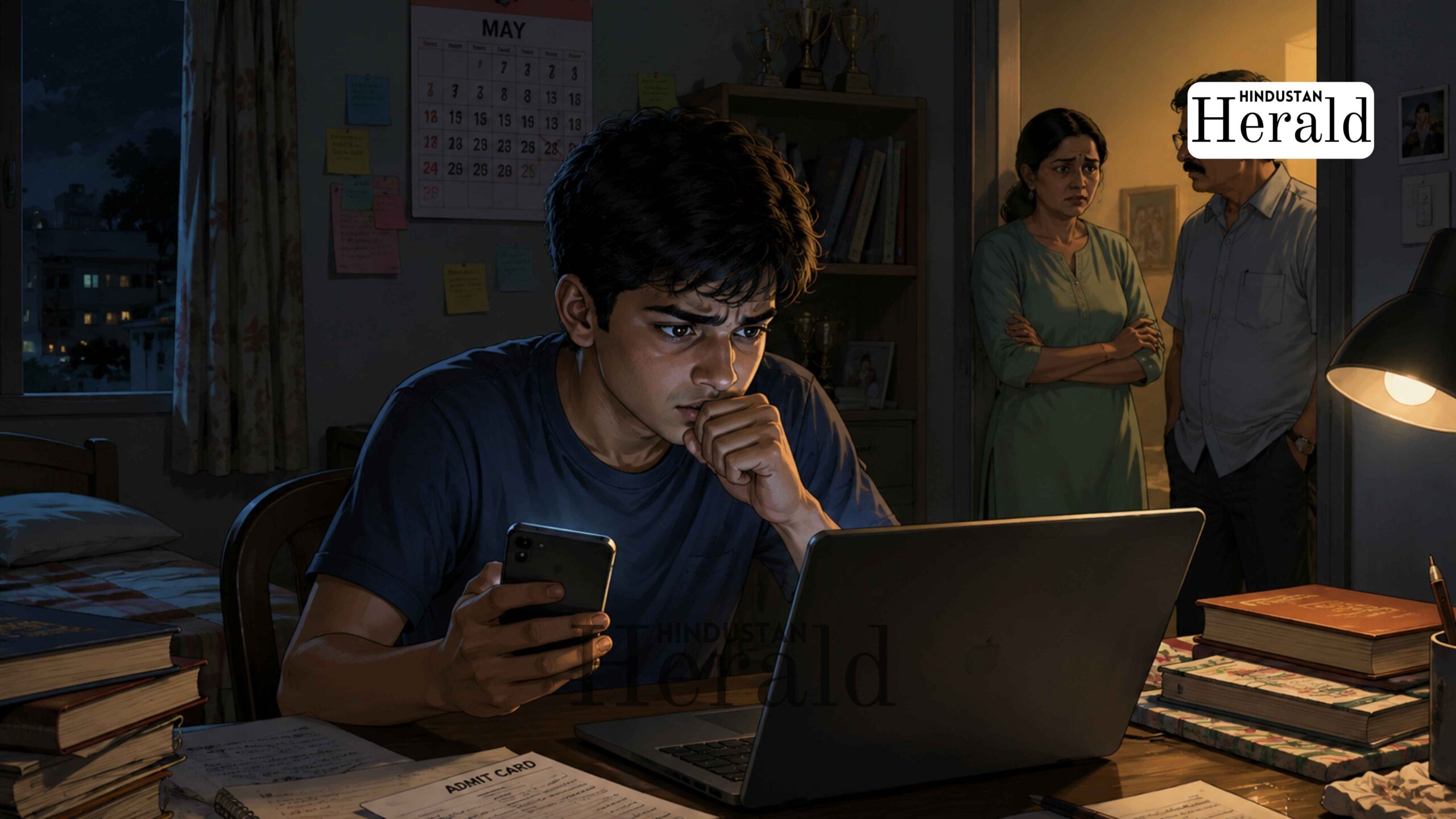
New Delhi, May 8: Somewhere right now, a seventeen-year-old is refreshing a webpage that hasn’t changed in three days. Her mother has stopped asking questions. Her father keeps mentioning a cousin who didn’t do well in boards and still “turned out fine.” Nobody in the house is really sleeping properly.
That is what CBSE Class 12 results season looks like from the inside. And with the Central Board of Secondary Education closing in on a declaration date, that low-grade anxiety has gone up a notch across households in every corner of the country.
The board hasn’t pinned down an exact date yet, but Controller of Examinations Sanyam Bhardwaj has said publicly that results should be out in the third week of May. Given how evaluation has gone this year, mid-May is looking realistic. More than 18 lakh students are waiting. That number is worth sitting with for a moment 18 lakh young people, most of them between 17 and 19, whose immediate futures hinge on what a portal shows them one morning very soon.
This Year Was Different From the Start
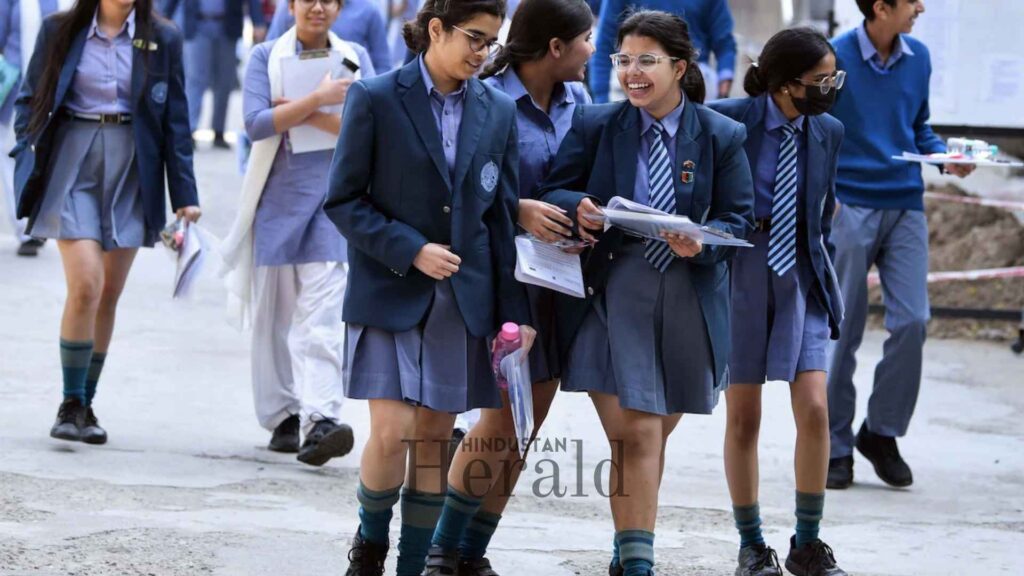
The Class 12 exams ran from February 17 to April 10, 2026, one shift a day, 10:30 am sharp, ending with Legal Studies as the final paper. Routine enough on the surface. But behind the scenes, the board was doing something it has never done at this scale before.
For the first time, Class 12 answer sheets were evaluated digitally through a system called On-Screen Marking, or OSM. Examiners didn’t sit with physical bundles of answer scripts anymore. Instead, scanned copies of the sheets were uploaded to a secure platform, and teachers marked them on their screens from wherever they were based. The answer books never physically moved to evaluation centres the way they used to.
Class 10 papers were still evaluated the old way. But for senior secondary, this was a clean break.
The practical effect of this shift matters more than it might sound. Anyone who has ever applied for re-evaluation after a CBSE result knows the frustration of waiting weeks only to discover the examiner made an arithmetic error adding up the marks. It happened every year, quietly, to thousands of students. With OSM, totalling is automatic. The system calculates it. That specific category of human error has effectively been removed from the equation.
Whether that translates into fewer re-evaluation applications this year will be something to watch. It very likely will.
The Numbers Analysts Are Watching
Last year, 88.39 per cent of students passed Class 12. Girls cleared it at 91.64 per cent, boys at 85.70 per cent a gap that has persisted for years and shows no sign of narrowing. In 2024, the overall pass rate was 87.98 per cent. So the trend over the last two cycles has been a modest, incremental climb.
Nobody in education circles is expecting anything dramatic in 2026. The exam schedule was normal, the evaluation process more streamlined than usual, and there were no pandemic-era asterisks to factor in. A pass percentage in the high-80s seems likely. Whether OSM introduces any subtle shifts in how marks cluster across the distribution is a genuinely open question, and one that education researchers will probably dig into once the data is public.
This year’s cohort is also larger. The 2025 registered base was around 17 lakh. This time, it’s crossed 18 lakh, with roughly 10.2 lakh boys and 8.3 lakh girls in the mix. That alone makes it one of the bigger Class 12 cohorts in recent memory.
One group worth flagging: students based in West Asian countries whose exams were cancelled mid-cycle. The board has confirmed their results will be declared alongside everyone else. They’ve been in a particularly uncomfortable limbo not just waiting, but waiting without even having sat the exam. What evaluation process applies to them specifically hasn’t been fully detailed publicly, and that’s a gap the board would do well to address clearly before or at the time of declaration.
Checking Your Result Without Losing Your Mind
When the declaration happens, the board’s main portals, cbse.gov.in, results.cbse.nic.in, and cbseresults.nic.in, will be the first places the scorecard goes live. And within minutes of that, all three will slow to a crawl. This is not speculation. It happens every single year without exception.
The smarter move is DigiLocker. It consistently handles declaration-day traffic far better than the primary sites, and the marksheet downloaded from there is fully official. Colleges accept it for provisional admission. It carries the same legal weight as the physical copy. Students who haven’t set up their DigiLocker account yet should do that today, not on result day.
Beyond that, CBSE has also made results accessible through the UMANG app, SMS, and an IVRS telephone service. The board’s thinking here is sensible distribute the load across multiple channels so a server crunch at one end doesn’t leave lakhs of students staring at a loading screen.
Students will need their roll number, school number, admit card ID, and date of birth to log in. Keep those details somewhere accessible, not buried in a folder on a laptop that takes four minutes to start.
The result students see on declaration day is provisional. Original marksheets, passing certificates, and migration documents come later, distributed through schools. For anything urgent college application portals, counselling registrations the DigiLocker PDF is what most institutions will ask for first.
What Passing Actually Requires
The threshold hasn’t changed. Students need at least 33 per cent in each subject to pass, and 33 per cent in aggregate overall. For subjects that have both theory and practical components, the 33 per cent bar applies separately to each. Passing one and falling short in the other means the subject isn’t cleared, regardless of what the combined number looks like.
The board does have a grace marks provision for borderline cases. A student who misses the passing cut in a subject by a mark or two may have that gap covered through moderation, avoiding a compartment result. This isn’t guaranteed, but it is a real part of how CBSE manages outcomes at the margins.
Students who don’t clear one or two subjects will sit compartment exams. Dates for those will follow the main declaration. Failing in three or more subjects means repeating the year. That is a hard outcome, and the board’s communication around it could always stand to be more empathetic than it typically is.
The Sixty Days That Follow
Here is the thing about the result that doesn’t get said enough. For most students, the day the number appears is not actually the most important day. The six to eight weeks that follow are.
Delhi University admissions, CUET counselling, private university portals, state-level processes all of it opens within days of the declaration and moves quickly. Students who haven’t already registered for CUET or identified their target colleges are already behind, and that gap grows fast once the result is out and every other student in the country is doing the same thing simultaneously.
Beyond admissions, there is the re-evaluation option for anyone who feels their marks don’t reflect what they wrote. CBSE will release the process and fee structure after results are declared. With OSM in place, requesting a photocopy of the scanned answer sheet and applying for verification should, in theory, be more straightforward than before. Whether the turnaround time improves is something students from previous cycles have reason to be sceptical about, even if the technology has changed.
For now, the waiting continues. Somewhere in Uttar Pradesh, Tamil Nadu, Maharashtra, Rajasthan, a teenager is on their phone again, checking education portals that are still showing the same non-update. A parent is pretending not to watch the clock.
The number that changes everything is coming. And when it does, what matters most is what the student does in the hours immediately after.
Stay ahead with Hindustan Herald — bringing you trusted news, sharp analysis, and stories that matter across Politics, Business, Technology, Sports, Entertainment, Lifestyle, and more.
Connect with us on Facebook, Instagram, X (Twitter), LinkedIn, YouTube, and join our Telegram community @hindustanherald for real-time updates.

- Arun Upadhayay

- Arun Upadhayay
- Arun Upadhayay
- Arun Upadhayay




 Ananya Sharma
  Sandeep Verma