
 By Ananya Sharma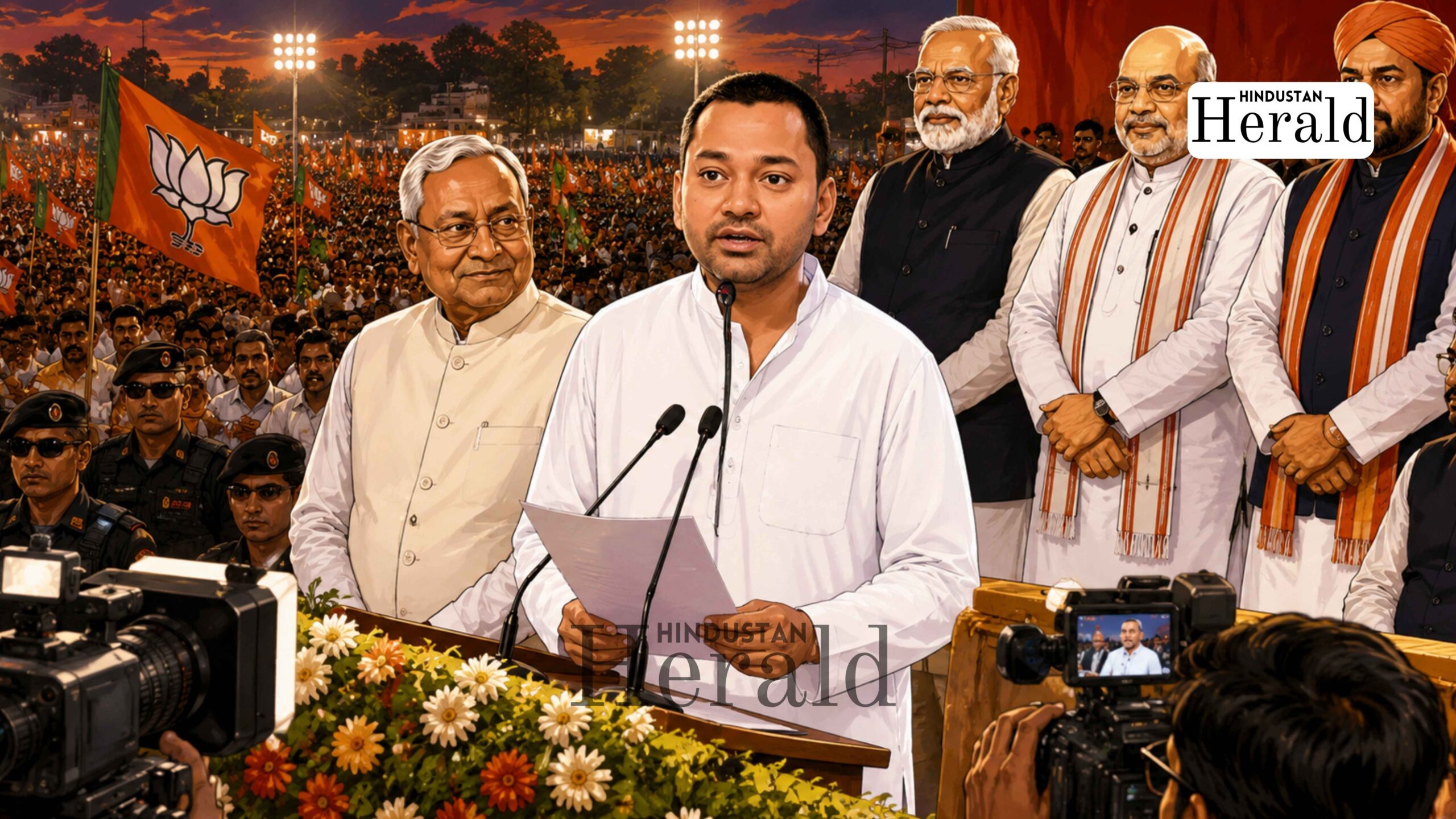
Patna, May 7: There was never really any doubt about how Thursday would end. Not once Amit Shah flew into Patna on Wednesday evening, not after the late-night meetings at Nitish Kumar’s 7 Circular Road residence, and certainly not after Lalan Singh boarded a flight from Delhi with what sources described as a firm conversation to finish. By the time Gandhi Maidan filled up on a warm May morning with television cameras, party workers, and enough political heavyweights to staff a cabinet of their own, Nishant Kumar’s swearing-in felt less like a surprise and more like the final act of a plan that had been quietly running for months.
He took the oath. Thirty-one others did too. But everybody knew whose name the gallery was waiting for.
The Son Who Said No, Then Said Yes
The part that makes Nishant Kumar’s entry into Bihar politics genuinely interesting is precisely the reluctance that preceded it. The 45-year-old engineering graduate had reportedly wanted to earn his spurs as a party worker first, before accepting any formal government post. That is not how political sons in Bihar typically behave, and it earned him a certain quiet respect even among those who remain sceptical of dynastic politics.
Reports suggest the decision to join the government finally came after a late-night meeting with senior JDU leaders on Tuesday. Lalan Singh, one of the party’s most trusted operators, had made the trip from Delhi specifically for those conversations. What was said behind closed doors has not been fully reported. What is known is that Nishant walked out of his father’s residence the next morning as a man who had agreed to something he had been declining for weeks. I
His “Sadbhavana Yatra,” scheduled to continue on May 7, was cancelled due to the swearing-in and is set to resume from May 9. That tour had been taking him across Bihar’s districts for weeks, letting him meet ordinary people, hear complaints, sit with village workers. It was as close to a political education at ground level as Bihar’s political environment allows for someone of his background. The fact that he paused it for the cabinet rather than the other way around tells you something about which direction the pressure was coming from.
Gandhi Maidan, and the Weight of the Guest List
The venue alone signalled that this was not a routine state cabinet expansion. Gandhi Maidan in Patna has hosted national-scale events for decades, and on Thursday it had the feel of one. The oath was administered by Governor Lieutenant General (Retired) Syed Ata Hasnain, with Prime Minister Narendra Modi, Union Home Minister Amit Shah, Defence Minister Rajnath Singh, BJP national president Nitin Nabin, and JD(U) chief Nitish Kumar all present on the dais. Union Ministers Chirag Paswan, Jitan Ram Manjhi, and Lalan Singh were also in attendance.
Three Union Cabinet ministers at a state swearing-in is not standard political protocol. It is a statement. The BJP’s central leadership was not just blessing the cabinet expansion from a distance. They were physically present, seated in the front row, watching it happen. That kind of visible endorsement from Delhi carries weight in Bihar’s coalition politics, where perceptions of central backing can shift internal party equations overnight.
After the ceremony concluded, Prime Minister Modi held a roadshow through Patna’s streets, turning the afternoon into something that looked less like a governance event and more like a political rally with better dressing. Whether that energy translates into governance momentum is a different question. For now, the BJP had the optics it wanted.
The Numbers Behind the Names
Of the 32 ministers sworn in on Thursday, 15 came from the BJP, 13 from the JD(U), two from the Lok Janshakti Party (Ram Vilas), and one each from the Hindustani Awam Morcha and the Rashtriya Lok Morcha.
That allocation is worth sitting with for a moment. In a cabinet led by a BJP Chief Minister, with the BJP holding the single largest share of ministers, the JD(U) is numerically the junior partner. That was not always the arithmetic of Bihar’s NDA arrangement. For most of the past two decades, Nitish Kumar was the dominant force and the BJP played a supporting role. The inversion is recent and, for many within JD(U), still uncomfortable.
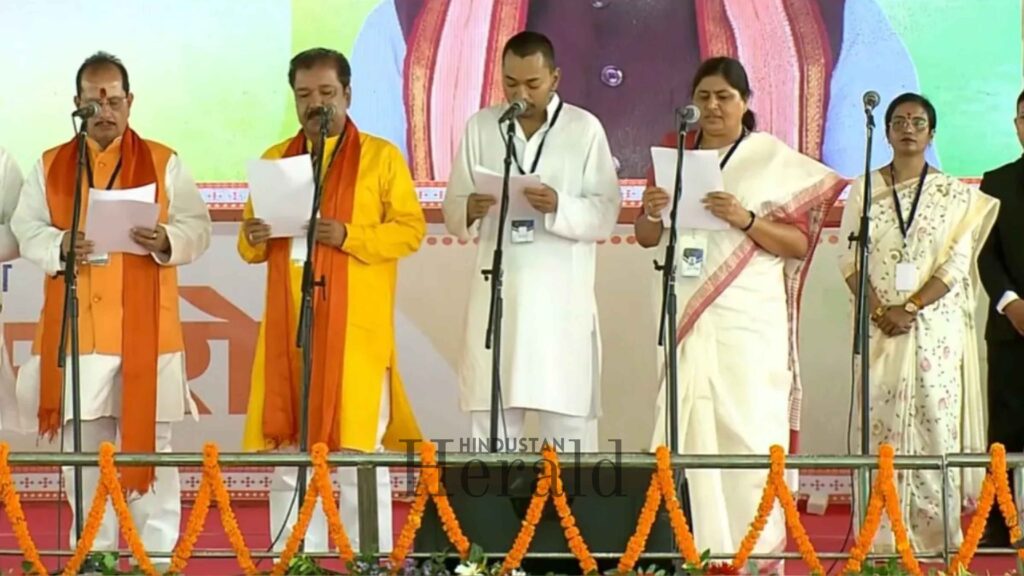
Alongside Nishant Kumar, former Deputy Chief Minister Vijay Kumar Sinha and former ministers Shrawon Kumar and Ashok Choudhary have also been inducted into the Samrat Choudhary cabinet. Several familiar names from the Nitish Kumar era are back, which suggests a degree of continuity even as the leadership at the top has changed. New JDU faces include Sheila Mandal, Ratnesh Sada, Bulo Mandal, Bhagwan Singh Kushwaha, Damodar Rawat, and Shweta Gupta, most of them younger entrants who owe their positions at least partly to the party’s effort to broaden its leadership pipeline.
Uncertainty over Upendra Kushwaha’s Rashtriya Lok Morcha had persisted until late Wednesday night, with Kushwaha holding extended discussions with Amit Shah in Patna. His son Deepak Prakash, as per The Federal, is tipped to have joined from the RLM quota. The pattern of political sons entering government while their fathers negotiate from positions of influence is not unique to Bihar, but it is particularly visible here on Thursday.
How Bihar Got Here
To understand the morning’s ceremony properly, you need to rewind to what happened in the weeks preceding it. The NDA swept back to power in Bihar after the 2025 elections with 202 seats, with BJP and JD(U) alone accounting for 174 of them. Nitish Kumar took oath as Chief Minister as expected, the seventh or eighth time depending on how you count his terms. Then, somewhat abruptly, he resigned.
The move was not entirely surprising to those who had been watching. Nitish Kumar’s decision to step down from the Chief Minister’s post came as he prepared to move to the Rajya Sabha, having resigned from the Bihar Legislative Council in March. He was heading to Delhi as a national-level political figure, and Bihar would be governed in his absence by Samrat Choudhary, a BJP leader who became the state’s first Chief Minister from that party. Choudhary subsequently won a trust vote in the 243-member Assembly comfortably, with BJP and JD(U) members affirming their support in full.
The cabinet expansion on Thursday is, in one sense, simply the completion of that transition. The new government now has a full ministerial team. In another sense, though, it is the opening act of something that Bihar has not quite seen before, a state government where the BJP calls the institutional shots while a Nitish Kumar loyalist family member sits inside the cabinet, watching from the inside.
What Nishant Carries Into Office
He is 45. He studied engineering at BIT Mesra, one of Bihar’s more reputable technical institutions. He is not a street-level political operator in the way that many Bihar ministers have been before taking office. His public presence before the “Sadbhavana Yatra” was minimal. He was Nitish Kumar’s son, and in Bihar that is both an enormous asset and a burden that never fully lifts.
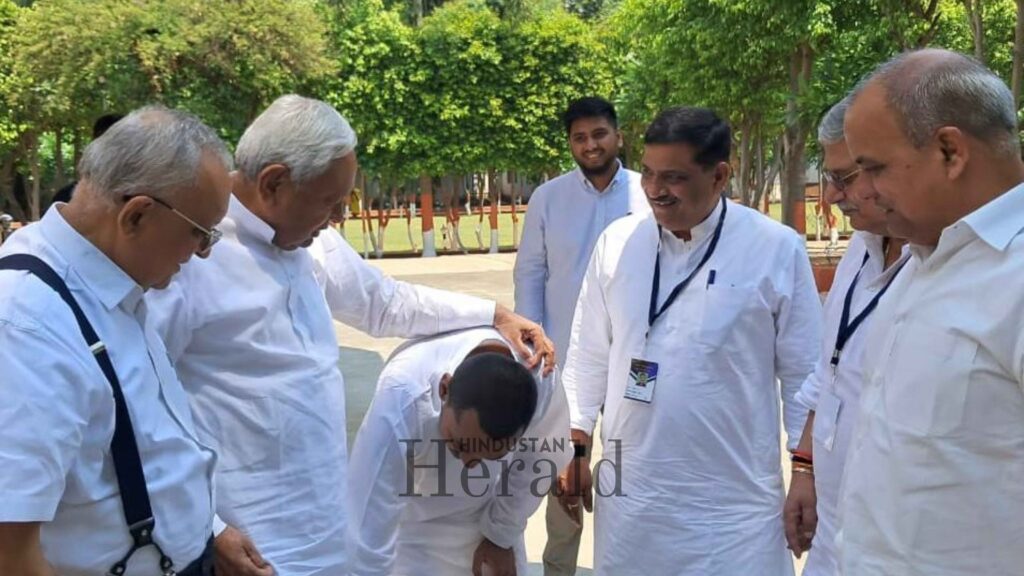
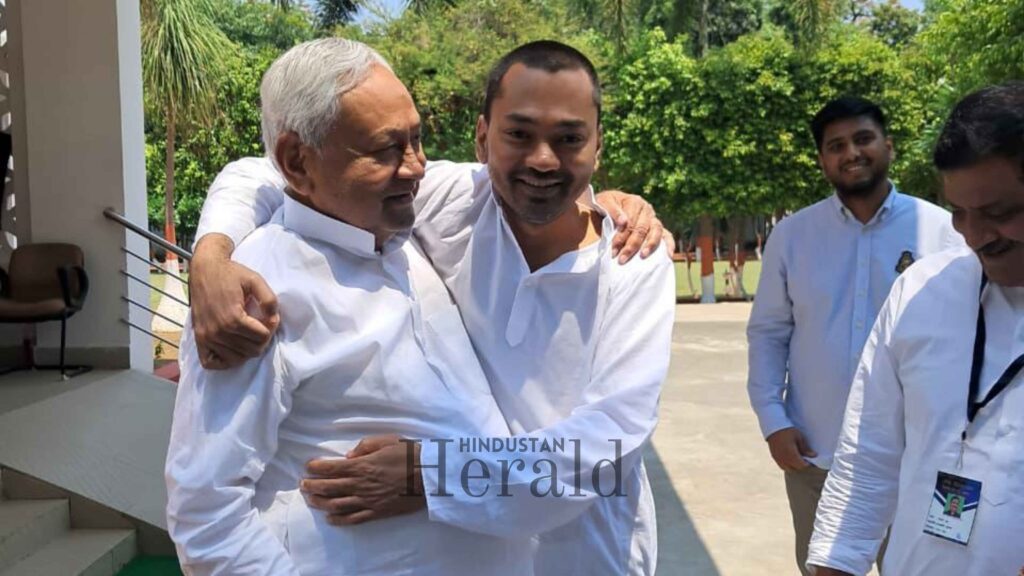
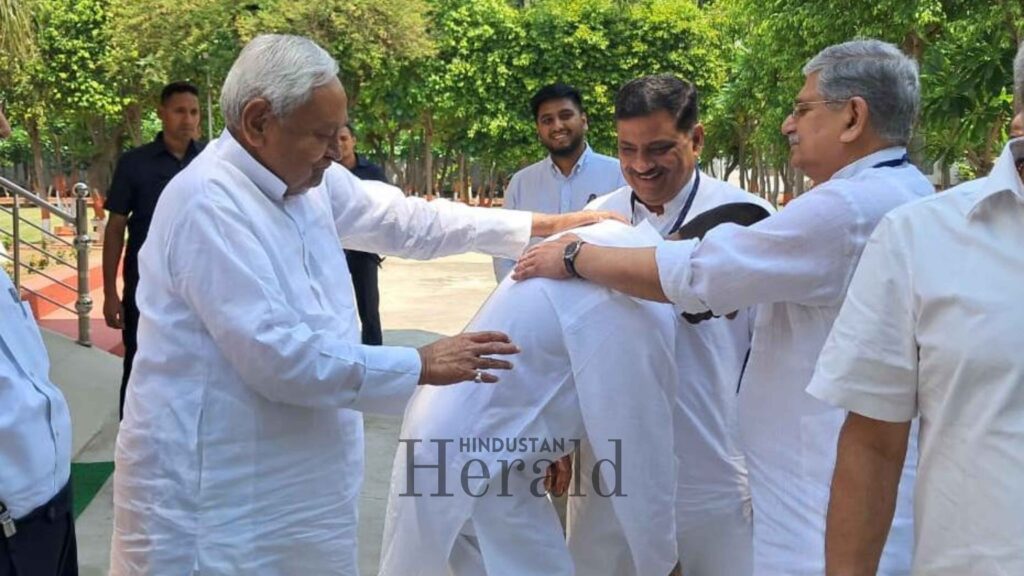
Before the swearing-in, Nishant met Nitish Kumar at his residence in Patna, a brief, private moment that preceded the very public one at Gandhi Maidan. What gets spoken between a father and a son at such a juncture, one who has spent a career building the political institution his son is now officially entering, is the kind of thing no reporter gets access to. But it is not hard to imagine the weight of it.
The portfolios have not been announced at the time of writing. That detail matters enormously. The department Nishant is handed will signal what the party thinks of him, how much responsibility they are willing to trust him with, and whether his entry is genuinely substantive or largely symbolic for now.
The Road Ahead
Bihar is not an easy state to govern. The development gap with India’s more prosperous states remains wide. Employment, migration out of the state, flood management in the north, infrastructure deficits in rural districts, these are not problems that resolve themselves with a well-attended swearing-in ceremony. The NDA’s 202-seat mandate was a strong electoral endorsement, but mandates expire faster than cabinets in Bihar’s political memory.
For Nishant Kumar specifically, the challenge is one that no amount of party meetings or outreach tours can fully prepare someone for. He will be measured against his father’s record whether he wants to be or not. Every decision he makes in his ministry will be compared, consciously or not, to what Nitish Kumar would have done. That is a heavy frame to govern inside.
That said, Thursday gave him a start. The oath is taken, the seat is his, and Bihar is watching with the particular attention it reserves for political sons who may or may not be more than their fathers’ names. The next few months will begin to answer that question, one ministerial file at a time.
Stay ahead with Hindustan Herald — bringing you trusted news, sharp analysis, and stories that matter across Politics, Business, Technology, Sports, Entertainment, Lifestyle, and more.
Connect with us on Facebook, Instagram, X (Twitter), LinkedIn, YouTube, and join our Telegram community @hindustanherald for real-time updates.

Covers Indian politics, governance, and policy developments with over a decade of experience in political reporting.
- Ananya Sharma

- Ananya Sharma
- Ananya Sharma
- Ananya Sharma



 Arun Upadhayay