
 By Sandeep Verma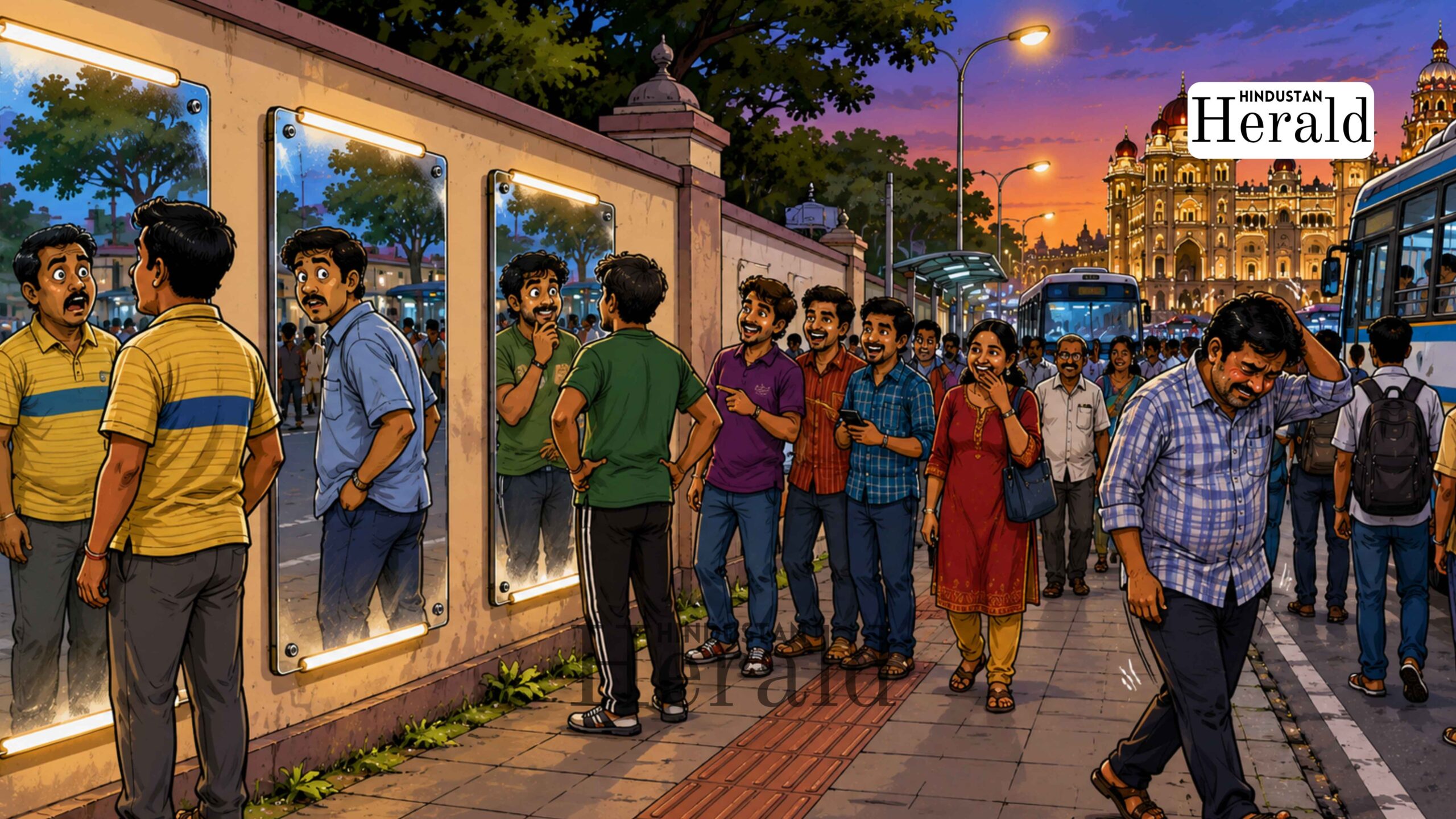
Mysuru, May 6: Here is something that actually happened in India in 2026. The Mysore City Corporation put up mirrors on a public wall to stop people from urinating on it. Reflective steel mirrors, fitted along the compound wall of the Government Guest House near the Suburban Bus Stand, with LED bulbs underneath so the deterrent works after dark too. The idea is simple enough: if you can see yourself doing it, maybe you will think twice.
That this is being celebrated as innovation tells you everything you need to know about where things stand.
The Wall That Became a Toilet
The stretch near Mysuru’s Suburban Bus Stand has been a problem for years. Not a new problem. Not a complicated problem. Just one of those things that Indian cities learn to live with until someone finally gets tired enough to do something about it. Passengers rolling in from long journeys, locals cutting through, passers-by with nowhere else to go. The wall took the worst of it, day after day, while signboards warning against the practice and threats of fines did precisely nothing.
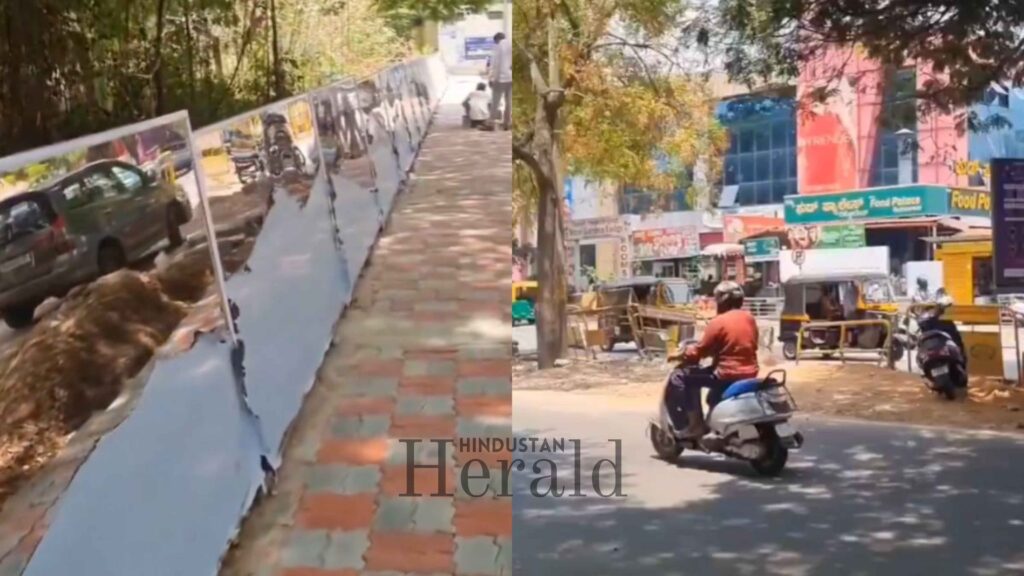
According to civic officials, people were openly urinating on the wall even after being warned and threatened with penalties. So the corporation did something different. They stopped arguing and put up mirrors instead.
The mirrors ensure that anyone engaging in such activity sees their own reflection, while also being visible to people passing by. Authorities hope that this sense of public visibility will discourage the practice. That is the theory, anyway. Whether shame works better than signage remains to be seen.
What the Corporation Is Actually Claiming
To be fair, they are not presenting this as a permanent fix. The corporation has installed mirrors on a trial basis on the compound wall of the Government Guest House, located opposite the city’s rural bus stand. If it holds up, officials have indicated that similar installations may be introduced in other identified hotspots across the city.
There is also a broader motivation at play here. The Mysuru City Corporation is making a strong push to secure the top rank in this year’s Swachh Survekshan, with innovative cleanliness measures across the city. So yes, part of this is about optics. Rankings matter to urban local bodies and showing you tried something creative counts for something in that ecosystem, even if the underlying problem remains.
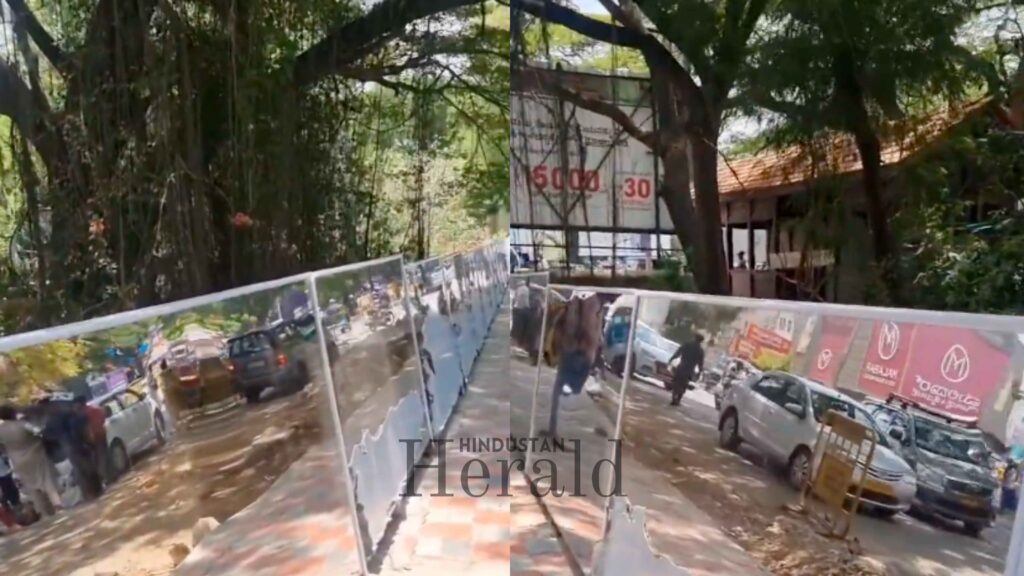
Still, the behavioural logic is not without merit. Seeing yourself in a mirror activates a kind of self-consciousness that a painted warning simply does not. It is not a new concept. Retailers have used mirrors in stores for decades, partly because people behave differently when they can see themselves. The psychological nudge here is real, even if the scale of the problem is larger than any mirror can fully address.
The Internet Had Thoughts
Videos of mirrors set up against the wall have been going viral on X. One user called the initiative deserving of a Cannes Lion award. Another suggested a Nobel Prize would be more appropriate. The general mood in the comments was somewhere between admiration and dark comedy. Some users joked about “installing a camera and live telecast.”
Comments ranged from calling it “genius” to suggesting similar methods be adopted in other cities. Which is genuinely heartening in one sense and quietly depressing in another. A mirror on a wall should not be the most exciting civic development in the country on any given Wednesday.
The sceptics were just as vocal. One user predicted people would simply break the mirrors and urinate over them anyway. Another went straight to the root of it: “People will do everything except solve the core problem.”
That line deserves to sit with you for a moment.
The Actual Conversation Nobody Wants to Have
Every time something like this surfaces, the same two camps emerge. One side praises the creativity. The other points out that none of this would be necessary if there were enough clean, functional, accessible public toilets near bus stands and transit zones. Both are right, which is the frustrating part.
Several users pointed to inadequate urban sanitation infrastructure, saying authorities should focus on expanding access to hygienic public restrooms rather than relying on embarrassment as a deterrent. That is not an unfair criticism. The Government Guest House wall in question sits right across from a busy rural bus stand. People arrive there tired, sometimes after hours on the road, and the nearest usable toilet may be nowhere obvious. That does not excuse urinating in public. But it does explain how the habit takes hold and why stern notices on walls have never made much difference.
Years of Swachh Bharat Abhiyan funding have built a lot of toilets on paper. The messier reality is that many of those toilets are locked, broken, unstaffed, or in a condition that makes the wall outside seem preferable. This is not conjecture. It is something any Indian who has traveled by road or used a smaller bus terminus knows instinctively.
The mirror is clever. It is also a workaround for something that should have been solved with drainage lines and sanitation workers and maintained public restrooms a long time ago.
This Is Not Just Mysuru
Mumbai painted gods and goddesses on walls to discourage people from urinating on them. That worked in some neighbourhoods and not at all in others, depending largely on the local population’s sensibilities. Delhi has tried CCTV warning stickers, multilingual signage, and occasional fine drives. Bengaluru has its own roster of wall-side sanitation horrors. Every Indian city above a certain size has some version of this problem and some version of a workaround that addresses the surface without touching the source.
The Mysuru mirror, in that sense, is part of a long tradition of urban India improvising solutions to civic failures that should never have been allowed to become normal. There is something admirable in the ingenuity. There is also something exhausting in the fact that we keep needing it.
Whether It Will Actually Last
This is the question that tends to get lost in the viral excitement. Outdoor steel mirrors are maintenance-intensive. They fog, they scratch, they attract graffiti. The LED bulbs underneath will need replacing. If the corporation runs the pilot, declares success in the first month, and then quietly stops maintaining it, the mirrors become another abandoned installation and the wall goes back to being a wall.
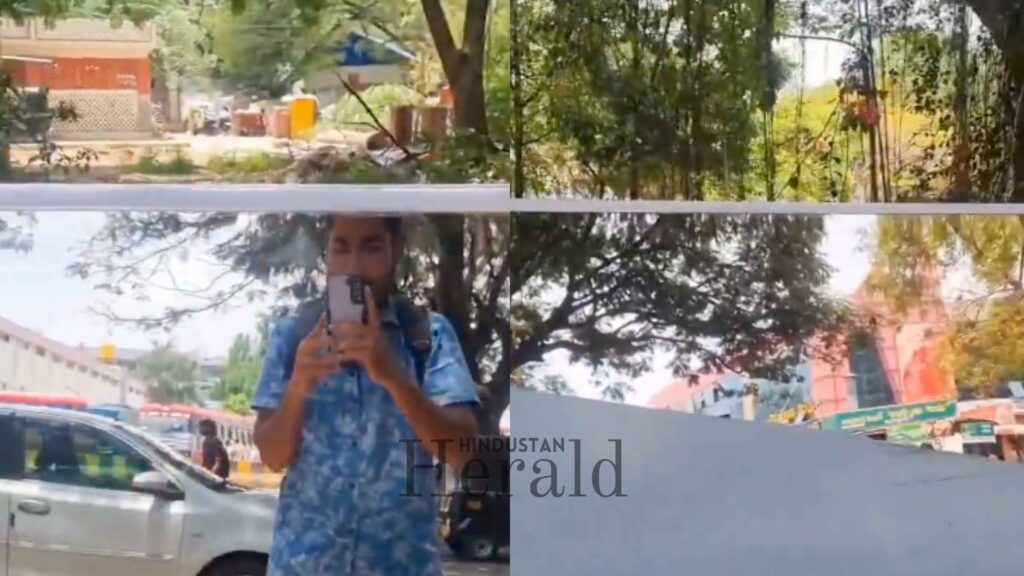
Real success here looks like sustained upkeep, data on whether the behaviour actually changed, and the honesty to admit if it did not work well enough to scale. That kind of follow-through is rarer than the original initiative, in Mysuru or anywhere else.
One commenter put the generational argument plainly: “Need to go back to school and make kids follow rules, and from that generation, change will happen.” That is probably the truest thing said in the entire thread. Mirrors work on adults who already have some latent sense of shame. They do nothing to build the civic instinct in people who never developed one to begin with. That is a longer project, measured in school curricula and community habits, not in steel sheets bolted to a compound wall.
For now, the mirror is up. The LED is on. And somewhere in Mysuru, a man approaching that wall after a long bus journey is going to see himself staring back. Whether he stops is the real experiment.
Whether the city gives him somewhere else to go is the more important one.
Stay ahead with Hindustan Herald — bringing you trusted news, sharp analysis, and stories that matter across Politics, Business, Technology, Sports, Entertainment, Lifestyle, and more.
Connect with us on Facebook, Instagram, X (Twitter), LinkedIn, YouTube, and join our Telegram community @hindustanherald for real-time updates.

Regional journalist bringing grassroots perspectives and stories from towns and cities across India.
- Sandeep Verma

- Sandeep Verma
- Sandeep Verma
- Sandeep Verma




 Ananya Sharma