
 By Sandeep Verma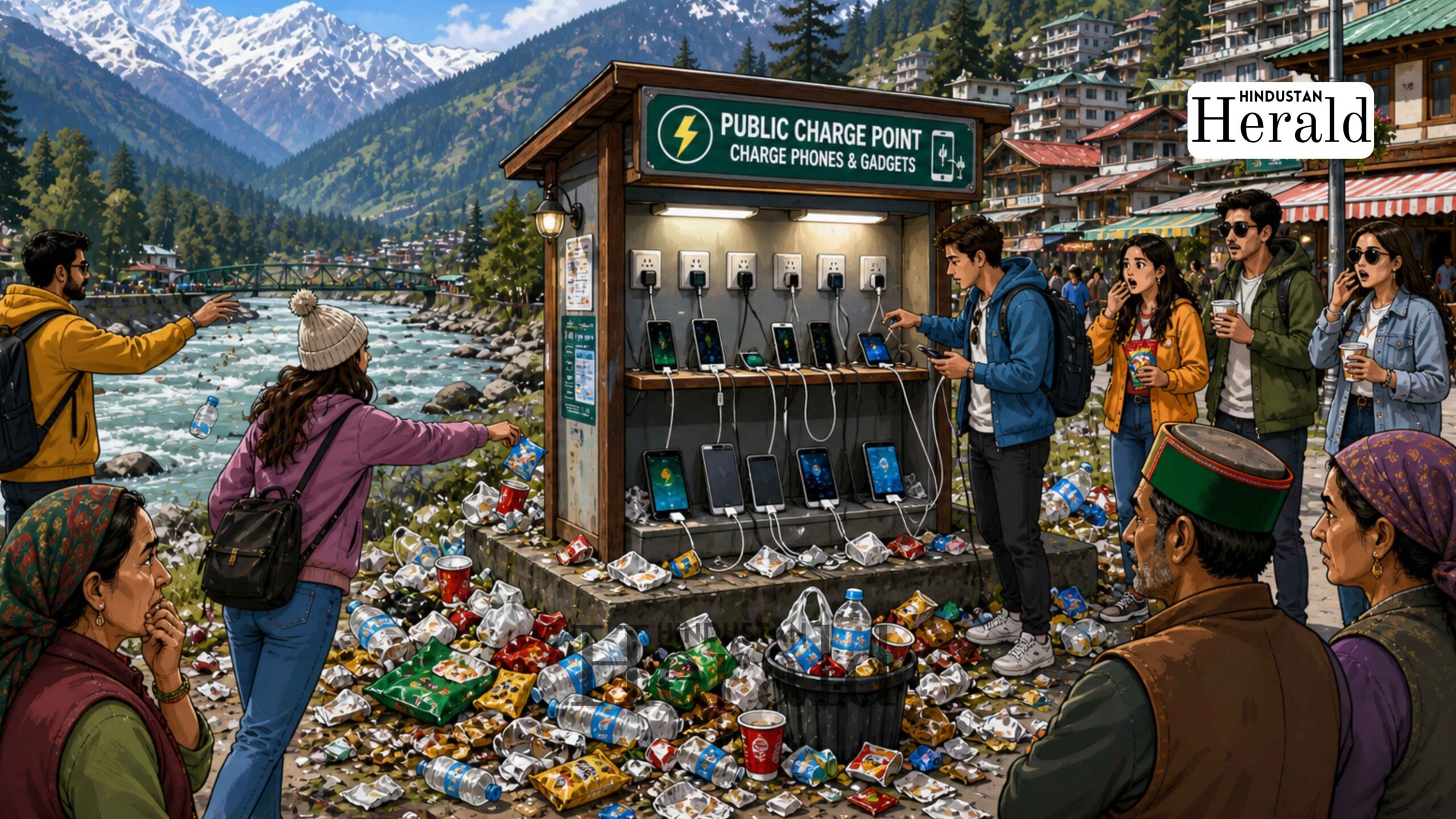
Shimla, May 2: There is something particularly galling about watching a government do something right, only to see it undone within 48 hours by the very people it was trying to help.
That is essentially what happened in Manali this week. The Himachal Pradesh government had installed a Manali Charging Station, a simple, practical public facility meant to let tourists juice up their phones and gadgets without hunting down a cafe or pestering hotel staff. Nobody asked for anything grand. It was a small convenience, the kind of thing that makes a tourist destination feel a little more looked-after.
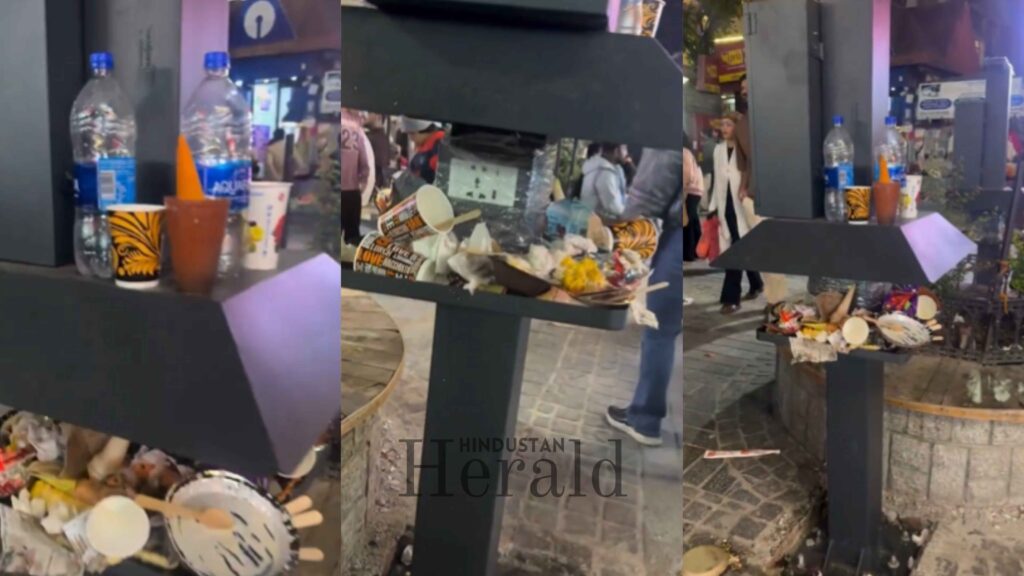
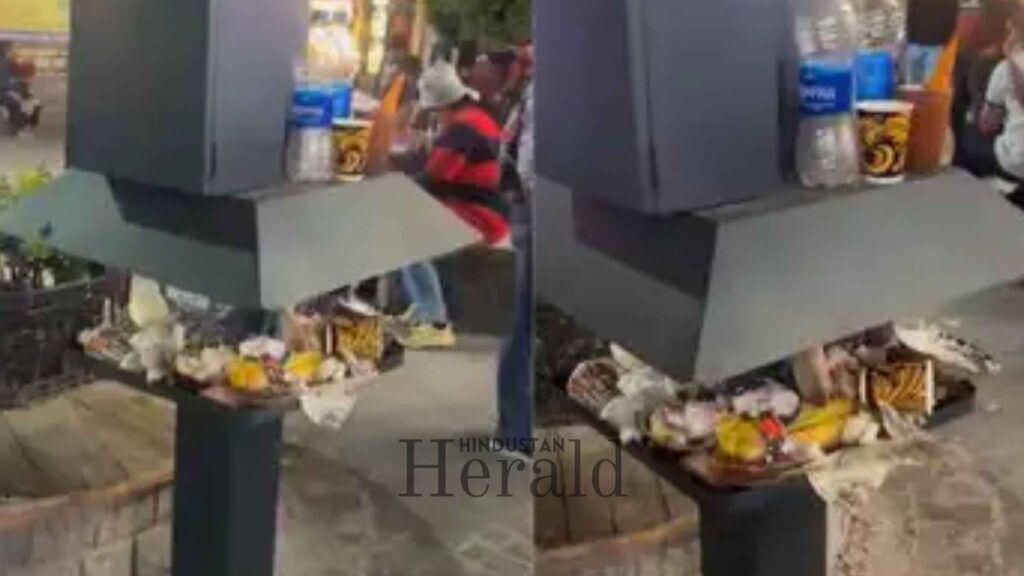
Two days later, it was buried in garbage.
Plastic bottles, used cups, disposable plates, and empty food packets. All of it was dumped at and around a facility that had been functioning for less time than most people take to finish a Netflix series. An X user named Nikhil Saini filmed it, posted it, and his frustration was barely contained. “No Swachh Bharat or any scheme can fix this nation,” he wrote. “Only an iron fist policy can bring change.”
The clip went viral. Predictably. Because it hit something raw.
“The Swachh Bharat Blind Spot”, Swachh Bharat and the Manali Charging Station Blind Spot
The reason people reacted so strongly has very little to do with the charging station itself. A piece of public infrastructure getting damaged or misused is not exactly breaking news in India. What made this different was the timeline. Not weeks of neglect. Not gradual decay. Two days. The speed of it was almost impressive in how depressing it was.
Manali is not some forgotten town struggling for basic amenities. It is one of the most commercially active hill destinations in the country. The place runs on tourism. Hotels, restaurants, adventure operators, taxi drivers, and shopkeepers selling Himachali caps to people who will wear them once and forget them at the bottom of a bag. The entire local economy breathes on the footfall of visitors from the plains. And those same visitors, some of them at least, cannot manage to find a dustbin for their empty water bottle.
The Himachali locals watching this happen are not strangers to it. They live with it every season. The litter along the Beas, the plastic wedged between rocks on trails, the general treated-like-a-hotel-room attitude that many tourists bring to public spaces. Resentment has been building for years in communities across hill towns in this state, quietly, because what are you going to do, tell people to stop coming?
The Swachh Bharat Blind Spot
This incident, small as it is, cuts right to the heart of why Swachh Bharat has always felt more like a campaign than a movement.
The scheme built toilets. Millions of them, by official count. It painted walls, launched advertisements, got celebrities to hold brooms for photographs. What it did not do, at least not with anything close to the same energy, was build the social cost of littering. The fine that actually gets collected. The officer who actually shows up. The genuine, lived consequence of treating a public space like your personal waste disposal unit.
India has rules against littering. Municipal acts, environmental protection orders, and NGT directions are specifically aimed at tourist zones in ecologically sensitive areas like Himachal Pradesh. They exist on paper with impressive regularity. Enforcement is another matter entirely. In most places, dumping your takeaway packaging on a public bench carries roughly the same practical consequences as not dumping it, which is to say, none.
Singapore gets brought up in every one of these conversations, and yes, it is a tired comparison, but it remains relevant because it actually worked. Not because Singaporeans are inherently more civic-minded than Indians. Because fines were heavy, enforcement was real, and the social norm shifted over time as a result. It took decades. It was not painless. But it happened.
The question India keeps avoiding is whether it actually wants to do what that requires.
The Defence That Does Not Quite Land
To be fair, there were people in the comments defending the tourists, arguing that a shortage of public dustbins near the charging station may have contributed to the problem. That people dump trash near convenient structures when they cannot find proper disposal options.
It is not a completely dishonest point. Infrastructure gaps in India’s tourist towns are real. Waste management at peak season in a place like Manali is genuinely stretched. None of that is fiction.
Still. A charging station is not a dustbin. Anyone capable of navigating to Manali, booking hotels, packing gear, and operating the devices they are charging is capable of holding their rubbish until they find an appropriate place for it. The defence, in this particular case, is doing a lot of heavy lifting for a fairly basic failure of personal responsibility.
What it really reflects is a habit of collective excuse-making that has become almost reflexive in these conversations. Every act of civic failure gets immediately contextualised, softened, and explained away. The infrastructure was bad. The system failed first. The government should have anticipated this. All of which may contain partial truth, and none of which changes what happened to that charging station.
The People Who Actually Pay for This
Lost somewhere in the noise of the viral moment are the residents of Manali.

Not the tourists. The people who were there before the tourists arrived and will be there after they leave. The family running the guesthouse that backs onto the Beas. The local guide who walks the same trails that visitors churn through in rented boots. The shopkeeper whose storefront faces the street that fills up with garbage every summer and clears out every October.
These are the people who absorb the actual cost of what careless tourism looks like. Their environment. Their water sources. Their town. And they rarely get asked about it because the conversation about civic sense in India almost always stays in the register of national pride and policy debate, never quite making it down to the ground level where the consequences actually land.
Something Has to Give
There is a version of this story that ends with resigned shrugging. India has too many people, too little enforcement capacity, too much poverty, and too many competing priorities. Civic behaviour is a long-term cultural project and these things take generations. Come back in fifty years.
That version of the story is also a choice. A choice to treat the status quo as fixed. It is not.
Behavioural change on public cleanliness has happened in places that were, within living memory, in far worse shape than India is now. It requires sustained enforcement, not campaigns. Real consequences, not awareness drives. And leadership willing to say clearly, repeatedly, that public spaces belong to everyone and treating them like a personal garbage dump is not acceptable, full stop.
For now, the Manali charging station may or may not have been cleaned up by the time this is read. The Himachal Pradesh government has not issued any statement about the incident. No official has announced fines, cameras, or monitoring. The video will cycle through WhatsApp groups for a few more days, generate a few more hot takes, and then something else will happen, and this will be forgotten.
Until the next one.
Stay ahead with Hindustan Herald — bringing you trusted news, sharp analysis, and stories that matter across Politics, Business, Technology, Sports, Entertainment, Lifestyle, and more.
Connect with us on Facebook, Instagram, X (Twitter), LinkedIn, YouTube, and join our Telegram community @hindustanherald for real-time updates.

Regional journalist bringing grassroots perspectives and stories from towns and cities across India.
- Sandeep Verma

- Sandeep Verma
- Sandeep Verma
- Sandeep Verma




 Ananya Sharma