
 By Ananya Sharma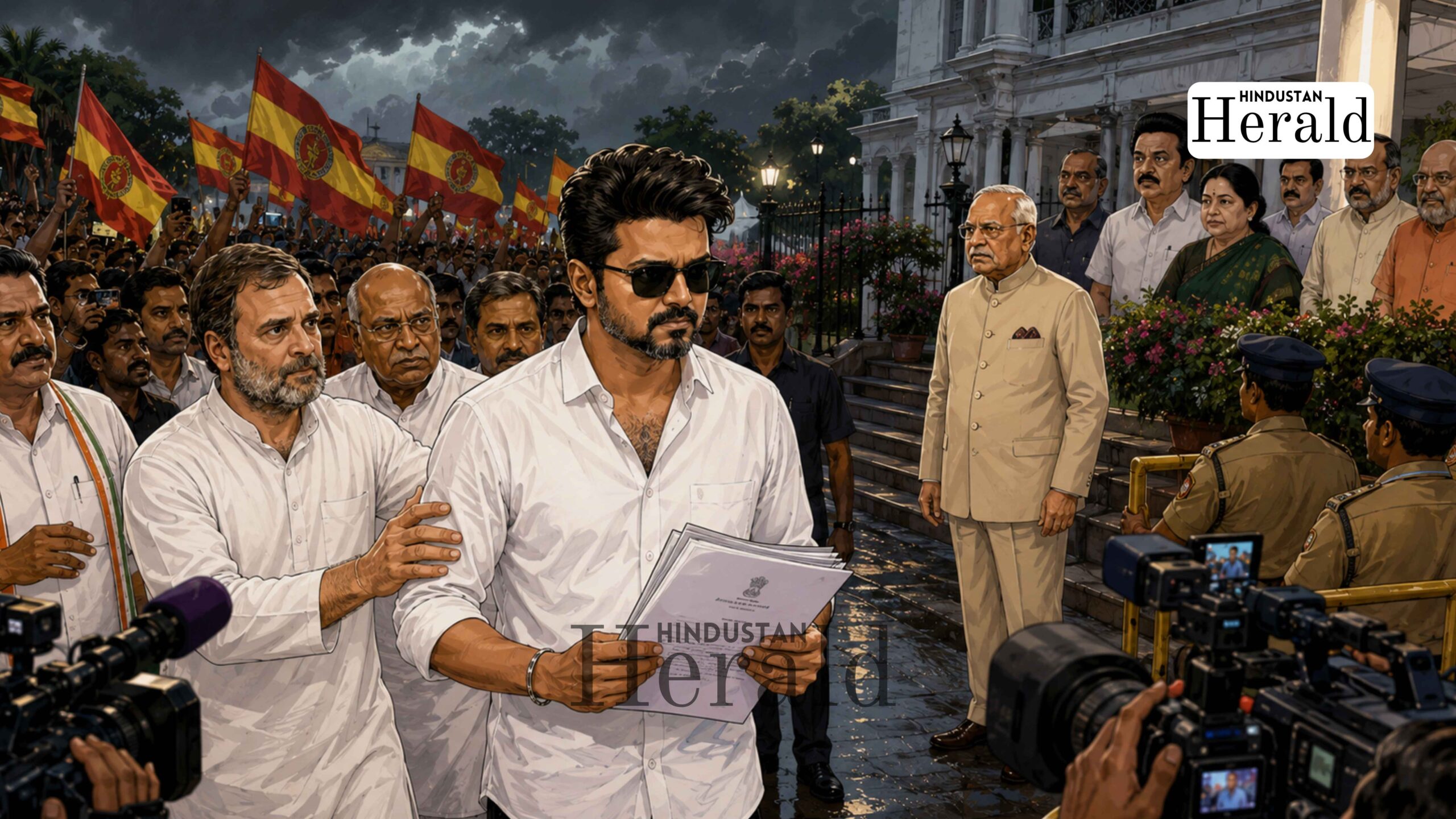
Chennai, May 7: Tamil Nadu woke up on Thursday to a political situation that is, depending on who you ask, either a constitutional crisis in the making or simply democracy doing what democracy does when no one wins cleanly.
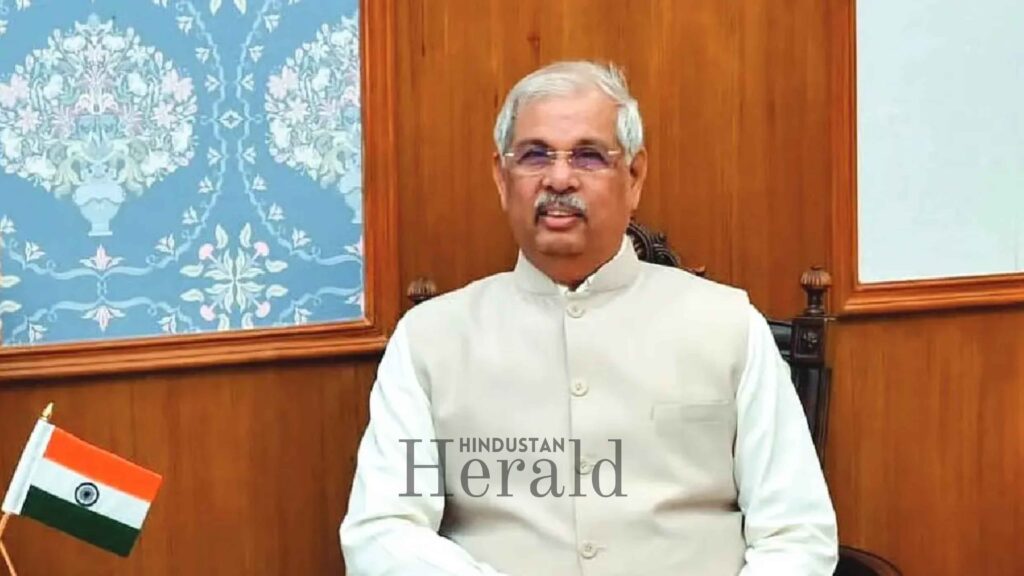
Vijay, the actor who launched Tamilaga Vettri Kazhagam (TVK) barely two years ago and then had the audacity to win 108 seats on debut, still does not have a government. Not yet. Governor Rajendra Vishwanath Arlekar is not satisfied with the numbers. Congress has called that obstruction. BJP has not said much, which, in the current climate, is itself a statement.
The day is young. The alliances are still shifting.
How Tamil Nadu Got Here
Go back three days. Results came in on May 4 and they were, by any honest measure, stunning. Every major opinion poll had either predicted a second consecutive DMK term or a comeback for AIADMK. Neither happened. TVK, a party that did not exist before February 2024, walked into the 234-seat Tamil Nadu Legislative Assembly and took 108 of them. M.K. Stalin, the outgoing Chief Minister, lost his own seat in Kolathur, a constituency he had won three times running. He resigned on May 5.
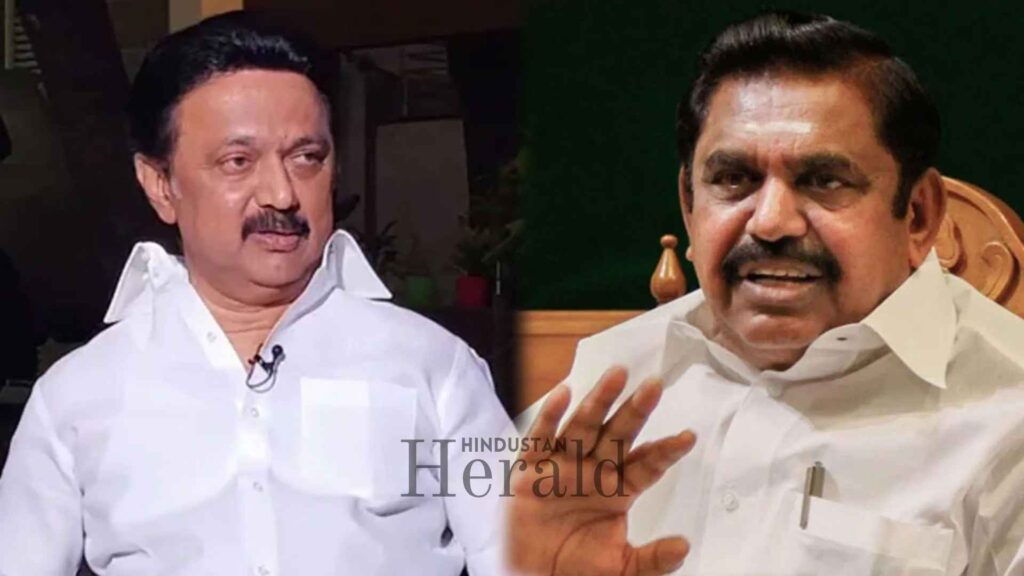
The DMK ended up with 59 seats. AIADMK, contesting alongside BJP under the NDA banner, fared no better. The party that was supposed to offer the only credible alternative to the ruling establishment got squeezed out of contention entirely.

Majority in the Tamil Nadu assembly requires 118 seats. TVK won 108. That ten-seat gap is what has kept Vijay out of the Chief Minister’s chair since Monday, and what has turned post-election Tamil Nadu into a rolling negotiation with no fixed endpoint.
Congress Makes Its Move
The most consequential development in this entire government formation saga has not been Vijay’s seat count. It has been Congress walking out on DMK.
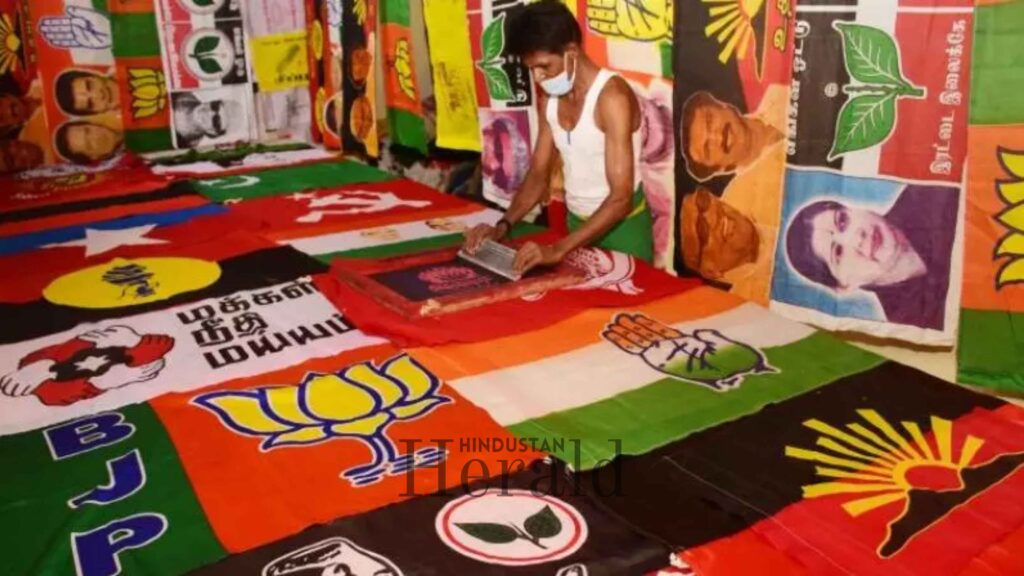
On May 6, the Tamil Nadu Congress Committee and the Congress Legislature Party announced they were backing TVK. Not the DMK. Not the alliance they had been part of since well before the election. TVK. AICC Tamil Nadu in-charge Girish Chodankar put it plainly in a formal statement, saying the support would be conditional on TVK keeping any communal forces that do not believe in the Constitution out of its coalition. The subtext was not particularly subtle. That condition is aimed squarely at any scenario where BJP or its ideological neighbourhood ends up inside a Vijay-led government.
Senior leader Karti Chidambaram acknowledged that voices within the party had been pushing for a TVK alignment even before the April 23 polls. The official position had been to stay with DMK. That position lasted until the results made it untenable.
Sashikanth Senthil, a Congress MP, made the philosophical case for the shift. Alliances, he argued, follow public mood and political priority. They always have. He also asked, gently but pointedly, that former allies refrain from tearing into each other publicly as the landscape rearranges itself. The Congress-DMK partnership had run for years, served both parties reasonably well, and produced real electoral dividends, most visibly the clean sweep of all 39 Lok Sabha seats in 2024. None of that, apparently, was enough to survive a mandate this decisive.
Congress has five MLAs. They brought TVK’s confirmed tally from 107 to 112. Still six short of the majority mark.
The Governor Holds the Line
On Wednesday afternoon, Vijay drove to Lok Bhavan, met Governor Arlekar, and formally staked his claim to form the government. He came with a letter showing support from 112 MLAs. The Governor’s response was that he would need to see 118 before taking things forward. He was not, in other words, going to invite TVK to form the government and then let the floor test sort out the majority.
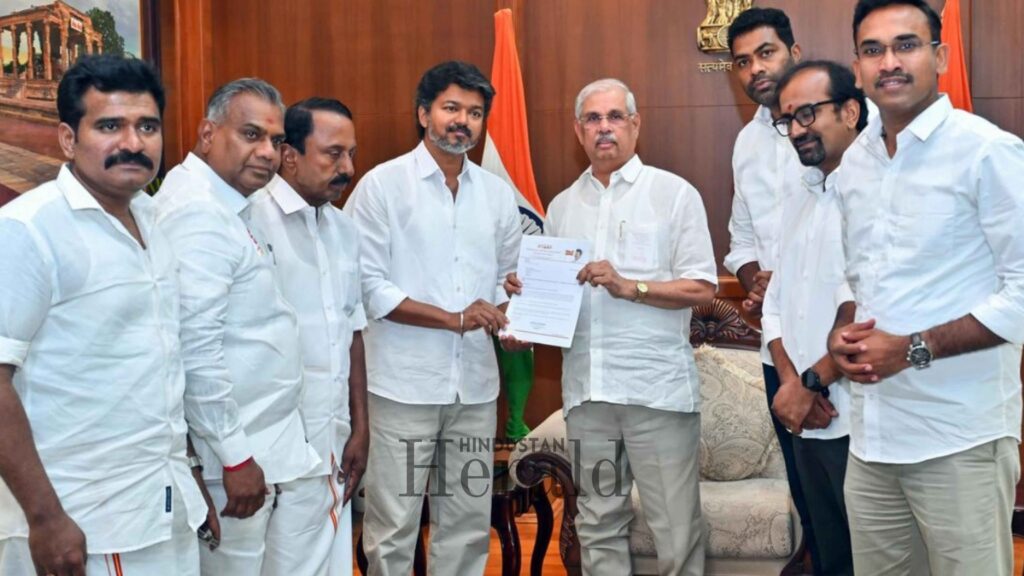
That position has precedent on its side, in a narrow technical sense. But it also runs against a fairly well-established post-Bommai reading of how gubernatorial discretion is supposed to work. The standard practice, as it has evolved through multiple Supreme Court judgments, is that the single largest party gets invited and the assembly floor is where majority gets tested. The Raj Bhavan is not supposed to be the first checkpoint.
Congress did not engage with the nuance. Tamil Nadu Congress President Selvaperunthagai K said, without hedging, that the Governor is acting on instructions from BJP headquarters. He called it a violation of the Constitution. He said Congress condemns it. He repeated that his party’s support for TVK is unconditional on this front. The Governor, he made clear, is not the problem. The BJP using the Governor is.
This accusation, it should be said, is not new. Non-BJP state governments across India have been making versions of this argument for years, about Raj Bhavans sitting on legislation, delaying appointments, and complicating government formation in states where the political colour does not match New Delhi’s. Tamil Nadu under Stalin had its own running battles on exactly these lines. What is different here is that the government has not even been formed yet, and the friction has already begun.
Who Else Is Being Courted
TVK needs six more MLAs. The party has been working the phones and the meeting rooms with some urgency.
The VCK, led by Thol Thirumavalavan, holds two seats. They were with DMK’s alliance going into the election. A party meeting was called for Thursday to decide whether to shift support to TVK. No decision has been announced at the time of writing.
Vijay also wrote to the Communist Party of India. The CPI called an emergency state executive committee meeting in response. They are deliberating. A final call is expected after the meeting.
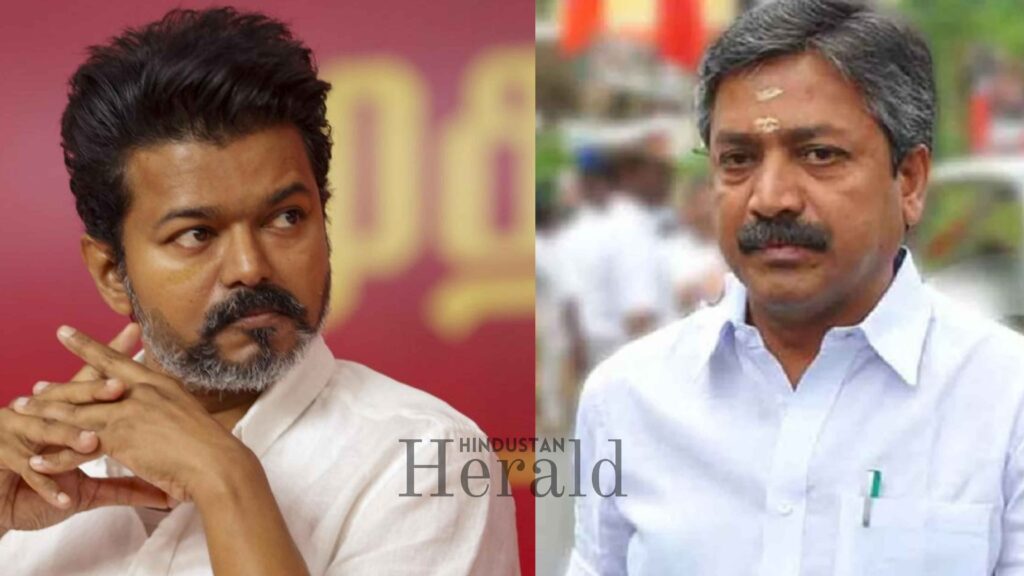
The AIADMK has officially closed the door. Party leadership made that position clear after an internal meeting. That said, there are reportedly MLAs within AIADMK who see things differently. Senior leader CV Shanmugam has been mentioned in this context, as someone around whom a pro-Vijay faction is coalescing. Whether that translates into actual support letters reaching the Governor is another question.
The Left parties and the Indian Union Muslim League have both said no. The BJP, which won exactly one seat, is not in a position to offer much, and has no evident interest in doing so.
A Swearing-In That Was Never Going to Happen Today
TVK had asked for an 11:30 AM ceremony on Thursday. Vijay had reportedly invited Rahul Gandhi to attend, with Congress leader Praveen Chakravarthy saying the visit would be finalised once the Governor gave the nod. That nod has not come. The ceremony will not happen today, as per sources close to the matter.
There is no formal deadline in play. Tamil Nadu’s assembly has been dissolved, effective May 5. President’s Rule is a possibility if no government is formed within a reasonable window, though that option carries its own political cost for the Union government, particularly if the delay is seen as manufactured.
For now, Vijay’s team is still counting. The math is not impossible. Six seats, sourced from the right combination of VCK, CPI, sympathetic independents, and possibly one or two AIADMK rebels, would get them there. Tamil Nadu’s smaller parties and independents understand perfectly well what it means to be on the wrong side of an incoming government.
What This Verdict Actually Signals
The seat count matters. But the larger significance of what happened on May 4 goes well beyond the numbers.
Tamil Nadu has run, more or less without interruption, on a Dravidian axis since 1967. Power has alternated between DMK and AIADMK, with the occasional disruption, but always within that framework. The ideological DNA of the state’s politics, the language movement, the social justice tradition, the suspicion of Brahminical dominance and Hindi imposition, has found expression through one of those two vehicles for nearly six decades.
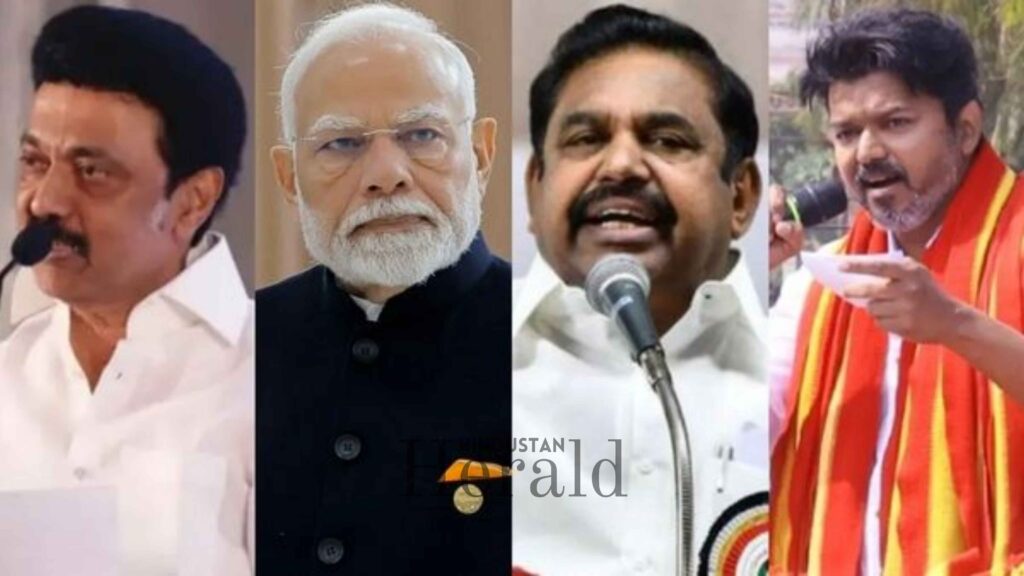
TVK did not dismantle that framework. But it cracked it open in a way nothing had before. Vijay ran on welfare, youth mobilisation, and a sharp anti-establishment pitch aimed at both Dravidian parties simultaneously. He positioned himself as neither DMK nor AIADMK, and explicitly as anti-BJP. Voters, particularly young voters and those in rural constituencies where both legacy parties had grown complacent, responded.
For Congress, the calculation is national as much as it is local. Being the party that helped get Vijay across the line keeps them politically alive in a state where they have been, for most of the past decade, a junior partner with limited leverage. The secular-anchor framing, built into their conditional support statement, is also useful for the INDIA bloc positioning heading into 2029.
BJP is watching all of this closely. The party has one MLA in Tamil Nadu. It has no direct path to power here. What it does have, if the accusations against the Governor hold, is the ability to slow things down and create the perception of instability around a new government that was not supposed to be possible. That is a much narrower political play, but it is the one available.
The floor of the Tamil Nadu assembly will, eventually, settle the question of majority. Constitutions are designed that way. What happens between now and that floor test, in the corridors of Lok Bhavan, in the party offices of Chennai, and in the calculations of six or more MLAs still making up their minds, is where the real story is being written.
Stay ahead with Hindustan Herald — bringing you trusted news, sharp analysis, and stories that matter across Politics, Business, Technology, Sports, Entertainment, Lifestyle, and more.
Connect with us on Facebook, Instagram, X (Twitter), LinkedIn, YouTube, and join our Telegram community @hindustanherald for real-time updates.

Covers Indian politics, governance, and policy developments with over a decade of experience in political reporting.
- Ananya Sharma

- Ananya Sharma
- Ananya Sharma
- Ananya Sharma

 Sandeep Verma