
 By Ananya Sharma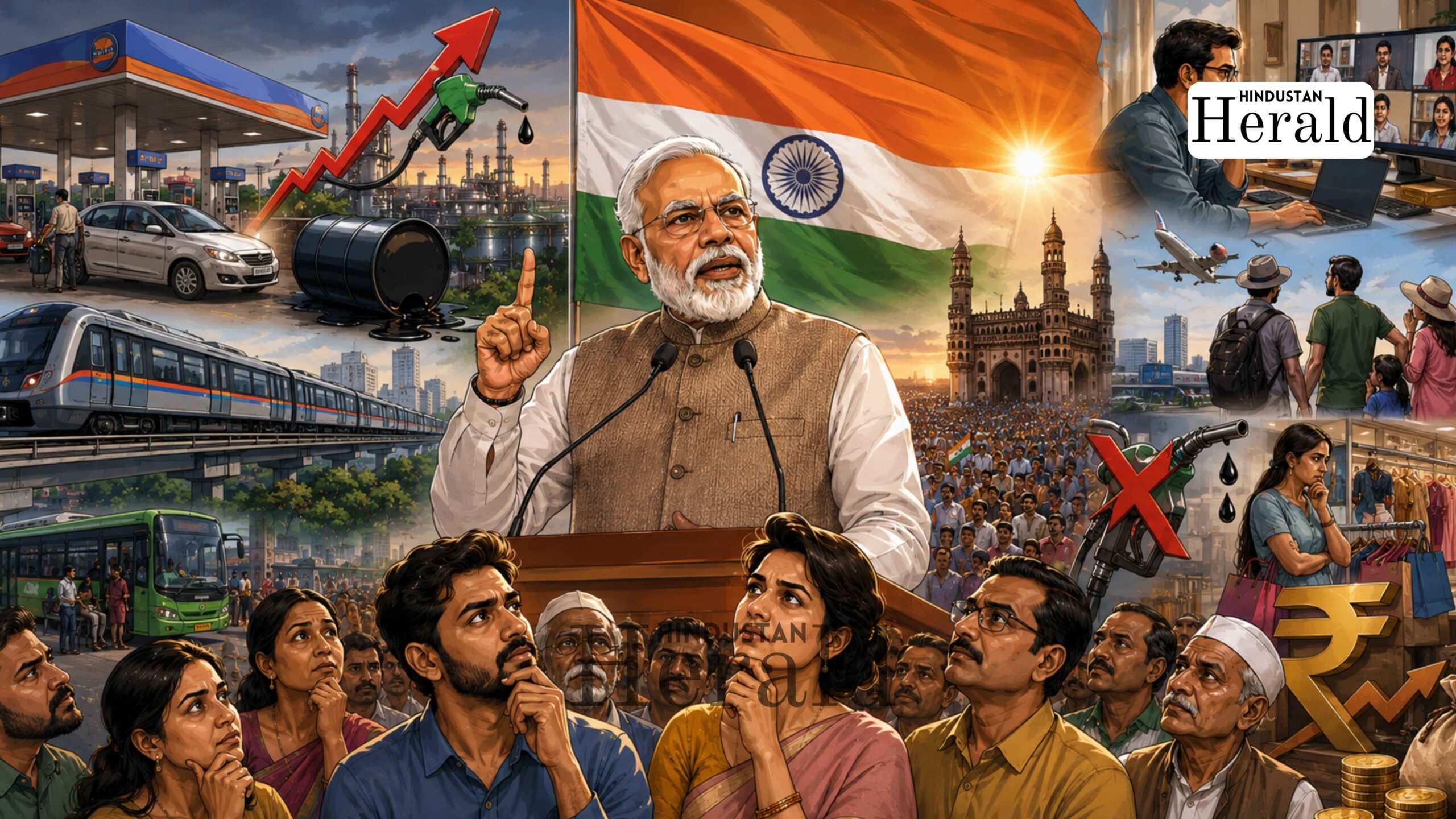
New Delhi, May 11: The country woke up on Sunday to an unusual kind of political speech. Not the kind that fires up a rally crowd with promises of infrastructure or welfare schemes, but one that asked ordinary Indians to do less consume less, spend less, travel less in the name of the nation.
Speaking at the Bharatiya Janata Party‘s public meeting at Parade Grounds, Secunderabad, on May 10, Prime Minister Narendra Modi appealed to citizens to conserve fuel, use public transport, revive work from home, avoid non-essential goods purchases, and skip overseas vacations all framed as steps to save foreign exchange amid the global disruption caused by the ongoing conflict in West Asia.
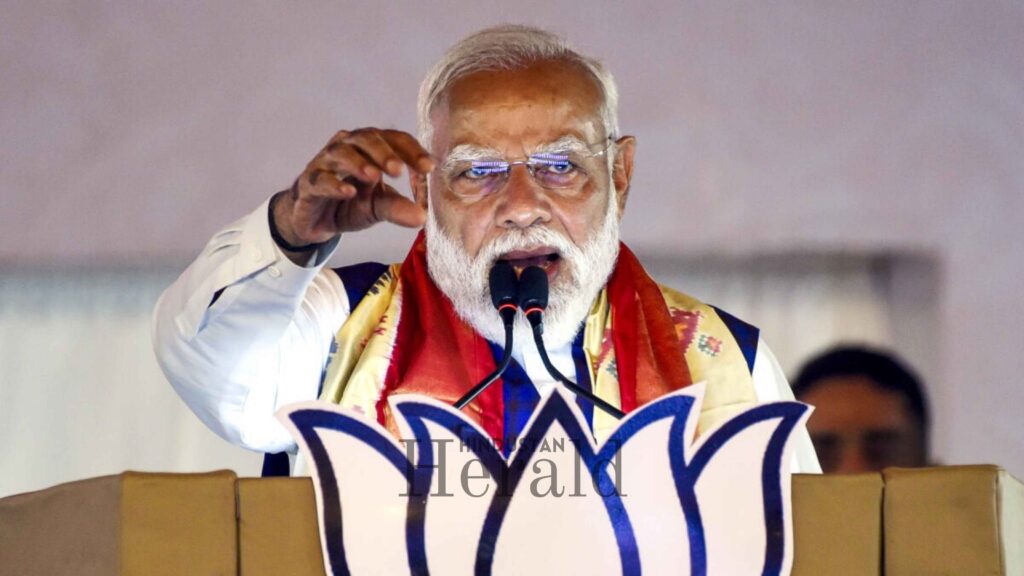
The speech, which lasted well beyond the standard political address, carried the weight of a government quietly signalling that things are tighter than the official line suggests. Modi did not announce price hikes. He did not announce rationing. But what he did in front of a BJP rally crowd was deliver what amounted to a 10-point austerity appeal to the public, wrapped in the language of patriotism and national duty.
Why Modi Spoke When He Did
The Prime Minister’s remarks came amid strong indications that fuel prices in India may witness their first major revision in nearly four years. Government and industry sources have indicated that petrol and diesel prices could be increased before May 15, as oil marketing companies continue to face heavy under-recoveries due to rising crude prices.
Officials indicated that at prevailing global crude prices, the government and oil companies are absorbing nearly Rs 24 per litre on petrol and Rs 30 per litre on diesel to shield consumers from the full impact of the international energy crisis. If approved, petrol and diesel prices may increase by around Rs 4-5 per litre, while domestic LPG cylinder prices could rise by Rs 40-50.
That context makes the Secunderabad speech a great deal more significant than a routine motivational address. When a Prime Minister publicly urges citizens to drive less two days before a potential price hike, the messaging is deliberate.
Modi acknowledged the scale of the problem directly. “We don’t have big oil wells. We have to import petrol, diesel, and gas. The prices of petrol, diesel, gas, and fertilisers have skyrocketed. For the last two months, the government has been making continuous efforts to save people from the impact by shouldering the burden,” he said.
The 10 Appeals, One by One
1. Conserve Petrol and Diesel
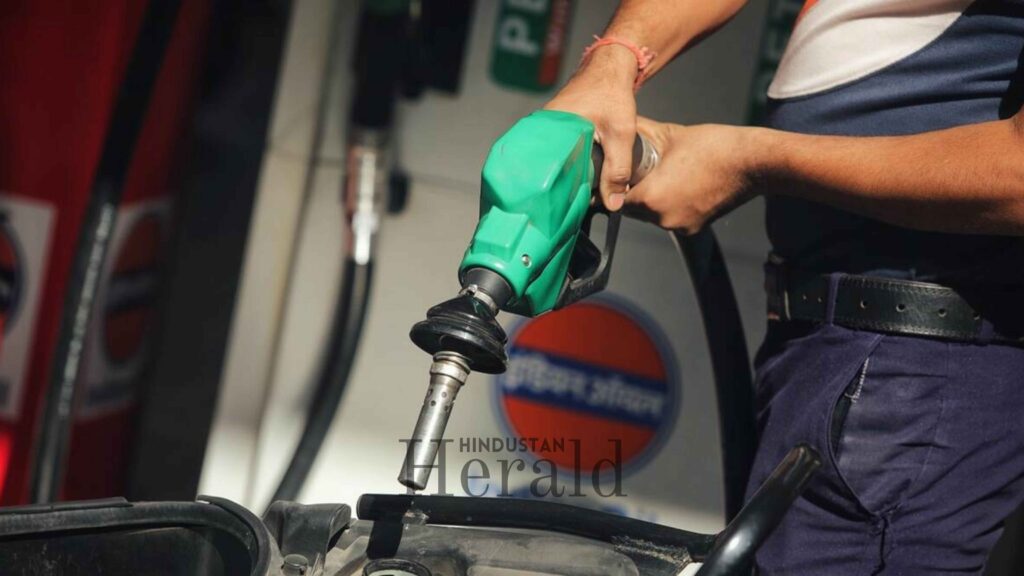
The most central appeal of the speech. Modi said it was the “responsibility of all” to conserve petrol and diesel, arguing that every litre saved translates to foreign exchange conserved for the nation. He framed fuel conservation not as a lifestyle inconvenience but as an act of economic patriotism.
2. Use Metro and Public Transport
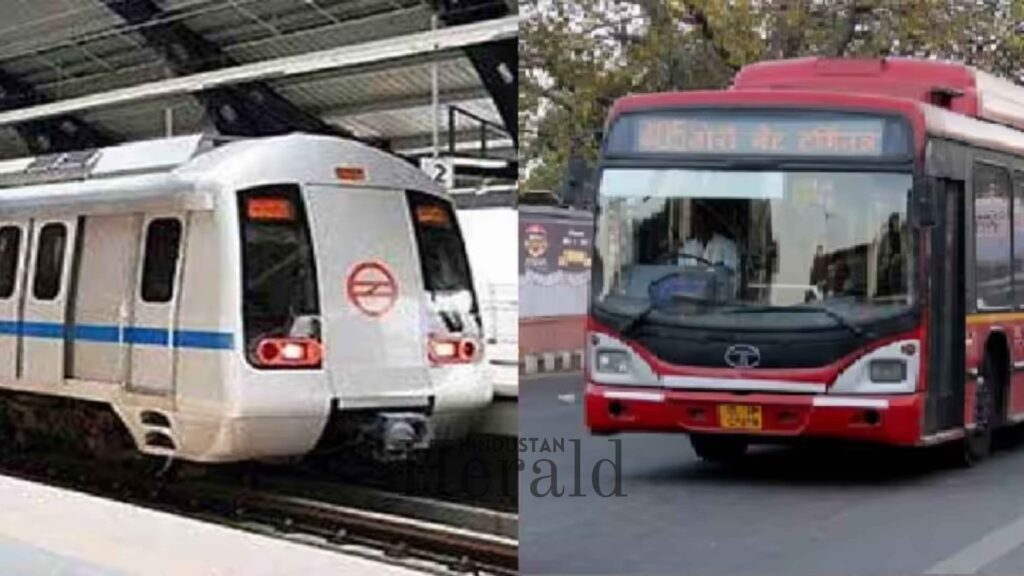
For those living in cities with metro networks, Modi appealed to citizens to make a conscious decision to travel by metro. He also encouraged carpooling for those who must drive, and urged electric vehicle owners to use their vehicles as much as possible.
3. Revive Work From Home

The Prime Minister recalled how India successfully adapted to remote working systems during the Covid pandemic, saying the country had developed functional infrastructure for online meetings and video conferences. He appealed for those systems to be restarted, calling it squarely “in the national interest.” The logic was straightforward: fewer commuters mean less fuel burned, less forex spent.
4. Avoid Foreign Travel and Destination Weddings

Modi appealed to citizens to avoid unnecessary foreign travel, overseas vacations, and destination weddings abroad, and instead choose domestic tourism and celebrations within India to help conserve foreign exchange. This was a pointed message directed at India’s growing upper-middle class, for whom international vacations and destination weddings have become status markers in the past decade.
5. Do Not Buy Gold (Sona) for One Year

In a significant appeal aimed at reducing import-driven expenditure, Modi urged people to avoid purchasing gold for weddings for one year. “I would appeal to people not to buy gold for weddings for one year,” he said. India is among the world’s largest consumers of gold, and gold imports constitute a substantial pressure point on the current account deficit. Asking citizens to step back from one of the country’s most deeply embedded cultural and religious traditions was, by any measure, a bold ask.
6. Reduce Edible Oil Consumption

Modi also called for reduced edible oil consumption, noting that India spends substantial foreign exchange on edible oil imports. “If every household reduces the use of edible oil, it is a huge contribution to patriotism. This will improve the health of the national treasury and the health of every family member,” he said.
7. Prioritise Made-in-India Products

Modi encouraged citizens to prioritise Made-in-India and locally manufactured products, including daily-use items such as shoes, bags, and accessories. This was a reinforcement of the longstanding Atmanirbhar Bharat messaging, but given new urgency by the global supply chain stress.
8. Farmers: Cut Chemical Fertiliser Use by 50%

The Prime Minister urged farmers to reduce chemical fertiliser usage by 50 per cent and move towards natural farming practices, saying this would protect soil health and reduce import dependence. India imports large quantities of chemical fertilisers, making the agricultural sector a significant drain on forex reserves at a time when global prices have spiked.
9. Farmers: Switch to Solar Irrigation Pumps
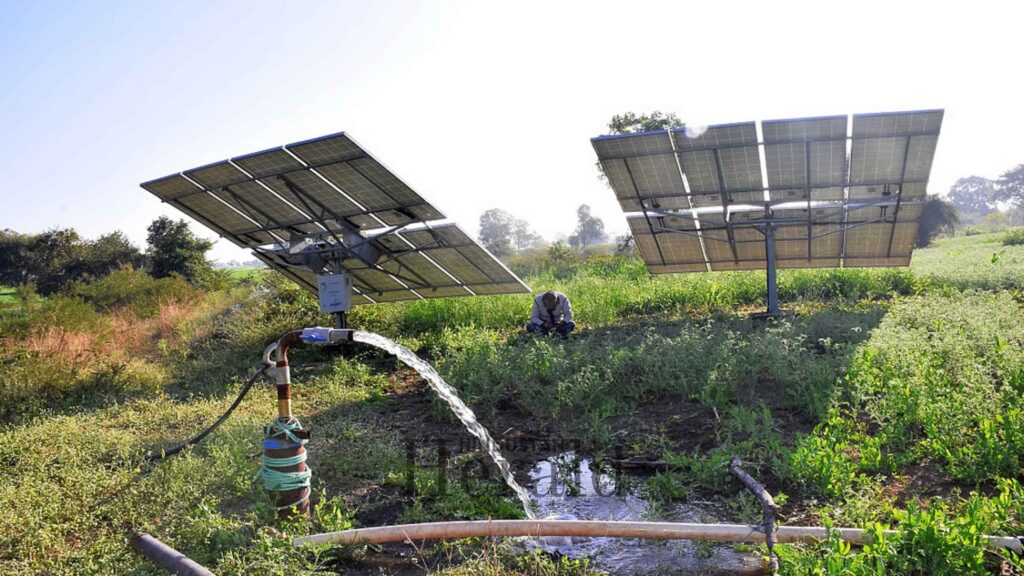
Modi also encouraged farmers to adopt solar-powered irrigation pumps instead of diesel pumps, a measure that addresses both the fuel import burden and the longer-term goal of agricultural sustainability. This dovetails with ongoing government schemes promoting solar energy adoption in rural India.
10. Freight by Rail, Not Road
The Prime Minister also called for shifting freight movement towards railways as a way to reduce diesel consumption in the transportation sector, which accounts for a significant share of India’s overall fuel demand.
The West Asia Context
None of these appeals exist in a vacuum. The current global energy crisis has been triggered by prolonged instability in the Middle East, which has disrupted shipping routes and raised concerns over global crude oil supplies. Nearly 20 per cent of the world’s oil passes through the Strait of Hormuz, where shipping movement has been affected due to the conflict.
Referring to the broader global context, Modi said the world was already grappling with supply chain disruptions following the COVID-19 pandemic, and that the Ukraine war had worsened the situation further. The West Asia crisis is now a third compounding shock, and India dependent on imports for over 85 per cent of its crude oil needs is acutely exposed.
While countries such as Bangladesh have introduced fuel rationing and Sri Lanka has reduced working days to manage the crisis, India has so far avoided shortages and disruptions in fuel supply. Modi’s speech was, in part, a pre-emptive attempt to manage demand before the government is forced into more drastic measures.
Reading Between the Lines
There is a political calculation embedded in this speech as well. By framing austerity as patriotism, the government is preparing public sentiment for uncomfortable decisions a price hike, possibly tighter import curbs without announcing them outright. The rally setting, a BJP event rather than a national broadcast, gave Modi room to speak with emotional register rather than technocratic caution.
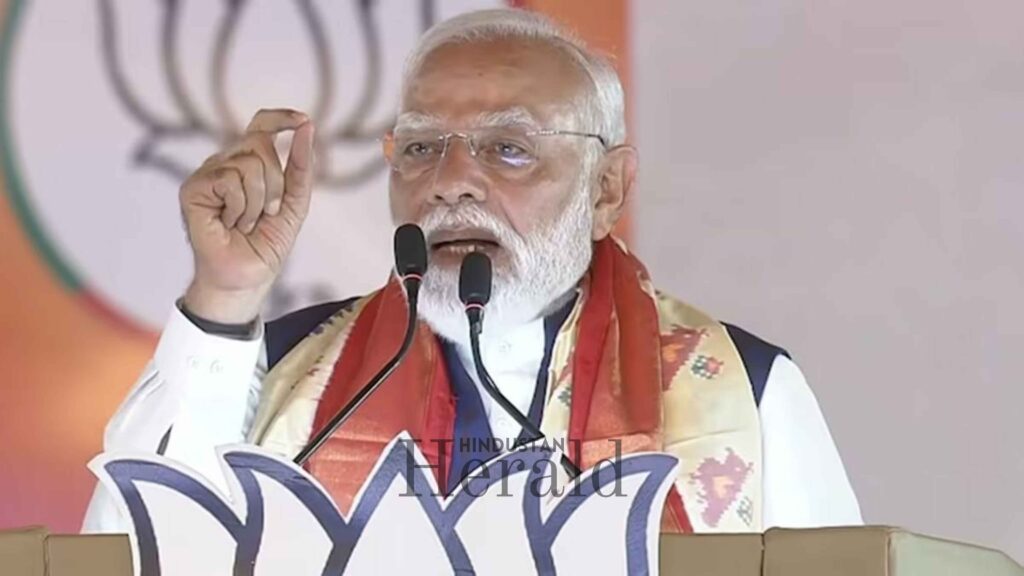
Highlighting the need for national responsibility during a period of international uncertainty, the Prime Minister called upon citizens to adopt measures aimed at reducing economic pressure, conserving resources, and strengthening self-reliance.
That framing is significant. “Self-reliance” is the ideological cornerstone of the Modi government’s economic identity. The crisis in West Asia is, for this administration, also an opportunity to push the needle on domestic manufacturing, natural farming, and public transport adoption goals that have remained elusive under normal conditions.
Still, the practical question lingers: how many commuters in Delhi, Mumbai, or Hyderabad will actually carpool tomorrow morning because the Prime Minister asked? How many middle-class families planning a Bangkok holiday this summer will cancel their tickets? How many farmers will halve their fertiliser use without a concrete subsidy or compensation framework in place?
For now, the appeals remain exactly that appeals. The government has not announced enforcement mechanisms, financial incentives, or sector-specific mandates to back them up. Whether the public responds will depend less on patriotism and more on petrol prices.
What Comes Next
All eyes are now on May 15, the date by which oil marketing companies are reportedly expected to revise retail fuel prices. If prices go up, Modi’s speech will be read as the groundwork for that announcement. If they don’t, it will be filed away as a moment of political caution in a difficult global season.
Either way, the Prime Minister has done something relatively rare: spoken directly to citizens about the global economic headwinds approaching India, and asked them to absorb some of the pressure voluntarily. Whether that trust is reciprocated and whether the government shares the burden equally through policy will define how this chapter is remembered.
Stay ahead with Hindustan Herald — bringing you trusted news, sharp analysis, and stories that matter across Politics, Business, Technology, Sports, Entertainment, Lifestyle, and more.
Connect with us on Facebook, Instagram, X (Twitter), LinkedIn, YouTube, and join our Telegram community @hindustanherald for real-time updates.

Covers Indian politics, governance, and policy developments with over a decade of experience in political reporting.
- Ananya Sharma

- Ananya Sharma
- Ananya Sharma
- Ananya Sharma




 Sandeep Verma